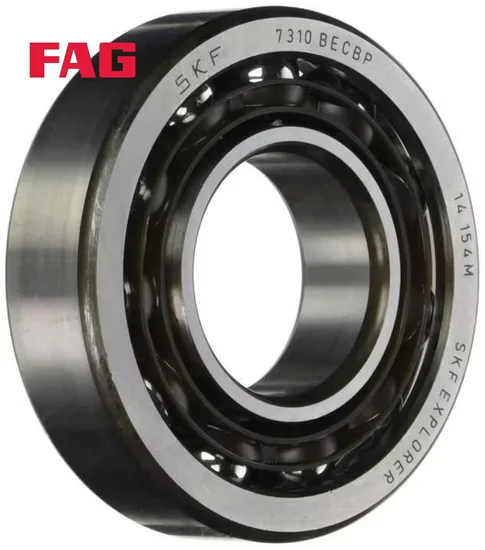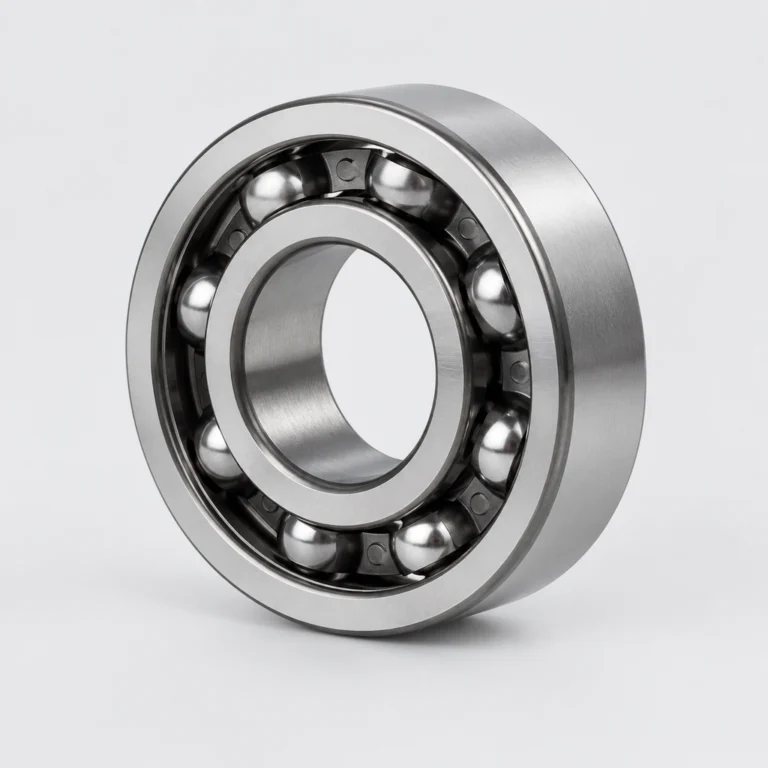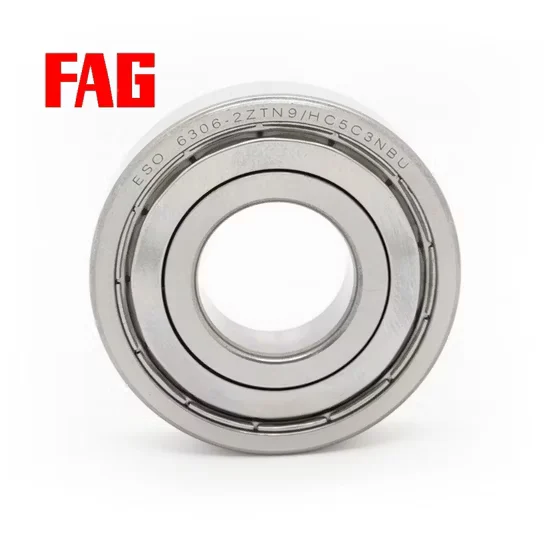

Product details
Description and application notes
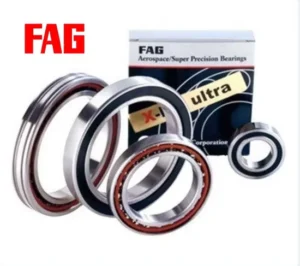
Unified Multi-Brand Sourcing — Consolidate your spindle bearing procurement with genuine FAG units alongside other premium lines in a single shipment, eliminating multi-vendor coordination.
Technical Specifications
| Parameter | Value |
|---|---|
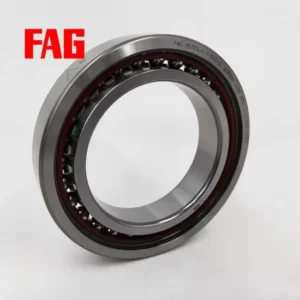
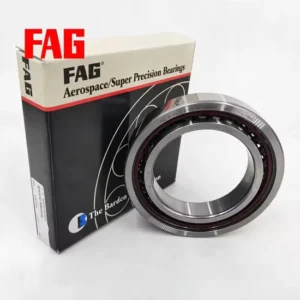
| Designation | FAG B7018-E-T-P4s-UL |
| Bearing Type | Angular Contact Ball Bearing |
| Precision Class | P4s (ISO) |
| Contact Angle | 25° |
| Material | Steel |
| Origin | Jiangsu China |
Note: Suffixes T and UL require manufacturer catalog confirmation for specific cage and preload definitions.
Application Suitability
| Industry | Typical Applications |
|---|---|
| Machine Tool Manufacturing | High-speed milling spindle front and rear supports |
| Precision Engineering | Internal grinding spindle shaft positioning |
| Robotics | High-accuracy rotary joint actuation |
Spindle Vibration Traces Back to Suffix Misinterpretation
Precision pairing dictates thermal stability in high-speed machining.
When configuring spindles for European machine tool builders early in my career, overlooking a light preload designation on a FAG B7018-E-T-P4s-UL angular contact ball bearing led to severe thermal expansion. A minor suffix discrepancy transforms a high-precision assembly into a source of unplanned downtime, as the internal clearance fails to compensate for centrifugal forces at elevated rotational speeds. The resulting thermal runaway often damages the spindle housing, turning a simple replacement into a costly rebuild.
Matching the 25° Contact Angle to Machining Loads
The 25° contact angle in this FAG B7018-E-T-P4s-UL angular contact ball bearing optimally balances radial rigidity with axial thrust capacity. This specific geometry absorbs the combined cutting forces encountered during heavy milling and drilling operations, ensuring the spindle maintains rotational accuracy without deflecting under dynamic load. Our engineering team verifies these complex load vectors against your specific machining parameters and duty cycles to confirm long-term suitability and prevent premature fatigue.
Thermal Dynamics and Lubrication in High-Speed Spindles
High-speed spindle environments generate significant frictional heat, demanding precise lubrication strategies to prevent raceway degradation and lubricant starvation. Oil-air or oil-jet lubrication systems are typically required to manage thermal gradients, while the bearing's internal geometry must accommodate the thermal expansion of the shaft and housing. Inadequate cooling, incorrect viscosity selection, or contaminated air supply rapidly accelerates surface fatigue and compromises the machining accuracy.
Decoding P4s Precision and Material Configurations
Achieving P4s precision ensures exceptionally tight dimensional and running accuracy, which is mandatory for minimizing runout in precision grinding and high-speed milling spindles. While standard configurations utilize high-purity bearing steel for structural rigidity, alternative material options like ceramic rolling elements are available for applications requiring reduced centrifugal load and higher speed capabilities. This precision level guarantees strict geometric conformity, drastically reducing vibration at extreme RPMs.
The Hidden Toll of Incorrect Preload Selection
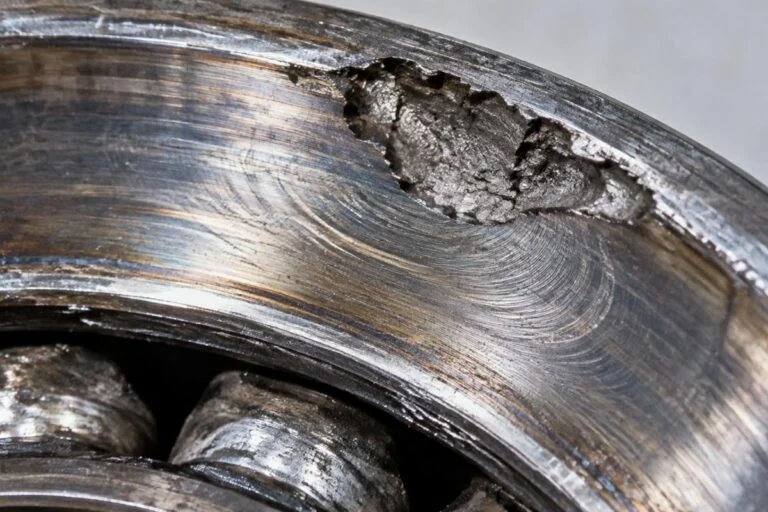
Installing a bearing with the wrong preload class leads to either excessive slip or catastrophic overheating. Under-preloaded setups allow micro-movements that fret the raceways and degrade the surface finish, while over-preloaded configurations generate immense frictional heat, destroying the lubricant film and seizing the cage. These failure modes result in severe warranty voidance, scrapped workpieces, and extensive machine recalibration costs, far exceeding the initial component expense.
Securing Authentic Spindle Components
Sourcing genuine spindle bearings requires rigorous supply chain validation to avoid counterfeit risks that plague the industrial aftermarket. We provide complete batch traceability for every FAG unit, ensuring the metallurgical and dimensional integrity perfectly matches the original factory specifications. Furthermore, our cross-brand equivalent consultation helps you manage global supply shortages without compromising the strict P4s tolerance requirements or the specific contact angle geometry of your spindle design.
Documentation & Authenticity
- Certificate of Conformity verifying P4s dimensional tolerances and running accuracy for this specific production batch.
- Original factory batch traceability linking the steel heat number directly to the final machining lot.
- Official brand QR code validation enabling immediate authenticity verification and technical data retrieval upon receipt.
- Dimensional inspection reports confirming the exact 25° contact angle alignment and raceway geometry before dispatch.
Storage, Handling & Mounting
- Store the P4s precision unit in its original vapor-phase inhibitor packaging to prevent microscopic raceway corrosion.
- Maintain strict climate control in storage, as thermal fluctuations can compromise the tight P4s dimensional tolerances.
- Use clean, lint-free gloves during handling to avoid transferring skin acids to the high-precision steel raceways.
- Follow induction heating protocols strictly, ensuring the inner ring expands uniformly without exceeding thermal limits.
- Keep matched sets sealed until mounting to preserve critical factory pairing marks on the outer rings.
Engineering Review for Spindle Integration
To validate the selection for your specific FAG B7018-E-T-P4s-UL angular contact ball bearing assembly, share the exact radial and axial cutting loads, maximum operational RPM, and expected thermal gradients. Providing the OEM spindle drawing, existing housing dimensions, and the specific machining materials allows our technical team to verify the fitment. We will perform a comprehensive L10 life calculation, ensuring optimal preload alignment and lubrication strategy for your unique application.
Frequently Asked Questions
Q: What does the E suffix indicate in this bearing designation?
A: The E suffix specifies a 25° contact angle, which is engineered to handle combined radial and axial loads effectively. This geometry is particularly suited for machine tool spindles where axial thrust from cutting tools must be supported without sacrificing radial rigidity or high-speed rotational stability.
Q: How do P4 and P4s precision classes differ under ISO standards?
A: While both denote high precision, P4s typically specifies even stricter running accuracy and dimensional tolerances than standard P4. This enhanced precision is critical for high-speed spindles to minimize vibration and runout, ensuring superior surface finish quality during precision machining operations.
Q: Why is traceability crucial for high-precision spindle bearings?
A: Traceability guarantees the bearing's metallurgical integrity and authentic origin, protecting against counterfeits that cause premature spindle failure. It provides verifiable proof of the steel batch, heat treatment, and dimensional inspections, ensuring the component meets the rigorous demands of high-speed machine tool applications.
Q: What lubrication methods are recommended for high-speed angular contact bearings?
A: Oil-air or oil-jet lubrication is generally required for high-speed spindle applications to manage frictional heat and flush out wear debris. The specific viscosity and flow rate must be calibrated to the bearing's speed factor and the spindle's thermal management system to prevent raceway degradation.