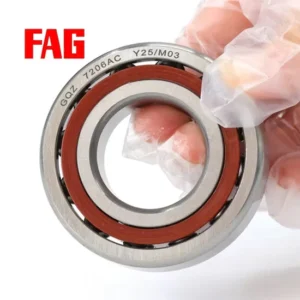
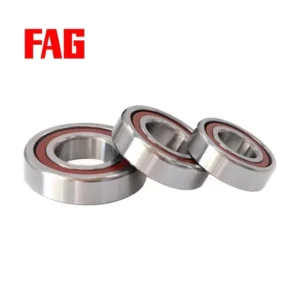
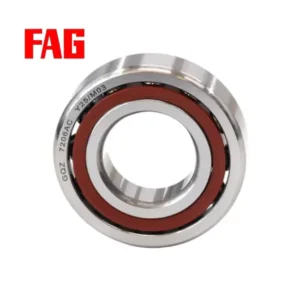
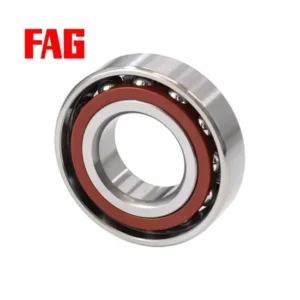
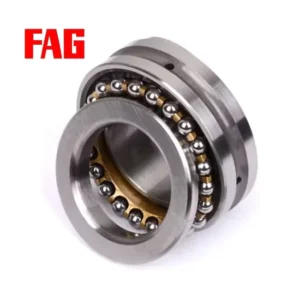
Product details
Description and application notes
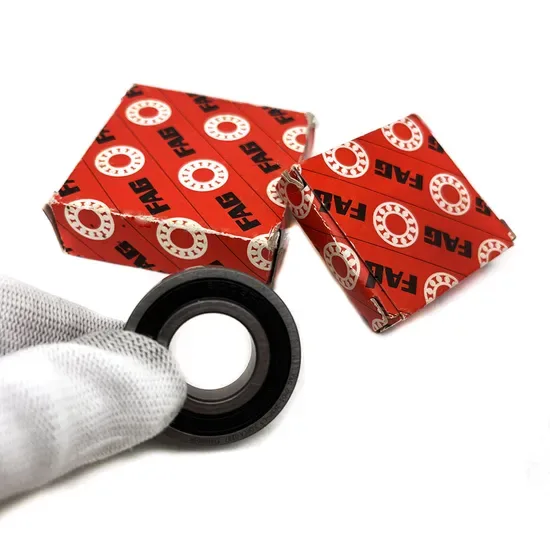
Official App Verification — Scan the QR code on the FAG B7024-C-T-P4s-UL packaging to instantly confirm batch authenticity and traceability.
Technical Specifications
| Parameter | Value |
|---|---|
| Designation | FAG B7024-C-T-P4s-UL |
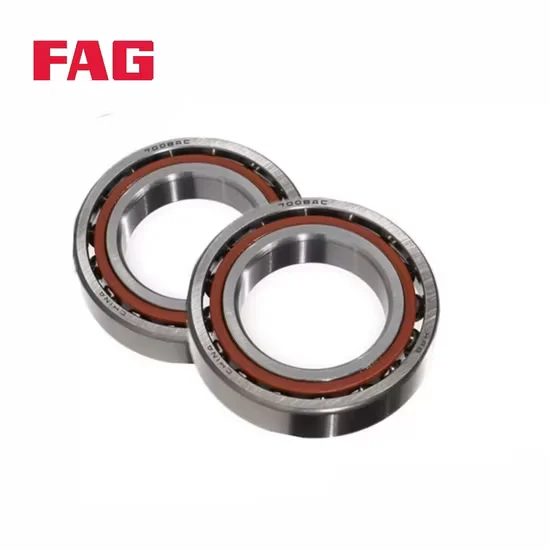
| Bearing Type | Angular Contact Ball Bearing |
| Series | B70 |
| Precision Class | P4s |
| Contact Angle | 15° (C suffix) |
| Material | Steel (ceramic variants available) |
| Origin | Jiangsu China |
Application Suitability
| Industry | Typical Applications |
|---|---|
| Machine Tool Manufacturing | High-speed motorized spindles and precision grinding heads |
| Fluid Machinery | High-speed pumps requiring low-friction rotation |
| Robotics & Automation | Precision rotary joints and articulated arms |
Why Spindle Bearings Fail Before the Steel Yields
Centrifugal slip at extreme RPMs causes severe raceway grooving long before fatigue limits are reached.
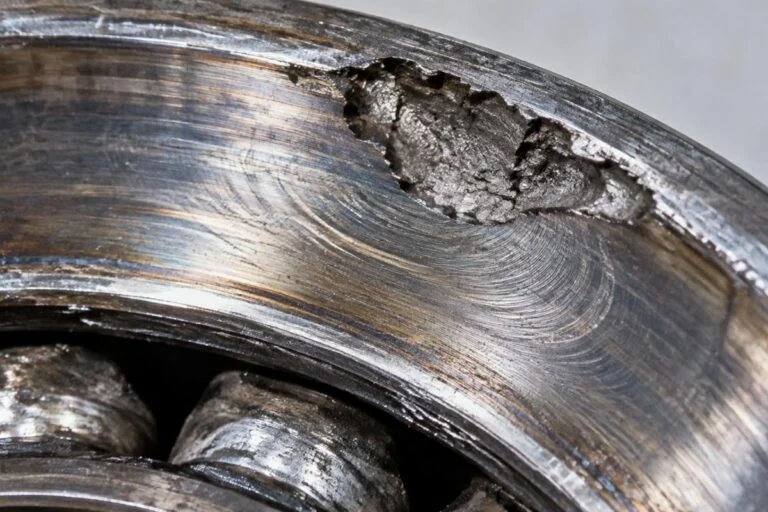
Early in my failure analysis career, I dismantled a scrapped motorized spindle where standard steel balls had skidded under high centrifugal forces, scoring the raceways deeply. The friction heat generated by this sliding motion completely destroyed the lubricant film. Sourcing a genuine FAG B7024-C-T-P4s-UL angular contact ball bearing prevents this catastrophic skidding, but fragmented global supply chains often deliver counterfeits or mislabeled tolerance classes. These substandard parts trigger unexpected machine downtime and compromise the surface finish of precision-machined components, turning a minor procurement saving into a massive production loss. The financial impact of a single spindle crash far exceeds the initial component cost, making verified sourcing absolutely critical for modern manufacturing facilities.
Matching Precision to High-Speed Spindle Demands
When outfitting motorized spindles for aerospace or automotive machining, the FAG B7024-C-T-P4s-UL angular contact ball bearing provides the necessary dimensional stability and running accuracy. Our engineering team routinely cross-references mixed-brand packages to ensure this specific configuration meets your exact spindle housing tolerances. By validating the exact internal geometry, we help you avoid the costly trial-and-error of mismatched precision classes that often plague decentralized MRO purchasing. This precise alignment guarantees that the spindle achieves its designed rotational speeds without inducing harmonic vibrations. We also analyze your specific machining operations to confirm that the dynamic load ratings align with the cutting forces encountered during heavy material removal processes.
Thermal Expansion and Lubrication Starvation at High RPMs
Spindle environments generate immense friction heat, demanding a 15° contact angle to minimize sliding friction and thermal buildup within the raceway. Lubrication starvation frequently occurs if the grease cannot withstand the centrifugal throw, leading to rapid temperature spikes and accelerated wear. Furthermore, maintaining the correct preload is absolutely critical, as thermal expansion of the shaft and housing alters the internal clearance dynamically during continuous operation. If the initial preload is too light, the balls will skid; if too heavy, the excessive friction will overheat the assembly. Monitoring the spindle's temperature profile during the run-in phase is essential to confirm that the selected lubrication and preload combination effectively manages the generated friction heat.
Decoding the P4s Tolerance and Contact Angle Configuration
The P4s precision class guarantees exceptionally tight dimensional and running accuracy, which is mandatory for minimizing vibration in high-speed grinding heads and milling spindles. The 'C' suffix denotes a 15° contact angle, optimizing the load distribution for combined radial and axial forces while significantly reducing friction heat compared to steeper angles. While the standard configuration utilizes high-purity bearing steel, ceramic hybrid variants are available to noticeably lower centrifugal forces and extend service life at extreme rotational speeds. Selecting the appropriate cage material and internal clearance ensures the bearing withstands the specific thermal gradients of your machining center.
The Cascading Impact of Substandard Spindle Components
Installing a bearing with incorrect internal clearance or an inferior raceway finish inevitably leads to premature failure and catastrophic damage to the expensive spindle shaft. According to ISO 281 frameworks, operating beyond the thermal limit of standard bearing steel drastically reduces the calculated L10 life and compromises structural integrity. Such unplanned downtime not only halts production lines but also voids the machine tool manufacturer's warranty, leaving the facility to absorb the full replacement cost. Relying on unverified secondary market sources exponentially increases the risk of receiving reconditioned units disguised as new inventory.
Securing Authentic High-Precision Configurations
Procuring the exact P4s precision class requires rigorous verification, as misidentified tolerance bands are a common pitfall in the secondary market. We provide complete traceability documentation for every FAG B7024-C-T-P4s-UL angular contact ball bearing, ensuring the physical nameplate perfectly matches the factory inspection reports. Our flexible consolidation shipping allows you to mix this high-precision spindle part with standard MRO replacements in a single container, optimizing your freight costs without compromising authenticity. Additionally, our technical team offers cross-brand equivalent model consultation to verify compatibility if your original equipment manufacturer specifies an alternative designation. This comprehensive support ensures your maintenance team receives exactly what the equipment requires, eliminating the guesswork and reducing the administrative burden of managing multiple specialized vendors across different regions.
Documentation & Authenticity
- Certificate of Conformity verifying the P4s precision class and 15° contact angle specifications.
- Original batch traceability records linking the spindle bearing to the manufacturer's production facilities.
- Official app QR validation confirming the genuine origin of the high-speed angular contact unit.
- Dimensional and running accuracy inspection reports aligned with ISO standards for P4s tolerances.
Storage, Handling & Mounting
- Keep the P4s precision bearing in its original vacuum-sealed packaging to prevent microscopic dust contamination before mounting.
- Use clean, lint-free gloves when handling the 15° contact angle raceways to avoid corrosive sweat transfer.
- Apply induction heating strictly controlled to avoid exceeding the thermal limit of the bearing steel during cylindrical bore installation.
- Ensure the spindle housing is machined to the exact tolerance required for the single-row angular contact arrangement.
- Maintain strict climate control in the storage area to prevent condensation on the high-precision steel surfaces.
Engineering Review for Spindle Integration
To validate the suitability of this configuration, please share your spindle's radial and axial load profiles, maximum operating RPM, and target temperature range. Providing the OEM equipment model number allows our technical team to perform a detailed cross-reference check and confirm the L10 life calculation for your specific application. We also evaluate your current lubrication strategy and sealing arrangements to recommend any necessary adjustments, ensuring the bearing operates reliably within its designated performance envelope.
Frequently Asked Questions
Q: How to verify the authenticity of FAG spindle bearings upon delivery?
A: Authenticity is confirmed by scanning the QR code on the packaging using the manufacturer's official app, which validates the batch number and production date. We also supply a Certificate of Conformity and dimensional inspection reports that cross-match the P4s tolerance data printed on the physical nameplate of the bearing.
Q: What does the P4s precision class mean compared to standard P4?
A: The P4s class represents an enhanced precision standard, offering tighter running accuracy and dimensional tolerances than the baseline P4 grade. This stringent control is essential for high-speed machine tool spindles, where even microscopic deviations can cause severe vibration, accelerated wear, and poor surface finish on the machined parts.
Q: How to interpret the unverified suffixes for specific cage and preload setups?
A: Certain suffixes in the designation require direct confirmation from the manufacturer's current catalog to verify the exact cage material and preload configuration. We recommend requesting the detailed specification sheet upon ordering to ensure the internal clearance and retainer design perfectly match your spindle's thermal expansion characteristics.
Q: What are the recommended mounting practices for high-precision angular contact bearings?
A: Mounting demands a clean environment and strict adherence to thermal expansion limits. Use controlled induction heating for the inner ring, avoiding open flames, and apply the correct axial force to seat the 15° contact angle properly. Always follow the specified tightening torque to establish the correct internal preload without causing raceway deformation.
Q: How to select the correct lubrication for high-speed spindle applications?
A: High-speed spindles typically require specialized greases with low base oil viscosity to minimize churning losses and friction heat. The relubrication interval depends on the rotational speed and operating temperature; over-greasing causes rapid temperature spikes, while under-greasing leads to starvation. Consult the spindle builder's manual for the exact grease grade and volume.