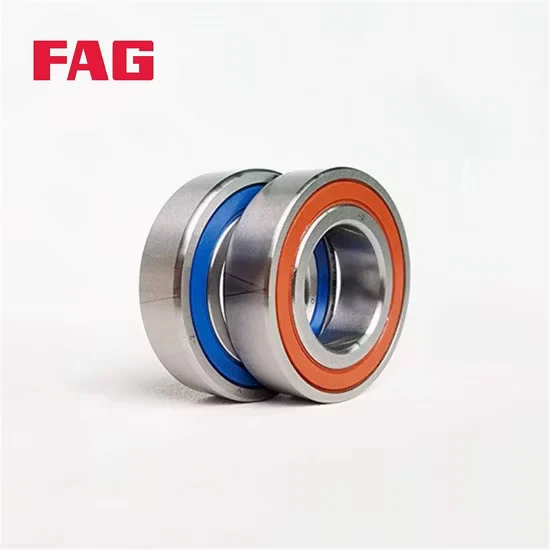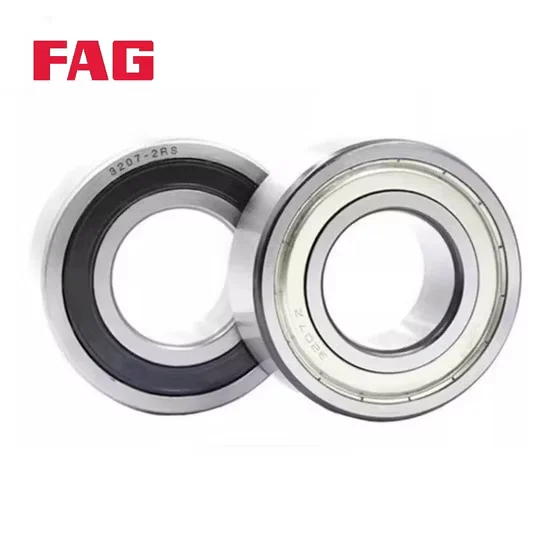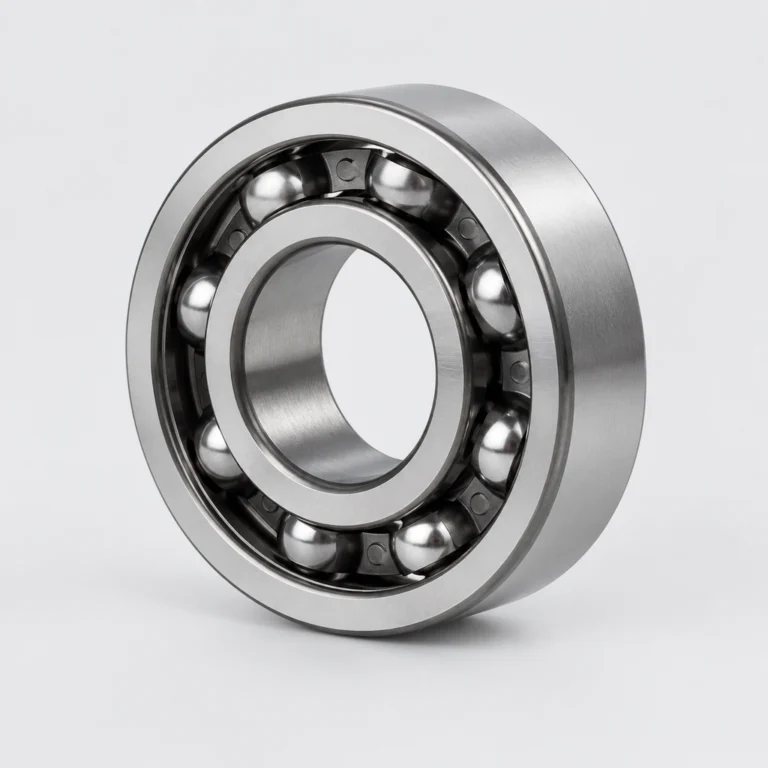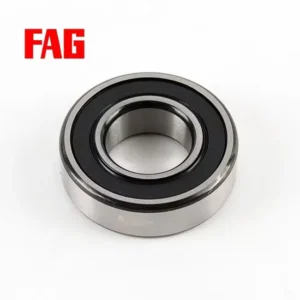
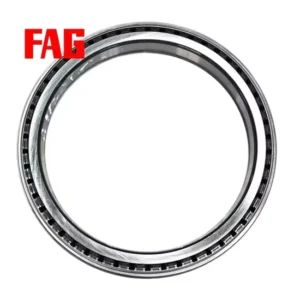
Product details
Description and application notes
Authenticity via QR scanning — Every precision spindle bearing ships with verifiable factory batch codes accessible through the official manufacturer application.
Technical Specifications
| Parameter | Value |
|---|---|
| Designation | FAG B7026-E-T-P4s-UL |
| Bearing Type | Angular Contact Ball Bearing |
| Bore Diameter (d) | 130 mm |
| Outside Diameter (D) | 200 mm |
| Width (B) | 33 mm |
| Contact Angle | 25° |
| Precision Class | P4s |
| Cage Material | Polyamide |
| Material | Steel |
| Arrangement | Single-Row Bearing |
| Dynamic Load Rating (Cr) | 137 kN |
| Static Load Rating (C₀) | 143 kN |
| Limiting Speed (Grease) | 5600 min⁻¹ |
| Limiting Speed (Oil) | 8500 min⁻¹ |
Note: The 'T' and 'UL' suffixes are marked as unverified in the initial draft and require manufacturer catalog confirmation for exact cage design and universal pairing preload specifics.
Application Suitability
| Industry | Typical Applications |
|---|---|
| Machine Tool Manufacturing | High-speed CNC lathe main spindles and milling center spindle units |
| Precision Engineering | High-speed pumps and robotics rotary joints |
| Industrial Equipment | Precision grinding machine wheelheads and internal grinding spindles |
Why Spindle Vibration Often Traces Back to Suffix Misreads on the FAG B7026-E-T-P4s-UL angular contact ball bearing
Mismatched preload and precision classes silently destroy spindle rigidity long before physical wear appears.
Early in my procurement career, I shipped a batch of spindle bearings to a Middle Eastern client without verifying the pairing suffixes. The basic model numbers matched perfectly on paper, but the missing preload configuration caused severe thermal expansion and vibration, halting their entire CNC production line for weeks. When sourcing a FAG B7026-E-T-P4s-UL angular contact ball bearing, overlooking the exact suffix string turns a high-precision component into a massive operational liability. Many buyers focus solely on the bore and outer diameter, completely ignoring how the contact angle and cage material interact under continuous cutting loads. This oversight leads to catastrophic spindle runout, poor surface finishes on machined parts, and premature bearing seizure.
Aligning P4s Precision with High-Speed Spindle Demands
Machine tool spindles demand exceptional rotational accuracy to maintain tight tolerances during continuous high-speed cutting operations. The FAG B7026-E-T-P4s-UL angular contact ball bearing delivers the necessary dimensional stability through its P4s precision class, which restricts runout and bore tolerances far beyond standard industrial grades. Our engineering team cross-references these specific precision requirements against your spindle housing dimensions to ensure the bearing integrates flawlessly into high-rigidity machining centers. We understand that even a microscopic deviation in the raceway geometry can amplify into severe chatter marks on the final workpiece. By strictly adhering to the specified precision class, we help manufacturing facilities maintain their competitive edge in producing high-tolerance aerospace and automotive components.
Managing Thermal Growth and Lubrication in Continuous Milling
High-speed spindle operations generate significant friction heat, directly impacting internal clearance and lubricant film thickness. A 25° contact angle effectively balances the combined radial and axial cutting forces, preventing excessive stress on the raceways during heavy milling cycles. Polyamide cages minimize friction and operate quietly, but they require strict adherence to oil-air or grease lubrication intervals to avoid thermal degradation. Furthermore, preventing coolant contamination is absolutely critical, as ingress rapidly degrades the polyamide material and compromises the P4s running accuracy. If the lubrication film breaks down due to excessive heat or contamination, the rolling elements will skid across the raceways, generating localized hot spots that permanently alter the steel microstructure and destroy the operational lifespan.
Decoding the Engineering Behind the Suffix String
The 'E' suffix designates the 25° contact angle, optimizing the load distribution for the combined forces typical in CNC spindle applications. The P4s precision class indicates a specialized tolerance band tailored specifically for machine tool spindles, ensuring minimal radial and axial runout during high-speed rotation. The polyamide cage reduces weight and centrifugal forces, allowing the bearing to reach higher limiting speeds compared to traditional brass alternatives. Finally, the single-row arrangement requires precise mounting configurations, often necessitating matched pairs or specific preload adjustments during assembly to achieve the desired system rigidity. Understanding these specific design choices is crucial for maintenance engineers who need to replace a failed unit without altering the original equipment manufacturer's dynamic balancing and vibration profiles.
The Cascading Impact of Incorrect Preload and Precision Selection
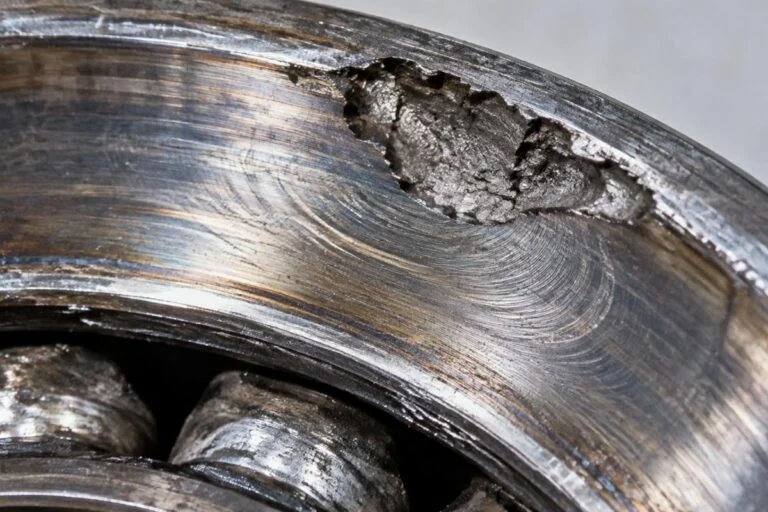
Installing a bearing with the wrong preload class or inadequate precision rating leads to premature spindle failure and catastrophic damage to the machining workpiece. According to ISO 15243 frameworks, improper internal clearance causes skidding, smearing, and eventual raceway spalling under high-speed conditions. This unplanned downtime not only halts production but also voids equipment warranties and necessitates complete spindle rebuilds, costing significantly more than the initial component price. When the preload is too light, the spindle lacks the rigidity to handle heavy cuts, resulting in tool breakage. Conversely, excessive preload generates immense friction heat, accelerating lubricant degradation and leading to sudden, catastrophic bearing seizure that can destroy the entire spindle shaft.
Securing Traceability and Technical Accuracy for Spindle Components
We maintain massive spot inventory of premium global brands, ensuring rapid fulfillment for urgent spindle maintenance without compromising authenticity. Every FAG B7026-E-T-P4s-UL angular contact ball bearing we dispatch includes complete batch traceability documentation to prevent counterfeit risks that plague the precision bearing market. Our technical team provides cross-brand equivalent model consultation, verifying that the exact contact angle and precision class align perfectly with your OEM specifications. We offer flexible MOQ options, from single-unit emergency replacements to full container consolidation, backed by long-term after-sales support for failure analysis and mounting guidance. Our commitment to detail ensures that you never receive a mismatched preload configuration, protecting your production line from the costly errors I witnessed early in my career.
Documentation & Authenticity
- Original factory batch traceability certificates verifying the exact production date and plant for this P4s precision batch.
- Official manufacturer application QR codes on the packaging for immediate authenticity validation of the FAG B7026-E-T-P4s-UL angular contact ball bearing.
- Dimensional and running accuracy inspection reports confirming the strict P4s runout tolerances before dispatch.
- Material certification documents validating the high-purity steel used for the inner and outer rings.
Storage, Handling & Mounting
- Store the single-row bearings in their original unopened packaging to prevent moisture ingress that could compromise the P4s precision raceways.
- Maintain a stable, climate-controlled storage environment to avoid thermal shock that might affect the polyamide cage dimensions.
- Use clean, lint-free gloves during handling to prevent sweat and particulate contamination on the high-precision 25° contact angle raceways.
- Follow the manufacturer's exact heating and mounting procedures to preserve the delicate P4s tolerance band during spindle assembly.
- Verify the universal pairing marks and preload directions before installation to ensure the correct axial load distribution in the spindle stack.
Preparing Your Spindle Parameters for Technical Review
To ensure the selected bearing perfectly matches your machining center, please provide the exact radial and axial cutting loads, maximum operating speeds, and precise spindle housing dimensions. Sharing the OEM equipment model number allows our engineering team to perform a comprehensive cross-reference and L10 life calculation tailored to your specific duty cycle. Detailing your specific lubrication method, cooling environment, and expected operating temperatures will help us confirm the absolute suitability of the polyamide cage and sealing requirements for your application. This collaborative technical review process eliminates guesswork and ensures that the replacement component restores your spindle to its original factory performance specifications.
Frequently Asked Questions
Q: How can I verify the authenticity and batch of the FAG B7026-E-T-P4s-UL angular contact ball bearing?
A: You can verify authenticity by scanning the QR code on the original packaging using the official manufacturer application. Additionally, we provide complete factory batch traceability documentation, including production dates and plant origins, ensuring the P4s precision components are genuine and fully trackable from the source to your facility.
Q: What are the specific differences between P4s precision and standard P4 in machine tool spindles?
A: The P4s precision class features a specialized tolerance band specifically optimized for machine tool spindles, offering tighter control over radial runout and axial displacement compared to standard P4. This enhanced accuracy minimizes vibration and heat generation during high-speed cutting, directly improving the surface finish of the machined workpiece and extending the overall spindle service life.
Q: How does the 25° contact angle affect spindle rigidity and speed limits?
A: A 25° contact angle provides an optimal balance between radial load capacity and axial rigidity, making it ideal for the combined cutting forces in CNC lathes and milling centers. While it offers higher axial stiffness than a 15° angle, it maintains sufficiently low friction to support the high limiting speeds required for modern high-speed machining operations without excessive thermal growth.
Q: What are the temperature limits and lubrication recommendations for polyamide cages in high-speed spindles?
A: Polyamide cages are lightweight and reduce friction, but they have strict upper temperature limits and can degrade if exposed to certain synthetic lubricants or prolonged high heat. We recommend using manufacturer-approved oil-air or high-speed spindle grease systems, maintaining strict lubrication intervals, and ensuring adequate cooling to keep the operating temperature well within the safe thermal boundaries of the cage material.
Q: How do I confirm the correct matching of universal pairing preload suffixes during installation?
A: Universal pairing suffixes dictate the internal clearance and preload when bearings are mounted together. You must align the V-marks on the outer rings exactly as specified by the manufacturer to achieve the intended light, medium, or heavy preload. Incorrect alignment or mixing different preload classes will cause severe thermal expansion, rapid wear, and immediate spindle failure.