

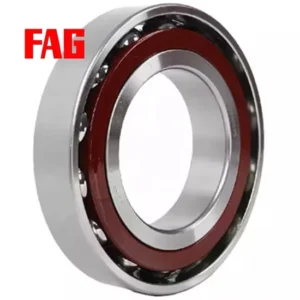
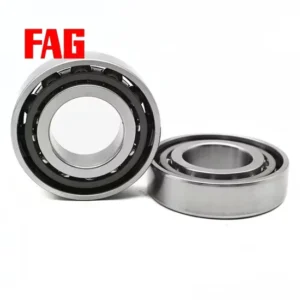
Product details
Description and application notes
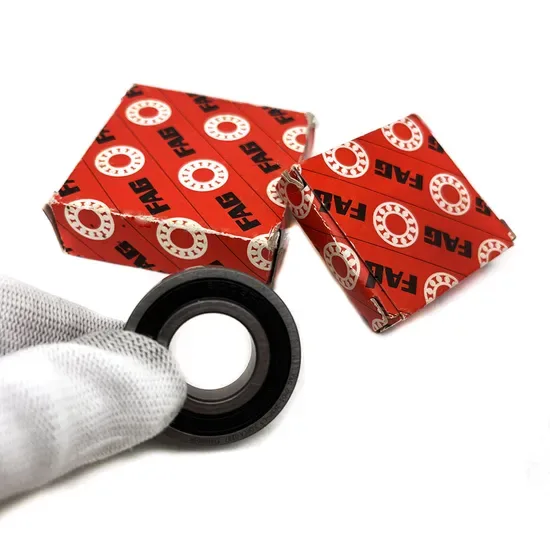
Official App QR Verification — Every FAG B7032-E-T-P4s-UL spindle bearing we dispatch includes a scannable QR code linked to the manufacturer's authentication app, ensuring immediate traceability on the shop floor.
Technical Specifications
| Parameter | Value |
|---|---|
| Designation | FAG B7032-E-T-P4s-UL |
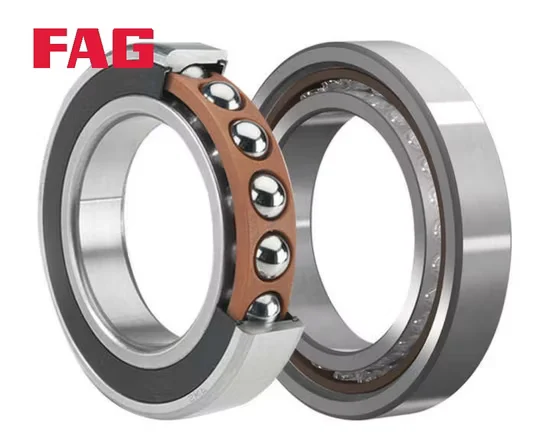
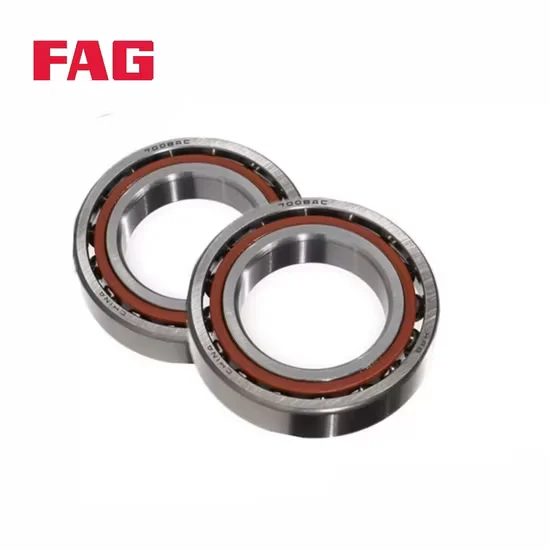
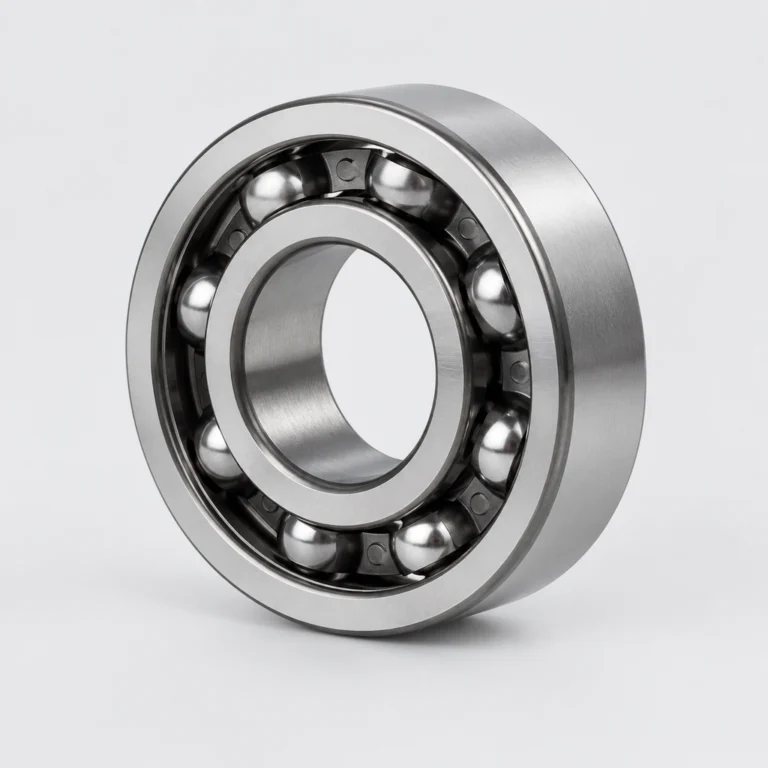
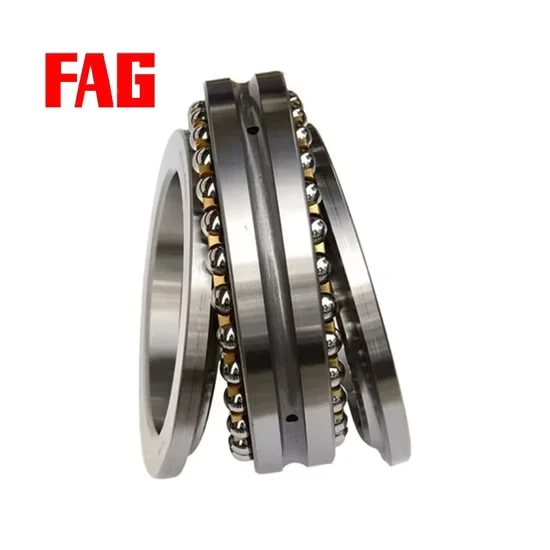
| Bearing Type | Single Row Angular Contact Ball Bearing |
| Bore Diameter (d) | 160 mm |
| Outside Diameter (D) | 240 mm |
| Width (B) | 38 mm |
| Contact Angle | 25° (E suffix) |
| Precision Class | P4s |
| Material | High-purity bearing steel (hybrid ceramic variants available upon request) |
| Origin | Jiangsu, China |
Note: Suffixes B, T, and UL are marked as unverified in the initial draft and require manufacturer catalog confirmation for exact preload and cage specifications.
Application Suitability
| Industry | Typical Applications |
|---|---|
| Machine Tool Manufacturing | High-speed CNC machining center spindles, precision grinding wheelheads |
| Precision Equipment | High-frequency rotary tables, precision boring and milling spindle units |
Why Spindle Vibration Often Traces Back to a Single Suffix Misread on the FAG B7032-E-T-P4s-UL angular contact ball bearing
Matching the exact preload and precision code prevents catastrophic runout at high RPMs.
Early in my sourcing career, I supplied a batch of spindle bearings to a European client, focusing only on the base dimensions while overlooking the specific preload suffix. The result was severe vibration during high-speed operation, leading to a complete batch rework. That costly lesson fundamentally changed how I evaluate high-precision components. When integrating a FAG B7032-E-T-P4s-UL angular contact ball bearing into a CNC spindle, assuming standard preload values without verifying the exact suffix configuration often leads to thermal expansion issues and premature raceway fatigue.
Aligning P4s Tolerance with High-Speed Machining Demands
CNC spindles demand extreme rotational accuracy to maintain tight machining tolerances. The P4s precision class of this FAG B7032-E-T-P4s-UL angular contact ball bearing ensures minimal dimensional deviation and running accuracy errors. By providing cross-brand equivalent model consultation and technical selection support, we ensure the bearing's internal geometry perfectly matches the spindle housing requirements, preventing micro-vibrations that degrade surface finish.
Navigating Thermal Growth and Axial Loads in Continuous Milling
During heavy milling operations, the spindle generates significant heat, which directly impacts internal clearance and lubrication film thickness. The 25° contact angle provides an optimal balance between radial rigidity and axial thrust capacity, essential for absorbing cutting forces. However, if the lubrication interval is miscalculated or the cooling system fails to manage thermal gradients, the resulting expansion can collapse the internal clearance, leading to skidding and rapid cage wear. Proper oil-air or grease lubrication selection is critical to mitigate these friction-induced temperature spikes.
Decoding the Engineering Behind the 25° Contact Angle and P4s Class
The "E" suffix designates a 25° contact angle, which is specifically engineered to handle the combined radial and axial loads typical in CNC milling and grinding applications. Unlike a 15° variant that prioritizes pure radial speed, the 25° geometry offers enhanced axial rigidity, keeping the tool tip stable under heavy cutting feeds. The P4s precision class goes beyond standard P4 tolerances, enforcing stricter limits on running accuracy and bore variations. While the standard configuration utilizes high-purity bearing steel for reliable durability, hybrid ceramic variants are available for applications requiring reduced centrifugal forces and extended high-speed fatigue life.
The Compounding Financial Impact of Unplanned Spindle Downtime
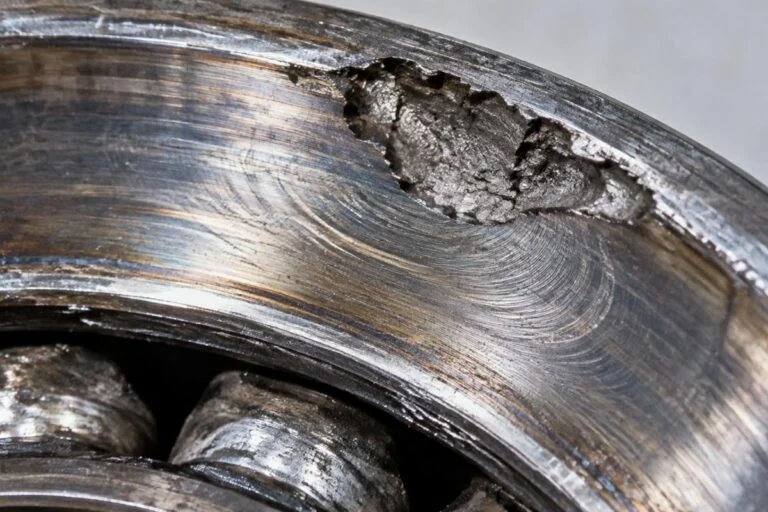
Selecting an incorrect precision class or mismatching the preload configuration does not merely reduce bearing life; it compromises the entire machining process. According to the failure mode classification per ISO 15243, improper mounting or incorrect internal clearance frequently results in smearing, false brinelling, or catastrophic raceway spalling. When a spindle fails mid-production, the hidden costs include scrapped high-value workpieces, emergency freight for replacement parts, and extensive machine recalibration hours.
Securing Genuine Spindle Components Through Rigorous Verification
Sourcing authentic high-precision bearings requires more than just a part number match. We maintain massive spot inventory covering thousands of standard and special part numbers, ensuring urgent maintenance requirements are met without delay. Every FAG B7032-E-T-P4s-UL angular contact ball bearing we supply comes with complete traceability documentation, preventing the risk of counterfeit components entering your spindle assembly. Our technical team provides cross-brand equivalent model consultation, ensuring that if an exact replacement is delayed, a verified alternative with matching preload and dimensional specs is identified. Furthermore, our flexible MOQ accommodates both single-unit emergency spare-part orders and full container consolidation shipments for large-scale production upgrades.
Documentation & Authenticity
- Certificate of Conformity verifying the P4s precision class and material origin.
- Original manufacturer batch traceability codes linked to production dates.
- Official app QR authentication tags applied to the packaging for instant shop-floor verification.
- Dimensional and running accuracy inspection reports confirming strict P4s tolerances before dispatch.
- Material certification detailing the high-purity bearing steel composition.
Storage, Handling & Mounting
- Keep the P4s precision bearing in its original vacuum-sealed packaging until mounting to prevent microscopic dust contamination.
- Store the components in a climate-controlled environment, avoiding temperature fluctuations that could alter the factory-applied corrosion inhibitor.
- Use clean, lint-free gloves when handling the 160mm bore to prevent moisture transfer from bare skin.
- Employ induction heating with precise temperature control for the outer ring if a tight housing fit is required, avoiding localized overheating.
- Verify the universal mounting alignment marks before pressing the inner ring to maintain the specified preload geometry.
Engineering Data Required for Precise Spindle Integration
To ensure the selected bearing perfectly matches your CNC spindle design, please share the specific radial and axial load profiles, maximum operating RPM, and expected thermal conditions. Providing the original equipment manufacturer's part number or housing dimensions allows our engineering team to perform a comprehensive cross-reference and L10 life calculation. If you are upgrading an existing spindle, detailing the current lubrication method and cooling system capacity will help us verify the optimal internal clearance and preload configuration.
Frequently Asked Questions
Q: What does the P4s precision class indicate compared to standard P4 tolerances?
A: The P4s designation signifies that the bearing meets the dimensional tolerances of the P4 class while adhering to even stricter running accuracy and runout limits. This enhanced precision is critical for high-speed CNC spindles, as it minimizes radial and axial displacement, ensuring superior surface finishes and extending tool life during continuous milling operations.
Q: Why is the 25° contact angle (E suffix) preferred for certain CNC spindle applications?
A: A 25° contact angle provides an optimal balance between radial load capacity and axial rigidity. While 15° bearings excel in ultra-high-speed, low-load scenarios, the 25° geometry better withstands the significant axial thrust forces generated during heavy cutting and milling, preventing tool deflection and maintaining tight machining tolerances.
Q: How can I verify the authenticity of the spindle bearings before installation?
A: Every genuine bearing we supply features a scannable QR code on the packaging that links directly to the manufacturer's official authentication app. Additionally, we provide comprehensive traceability documentation, including material certificates and dimensional inspection reports, allowing your quality control team to verify the origin and P4s compliance prior to mounting.
Q: What information is needed to cross-reference this bearing for an older machine tool?
A: To accurately cross-reference an existing spindle bearing, please provide the original equipment manufacturer's part number, the exact shaft and housing dimensions, and the current preload or arrangement configuration. This data allows our technical team to identify a precise equivalent that matches the original kinematic requirements without compromising spindle rigidity.