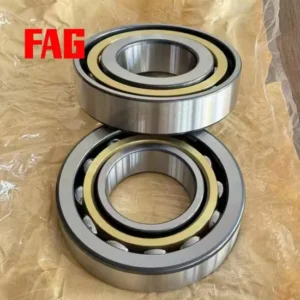
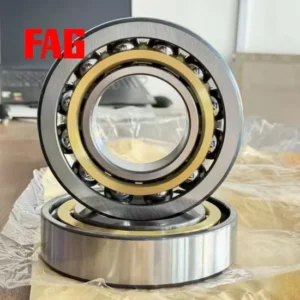
Product details
Description and application notes
Full-Spectrum Brand Sourcing — Consolidate mixed-brand precision spindle packages into a single shipment without juggling multiple regional distributors.
Technical Specifications
| Parameter | Value |
|---|---|
| Designation | FAG B71916-C-T-P4s-UL |
| Bearing Type | Angular Contact Ball Bearing |
| Precision Class | P4s |
| Contact Angle | 15° |
| Material | Steel |
| Arrangement | Single-Row Bearing |
| Series | B719 |
| Certification | ISO |
Note: Suffixes T and UL are flagged as unverified in preliminary data; UL typically indicates universal light preload, but exact cage and preload values require final catalog confirmation.
Application Suitability
| Industry | Typical Applications |
|---|---|
| Machine Tool Manufacturing | High-speed CNC milling spindle front and rear support |
| Precision Equipment | Optical grinding machine high-frequency grinding head |
| Industrial Pumps | High-speed centrifugal pump shaft radial and axial support |
| Robotics | Articulated joint precision rotary actuator |
Why Spindle Vibration Destroys Precision Before the Tool Does
Mismatched preload and ignored suffix pairing cause catastrophic thermal seizure at high RPMs.
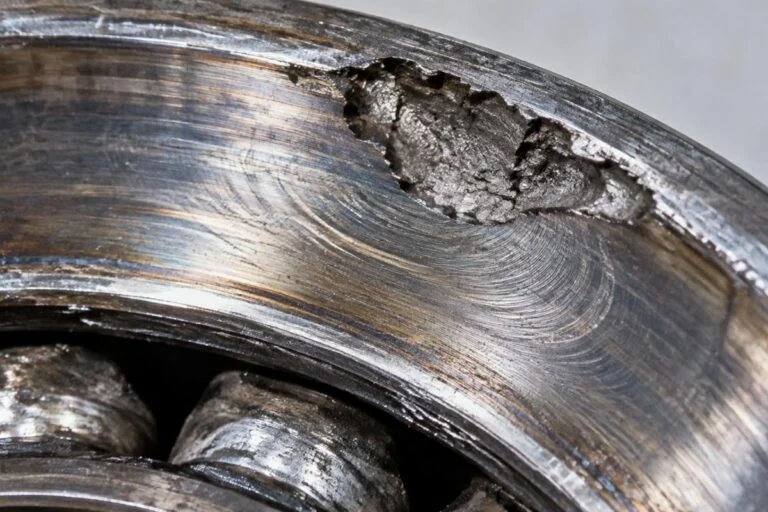
During a failure analysis in Dubai, a CNC facility replaced their original spindle bearings with standard off-the-shelf units, completely ignoring the specific pairing and precision suffixes. The result was excessive friction heat and complete spindle lock-up within weeks. When sourcing a FAG B71916-C-T-P4s-UL angular contact ball bearing, overlooking the exact P4s tolerance and universal pairing arrangement guarantees premature failure. Procurement engineers must prioritize exact suffix matching over generic part number substitutions to maintain dimensional stability.
Matching the 15° Contact Angle to High-Speed Cutting Dynamics
The 15° contact angle inherent in the C suffix generates significantly less friction heat compared to higher-angle variants, making it ideal for high-speed machine tool spindles. This specific FAG B71916-C-T-P4s-UL angular contact ball bearing configuration ensures rigid shaft support while minimizing thermal expansion during continuous milling operations. Our engineering team routinely cross-references these exact dimensional requirements to prevent axial play in precision grinding heads.
Managing Thermal Expansion and Lubrication Breakdown in Spindles
High-speed spindle environments subject bearings to intense combined loads and rapid temperature fluctuations that degrade standard lubricants. The P4s precision class ensures tighter running accuracy, which is critical when thermal expansion threatens to alter the internal clearance and cause contact between the rolling elements and cage. Proper oil-air or oil-mist lubrication is mandatory to manage friction heat, while the single-row arrangement demands strict adherence to mounting preload specifications to avoid axial shifting under reverse cutting forces.
Decoding the P4s Precision and Universal Pairing Arrangement
The P4s designation represents a specialized high-precision standard that offers tighter dimensional and running accuracy than conventional P5 or standard P4 grades, directly reducing spindle runout. The C suffix confirms the 15° contact angle, optimizing the load distribution for high-speed, light-to-moderate axial loads typical in CNC milling. Furthermore, the UL arrangement indicates a universal light preload, allowing the bearing to be mounted in any configuration while maintaining a consistent axial load that prevents ball skidding. While standard bearing steel is common, these precision configurations are also available in ceramic hybrid variants for enhanced speed capabilities.
The Hidden Financial Drain of Generic Precision Substitutions
Substituting a specified P4s spindle bearing with a lower-precision alternative inevitably leads to unplanned downtime and scrapped workpieces due to poor surface finish. According to failure analysis frameworks, incorrect preload or mismatched contact angles accelerate fatigue and cause catastrophic damage to the spindle housing. The resulting warranty voidance and emergency replacement costs far exceed the initial savings of sourcing unverified inventory.
Securing Traceable Precision for Mission-Critical Spindles
We eliminate the risk of counterfeit precision components by providing complete factory batch traceability for every FAG B71916-C-T-P4s-UL angular contact ball bearing shipped. Our inventory specifically targets the exact P4s and UL suffix combinations that are frequently mismatched by generalist suppliers. We offer flexible consolidation, allowing you to mix this specific spindle bearing with heavy-equipment spherical roller bearings in a single container. Additionally, our technical team provides cross-brand equivalent model consultation if lead times require an immediate, dimensionally identical alternative from another premium manufacturer.
Documentation & Authenticity
- Certificate of Conformity confirming P4s dimensional tolerances for this specific batch.
- Original factory batch traceability linking the bearing to its production date and facility.
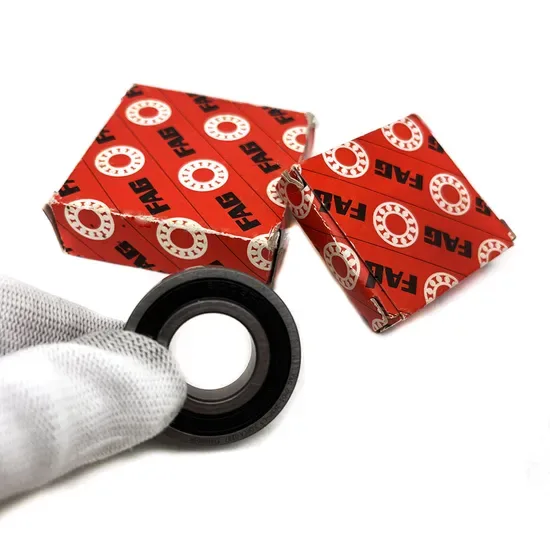
- Official manufacturer app QR code verification to authenticate the physical packaging.
- Material and dimensional inspection reports validating the 15° contact angle and steel grade.
- Origin and customs documentation ensuring compliant international shipping and import clearance.
Storage, Handling & Mounting Protocols
- Keep the universal pairing packaging sealed until mounting to preserve the factory-applied preload match marks on the outer rings.
- Store in a climate-controlled environment to prevent condensation from compromising the P4s precision raceway surfaces.
- Use clean, lint-free gloves during handling to avoid transferring corrosive skin oils to the bearing components, whether standard steel or ceramic hybrid variants.
- Follow strict induction heating protocols for the inner ring, avoiding localized overheating that alters the metallurgical hardness.
- Verify the mounting direction against the V-marks to ensure the intended back-to-back or face-to-face arrangement is achieved.
Engineering Review and Selection Support
To ensure optimal spindle performance, please provide your specific radial and axial load profiles, maximum operating RPM, and target operating temperature. Sharing the original OEM equipment manual or existing spindle assembly drawings allows our technical team to verify the L10 life calculation and confirm the correct universal preload arrangement. We will then cross-reference your requirements to guarantee the selected configuration matches your exact machining dynamics.
Frequently Asked Questions
Q: How do I verify the authenticity of this specific precision bearing?
A: You can authenticate the bearing by scanning the QR code on the packaging using the manufacturer's official mobile application. We also supply original factory batch traceability documents and a Certificate of Conformity that explicitly confirms the P4s precision class and material specifications for your exact shipment.
Q: What does the P4s precision class mean compared to standard P4 or P5?
A: The P4s class indicates a specialized high-precision standard designed specifically for machine tool spindles. It mandates tighter dimensional and running accuracy tolerances than standard P4 or P5 grades, ensuring minimal radial runout and vibration, which is critical for achieving superior surface finishes in high-speed CNC milling operations.
Q: How do I select the correct contact angle for my high-speed spindle?
A: A 15° contact angle, denoted by the C suffix, is generally preferred for high-speed spindles because it generates less friction heat and offers higher rigidity under radial loads. Higher angles like 25° provide greater axial load capacity but increase friction, making them better suited for heavy-duty cutting rather than high-speed finishing.
Q: What precautions are necessary when cross-referencing this bearing?
A: When cross-referencing to alternative brands, you must verify that the precision class, contact angle, and preload arrangement match exactly. Substituting a standard P4 bearing or mismatching the universal light preload can alter the internal clearance, leading to premature thermal failure and compromised spindle accuracy.
Q: What is the recommended lubrication approach for this spindle configuration?
A: High-speed spindle bearings with a 15° contact angle typically require oil-air or oil-mist lubrication to effectively manage friction heat without causing churning losses. Grease lubrication is generally limited to lower-speed applications, as the high centrifugal forces in spindle operations will rapidly degrade the grease and cause thermal seizure.