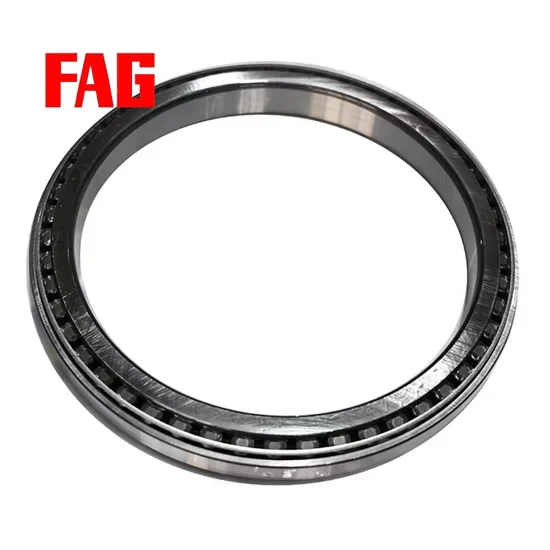



Product details
Description and application notes
Mixed-Brand Sourcing — Consolidating this spindle bearing with other drive-train components in a single shipment eliminates multi-vendor coordination delays.
Technical Specifications
| Parameter | Value |
|---|---|
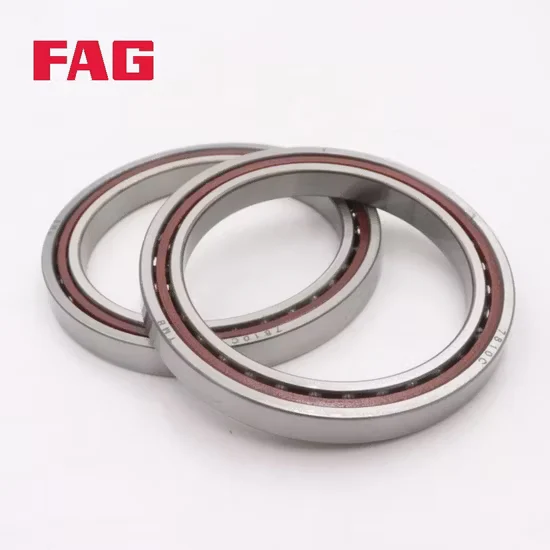
| Designation | FAG B71934-C-T-P4s-UL |
| Bearing Type | Angular Contact Ball Bearing |
| Precision Class | P4s (ISO) |
| Contact Angle | 15° |
| Material | Steel |
| Origin | Jiangsu China |
Application Suitability
| Industry | Typical Applications |
|---|---|
| Machine Tool Manufacturing | High-speed milling and grinding spindle assemblies |
| Precision Equipment | Rotary tables and indexing heads requiring tight runout limits |
Why Standard Tolerances Destroy High-Speed Spindles Before the FAG B71934-C-T-P4s-UL angular contact ball bearing Reaches Full RPM
Tight dimensional control prevents catastrophic cage failure during thermal expansion.
Early in my failure analysis career, I watched standard precision bearings disintegrate inside motorized spindles simply because thermal growth at high RPM eliminated internal clearance. When procurement teams substitute lower-grade alternatives to save costs, the resulting vibration destroys the spindle housing and ruins expensive cutting tools. Sourcing the exact FAG B71934-C-T-P4s-UL angular contact ball bearing ensures the dimensional stability required to survive continuous high-velocity rotation without burning up the lubricant. The strict geometric tolerances prevent the microscopic skidding that generates excessive friction heat, which is the primary culprit behind premature cage fragmentation in high-speed machining centers.
Matching Precision Requirements to Spindle Dynamics
High-frequency milling demands extreme rotational accuracy to achieve mirror-finish surface tolerances on machined aerospace components. The FAG B71934-C-T-P4s-UL angular contact ball bearing delivers the exact running accuracy needed for these demanding operations, ensuring the cutting tool remains perfectly centered. Our engineering team frequently cross-references OEM spindle blueprints to verify that the selected precision class aligns perfectly with the machine builder's original runout specifications. By validating these critical parameters before shipment, we help maintenance engineers avoid the costly trial-and-error shimming process that often delays machine tool rebuilds and compromises final part quality.
Navigating Thermal and Centrifugal Loads in Motorized Spindles
Spindle environments generate intense localized heat and massive centrifugal forces that push rolling elements outward against the outer raceway. A 15° contact angle optimizes the load distribution to handle these combined radial and axial thrusts while minimizing friction heat generation at the contact ellipse. Proper oil-air lubrication is absolutely critical here, as traditional grease would quickly degrade, channel away, and cause starvation. Furthermore, the bearing must accommodate the thermal expansion of the steel shaft without inducing excessive preload that could seize the assembly. Selecting the correct internal geometry ensures the rolling elements maintain pure rolling motion even when the spindle reaches its maximum operational velocity.
Decoding the Suffix Architecture for Spindle Reliability
The C suffix confirms the 15° contact angle, which is the industry standard for prioritizing high-speed capability over heavy axial load capacity in milling applications. While the P4s precision class guarantees the tight bore and outside diameter tolerances necessary for proper shaft and housing fits, the UL designation indicates a light preload for matched pairs. This specific preload prevents ball skidding during rapid acceleration but requires careful attention during mounting to maintain the factory-calibrated axial load. The T suffix remains unverified in standard public catalogs and requires manufacturer catalog confirmation to clarify the exact cage material or internal design variation. Understanding these specific suffix combinations is vital, as installing a heavy preload variant by mistake would generate uncontrollable heat and destroy the spindle within hours.
The Financial Impact of Ignoring Preload and Precision Specs
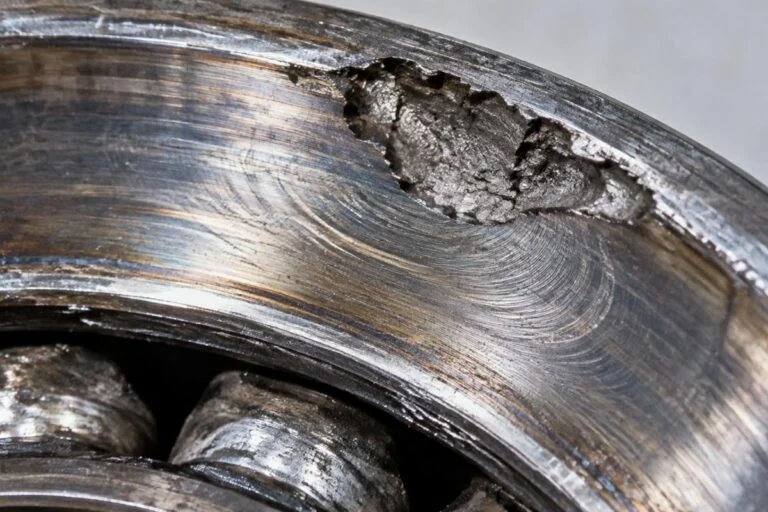
Installing a standard clearance bearing in a preloaded spindle arrangement leads to immediate ball skidding and smearing on the raceways. According to ISO 15243 failure classification frameworks, this surface damage rapidly progresses to spalling and catastrophic seizure. The resulting unplanned downtime and the cost of replacing a ruined spindle shaft far exceed the initial savings of purchasing an incorrect, lower-specification replacement. Maintenance teams often misdiagnose these failures as lubrication issues, replacing the oil system while the root cause remains an improperly specified bearing clearance that allowed destructive micro-movements under cutting loads.
Securing Authentic Spindle Components Through Verified Channels
Counterfeit precision bearings often fail basic dimensional checks, causing immediate vibration issues upon startup and ruining the surface finish of machined parts. We source the FAG B71934-C-T-P4s-UL angular contact ball bearing directly from authorized distribution networks, providing complete batch traceability for every unit shipped. Our technical team actively verifies the UL preload matching marks before dispatch, ensuring the paired sets arrive exactly as calibrated at the factory. This prevents the costly trial-and-error shimming that plagues maintenance teams dealing with mismatched inventory. Furthermore, our flexible consolidation services allow you to mix this high-precision spindle component with standard conveyor bearings in a single shipment, significantly reducing international freight costs and administrative overhead.
Documentation & Authenticity
- Original factory batch traceability documents linking the specific P4s tolerance report to your shipment.
- Official app QR code authentication verifying the genuine FAG origin of the spindle bearing set.
- Running accuracy inspection confirming the strict P4s dimensional limits before international dispatch.
- Material certification validating the high-purity steel used for the inner and outer rings.
Storage, Handling & Mounting
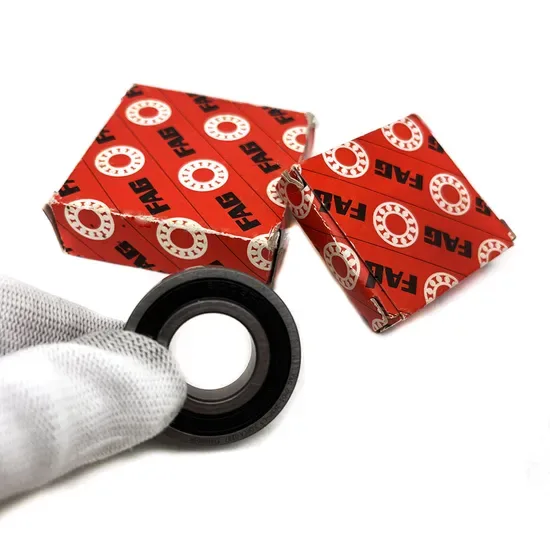
- Keep the UL matched set sealed in its original wrapping until the exact moment of spindle assembly to preserve factory preload marks.
- Use induction heating for the inner ring installation, strictly avoiding open flames that could alter the P4s precision heat treatment.
- Wear lint-free cleanroom gloves when handling the 15° contact angle raceways to prevent microscopic corrosion from skin acids.
- Store the steel components in a climate-controlled environment to prevent thermal distortion of the tight tolerance rings.
Engineering Review for Spindle Integration
To ensure optimal L10 life calculation and verify the suitability of the light preload for your specific application, please share the spindle's maximum operating RPM, radial and axial cutting loads, and the chosen oil-air lubrication parameters. Providing the original machine tool builder's part number allows our technical staff to perform a comprehensive cross-reference check against equivalent precision grades. This operational data enables us to confirm the exact matching configuration required for your multi-bearing spindle arrangement, ensuring the replacement set integrates flawlessly with your existing housing tolerances and shaft geometries without requiring extensive mechanical modifications.
Frequently Asked Questions
Q: What does the UL suffix mean for this spindle bearing arrangement?
A: The UL suffix designates a light preload specifically calibrated for universal mounting arrangements. This allows the bearings to be installed in back-to-back or face-to-face configurations while maintaining a precise, factory-set axial load. This light preload minimizes friction heat generation, making it ideal for the high rotational speeds typical of modern milling spindles.
Q: How does the 15° contact angle affect spindle performance?
A: A 15° contact angle, indicated by the C suffix, provides an optimal balance for high-speed applications. It offers sufficient axial rigidity to handle thrust loads from cutting tools while keeping the friction and centrifugal forces on the rolling elements lower than steeper angles. This configuration is essential for maintaining tight runout limits at elevated RPMs.
Q: Can I mix this P4s precision bearing with standard P4 grades in the same spindle?
A: Mixing precision classes within the same spindle stack is highly discouraged. The dimensional and running accuracy variations between P4s and standard P4 grades will cause uneven load distribution across the bearing set. This imbalance leads to premature failure of the most heavily loaded bearing and compromises the overall machining accuracy of the tool.
Q: Why is the T suffix marked as unverified in some catalogs?
A: The T suffix occasionally appears in specialized or legacy spindle bearing designations where it may denote a specific cage material, such as a phenolic resin or a particular internal geometry optimization. Because nomenclature can vary across different production eras, we always cross-reference the exact T suffix meaning with the manufacturer's current technical documentation before finalizing the procurement.