

Product details
Description and application notes
Authenticity via QR scanning — Every FAG B7203-C-T-P4s-UL angular contact ball bearing we dispatch includes verifiable factory QR codes for instant official app validation.
Technical Specifications
| Parameter | Value |
|---|---|
| Designation | FAG B7203-C-T-P4s-UL |
| Bearing Type | Angular Contact Ball Spindle Bearing |
| Bore Diameter (d) | 17 mm |
| Outside Diameter (D) | 40 mm |
| Width (B) | 12 mm |
| Precision Class | P4s |
| Contact Angle | 15° |
| Material | Steel |
| Certification | ISO |
Note: Suffixes 'T' and 'UL' require manufacturer catalog confirmation for specific cage design and universal preload pairing details.
Application Suitability
| Industry | Typical Applications |
|---|---|
| Machine Tool Manufacturing | High-speed motorized spindles and precision grinding heads |
| Precision Equipment | Robotics joint actuators and optical measuring instruments |
| Industrial Pumps | High-speed centrifugal pump shafts and fluid dynamics rotors |
Why Spindle Vibration Spikes Trace Back to Suffix Misreads on the FAG B7203-C-T-P4s-UL angular contact ball bearing
A single mismatched preload suffix turns a precision component into a heat-generating liability.
Early in my career sourcing parts at the Hanover trade fair, I procured a batch of spindle bearings with incorrect suffixes. The resulting vibration exceeded limits upon installation, leading to immediate scrapping of the entire spindle assembly. Transitioning to sales, I became uncompromising about suffix accuracy. For spindle applications, matching the base model is insufficient; a slight deviation in universal pairing or P4s precision tolerances causes the spindle to overheat and seize within hours. The internal geometry is engineered to operate within microscopic thresholds. When procurement teams ignore critical pairing arrangements, the resulting axial play destroys the raceway surfaces. This oversight transforms a precision component into a catastrophic failure point, generating excessive friction heat that degrades the lubricant.
Matching P4s Tolerances to Demanding Machining Environments
Maintaining tight dimensional accuracy is critical when operating at elevated rotational speeds in modern CNC machining centers. The FAG B7203-C-T-P4s-UL angular contact ball bearing provides the necessary running accuracy to prevent chatter marks on machined surfaces, ensuring the final product meets stringent tolerances. Our engineering team frequently assists clients in cross-referencing this specific configuration against alternative brands, ensuring the dimensional envelope aligns perfectly with existing spindle housings. When a facility upgrades its machining capabilities, the existing bearings often become the limiting factor for surface finish quality. By supplying components that strictly adhere to ultra-high precision standards, we eliminate the micro-vibrations that plague high-speed milling operations. This technical alignment ensures the spindle maintains rotational stability even under aggressive cutting forces.
Managing Thermal Growth and Radial Loads in High-RPM Setups
Spindle assemblies generate significant friction heat during continuous operation, which directly impacts internal clearance and lubricant film thickness. A 15° contact angle minimizes friction compared to steeper variants, yet the steel construction still requires careful thermal management to avoid preload escalation. Inadequate lubrication or improper mounting forces can trigger surface distress and accelerate fatigue mechanisms. Proper oil-air or grease lubrication intervals must be established to dissipate heat effectively. As the spindle housing expands at a different rate than the inner ring, the internal preload shifts dynamically. If the initial configuration does not account for this thermal growth, the bearing will either run too loose, causing vibration, or too tight, leading to rapid thermal runaway. Understanding these thermodynamic interactions is essential for specifying the correct initial preload.
Decoding the 15° Contact Angle and Precision Class
The 'C' suffix designates a 15° contact angle, an optimal geometry for balancing axial rigidity with high-speed rotational capability. This configuration reduces centrifugal forces on the rolling elements, allowing the spindle to reach higher RPM thresholds without generating excessive heat. The P4s precision class guarantees exceptionally tight tolerances for bore, outside diameter, and running accuracy, which is mandatory for eliminating micro-vibrations in precision grinding operations. The steel material ensures reliable load capacity under continuous radial and axial stresses, providing the necessary rigidity to withstand cutting forces. Furthermore, the ultra-high precision grinding of the raceways ensures that the load is distributed evenly across all rolling elements, preventing localized stress concentrations. This strict attention to geometric perfection allows the spindle to maintain its concentricity, resulting in superior surface finishes and extended tool life.
The Cascading Impact of Incorrect Preload Selection
Selecting an inappropriate pairing or preload arrangement leads to catastrophic damage within the spindle assembly, often requiring complete rebuilds. Excessive preload generates rapid temperature spikes, degrading the lubricant and causing premature raceway spalling that contaminates the oil system. Conversely, insufficient preload allows axial play, ruining the surface finish of machined parts and accelerating fatigue. Such failures frequently void equipment warranties and result in extensive unplanned downtime, halting production lines. The financial impact extends far beyond the replacement component cost, encompassing lost production hours and scrapped workpieces. By prioritizing precise suffix verification during the procurement phase, maintenance teams can avoid these cascading failures and ensure continuous machine tool availability.
Securing Traceable Spindle Components Without Official Channel Delays
Sourcing high-precision components often involves inflated costs and lengthy lead times through direct official channels, disrupting maintenance schedules. We maintain massive spot inventory covering thousands of part numbers, enabling rapid fulfillment for urgent requirements and minimizing downtime. When dealing with complex configurations like this model, our technical selection support ensures the exact preload and precision class are verified before shipment. We provide complete traceability documentation, guaranteeing genuine original products without the administrative friction of traditional procurement routes. Our flexible ordering quantities allow facilities to purchase single emergency spares or consolidate full shipments, optimizing inventory costs. By combining competitive sourcing costs with rigorous quality assurance, we deliver a reliable supply chain solution that keeps critical manufacturing assets running efficiently.
Documentation & Authenticity
- Official app QR codes verifying the P4s precision grade and factory origin.
- Dimensional inspection reports confirming tight P4s tolerances for bore and outside diameter.
- Batch traceability certificates linking the steel material to specific heat treatment records.
- Running accuracy test sheets validating the 15° contact angle alignment prior to dispatch.
Storage, Handling & Mounting
- Keep the matched set sealed until mounting; opening early risks losing the factory preload pairing marks on this universal arrangement.
- Store in a climate-controlled environment to prevent condensation from compromising the P4s precision raceway surfaces.
- Use clean lint-free gloves during handling to avoid transferring skin oils onto the high-speed steel rolling elements.
- Employ induction heating for the spindle housing rather than the bearing to preserve the 15° contact angle geometry.
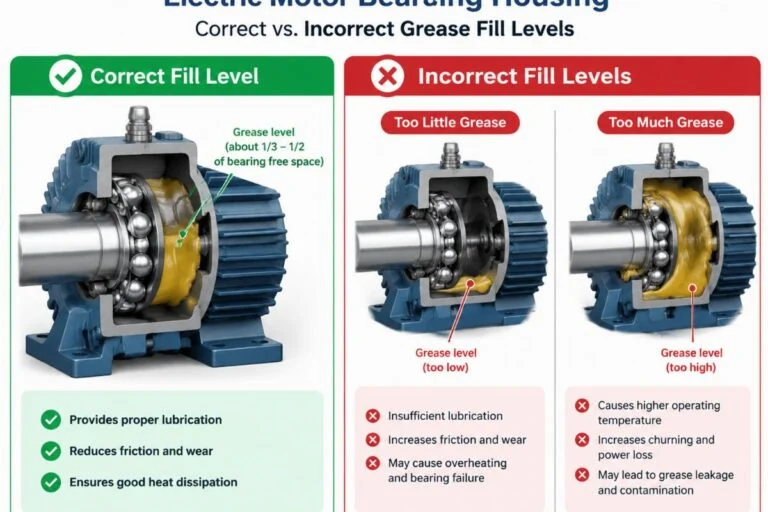
- Apply the specified high-speed spindle grease evenly to ensure adequate lubrication across the 12 mm width.
Preparing Your Technical Parameters for Model Verification
To ensure optimal performance, please share your specific radial and axial load profiles, operating speeds, and thermal conditions encountered during typical machining cycles. Providing the original equipment manufacturer part number allows our engineering team to perform a precise cross-reference check and identify any historical design updates. This technical review guarantees the selected configuration matches your spindle housing dimensions perfectly, preventing installation delays. Additionally, detailing environmental conditions, such as exposure to coolant mist, helps us recommend the most appropriate sealing solutions to protect the precision raceways from contamination.
Frequently Asked Questions
Q: How do we verify the authenticity of these spindle bearings upon delivery?
A: Every unit features a unique QR code printed on the packaging. By scanning this code with the manufacturer's official mobile application, procurement teams can instantly validate the origin, confirm the P4s precision class, and access the original factory batch data, ensuring complete protection against counterfeit components entering the supply chain.
Q: What does the P4s precision class signify for machine tool applications?
A: This designation indicates ultra-high precision, exceeding standard P4 or ABEC 7 tolerances. It guarantees exceptionally tight limits on dimensional accuracy and running precision, which are critical for minimizing vibration and achieving superior surface finishes in high-speed motorized spindles and precision grinding equipment.
Q: How should we interpret the unverified suffixes when cross-referencing equivalents?
A: When mapping this model to alternative brands, the base dimensions and 15° contact angle remain constant, but specific cage designs and universal preload arrangements vary. Our technical team consults comprehensive cross-reference databases to match the exact preload and precision requirements, ensuring functional equivalence without compromising spindle rigidity.
Q: What are the recommended lubrication practices for high-speed operations?
A: High-speed spindle applications demand specialized lubricants with low friction characteristics. Depending on the setup, either a precise oil-air mist system or high-speed synthetic spindle grease is applied. Establishing correct re-lubrication intervals prevents thermal degradation and maintains the necessary film thickness across the rolling contacts.
Q: How do we select the correct pairing for our specific spindle housing?
A: Pairing selection depends on the required axial rigidity and the housing's thermal expansion characteristics. By providing your operational speed, load data, and mounting arrangement details, our engineers calculate the optimal preload configuration to prevent internal clearance loss during high-temperature operation, ensuring stable rotational accuracy.