
Product details
Description and application notes
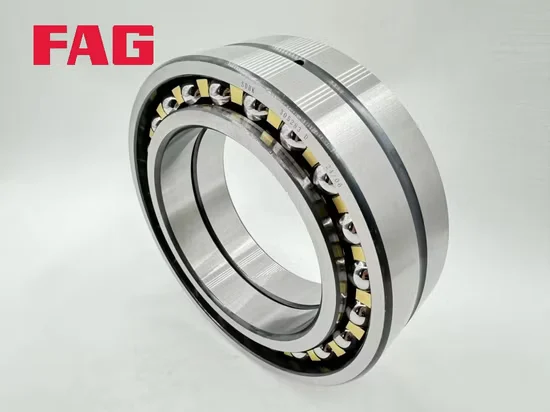
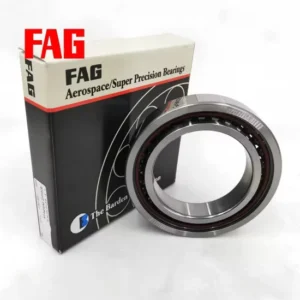
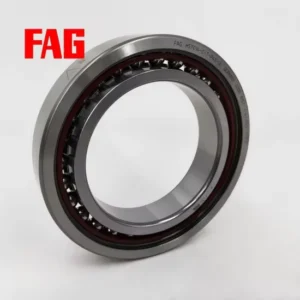
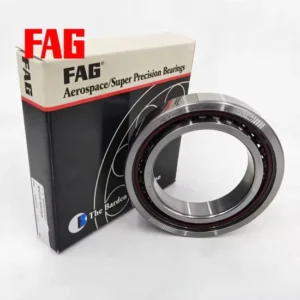
Original Batch Traceability — Every FAG HS7009-E-T-P4s-UL angular contact ball bearing ships with verifiable manufacturer lot documentation to guarantee authenticity.
Technical Specifications
| Parameter | Value |
|---|---|
| Designation | FAG HS7009-E-T-P4s-UL |
| Bearing Type | Angular Contact Ball Bearing |
| Precision Class | P4s |
| Contact Angle | 25° |
| Material | Steel |
| Arrangement | Single-Row Bearing |
| Certification | ISO |
Application Suitability
| Industry | Typical Applications |
|---|---|
| Machine Tool Manufacturing | High-speed spindle assemblies requiring strict rotational accuracy |
| Precision Engineering | Robotics joint actuators demanding low runout |
| Fluid Machinery | High-speed pump shafts handling combined axial and radial loads |
Why Spindle Bearings Fail When Suffix Details Are Ignored
Precision loss often starts with a mismatched preload or clearance code, not the basic bearing size.
When sourcing a FAG HS7009-E-T-P4s-UL angular contact ball bearing, overlooking the specific suffix configuration can lead to catastrophic thermal expansion during high-speed operation. I once saw a perfectly good spindle seize simply because a standard clearance variant was installed where a universally preloaded pair was specified. The resulting unplanned downtime cost far more than the component itself. Procurement engineers must verify every alphanumeric character to ensure the internal geometry matches the machine's thermal and dynamic profile, preventing costly secondary damage to the spindle housing.
Matching the 25-Degree Contact Angle to Spindle Cutting Forces
The 25° contact angle designated by the E suffix optimizes the FAG HS7009-E-T-P4s-UL angular contact ball bearing for the combined axial and radial loads typical in milling and grinding spindles. This specific geometry provides the necessary axial rigidity to resist cutting forces while maintaining the high-speed rotational capability required for fine surface finishes. Our sourcing network ensures these exact geometric specifications are met without compromising lead times.
Thermal Management and Lubrication in High-Speed Spindles
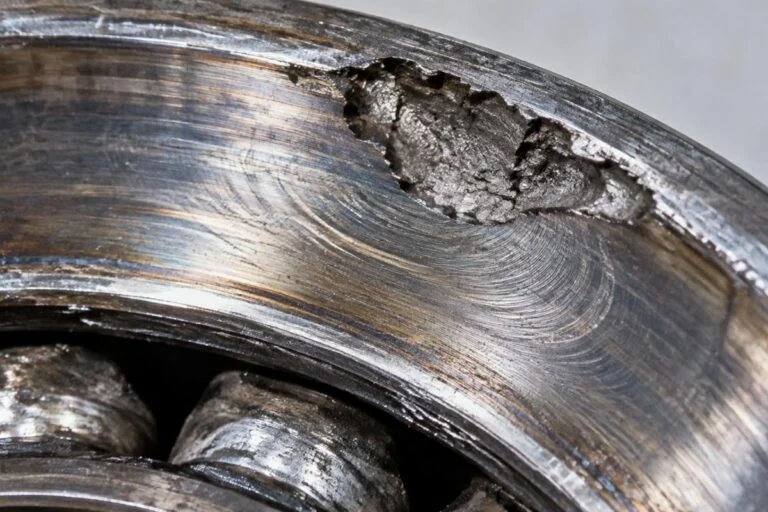
Spindle environments generate significant friction heat, which directly impacts internal clearance and lubricant film thickness. If the preload is too high or the lubrication interval is miscalculated, the resulting temperature spike can degrade the grease and cause raceway scoring. Proper oil-air or oil-jet lubrication systems are critical to flush away heat and maintain the P4s running accuracy under continuous operation. Selecting the correct cage design and ensuring clean lubricant delivery prevents premature fatigue and maintains the required surface finish on the machined parts.
Decoding P4s Precision and Single-Row Architecture
The P4s precision class indicates extremely tight tolerances for both dimensional accuracy and running precision, which is mandatory for minimizing vibration in high-RPM spindles. As a single-row bearing, this unit is typically mounted in pairs or sets to accommodate bidirectional axial loads and establish the required system rigidity. Available in high-purity bearing steel or hybrid ceramic configurations, the material choice provides the necessary structural integrity and fatigue resistance for continuous industrial machining cycles.
The Financial Impact of Incorrect Preload Selection
Installing a bearing with the wrong preload class leads to either excessive sliding friction or inadequate shaft stiffness. According to failure mode classifications, incorrect internal clearance is a primary driver of premature smearing and cage failure. This not only destroys the bearing but can also damage the expensive spindle housing and ruin the workpiece, resulting in severe warranty voidance and scrapped production batches.
Securing Exact Suffix Configurations Through Verified Channels
Sourcing the exact FAG HS7009-E-T-P4s-UL angular contact ball bearing requires strict attention to the UL and T suffixes, which dictate specific preload and clearance states that generic suppliers often confuse. We cross-reference every order against the manufacturer's technical catalogs to ensure the delivered units match your spindle's exact OEM requirements. Our inventory consolidation allows you to mix different precision grades and sizes in a single shipment, reducing freight costs while maintaining complete batch traceability for your quality audits.
Documentation & Authenticity
- Certificate of Conformity verifying P4s tolerance grades for this specific production batch.
- Original manufacturer lot traceability documents linking the bearing to its final assembly inspection.
- Dimensional and running accuracy inspection reports confirming the 25° contact angle geometry.
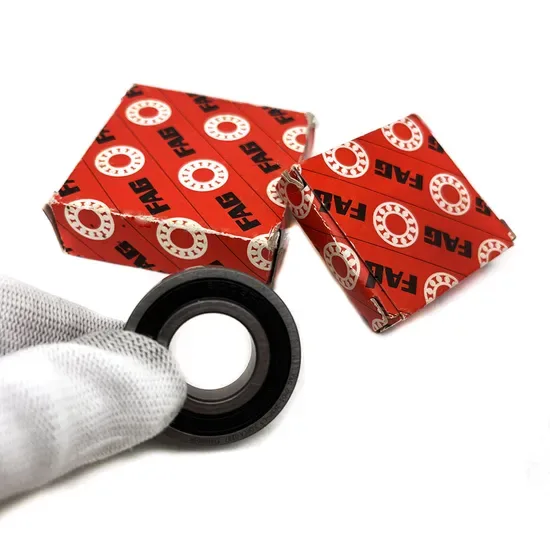
- Official manufacturer app QR verification to guarantee the product is not a counterfeit replacement.
Storage, Handling & Mounting
- Keep the single-row bearing in its original VCI packaging until mounting to prevent corrosion on the precision-ground steel raceways.
- Handle the P4s precision components with lint-free gloves to avoid transferring skin moisture to the ultra-smooth surfaces.
- Verify the matching marks before mounting paired sets to ensure the factory-established preload alignment is strictly maintained.
- Use induction heaters with precise temperature control when mounting the inner ring to avoid thermal shock to the steel structure.
Technical Data Required for Spindle Bearing Verification
To ensure the selected configuration perfectly matches your spindle design, please provide the exact OEM part number or the specific axial and radial load profiles along with the maximum operating RPM. Sharing the required system rigidity and the intended lubrication method allows our engineering team to verify the preload class and confirm the L10 life calculation before finalizing the order.
Frequently Asked Questions
Q: What does the E suffix indicate on this angular contact ball bearing?
A: The E suffix specifies a 25-degree contact angle, which is engineered to handle significant axial loads while maintaining high-speed rotational capabilities. This geometry is standard for machine tool spindles where cutting forces generate substantial thrust, ensuring the shaft remains rigid and accurately positioned during heavy milling or grinding operations.
Q: How do I verify the authenticity of the P4s precision class?
A: Authenticity is verified by scanning the QR code on the packaging using the manufacturer's official application and cross-referencing the batch number with the supplied Certificate of Conformity. We also provide dimensional inspection reports that confirm the tight running accuracy and bore tolerances required for the P4s classification before the items leave our facility.
Q: Why are unverified suffixes like HS, T, and UL critical to check?
A: These specific suffixes define the exact internal clearance, preload state, and arrangement configuration required for your spindle. Since they are highly specialized, we manually verify them against the official manufacturer catalog for every order to ensure you receive the precise preload pairing needed to prevent thermal seizure or excessive vibration during high-speed operation.
Q: Can this single-row bearing be used alone in a spindle application?
A: Single-row angular contact ball bearings are rarely used alone in spindles because they only accommodate axial loads in one direction. They are typically mounted in pairs or multiplex arrangements, such as back-to-back or face-to-face, to manage bidirectional thrust and establish the necessary system rigidity for precision machining.