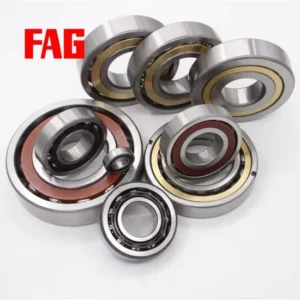
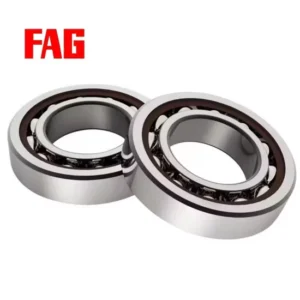
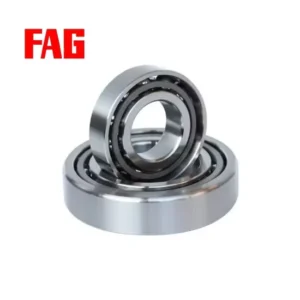
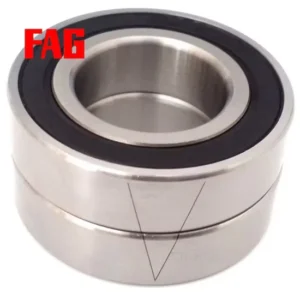
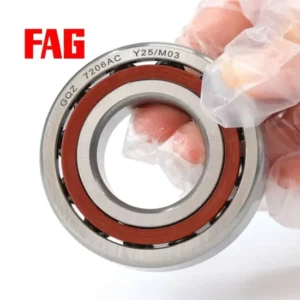
Product details
Description and application notes
Original Batch Traceability — Every unit ships with factory-issued batch certificates ensuring complete material and dimensional lineage for your spindle assembly.
Technical Specifications
| Parameter | Value |
|---|---|
| Designation | FAG HS7019-E-T-P4s-UL |
| Bearing Type | Angular Contact Ball Bearing |
| Precision Class | P4s |
| Contact Angle | 25° |
| Material | Steel or hybrid ceramic variants |
| Arrangement | Single-Row Bearing |
| Origin | Jiangsu China |
Application Suitability
| Industry | Typical Applications |
|---|---|
| Machine Tool Manufacturing | CNC milling machine main spindles |
| Precision Engineering | High-speed grinding wheelheads |
| Robotics | High-precision rotary actuators |
Why Spindle Thermal Growth Ruins Tolerances in FAG HS7019-E-T-P4s-UL Angular Contact Ball Bearing Assemblies
Thermal expansion from internal friction silently destroys micron-level machining accuracy.
Early in my sourcing career, I specified a spindle bearing for a Dubai client but overlooked the preload suffix, resulting in catastrophic thermal seizure during high-speed operation. When replacing critical spindle components, ignoring the exact thermal displacement characteristics leads to unplanned downtime and scrapped parts.
Matching Ultra-Precision Tolerances to High-Speed Cutting Dynamics
Selecting the right FAG HS7019-E-T-P4s-UL angular contact ball bearing requires aligning its specific precision class with the dynamic loads of your CNC spindle. Our engineering team cross-references your machine's operational parameters to ensure the selected configuration handles both radial cutting forces and axial thrust without compromising surface finish quality.
Managing Centrifugal Loads and Lubrication Starvation
High-speed spindle environments subject rolling elements to extreme centrifugal forces that push them against the outer ring raceway. This dynamic alters the internal contact angle and generates significant heat, demanding an oil-air or oil-mist lubrication strategy to prevent starvation. Furthermore, any contamination from coolant or metallic swarf will rapidly degrade the raceway surface, making effective sealing or cleanroom assembly protocols mandatory for prolonged service life.
Decoding the P4s Precision and 25° Contact Angle Architecture
The P4s precision class dictates exceptionally tight dimensional and running accuracy tolerances, which are mandatory for minimizing vibration at elevated rotational speeds. A 25° contact angle provides an optimal balance, offering substantial axial rigidity to resist tool deflection while maintaining adequate radial load capacity. The single-row arrangement allows maintenance teams to pair these units in back-to-back or face-to-face configurations, adjusting the internal clearance to match the specific thermal expansion profile of the spindle housing.
The Compounding Financial Impact of Incorrect Preload Selection
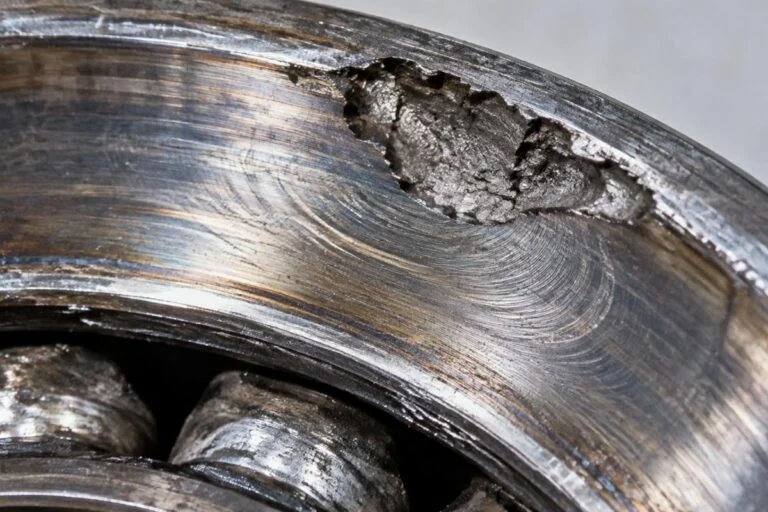
Specifying an incorrect preload or mismatching the precision grade leads to accelerated fatigue and premature raceway spalling. According to failure analysis frameworks, improper internal clearance accounts for a significant share of premature spindle failures, ultimately resulting in catastrophic damage to the tooling and costly warranty voidance. The financial burden extends far beyond the replacement part itself, encompassing lost production hours and scrapped workpieces.
Securing Verified Spindle Components Through Rigorous Sourcing
Procuring ultra-precision components requires more than just finding a part number; it demands verifying the exact suffix configuration to prevent thermal seizure. We maintain massive spot inventory covering thousands of standard and special part numbers, allowing us to fulfill urgent maintenance requirements without the typical multi-week lead times of direct channels. Our technical selection support ensures that the specific contact angle and precision class align perfectly with your OEM specifications, backed by competitive sourcing costs compared to official brand channels.
Documentation & Authenticity
- Certificate of Conformity verifying P4s tolerance grades for each individual unit.
- Original factory batch traceability documents linking the bearing to its specific production run.
- Schaeffler official app QR verification confirming the authenticity of the packaging and product.
- Dimensional and running accuracy inspection reports validating the 25° contact angle geometry.
- Material certification confirming the metallurgical properties of the selected ring and rolling element materials.
Storage, Handling & Mounting
- Keep the single-row bearing in its original vacuum-sealed packaging until the exact moment of mounting to prevent microscopic corrosion.
- Use lint-free cleanroom gloves when handling the P4s precision raceways to avoid transferring skin oils that cause localized etching.
- Maintain a climate-controlled storage environment to prevent thermal shock that could alter the tightly controlled internal clearance.
- Apply the specified spindle oil immediately after unsealing to protect the open bearing surfaces from ambient humidity.
- Ensure the mounting shaft and housing shoulders are machined to P4s concentricity standards to avoid inducing artificial preload.
Preparing Your Technical Parameters for Selection Review
To ensure optimal spindle performance, please share your specific radial and axial load profiles, maximum operating speeds, and expected thermal gradients. Providing the original equipment manufacturer part number or detailed housing dimensions allows our engineering team to perform a thorough L10 life calculation and cross-reference validation. This technical review guarantees that the selected configuration perfectly matches your machine's unique dynamic requirements.
Frequently Asked Questions
Q: How does P4s precision differ from standard P4 in spindle applications?
A: P4s precision enforces stricter running accuracy and dimensional tolerances than standard P4, which is critical for minimizing vibration and heat generation in high-speed CNC spindles. This tighter control ensures the FAG HS7019-E-T-P4s-UL angular contact ball bearing maintains micron-level stability under heavy cutting loads, directly improving the surface finish of machined parts.
Q: What do the unverified HS, T, and UL suffixes indicate?
A: While E denotes a 25° contact angle and P4s defines the precision class, the HS, T, and UL suffixes require direct manufacturer catalog confirmation. These designations typically relate to specific cage materials, hybrid ceramic ball configurations, or specialized preload arrangements, making it essential to verify them against your exact OEM spindle requirements.
Q: How should single-row spindle bearings be paired for optimal rigidity?
A: Single-row bearings are typically mounted in back-to-back or face-to-face pairs to manage combined loads and control axial displacement. The correct pairing and preload selection depend on the spindle's thermal expansion characteristics and cutting forces, ensuring the FAG HS7019-E-T-P4s-UL angular contact ball bearing set maintains rigid contact without generating excessive internal friction.
Q: What information is needed to verify official distributor status?
A: Buyers should request verifiable authorization certificates directly from the brand and cross-check the supplier's status via the manufacturer's official portal. Additionally, demanding original batch traceability documents and utilizing the official app to scan packaging QR codes provides concrete proof of authenticity, protecting your facility from counterfeit or parallel-imported spindle components.