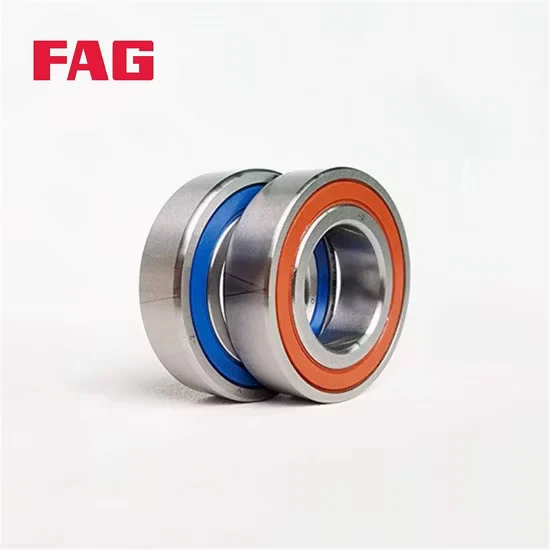

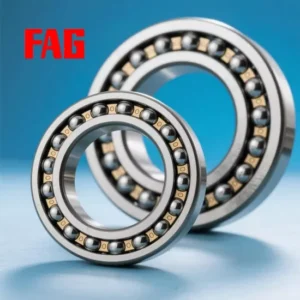

Product details
Description and application notes
Verified via QR scan — Every FAG HS71911-C-T-P4s-UL we dispatch carries an authentic manufacturer QR code for instant app validation, ensuring absolute traceability for your critical spindle assemblies.
Technical Specifications
| Parameter | Value |
|---|---|
| Designation | HS71911-C-T-P4s-UL FAG |
| Bearing Type | Angular Contact Ball Bearing |
| Number of Rows | Single-Row |
| Precision Class | P4s |
| Contact Angle | 15° |
| Material | Steel |
| Origin | Jiangsu China |
Application Suitability
| Industry | Typical Applications |
|---|---|
| Metalworking | CNC Machine Spindle |
| Precision Manufacturing | Machine tool spindles |
| Fluid Handling | High-speed pumps |
| Automation | Robotics |
| Equipment Manufacturing | Precision equipment |
When Spindle Vibration Traces Back to a Single Suffix on the FAG HS71911-C-T-P4s-UL angular contact ball bearing
Preload mismatches destroy machining accuracy long before the bearing steel actually fatigues.
Sourcing authentic, high-precision spindle bearings with verifiable traceability is critical to preventing costly CNC downtime and ensuring machining accuracy. Over my years sourcing components for European machine tool builders, I have seen entire multi-axis machining centers scrapped because a procurement team focused solely on the base model number while completely ignoring the preload suffix. This oversight led to severe spindle vibration immediately after assembly. Selecting the correct configuration requires matching the exact suffix string to the spindle's operational demands, as even a slight deviation in internal clearance will cause catastrophic thermal runaway at high RPMs.
Aligning P4s Tolerances with High-Speed CNC Demands
The FAG HS71911-C-T-P4s-UL angular contact ball bearing delivers the tight dimensional and running accuracy required for high-speed spindle operations. Our engineering team cross-checks the physical markings against official authentication apps to ensure the precision class genuinely meets the stringent P4s standard. This rigorous verification prevents the installation of downgraded components that would otherwise compromise surface finish quality. The single-row design is specifically designed for high-rigidity configurations, allowing machine tool builders to arrange multiple bearings in tandem or back-to-back setups to handle complex cutting forces without deflection.
Managing Thermal Growth and Radial Loads in Spindles
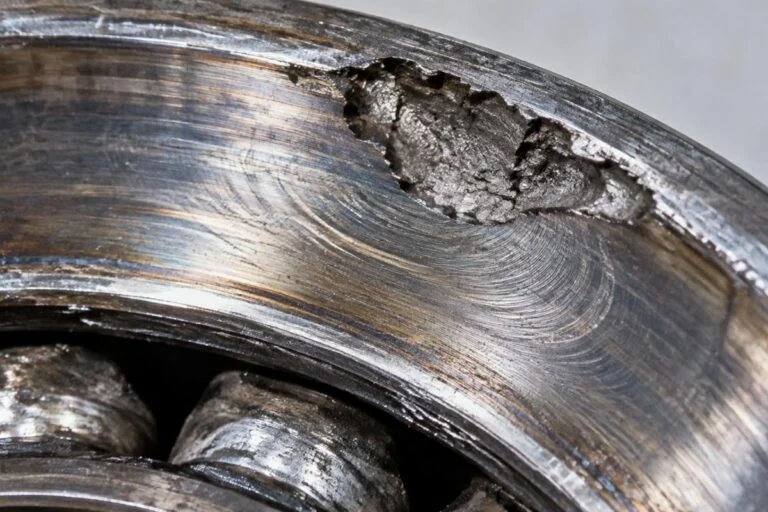
CNC spindles generate significant heat during continuous milling cycles, making the 15° contact angle crucial for balancing radial stiffness with axial thrust capacity. At elevated rotational speeds, thermal expansion alters the internal clearance, demanding precise preload management to avoid excessive friction or a complete loss of rigidity. Proper oil-air lubrication intervals and pristine filtration systems are mandatory to prevent microscopic contamination from degrading the raceways. Without adequate thermal management and clean lubrication, the precision ground surfaces will rapidly deteriorate under the intense localized stresses of high-speed cutting.
Decoding the Suffix String for Spindle Rigidity
The "C" suffix confirms the 15° contact angle, optimizing the load distribution for the combined radial and axial forces typical in precision milling operations. The "P4s" designation guarantees ultra-precise running accuracy, minimizing runout and vibration at extreme RPMs to protect both the cutting tool and the workpiece. The single-row architecture provides the flexibility needed for custom spindle cartridge designs. Confirming the exact cage material and universal pairing arrangement requires cross-referencing the specific configuration string with the manufacturer's technical documentation before mounting.
The Financial Toll of Overlooked Preload Specifications
Installing a bearing with an incorrect preload class or mismatched contact angle leads to unplanned downtime and catastrophic damage to the expensive spindle housing. According to ISO 15243 frameworks, improper mounting and preload errors account for a significant share of premature failures in precision manufacturing equipment. Relying on unverified equivalents without confirming the exact suffix string often results in warranty voidance, scrapped aerospace workpieces, and massive financial losses. The hidden costs of a single mismatched component far exceed the initial savings of bypassing authorized technical consultation.
Securing Traceability for Mission-Critical Spindle Components
We maintain massive spot inventory covering thousands of standard and special part numbers, ensuring urgent maintenance requirements are met without extended delays. Every FAG HS71911-C-T-P4s-UL angular contact ball bearing we supply includes complete traceability documentation to verify its origin and production batch. Our technical selection support helps buyers cross-check equivalent models and confirm that the specific preload and precision suffixes align perfectly with their machine tool specifications. Furthermore, our global shipping consolidation allows you to mix this precision component with heavy-equipment bearings in a single container, drastically reducing freight costs and simplifying customs clearance.
Documentation & Authenticity
- Certificate of Conformity confirming P4s precision class and 15° contact angle specifications.
- Original factory batch traceability documents linking the physical bearing to its exact production run.
- Official app QR code authentication support to verify the genuine origin before installation.
- Dimensional and running accuracy inspection reports validating strict P4s tolerances before dispatch.
Storage, Handling & Mounting
- Keep the single-row bearing in its original packaging to protect the P4s precision raceways from ambient humidity and dust.
- Use clean lint-free gloves when handling the steel components to prevent corrosive sweat transfer onto the ground surfaces.
- Verify the exact preload class via the manufacturer catalog before selecting the induction heating temperature for mounting.
- Store the 15° contact angle bearing horizontally in a temperature-controlled environment to prevent cage deformation.
- Ensure the mounting environment is exceptionally clean, as microscopic particles will permanently compromise the P4s running accuracy.
Preparing Your Spindle Parameters for Technical Review
Share your exact radial and axial load profiles, maximum operating speeds, and thermal conditions so our engineers can verify the L10 life and preload suitability. Providing the original OEM equipment serial number allows us to perform a precise cross-reference check against the manufacturer's database. This technical review ensures the selected configuration perfectly matches your high-speed pump or CNC spindle requirements, preventing costly trial-and-error during the assembly phase.
Frequently Asked Questions
Q: How can I verify the authenticity of this FAG spindle bearing?
A: You can scan the QR code printed on the packaging using the official manufacturer authentication app. We also provide original factory batch traceability documents and dimensional inspection reports. This multi-layer verification ensures the bearing genuinely meets the P4s precision standard and has not been counterfeited or relabeled.
Q: What does the P4s precision class mean compared to standard P4?
A: The P4s class indicates a specialized precision level tailored specifically for machine tool spindles, often featuring tighter running accuracy and specialized internal clearances compared to standard P4 or ABEC 7 equivalents. This ensures minimal vibration and runout during high-speed CNC milling operations, directly improving the surface finish of machined parts.
Q: How should I interpret the HS, T, and UL suffixes?
A: These specific suffixes are unverified in general public catalogs and require direct manufacturer catalog confirmation. They typically dictate critical spindle parameters such as the specific cage material, the exact universal preload class, and the pairing arrangement. We strongly recommend consulting our technical team to decode these before installation.
Q: What are the recommended mounting practices for P4s angular contact bearings?
A: Always use controlled induction heating rather than open-flame or oil-bath methods to prevent contamination and thermal shock. Ensure the mounting environment is exceptionally clean, as even microscopic particles can compromise the P4s running accuracy. Follow the manufacturer's specified tightening torque for the locknut to achieve the correct internal preload without distorting the rings.