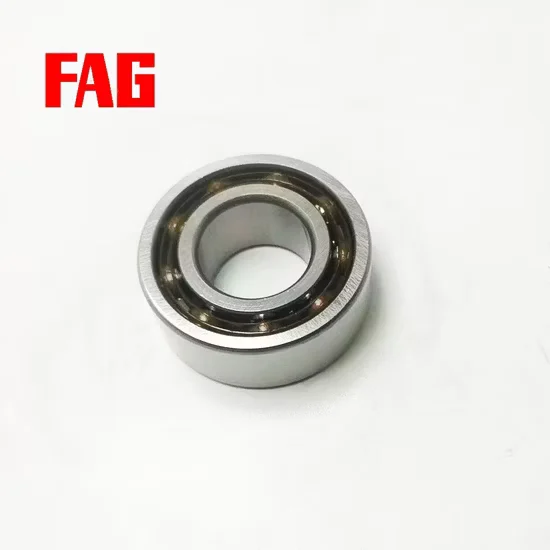
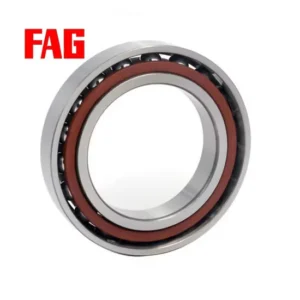
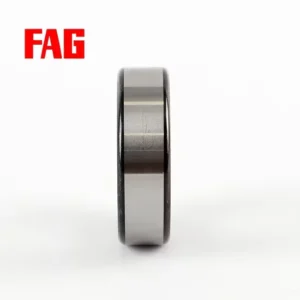
Product details
Description and application notes
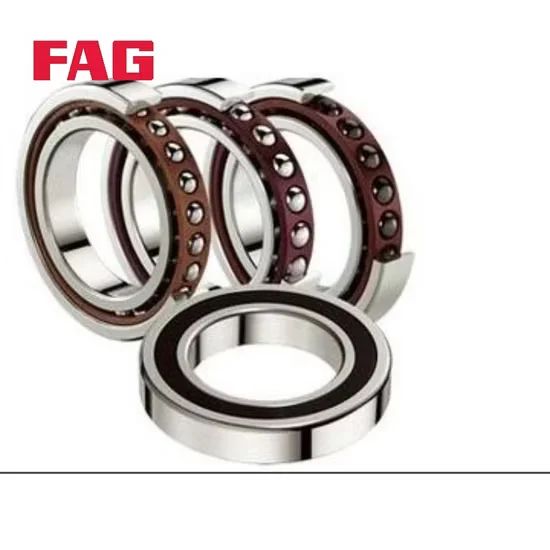
Original Batch Traceability — Every FAG B71922-E-T-P4s-UL angular contact ball bearing ships with verifiable factory lot documentation to guarantee authentic P4s precision and reliable performance in demanding spindle applications.
Technical Specifications
| Parameter | Value |
|---|---|
| Designation | FAG B71922-E-T-P4s-UL |
| Bearing Type | Angular Contact Ball Bearing |
| Series | B719 |
| Precision Class | P4s |
| Contact Angle | 25° (E suffix) |
| Material | Steel |
| Origin | Jiangsu China |
| Certification | ISO |
Note: The 'T' and 'UL' suffixes require manufacturer catalog confirmation for exact cage and preload specifications.
Application Suitability
| Industry | Typical Applications |
|---|---|
| Machine Tool Manufacturing | High-speed milling and grinding spindle assemblies |
| Precision Equipment | Rotary tables and indexing heads requiring tight runout |
| Industrial Machinery | High-speed pump shafts and robotic joint actuators |
Why Spindle Vibration Ruins More Than Just Surface Finish
Mismatched preload and precision classes silently destroy spindle bearings long before catastrophic seizure occurs.
I spent years troubleshooting five-axis machining centers in the Middle East, where operators often mixed standard precision bearings with high-speed spindles to cut immediate procurement costs. The result was always excessive heat, severe chatter, and unacceptable vibration at high RPMs, ultimately ruining expensive workpieces. Upgrading to a genuine FAG B71922-E-T-P4s-UL angular contact ball bearing with verified P4s tolerances and correct preload alignment is the only reliable way to stabilize the shaft and protect the final product. Ignoring these subtle geometric mismatches inevitably leads to scrapped parts, damaged tooling, and extensive machine downtime.
Matching P4s Tolerances to Demanding Machining Environments
High-speed cutting demands extreme rotational accuracy, which this FAG B71922-E-T-P4s-UL angular contact ball bearing delivers through its strict P4s dimensional controls and superior raceway finishing. Our global supply chain ensures that mixed-brand project orders maintain exact cross-reference alignment, preventing the subtle geometric mismatches that cause premature wear in complex multi-axis setups. When sourcing replacement components for critical precision equipment, verifying the exact manufacturer specifications prevents the installation of incompatible tolerances that would otherwise compromise the entire machining center's accuracy, output quality, and long-term operational reliability.
Thermal Growth and Axial Thrust in High-RPM Spindles
Spindle assemblies generate significant heat during continuous heavy-duty operation, altering internal clearance and demanding a 25° contact angle to manage combined radial and axial loads effectively. Proper lubrication is absolutely critical, as oil-air systems must balance cooling with minimal churning losses at elevated speeds to prevent thermal runaway and raceway degradation. Contamination from coolant mist and microscopic metallic dust also necessitates careful seal selection to prevent raceway scoring without adding excessive friction that would further elevate operating temperatures. Managing these thermal and environmental factors is essential for maintaining the tight runout required in precision milling and grinding operations.
Decoding the B719 Series Contact Angle and Precision
The 'E' suffix confirms a 25° contact angle, providing an optimal balance between axial rigidity and radial capacity for demanding milling spindles. The P4s precision class ensures exceptionally tight running accuracy, minimizing runout that would otherwise transfer directly to the workpiece surface and cause visible chatter marks on finished parts. While standard P4 bearings suffice for general industrial machinery, the P4s designation is mandatory for high-frequency spindles where micron-level deviations are completely unacceptable. The single-row steel construction allows for flexible pairing arrangements during assembly, enabling experienced technicians to achieve the required system rigidity through precise spacer adjustments and matched mounting configurations.
The Cascading Impact of Incorrect Preload Selection
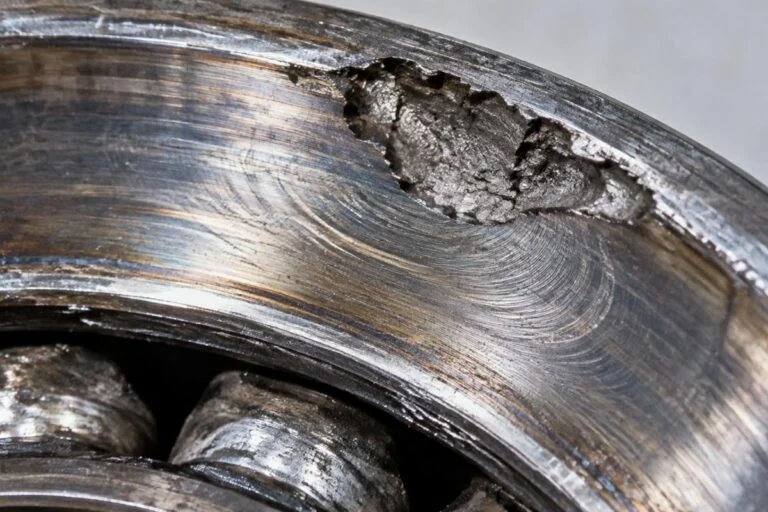
Installing a bearing with the wrong preload class leads to either excessive skidding under light loads or rapid thermal runaway under heavy cutting forces. According to ISO 15243 frameworks, these installation and selection errors manifest as smearing, raceway spalling, or cage wear, ultimately resulting in unplanned downtime and scrapped production batches. The financial impact of replacing a seized spindle and recalibrating the entire machine tool far exceeds the initial investment in correctly specified, fully traceable components. Avoiding these hidden costs requires strict adherence to the original equipment manufacturer's preload guidelines and careful handling during the mounting process.
Securing Authentic Spindle Components Through Verified Channels
Sourcing high-precision components requires more than just finding a matching part number; it demands strict verification of the specific preload and cage specifications to avoid catastrophic mismatches during assembly. We provide complete batch traceability for every FAG B71922-E-T-P4s-UL angular contact ball bearing, ensuring the physical product perfectly matches the factory test reports and quality standards. Our technical team offers comprehensive cross-reference consultation to verify equivalent models when urgent maintenance requires flexible substitution, backed by rigorous dimensional inspection before dispatch. This level of supply chain transparency protects your equipment from the devastating consequences of counterfeit or mislabeled precision parts.
Documentation & Authenticity
- Certificate of Conformity verifying P4s tolerance grades for the specific production batch.
- Original factory lot traceability documents linking the bearing to its manufacturing date and facility.
- Official manufacturer app QR code authentication for immediate on-site genuineness verification.
- Material and heat treatment inspection reports confirming steel metallurgy standards.
- Dimensional and running accuracy inspection reports validating the 25° contact angle and bore tolerances.
Storage, Handling & Mounting
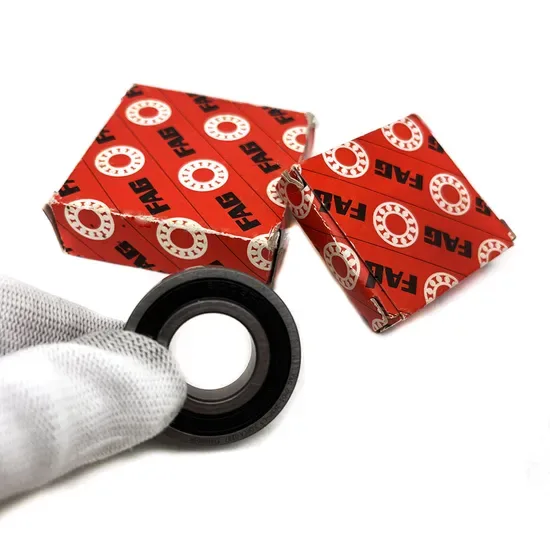
- Keep the P4s precision bearing in its original vacuum-sealed packaging until mounting to prevent microscopic dust contamination.
- Store the single-row angular contact set in a climate-controlled environment to avoid thermal shock before spindle assembly.
- Use clean, lint-free gloves when handling the exposed raceways to prevent corrosive sweat transfer on the steel surfaces.
- Follow strict induction heating protocols for the inner ring, ensuring temperature limits are not exceeded to preserve P4s dimensional stability.
- Verify the mating shaft and housing tolerances match the P4s requirements before pressing the bearing into the spindle cartridge.
Preparing Your Technical Parameters for Selection Review
To ensure optimal spindle performance and avoid premature failures, please provide your specific radial and axial load profiles, maximum operating speeds, and target operating temperatures. Sharing the original equipment manufacturer part numbers and machine tool model details allows our engineering team to perform precise cross-reference checks and L10 life recalculations. This operational data enables us to confirm the exact preload, pairing configuration, and lubrication requirements for your specific machining application, ensuring the replacement components integrate flawlessly into your existing production setup without requiring extensive machine recalibration or prolonged setup times.
Frequently Asked Questions
Q: How does the P4s precision class differ from standard P4 for spindle applications?
A: The P4s class enforces stricter running accuracy and dimensional tolerances compared to standard P4, specifically targeting high-speed machine tool spindles. This tighter control minimizes vibration and heat generation at elevated RPMs, ensuring superior surface finish on machined parts and extending the overall service life of the spindle assembly.
Q: What does the 25° contact angle indicated by the 'E' suffix mean for load capacity?
A: A 25° contact angle provides an optimized balance between axial thrust capacity and radial load support. This geometry is ideal for machine tool spindles that experience significant axial cutting forces while maintaining high rotational speeds, offering better rigidity than a 15° angle without sacrificing speed capability like a 40° angle would.
Q: How can I verify the authenticity of the FAG B71922-E-T-P4s-UL angular contact ball bearing?
A: Authenticity is verified through multiple layers, including scanning the official manufacturer QR code on the packaging and cross-referencing the factory batch traceability documents. We also provide dimensional inspection reports that confirm the P4s tolerances, ensuring the physical characteristics perfectly match the genuine specifications before the bearing is installed in your equipment.
Q: Why is correct preload alignment critical when replacing spindle bearings?
A: Preload determines the internal clearance and rigidity of the bearing set under operating conditions. Incorrect preload leads to excessive friction and heat if too tight, or vibration and poor surface finish if too loose. Matching the exact factory preload specification is essential to maintain the designed dynamic stiffness of the high-speed spindle.