

Product details
Description and application notes
Factory Batch Traceability — Every unit links directly to the original production run through verifiable manufacturer batch records.
Technical Specifications
| Parameter | Value |
|---|---|
| Designation | NJ409 NJ210 NJ2210 NJ310 NJ2310 SL183007-A-XL |
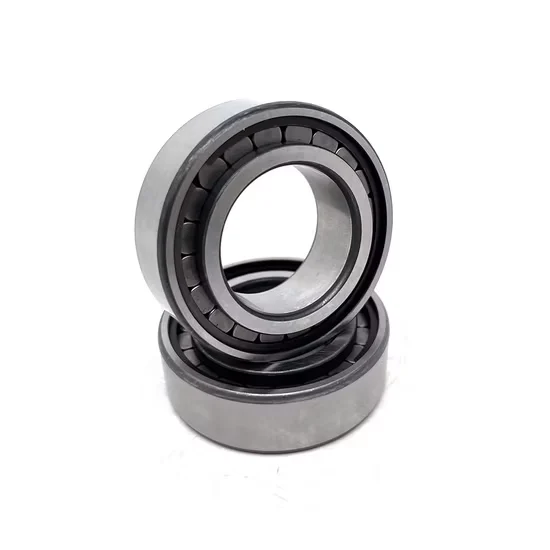
| Bearing Type | Cylindrical Roller Bearing |
| Number of Rows | Single |
| Load Direction | Radial |
| Separable Design | Separated |
| Cage Material | Steel Cage and Nylon Cage options |
| Precision Class | P0, P5, P6 |
| Vibration Grade | V1, V2, V3 |
| Noise Grade | Z1, Z2, Z3 |
| Hardness | 59-62 HRC |
| Material | Available in stainless steel or standard bearing steel variants |
| Certification | ISO, CE |
| Origin | Shandong, China |
Application Suitability
| Industry | Typical Applications |
|---|---|
| Construction & Earthmoving | Excavator swing drives and track roller frames |
| Heavy Machinery | Heavy-duty gearboxes for mining conveyors |
| Power Transmission | Traction motors in industrial locomotives |
| Metallurgy | Rolling mills for continuous casting lines |
Why Excavator Swing Drives Fail When Suffix Details Are Ignored
When sourcing an INA NJ409 NJ210 NJ2210 NJ310 NJ2310 SL183007-A-XL cylindrical roller bearing, buyers often focus solely on the base model number, assuming all variants share identical operational limits. Overlooking internal clearance and cage suffixes leads to rapid thermal seizure under heavy radial loads. Early in my career managing procurement for excavator fleets in Dubai, I ordered standard NJ2210 bearings for high-ambient-temperature sites without verifying the specific thermal expansion requirements. The equipment suffered catastrophic lock-ups within weeks because the standard clearance couldn't accommodate the extreme desert heat, causing the rolling elements to bind inside the raceway. That failure highlighted how critical exact suffix matching is for heavy equipment operating in extreme environments, where microscopic dimensional changes dictate the difference between smooth rotation and total mechanical failure.
Matching Radial Capacity to Earthmoving Demands
The single-row radial design of the INA NJ409 NJ210 NJ2210 NJ310 NJ2310 SL183007-A-XL cylindrical roller bearing delivers the high radial load capacity required for excavator slewing mechanisms and track frames. By offering both steel and nylon cage options, these components adapt to varying speed and temperature profiles on construction sites. Our engineering team cross-references exact OEM requirements to ensure the selected variant handles the specific shock loads encountered during trenching and lifting operations. This meticulous alignment between the component's internal geometry and the machine's dynamic forces prevents premature wear and extends the operational lifecycle of critical earthmoving assets.
Navigating Dust, Heat, and Shock Loads in Heavy Equipment
Construction environments expose bearings to severe particulate contamination and extreme temperature fluctuations that degrade standard lubricants and compromise structural integrity. High shock loads from digging actions demand a separable design that maintains alignment under sudden radial impacts, preventing edge loading on the rollers. Furthermore, thermal expansion in heavy-duty gearboxes necessitates precise internal clearance selection to prevent rolling element skidding when the inner and outer rings expand at different rates. Proper sealing arrangements and cage material choices directly influence the component's resistance to abrasive dust and thermal cycling, ensuring consistent performance even when maintenance intervals are delayed due to remote site conditions.
Decoding Cage Materials and Precision Tolerances
Selecting between steel and nylon cages fundamentally alters the operational envelope of these single-row radial components, dictating their suitability for specific industrial tasks. Steel cages provide superior structural rigidity and withstand higher operating temperatures, making them ideal for heavy-duty gearboxes and rolling mills where thermal stability is paramount. Conversely, nylon cages offer reduced friction and lower noise levels, which benefits traction motors requiring smoother rotation and minimal energy loss. Precision classes ranging from P0 to P6 dictate the running accuracy, where tighter tolerances minimize vibration in high-speed applications and reduce the risk of resonant frequency damage. Vibration and noise grades further refine the selection for sensitive industrial environments, ensuring the chosen configuration aligns perfectly with the acoustic and dynamic demands of the host machinery.
The Financial Impact of Premature Thermal Seizure
Installing a component with incorrect internal clearance or unsuitable cage material inevitably results in unplanned downtime and catastrophic damage to adjacent shafts and housings. According to failure mode classifications outlined in ISO 15243, thermal seizure and surface fatigue are primary consequences of mismatched operational parameters and inadequate lubrication under heavy loads. Such premature failures not only void equipment warranties but also escalate maintenance costs through secondary component replacements and extended project delays. Relying on generic substitutes without verifying the exact manufacturer specifications introduces hidden risks that compromise the overall reliability of the heavy machinery fleet.
Securing Traceability and Exact Suffix Alignment
We maintain massive spot inventory covering thousands of standard and special part numbers, ensuring rapid fulfillment for the INA NJ409 NJ210 NJ2210 NJ310 NJ2310 SL183007-A-XL cylindrical roller bearing and other urgent excavator maintenance needs. Our technical selection support includes rigorous cross-brand equivalent model consultation to verify dimensional compatibility and performance equivalence across different manufacturer lines. Every shipment includes complete traceability documentation, eliminating the risk of counterfeit parts infiltrating critical heavy machinery and ensuring full compliance with international quality standards. We provide flexible consolidation shipments, allowing you to mix various bearing types in a single container while maintaining strict ISO-compliant quality assurance and optimizing global logistics costs.
Documentation & Authenticity
- Certificate of Conformity verifying the exact precision class and material grade for each unit.
- Original batch traceability records linking the specific production run to the manufacturer's facilities.
- Official app QR verification enabling on-site authenticity checks before installation.
- Dimensional and running accuracy inspection reports confirming P0, P5, or P6 tolerances.
- Material testing certificates validating the hardness and metallurgical composition of the rings.
Storage, Handling & Mounting
- Store the separable components in their original packaging to prevent moisture ingress and cage deformation.
- Use clean gloves during handling to avoid transferring corrosive salts onto the precision-ground raceways.
- Apply induction heating for inner ring mounting to preserve the specified internal clearance class.
- Keep steel and nylon cage variants segregated to ensure correct installation per the equipment manual.
- Verify the shaft and housing tolerances before pressing the outer ring to prevent raceway distortion.
Preparing Your Technical Parameters for Selection
To ensure precise model matching, please provide the exact radial and axial loads, operational speeds, and ambient temperature ranges for your specific application. Sharing the OEM equipment number or existing part numbers allows our engineering team to perform accurate cross-reference verification and identify any obsolete designations. Detailing the installation space constraints and environmental exposure helps us recommend the optimal cage material, sealing arrangement, and clearance class for your machinery. This collaborative technical review guarantees that the selected components will deliver reliable performance and extended service life under your unique operating conditions.
Frequently Asked Questions
Q: How do I verify the authenticity of these bearings using official apps?
A: You can scan the QR code on the packaging using the manufacturer's official application to confirm the production batch and origin. This digital traceability ensures the components meet ISO standards and protects your heavy machinery from counterfeit risks during critical operations.
Q: What are the critical cross-reference checks when replacing NJ series bearings?
A: When replacing standard NJ series components, you must verify the exact internal clearance, cage material, and dimensional tolerances. Cross-referencing ensures the new unit matches the original equipment manufacturer's specifications for radial load capacity and thermal expansion limits in heavy machinery.
Q: How do I choose between steel and nylon cages for excavator applications?
A: Steel cages are strongly preferred for high-temperature and heavy-shock environments like excavator swing drives, offering superior structural rigidity. Nylon cages are better suited for applications requiring lower friction, reduced noise, and moderate operating temperatures, such as specific traction motor assemblies.
Q: What do the P0, P5, and P6 precision classes mean for these components?
A: These classes define the dimensional and running accuracy tolerances of the bearing. P0 is the standard class for general industrial use, while P5 and P6 offer tighter tolerances for applications demanding higher rotational accuracy and reduced vibration in heavy-duty gearboxes.
Q: How should I interpret unverified suffixes like A and XL in part numbers?
A: Suffixes indicate specific internal designs, clearances, or specialized material treatments. Unverified suffixes require strict confirmation against the official manufacturer catalog to ensure they match your exact dimensional and operational requirements before procurement, preventing costly installation errors in critical equipment.