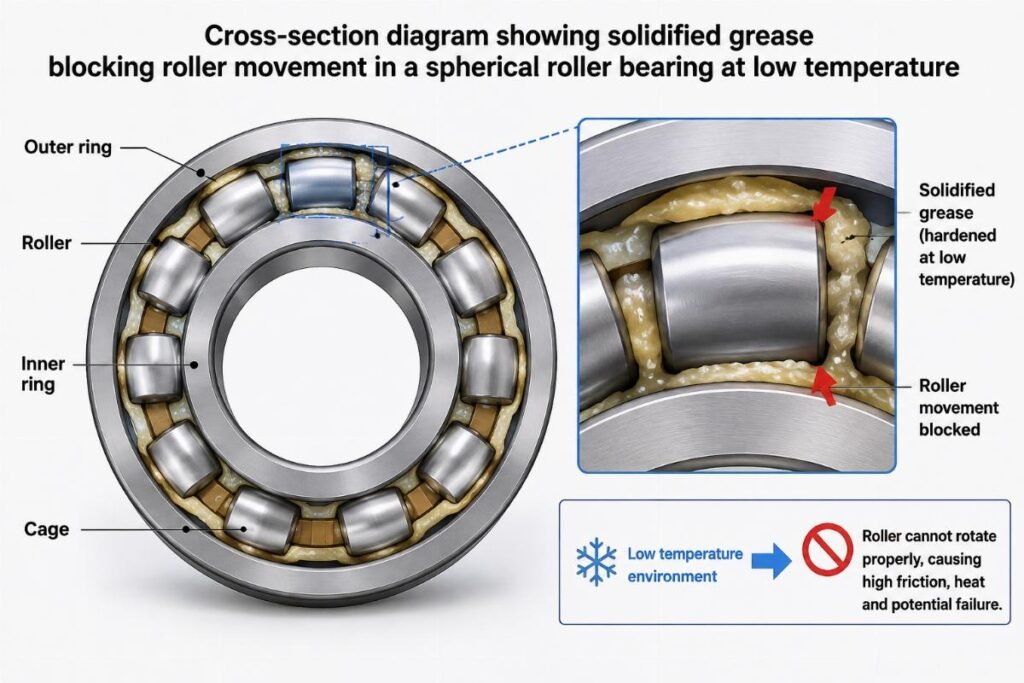
Most frozen bearings are not defective; they are simply lubricated for the wrong season.
FAG bearing failures in cold weather occur primarily because standard mineral-based greases solidify into a semi-solid block at sub-zero temperatures, and standard internal clearance (CN) shrinks due to thermal contraction, leaving no room for rolling elements to move. The solution is not replacing the brand, but specifying C3 or C4 internal clearance and switching to synthetic low-temperature lubricants with verified viscosity-temperature performance.
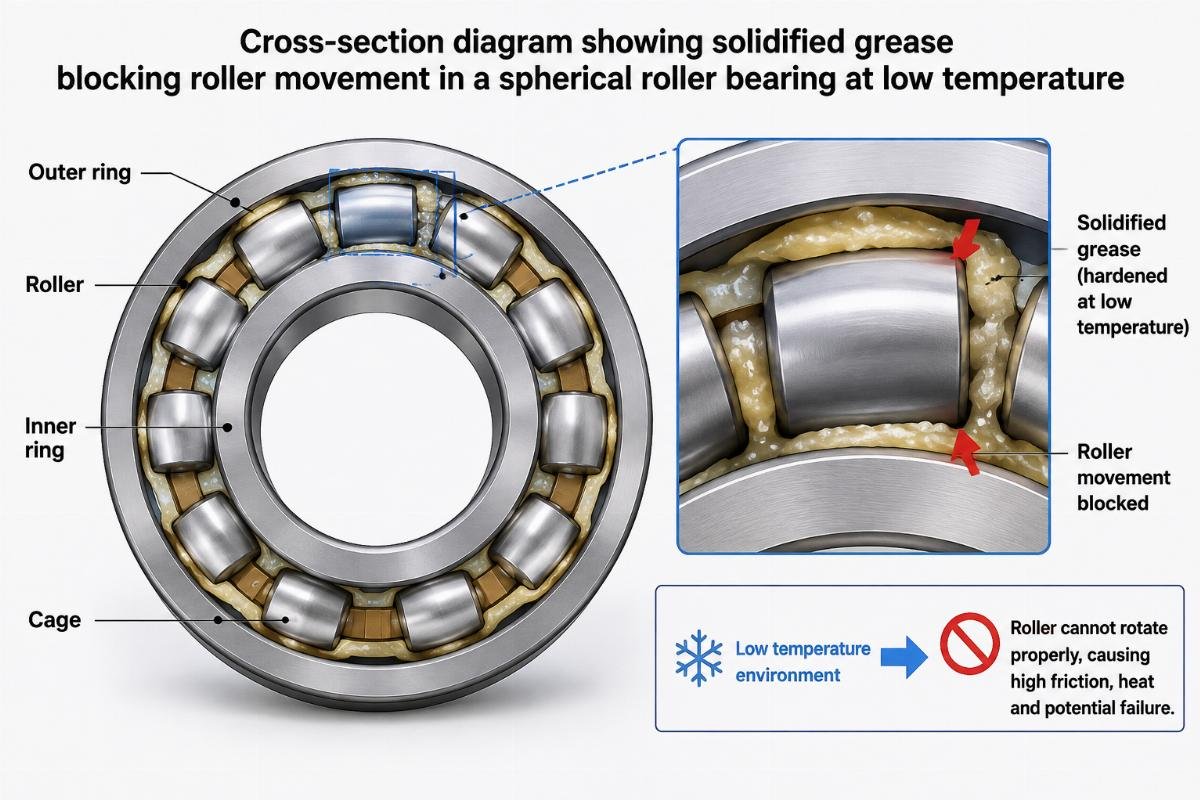
I still remember the call from my client in Jakarta. He was frantic. A batch of crushers he had supplied to a mining operation in Siberia had seized up within weeks of installation. The local engineers were blaming the quality of the components, claiming the steel was brittle. I flew to Yakutsk to inspect the site myself. The temperature was hovering around -30°C. When we dismantled the housing, the issue was immediately visible. The grease inside the FAG spherical roller bearing freezing had turned into a hard, waxy plug. The rollers were not spinning; they were stuck in a matrix of frozen oil. Furthermore, the inner ring had contracted onto the shaft so tightly that the original clearance had vanished. It was not a manufacturing defect. It was a specification error. This experience reshaped how I approach every order destined for high-latitude regions.
Understanding why these failures happen requires looking beyond the brand name. While FAG is renowned for precision, no bearing can overcome the laws of physics if the surrounding environment is ignored. The root cause is almost always a mismatch between the component’s design parameters and the operational climate.
Why Do FAG Bearings Freeze in Sub-Zero Temperatures?
The primary mechanical trigger for seizure is not material fatigue, but the physical state change of the lubricant and the reduction of internal space.
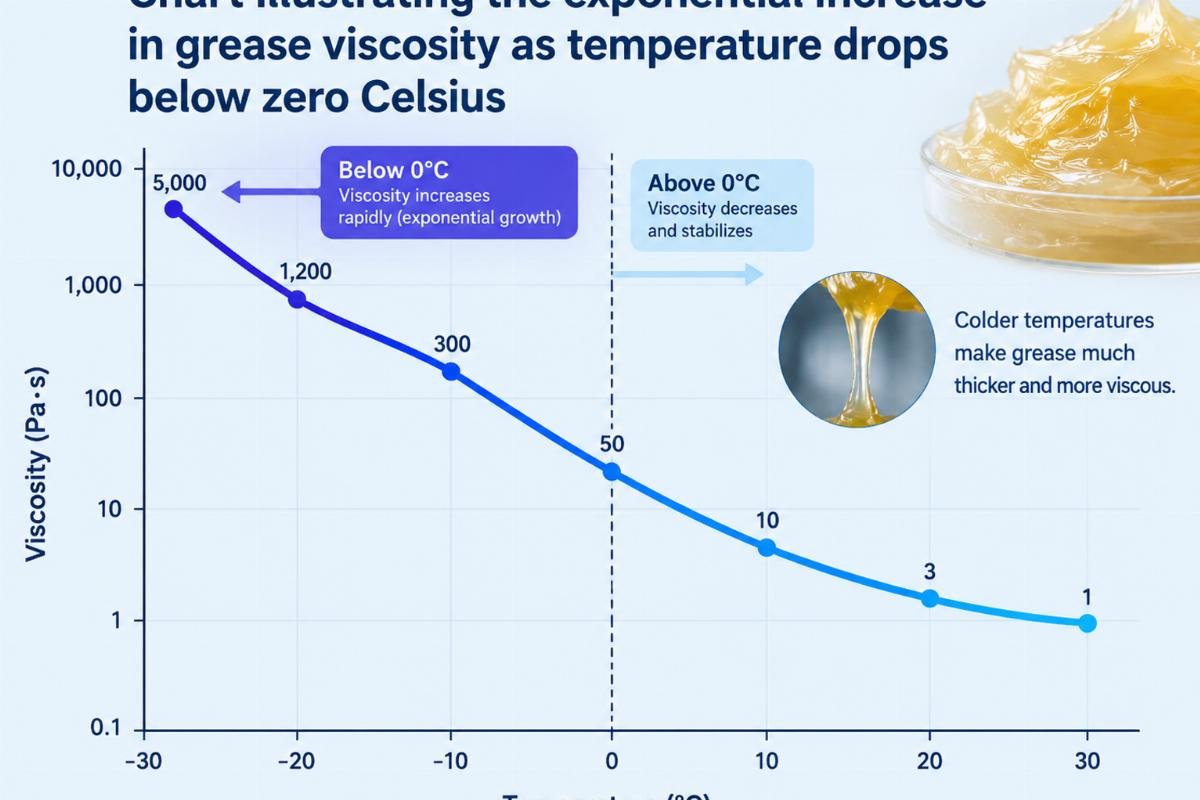
When temperatures drop below -20°C, the viscosity of standard mineral oils increases exponentially. What flows freely at room temperature becomes a gel, and eventually, a solid. This resistance creates immense drag on the rolling elements. If the bearing is already under load, the motor cannot overcome this initial torque, leading to slippage, heat generation, and eventual seizure.
Simultaneously, metals contract. Steel shrinks as it cools. In a typical assembly, the inner ring is mounted on a steel shaft, while the outer ring sits in a housing that might be cast iron or even aluminum. These materials have different coefficients of thermal expansion. As the temperature plummets, the housing may contract more than the outer ring, or the shaft may contract less than the inner ring, depending on the fit. This differential movement crushes the internal clearance. If you start with standard CN clearance, there is simply no room left for the rollers to rotate once the system reaches equilibrium at -30°C.
This is why FAG bearing cold temperature failure is often misdiagnosed. Operators see a seized unit and assume a flaw in the raceway or cage. In reality, the bearing was starved of motion by its own environment. The fix is not a stronger bearing, but a smarter specification.
How to Select the Right Internal Clearance for Cold Climates?
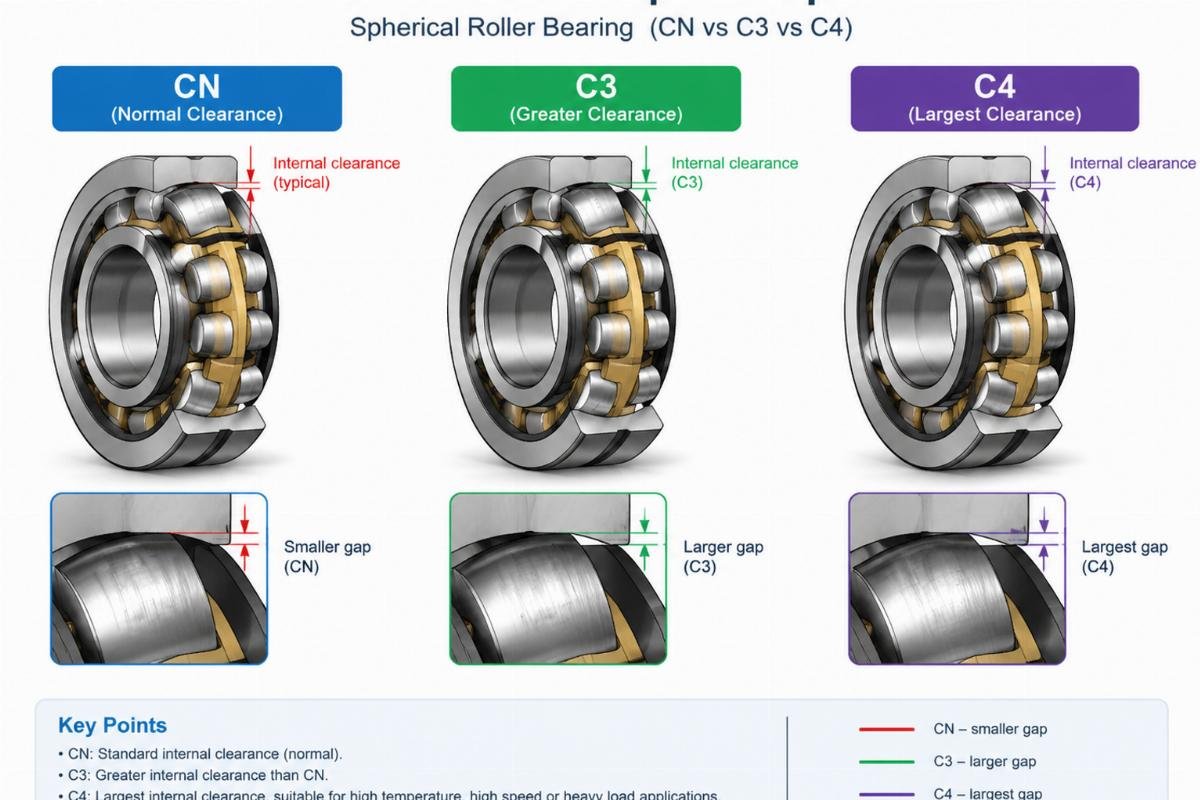
Standard CN clearance is insufficient for extreme cold; C3 or C4 clearance must be specified to compensate for thermal shrinkage.
Internal clearance is the gap between the rolling elements and the raceways. At room temperature, this gap allows for thermal expansion during operation. In cold climates, we need extra gap to account for thermal contraction before the bearing even starts running. If you use a standard clearance bearing in a sub-zero environment, the metal shrinkage will eliminate this gap, causing pre-load conditions that lead to rapid overheating and failure.
| Clearance Class | Typical Application | Suitability for Cold Climate | Risk Level at -30°C |
|---|---|---|---|
| CN (Normal) | Standard industrial motors, general machinery | Poor | Critical Seizure |
| C3 | Electric motors, pumps, moderate loads | Good | Low |
| C4 | Heavy vibration, large temperature differentials | Excellent | Minimal |
Choosing C3 or C4 clearance provides the necessary buffer. For heavy equipment like crushers or excavators operating in Arctic conditions, C4 is often the safer choice. It ensures that even after the shaft and housing contract, there is still sufficient space for the rollers to move freely. This is a critical detail that many distributors overlook. They ship the same part number globally, assuming the bearing is universal. It is not.
In my work with Southeast Asian distributors, I now insist on verifying the clearance code before shipment to Russia or Northern Europe. A simple suffix change on the order form can prevent months of downtime. We stock genuine FAG bearings with customized C3 and C4 clearances specifically for these harsh environments. This ensures that when the equipment arrives on site, it is ready for the cold, not just for the warehouse.
What Lubrication Strategy Prevents Cold-Weather Seizure?
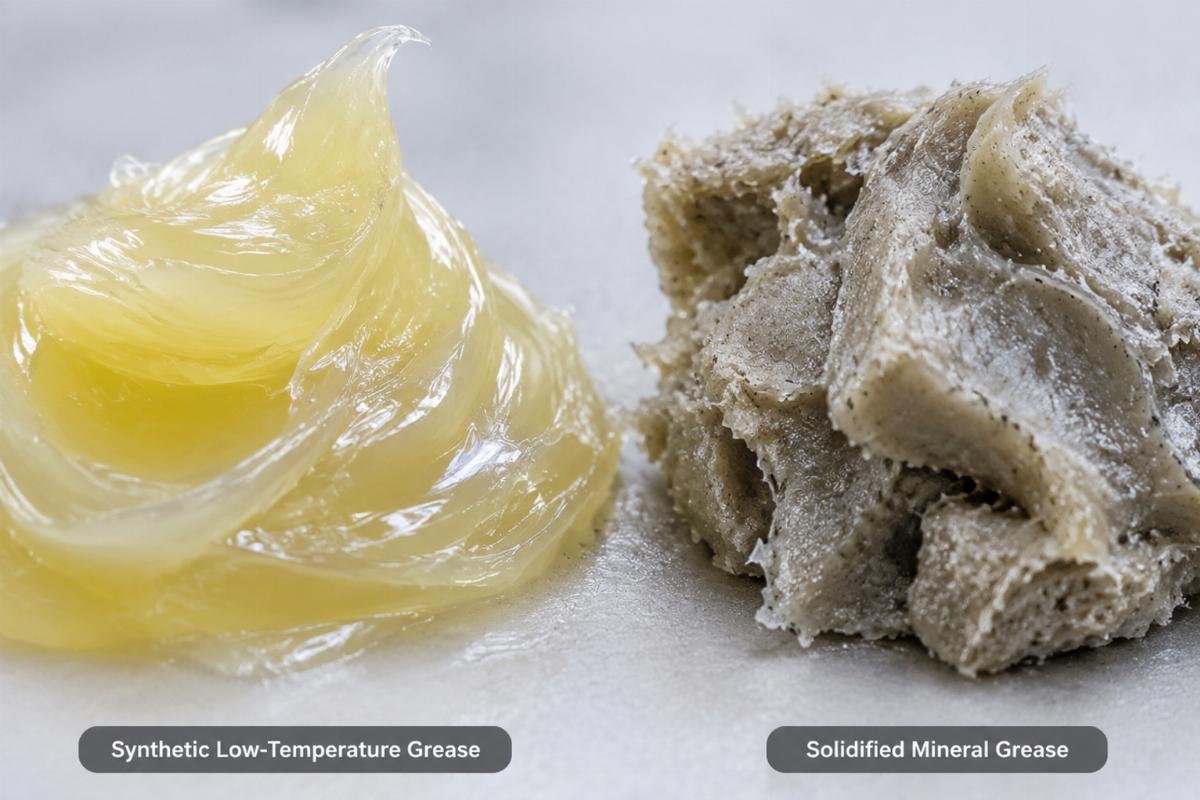
Standard mineral greases fail below -20°C; synthetic low-temperature greases with appropriate base oil viscosity are mandatory.
Lubrication is the lifeblood of any bearing, but in the cold, it can become the killer. Most standard greases use mineral base oils. These oils contain waxes that crystallize at low temperatures. Once crystallized, the grease loses its ability to flow and lubricate. The result is metal-to-metal contact, which generates heat and wear particles, accelerating failure.
To prevent FAG bearing failures in cold weather, you must switch to synthetic base oils, such as polyalphaolefin (PAO) or ester-based fluids. These synthetics do not contain waxes and maintain their fluidity at much lower temperatures. However, not all synthetic greases are equal. You must check the base oil viscosity at the expected operating temperature.
A common mistake is using a grease with a high NLGI consistency (like NLGI 3) thinking it will stay in place better. In the cold, a harder grease is even more difficult to penetrate. For sub-zero applications, an NLGI 1 or even NLGI 0 grease with a synthetic base is often recommended. This ensures the grease remains soft enough to be displaced by the rolling elements, providing a continuous lubricating film.
We provide technical consultation for cold-climate grease selection to our clients. By matching the right synthetic grease with the correct FAG bearing, we ensure that the lubrication system supports the bearing rather than hindering it. This holistic approach minimizes the risk of unplanned downtime due to lubrication failure.
Step-by-Step Installation & Maintenance Checklist for Extreme Cold
Follow precise mounting procedures, verify fits, and establish frequent relubrication intervals to ensure longevity.
Even with the right bearing and grease, improper installation can negate all benefits. In cold climates, the margin for error is smaller. Here is a methodical approach to installing bearings for sub-zero operations.
- Pre-warm Components: Never install a cold bearing onto a cold shaft if possible. Bring the bearing and housing to room temperature before assembly. This ensures that the initial fit is achieved under standard conditions, preventing immediate stress from differential contraction.
- Verify Shaft and Housing Fits: Use micrometers to check dimensions. In cold climates, avoid tight interference fits on the outer ring if the housing is aluminum, as the differential contraction can crush the bearing. A slip fit with a locking mechanism is often safer.
- Apply Synthetic Grease Correctly: Fill the bearing with the specified synthetic low-temperature grease. Do not overfill. Excess grease can cause churning and heat buildup, which is harder to dissipate in cold air. Ensure the grease is distributed evenly.
- Initial Run-in: Start the equipment slowly. Allow the bearing to warm up gradually. Monitor vibration and temperature. If the temperature rises sharply, stop immediately. This could indicate residual clearance issues or grease incompatibility.
- Establish Relubrication Schedule: In cold weather, grease ages faster due to thermal cycling. Implement a more frequent relubrication schedule than what is used in temperate climates. Use a grease gun with a flexible hose to reach points in confined spaces.
A maintenance team I worked with in Scandinavia reduced their unplanned downtime significantly by adopting this checklist. They moved from reactive repairs to proactive maintenance, ensuring that every bearing was installed with the cold in mind. This shift in practice is crucial for anyone dealing with FAG bearing cold temperature failure.

Conclusion
Cold weather does not break bearings; poor preparation does.
FAG bearing failures in cold weather are preventable. By understanding the mechanics of thermal contraction and grease solidification, you can specify the right components. Switching to C3 or C4 clearance and using synthetic low-temperature lubricants transforms a potential failure point into a reliable asset. As a supplier, my role is to ensure that the parts you receive are not just genuine, but suitable for your specific environment. This attention to detail saves time, money, and reputation in the harshest conditions.