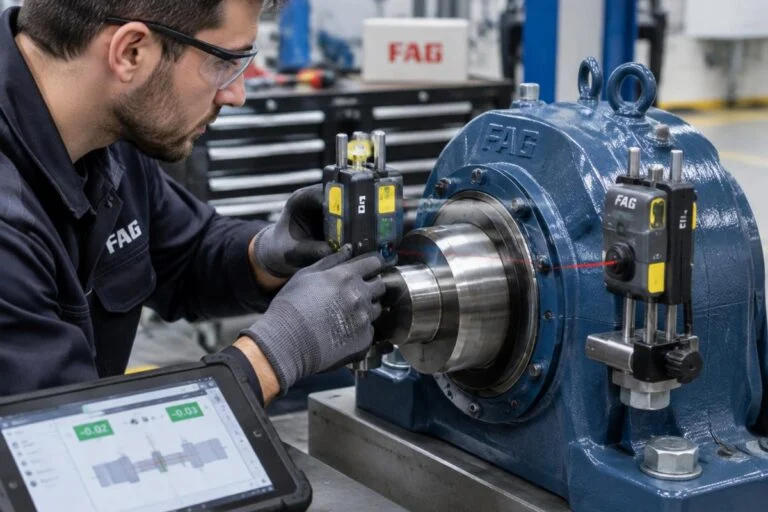
Most premature bearing failures are not caused by defective parts, but by dirty rags.
Proper FAG bearing maintenance for US fleets hinges on strict contamination control during installation and precise torque application, rather than simply replacing components. When fleet managers prioritize clean-room protocols and correct lubrication volumes over speed, wheel bearing life extends significantly, turning routine MRO into a measurable cost advantage.
I still remember the heat of a workshop in Lagos, watching a technician wipe a seal with a rag that had been lying on the oily floor. That single action introduced microscopic grit into the grease. The truck, part of a major regional logistics network, seized its hub before hitting twenty thousand miles. It was a harsh lesson: the quality of the component matters less than the cleanliness of the hands installing it. This reality holds true whether you are in West Africa or managing a cross-country fleet in the United States.

The transition from chaotic repair shops to standardized maintenance bays is where real savings happen. For those sourcing components, understanding this operational nuance is critical. A reliable FAG bearing maintenance US fleets strategy starts long before the wheel is mounted.
Why Do Fleet Wheel Bearings Fail Prematurely?
Contamination and improper handling account for the majority of early failures, often misdiagnosed as material defects.
It is counter-intuitive, but the enemy of a bearing is rarely the load it carries; it is what gets inside it. In heavy-duty applications, radial loads are immense, yet modern tapered roller bearings are engineered to withstand them. The real culprit is often the environment during installation. Dust, moisture, and metal shavings act as abrasives, grinding away the precision-ground surfaces of the rollers and raceways.
Consider a scenario involving a long-haul fleet operating in the Midwest. During winter, road salt and slush create a highly corrosive environment. If seals are damaged during mounting or if the housing is not cleaned thoroughly, saline solution enters the grease. The result is not just wear, but rapid corrosion pitting.
Another common failure mode is over-greasing. Many technicians believe that more grease equals better protection. In reality, excessive grease creates churning resistance, leading to overheating. This heat degrades the lubricant, breaks down the thickener, and can even blow out seals, inviting further contamination. The balance is delicate.
When I supply batches of fifty to one hundred sets for fleet consolidation, I include detailed guides that highlight these pitfalls. The goal is to shift the mindset from “replace and forget” to “install with precision.” A genuine FAG bearing, handled correctly, offers traceability and consistency that aftermarket equivalents often lack.
Understanding these failure modes allows fleet managers to adjust their maintenance intervals and training protocols. It is not enough to buy the right part; you must ensure it is treated with the respect its engineering demands.
What Are the Step-by-Step Installation Protocols?
Strict cleaning, precise torque, and correct greasing prevent immediate damage and ensure optimal performance.
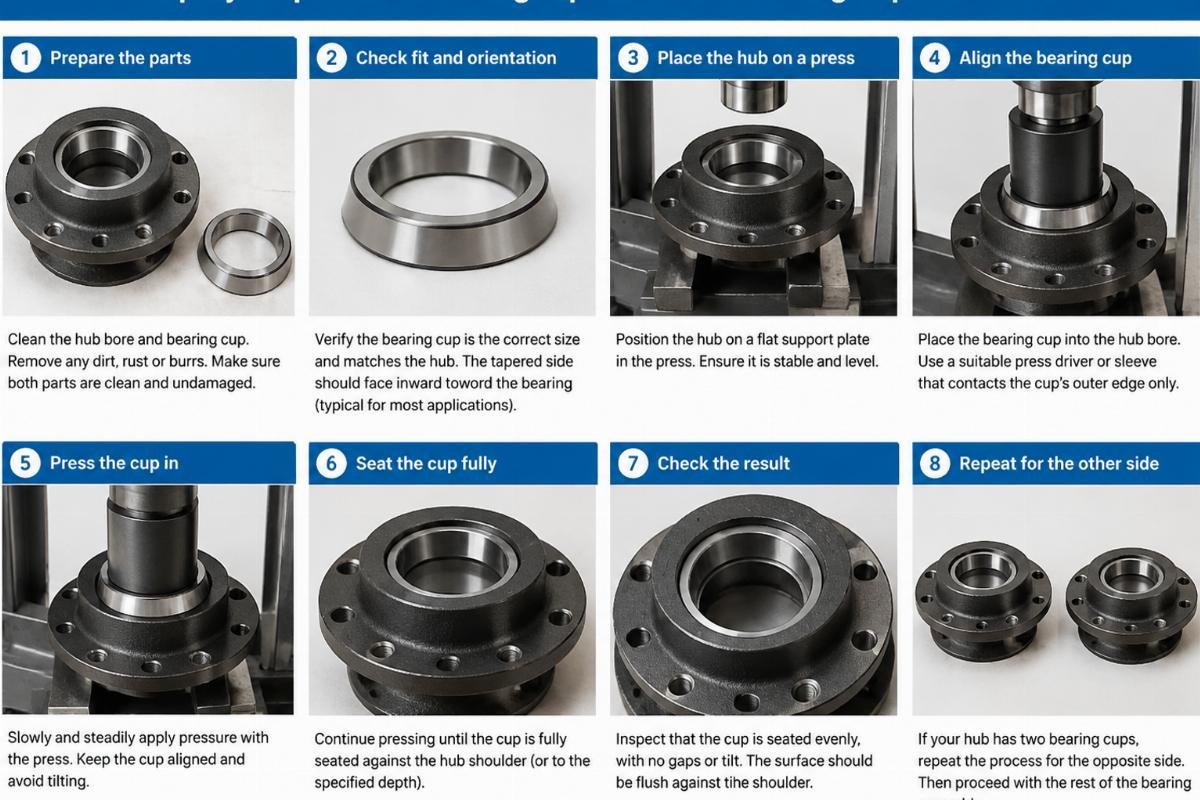
Installation is a surgical procedure, not a brute-force task. The first step is always preparation. The workspace must be clean, and all tools should be free of debris. Before opening the new bearing package, inspect the housing for any signs of previous damage or residual contaminants. Use lint-free cloths and approved solvents to clean the spindle and hub.
Next, handle the bearing with care. Never strike the bearing directly with a hammer. Use a press or a suitable driver tool to seat the cup and cone evenly. Misalignment during pressing can cause brinelling—small dents in the raceway—that become stress concentrators and lead to early spalling.
Lubrication is the next critical phase. Apply the recommended amount of high-quality grease. For tapered roller bearings, pack the rollers thoroughly but avoid overfilling the hub cavity. Leave space for thermal expansion. Overfilling leads to the overheating issues mentioned earlier.
Torque specifications are non-negotiable. Use a calibrated torque wrench to tighten the axle nut to the manufacturer’s specified value. Incorrect torque can lead to either excessive preload, causing heat buildup, or insufficient preload, allowing play and vibration.
Finally, install the seal carefully. Ensure it is seated evenly without twisting. A twisted seal will leak, allowing contaminants to enter and grease to escape. This final step seals the system, protecting the internal components from the harsh external environment.
By following these steps, you ensure that the bearing performs as designed. This is why I emphasize the inclusion of standardized maintenance manuals with every shipment. It is not just about selling a product; it is about ensuring its success in the field.
How to Conduct Routine Maintenance and Inspection?
Regular interval checks and vibration monitoring catch issues before they lead to catastrophic seizure.
Maintenance is not just about fixing what is broken; it is about preventing breakage. For US fleets, this means implementing a rigorous inspection schedule. Visual inspections should check for leaks around the seal. Any sign of grease leakage indicates a compromised seal, which must be replaced immediately to prevent contamination.
Listening to the wheels is an old trick, but it remains effective. A humming or growling noise often indicates bearing wear. However, by the time noise is audible, significant damage may have already occurred. Modern fleets use vibration analysis and temperature monitoring to detect issues earlier.
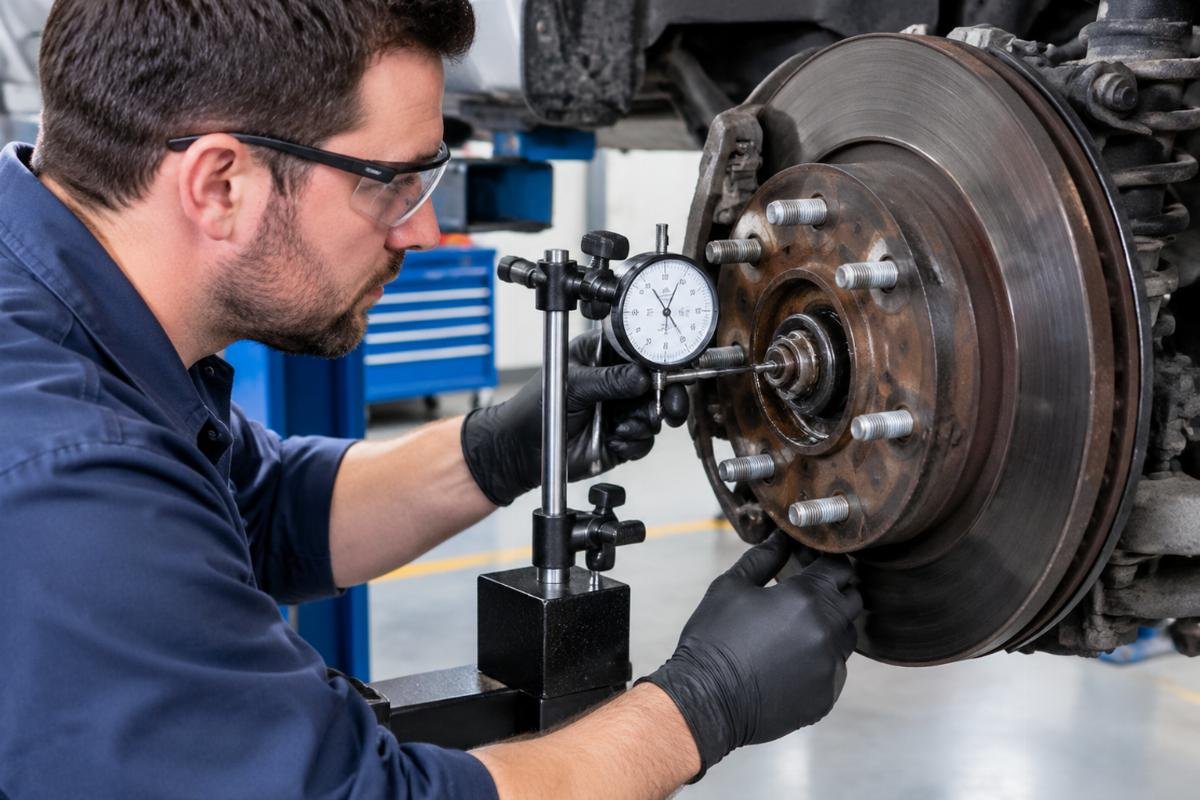
During routine brake service, take the opportunity to check for end-play. Excessive play suggests wear in the bearing assembly or loose adjustment. Conversely, if the wheel feels tight or binds, it may indicate over-preload or lack of lubrication.
Thermal imaging is another powerful tool. Hot spots on the wheel end can indicate friction due to poor lubrication or misalignment. Identifying these hot spots early allows for targeted intervention before a roadside breakdown occurs.
For fleet managers, integrating these checks into standard operating procedures reduces unplanned downtime. It transforms maintenance from a reactive cost center into a proactive efficiency driver. When you source from a supplier who understands these needs, you gain more than just parts; you gain a partner in reliability.
How to Perform Root Cause Analysis on Failed Bearings?
Analyzing wear patterns reveals whether the issue is load, alignment, or lubrication, guiding future prevention.
When a bearing fails, do not just discard it. Examine it. The damage tells a story. Spalling—flaking of the metal surface—often indicates fatigue due to overload or poor lubrication. If the spalling is localized, it may point to a specific impact or misalignment.
Scoring or scratching on the raceways suggests contamination. Abrasive particles have entered the system, grinding against the precision surfaces. This is a clear sign that installation cleanliness or seal integrity needs improvement.
Discoloration, such as blue or brown tints, indicates overheating. This could be due to over-greasing, excessive preload, or insufficient lubrication. Identifying the root cause allows you to adjust your maintenance protocols to prevent recurrence.

If the rollers show flattening or brinelling, it suggests impact damage during installation or operation. This highlights the need for better handling procedures and possibly upgraded components for heavier loads.
By systematically analyzing failures, fleets can refine their maintenance strategies. This data-driven approach ensures that each replacement is an improvement, not just a repetition. It is this level of detail that separates professional operations from amateur repairs.
Conclusion
Precision in installation and vigilance in maintenance define fleet reliability.
Extending the life of wheel bearings requires more than just buying quality parts; it demands a commitment to clean, precise, and informed practices. By controlling contamination, adhering to torque specs, and analyzing failures, US fleets can minimize downtime and maximize return on investment.