

More grease is not better. Over-lubrication causes churning and overheating, leading to premature failure.
A rigorous maintenance checklist focusing on precise installation, correct lubrication matching, and routine inspection is the most cost-effective strategy to prevent catastrophic FAG bearing failures in US plants. This approach addresses the root causes of downtime rather than treating symptoms.
I still remember the panic in my voice when I took a call from a mine site in Mexico years ago. The production line had stopped because several spindle bearings were completely burnt out. The culprit was not a product defect but violent disassembly and improper lubrication during the previous maintenance cycle. I had to arrange emergency air freight overnight. The shipping cost ended up being several times the value of the bearings themselves, and the shipment faced customs delays that extended the downtime. That experience shifted my focus from reactive logistics to proactive technical guidance. Now, when I share a FAG bearing maintenance checklist with North American facilities, I emphasize the field details that prevent such costly errors. Understanding the mechanics of installation and lubrication is far more valuable than having a fast shipping option after the damage is done.
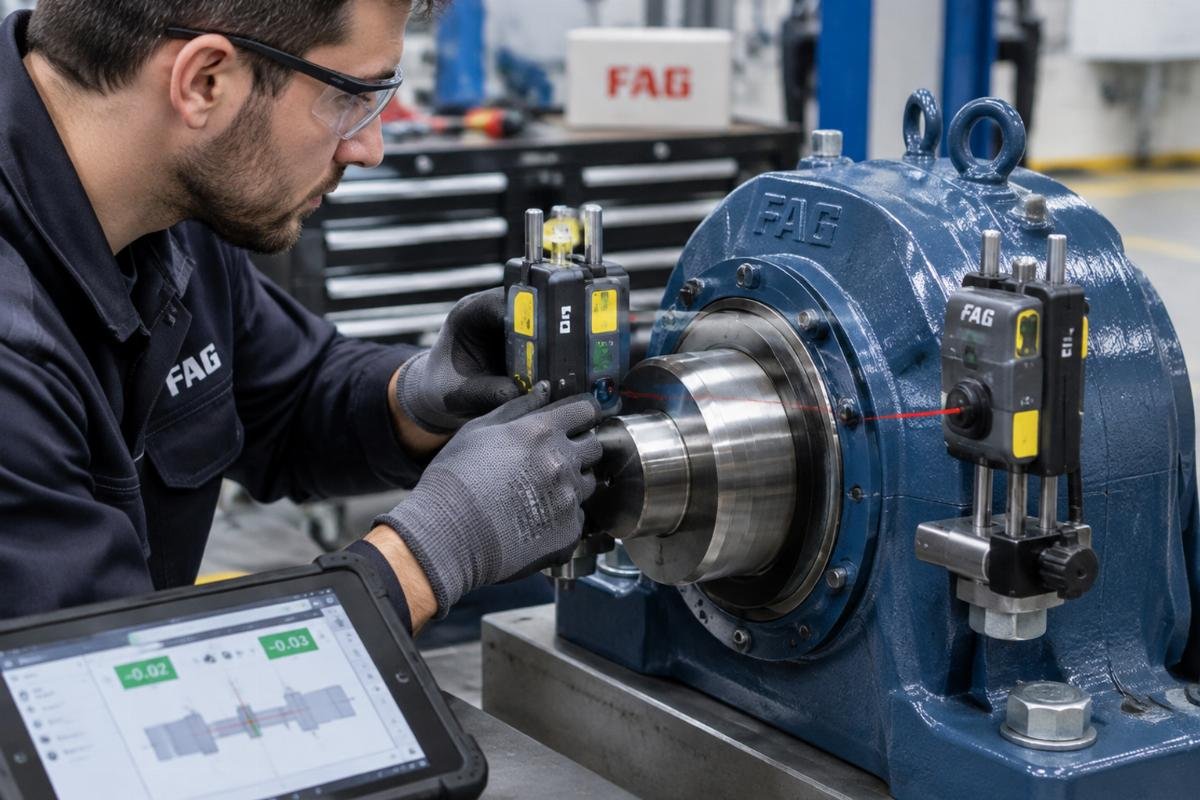
Preventing failure starts with understanding why it happens. Most breakdowns are not random events but the result of accumulated minor errors in handling and maintenance. By following a structured FAG bearing maintenance checklist, MRO managers can identify these risks before they halt production.
Why Do FAG Bearings Fail Prematurely in US Plants?
Bearing failure is rarely a product defect. The majority of premature failures stem from installation or lubrication errors.
In heavy industries across the United States, the pressure to minimize downtime often leads to rushed maintenance procedures. However, speed without precision is counterproductive. When a bearing fails prematurely, it is usually due to misalignment, contamination, or incorrect lubrication. These issues are preventable with a disciplined approach.
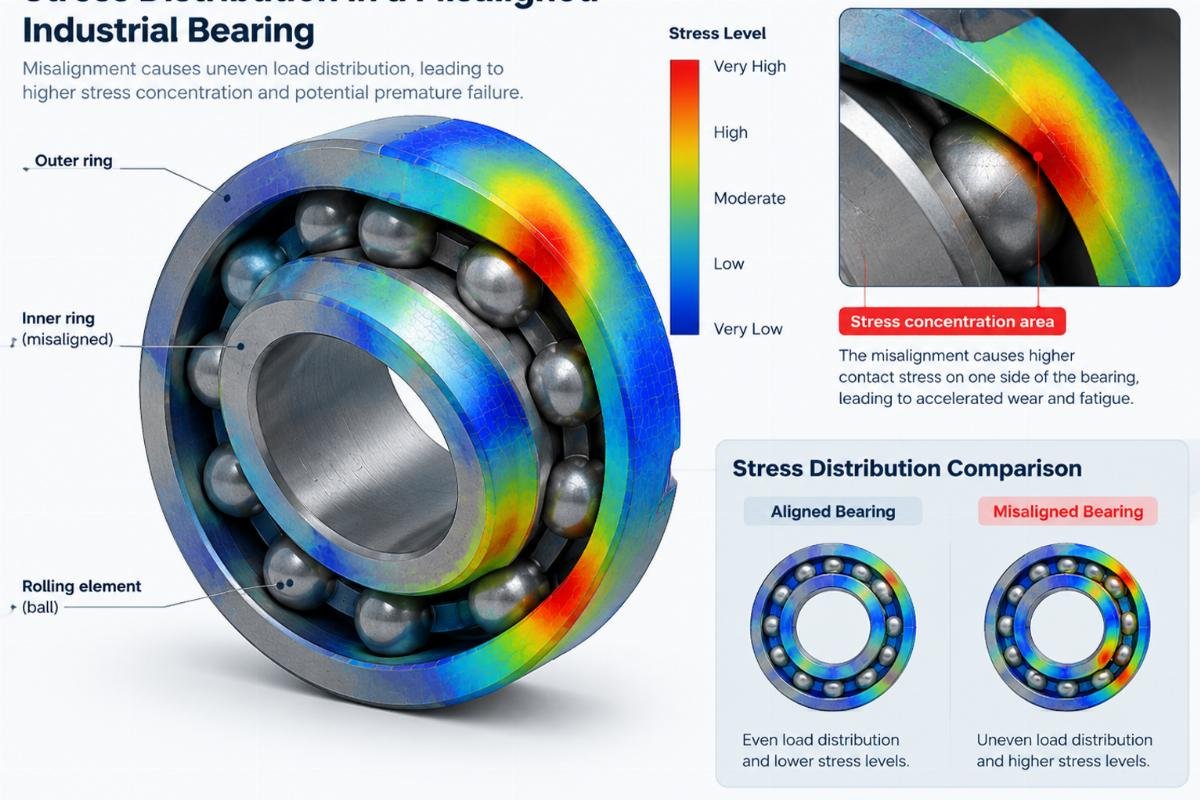
Misalignment places uneven stress on the rolling elements, causing localized fatigue and spalling. Even a slight deviation in shaft or housing alignment can significantly reduce service life. Contamination is another silent killer. Dust, moisture, or metal particles entering the bearing raceway act as abrasives, accelerating wear. Lubrication errors are equally critical. Using the wrong grease type or applying an incorrect volume can lead to either starvation or overheating.
A case from a steel mill in the Midwest illustrates this point. The facility experienced repeated failures in a critical conveyor system. Initial inspections suggested material fatigue, but a deeper analysis revealed that the housing fits were too loose, allowing the outer ring to creep during operation. This movement generated heat and degraded the lubricant. Once the housing tolerances were corrected according to the manufacturer’s specifications, the bearings ran substantially longer without issue.
Identifying these root causes before they halt production is the first step in effective maintenance. A comprehensive FAG bearing maintenance checklist helps teams verify alignment, cleanliness, and lubrication practices regularly. This proactive stance reduces the likelihood of unexpected breakdowns and extends the operational life of expensive equipment.
What Are the Critical Pre-Installation Checks?
Verifying shaft tolerances, housing fits, and cleanliness ensures perfect mounting. Skipping these steps invites immediate failure.
Installation is the most critical phase in a bearing’s lifecycle. Errors made during mounting are often irreversible and lead to early degradation. Before any tool touches the bearing, the surrounding components must be inspected thoroughly.
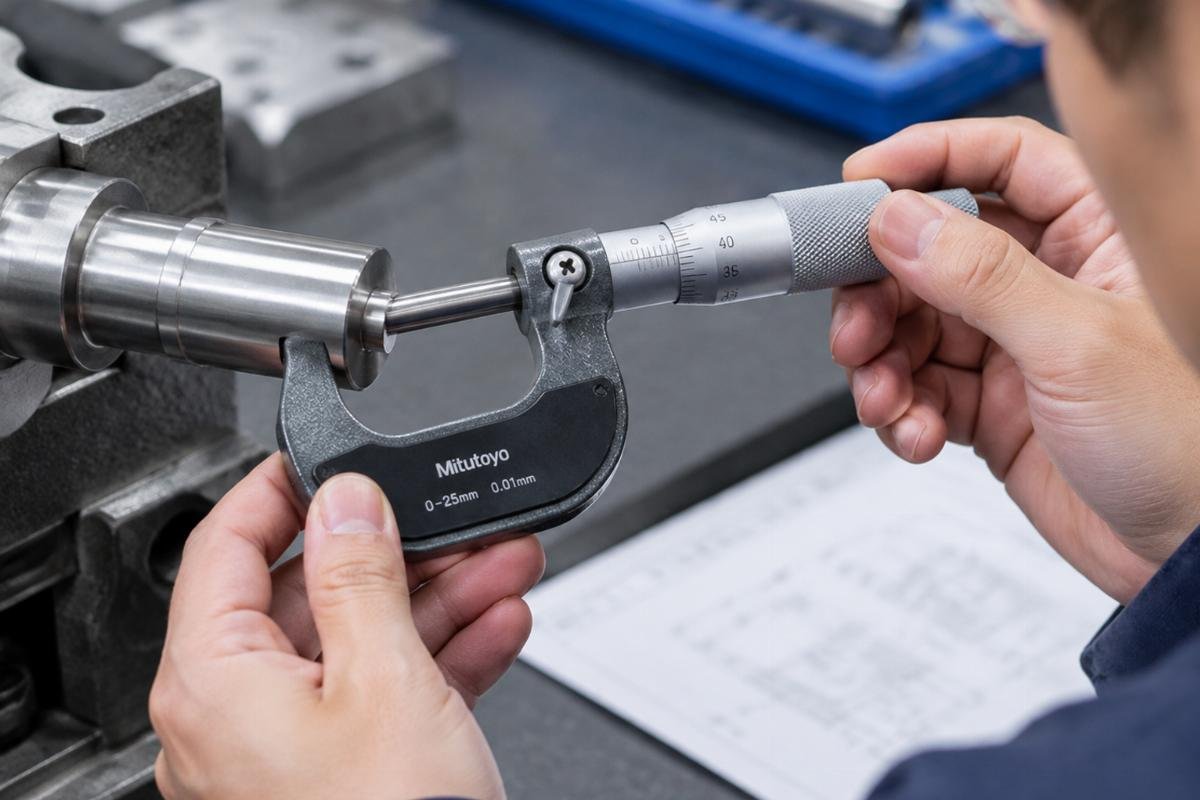
Shaft and housing dimensions must match the required tolerance classes. For standard industrial applications, specific fit classes ensure the correct level of interference or clearance. Using a micrometer to measure the shaft diameter and bore size confirms that the parts are within specification. Any deviation can cause excessive preload or looseness.
Cleanliness is non-negotiable. The work area should be free from dust and debris. Bearings should remain in their original packaging until the moment of installation. If cleaning is necessary, only approved solvents should be used, and the bearing must be dried completely to prevent corrosion.
The method of mounting also matters. Induction heaters are preferred for larger bearings as they provide uniform expansion without mechanical stress. Hammering or using direct force can damage the rolling elements and raceways. If a press is used, the force must be applied evenly to the correct ring.
A common mistake observed in many plants is the use of dirty or damaged tools. A dented sleeve or a contaminated heater can transfer imperfections to the bearing surface. Ensuring that all installation tools are in good condition is a simple yet vital check.
By adhering to these pre-installation checks, maintenance teams create a solid foundation for reliable operation. This attention to detail is a core component of any effective FAG bearing maintenance checklist. It prevents the kind of violent disassembly issues that once caused me so much trouble in international logistics.
How to Match Lubricants and Calculate Intervals?
Selecting the right grease type and volume based on speed and temperature prevents burnout. More is not always better.
Lubrication is the lifeblood of a bearing. Choosing the wrong lubricant or applying it incorrectly can be as damaging as no lubrication at all. The key is to match the grease properties to the operating conditions.
Factors such as speed, temperature, and load determine the required viscosity and additive package. High-speed applications need low-viscosity base oils to minimize friction, while high-load scenarios benefit from higher viscosity and extreme pressure additives. Temperature stability is also crucial. Greases that break down under heat lose their protective film, leading to metal-to-metal contact.
Calculating the correct relubrication interval is equally important. Over-lubrication causes churning, which generates excess heat and can blow out seals. Under-lubrication leads to starvation and wear. The general rule is to replenish a small percentage of the total grease volume at regular intervals, rather than filling the housing completely.
| Condition | Grease Characteristic | Relubrication Frequency |
|---|---|---|
| High Speed | Low Viscosity Base Oil | Frequent, Small Volume |
| High Load | High Viscosity, EP Additives | Moderate, Standard Volume |
| High Temperature | Synthetic Base, Thermal Stability | Frequent, Monitor Condition |
| Wet Environment | Water-Resistant, Corrosion Inhibitors | Frequent, Seal Check |
This table provides a qualitative guide for selecting lubricants. Exact intervals depend on the specific application and should be verified against technical data sheets.
A US buyer once reported that their team was greasing bearings until purge occurred, believing this ensured full coverage. This practice led to seal failure and contamination ingress. After adjusting the volume to the recommended amount and switching to a synthetic grease suitable for their high-temperature environment, the bearing temperature dropped noticeably, and service life extended meaningfully.
Matching lubricants correctly is a technical skill that pays dividends. It is a critical section of the FAG bearing maintenance checklist that prevents the thermal failures often mistaken for material defects.
What Should the Routine Inspection Checklist Include?
Monitoring temperature, vibration, and noise catches early warning signs of degradation. Early detection allows for planned replacement.
Routine inspection is the final line of defense against unplanned downtime. A structured inspection routine helps identify issues before they become catastrophic. The three primary indicators of bearing health are temperature, vibration, and noise.
Temperature monitoring is straightforward. A sudden rise in operating temperature often indicates lubrication problems or excessive load. Infrared thermometers or mounted sensors can track these changes over time. Consistent baseline readings are essential for identifying deviations.
Vibration analysis provides deeper insights into internal condition. Changes in vibration patterns can signal early-stage fatigue, misalignment, or imbalance. Regular spectrum analysis helps distinguish between different fault types. Noise is another useful indicator. Unusual sounds such as grinding, squealing, or clicking suggest damage or contamination.

When anomalies are detected, immediate action is required. This might involve relubrication, realignment, or scheduled replacement. Having access to genuine replacement parts is crucial for minimizing downtime during these interventions. Our team supports failure analysis and maintains a spot inventory of genuine FAG products to assist in urgent MRO replacements. This ensures that when an issue is identified, the solution is readily available.
A routine inspection checklist should include:
- Visual inspection for leaks or seal damage.
- Temperature measurement at standardized points.
- Vibration reading comparison against baseline data.
- Auditory check for unusual noises.
- Verification of lubrication levels and condition.
By consistently applying these checks, maintenance teams can transition from reactive repairs to predictive maintenance. This shift is the ultimate goal of implementing a robust FAG bearing maintenance checklist. It transforms maintenance from a cost center into a reliability asset.
Conclusion
Precision in installation and lubrication prevents costly downtime. A disciplined approach saves more than just money.
Implementing a rigorous FAG bearing maintenance checklist is the most effective way to ensure reliability in US plants. By focusing on proper installation, correct lubrication matching, and routine inspection, facilities can avoid the majority of premature failures. This proactive strategy reduces unplanned downtime and extends equipment life.
For MRO managers and engineers, the key is consistency. Every step, from pre-installation checks to daily monitoring, contributes to overall system health. When issues do arise, having access to genuine parts and technical support ensures quick resolution. This holistic approach to maintenance is what separates high-performing facilities from those struggling with frequent breakdowns.



