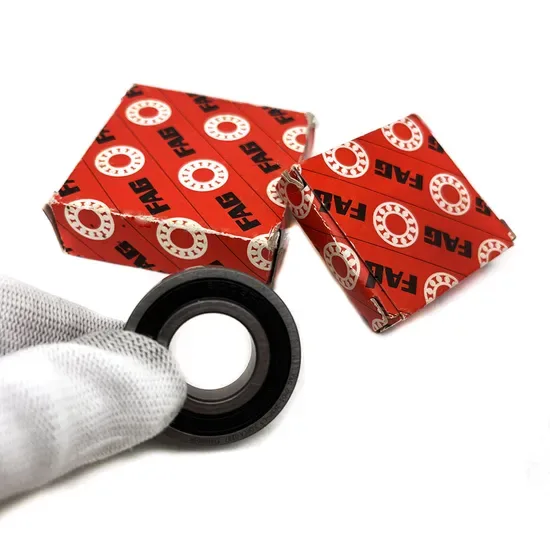
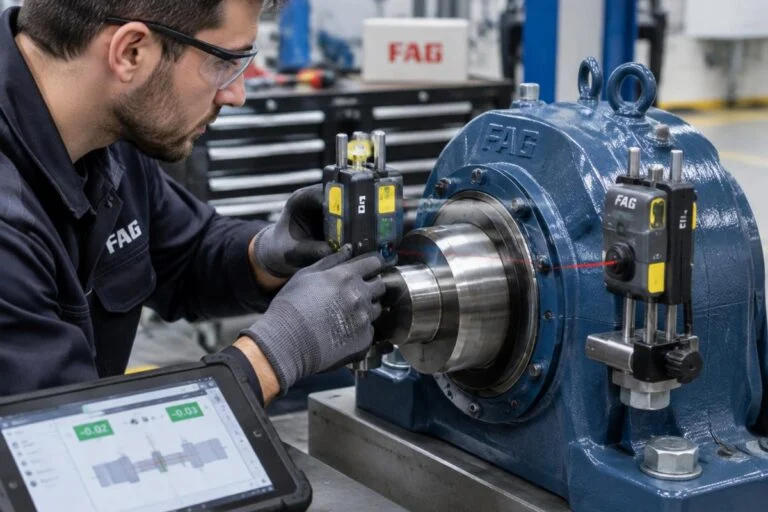
Buying genuine FAG bearings is not enough to pass a terminal factory audit.
To secure long-term MRO contracts and pass compliance checks, you must provide complete FAG bearing replacement records that link every installed unit to its original purchase invoice, batch number, and specific installation parameters. Auditors verify traceability and installation integrity, not just part authenticity. Without these documents, even authentic components are treated as non-compliant spares.
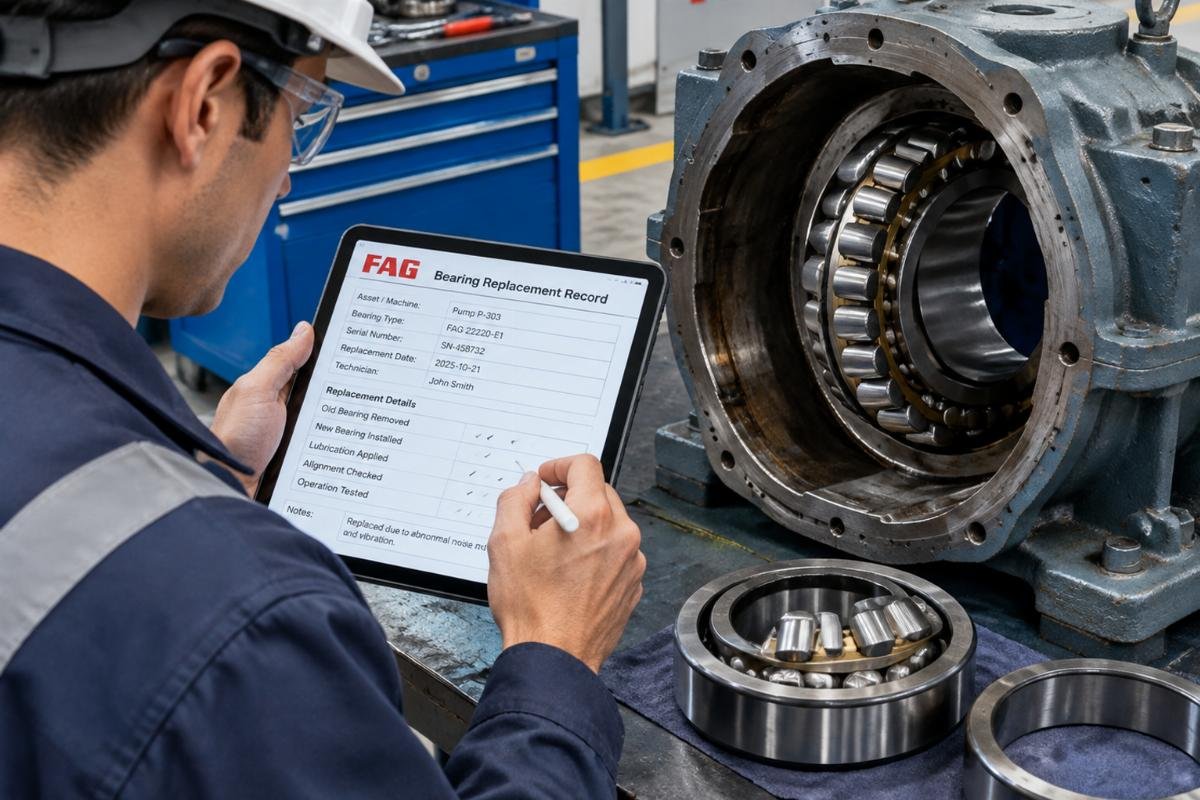
I learned this the hard way in Dongguan. Early in my career, I handled after-sales service for injection molding plants, specializing in FAG spindle bearing failure analysis. The work was technical and precise. However, when I moved to a packaging plant project, I focused solely on the mechanical swap. We replaced a set of spherical roller bearings on a critical conveyor line. The machinery ran smoothly. The client was happy. Six months later, their terminal client conducted a rigorous factory audit. The auditors demanded proof of the bearing replacement. They wanted installation clearances, torque values, and batch traceability. I had none. The documentation was missing. The plant nearly lost its annual maintenance contract. That incident shifted my perspective entirely. Now, when I supply FAG bearings to overseas MRO clients, the physical product is only half the delivery. The other half is the paperwork.
Why Are FAG Bearing Replacement Records Crucial for Audits?
Most buyers assume that providing a certificate of authenticity is sufficient for compliance. This is a dangerous misconception. Terminal factories, especially in regulated industries like food processing, pharmaceuticals, and heavy manufacturing, operate under strict quality management systems. They do not just check if the part is real; they check if the part was installed correctly and can be traced back to its source.
Auditors look for a closed loop. They want to see that the bearing installed in Machine A at Time B came from Batch C, which was purchased from Supplier D. If there is a gap in this chain, the entire maintenance event is flagged as non-compliant. This is not about distrusting the supplier; it is about mitigating risk. If a bearing fails prematurely, the factory needs to know if it was a manufacturing defect, a storage issue, or an installation error. Without detailed FAG bearing replacement records, they cannot determine the root cause.
In my current role, I see distributors lose bids not because their prices are high, but because their documentation is weak. A European wind farm operator once told me that they switched suppliers because the new vendor provided automated traceability logs with every shipment. The previous vendor, despite offering lower prices, could only provide generic invoices. The ability to produce instant, verifiable FAG bearing replacement records became the deciding factor. It reduced their audit preparation time from weeks to hours.

What Key Parameters Must Be Logged During FAG Bearing Replacement?
A simple log entry stating “bearing replaced” is useless for audit purposes. To create robust FAG bearing replacement records, you must capture specific technical parameters during the installation process. These data points prove that the bearing was handled according to manufacturer specifications and industry best practices.
The following parameters are essential for a compliant log:
| Parameter Category | Specific Data Points to Record | Audit Relevance |
|---|---|---|
| Identification | Full part number, serial number (if applicable), batch/lot number | Links the physical item to the purchase order and certificate of conformity. |
| Pre-Installation | Shaft and housing dimensions, surface finish verification | Proves that the mating components were within tolerance before installation. |
| Installation Method | Method used (hydraulic, induction heating, mechanical press), heating temperature (if applicable) | Ensures no thermal damage or mechanical stress was introduced during mounting. |
| Clearance & Fit | Initial internal clearance, final residual clearance after mounting | Critical for predicting service life and preventing premature failure due to preload. |
| Torque Values | Locknut torque, housing bolt torque | Verifies that the assembly was secured to specified mechanical standards. |
| Lubrication | Lubricant type, quantity, brand, batch number | Ensures compatibility and prevents chemical degradation or starvation. |
Recording these details requires discipline. In an injection molding plant I consulted for, the maintenance team started using standardized digital forms for every spindle bearing change. They recorded the induction heater temperature and the exact moment the bearing reached the target expansion. When an auditor asked why a specific bearing had a shorter lifespan, the team pulled up the FAG bearing replacement records. The data showed that the shaft diameter was at the upper limit of tolerance, which affected the fit. This level of detail turned a potential complaint into a validated engineering observation.
Without these parameters, you are guessing. With them, you are managing assets. The difference is visible in the audit report. One column shows “compliant,” the other shows “observation.”

How to Build a Compliant Traceability System for MRO Sites?
Building a traceability system does not require expensive software. It requires a consistent process that maps every replaced FAG bearing to its original purchase invoice and batch. The goal is to make retrieval instant. When an auditor asks for the history of a specific machine, you should be able to produce the file within minutes, not days.
Start with the receiving process. When genuine FAG bearings arrive, do not just store them. Assign an internal tracking ID if the manufacturer’s batch number is not easily readable on the outer box. Link this ID to the supplier’s invoice and the certificate of analysis. Store this digital copy in a centralized folder accessible to the maintenance team.
Next, integrate this data into the work order system. When a technician issues a bearing from stock, the system should prompt them to enter the batch number. This step is often skipped in busy environments, leading to gaps in FAG bearing replacement records. To enforce this, some sites use barcode scanners. Others use simple paper tags that travel with the bearing until installation. The tag is then scanned or entered into the log once the job is complete.
For MRO distributors, this system is a value-added service. I now include a QR code with every bulk shipment of FAG bearings. Scanning the code leads to a portal where the buyer can download the batch-specific certificates and a template for FAG bearing replacement records. This small addition helps my clients maintain their own compliance. It transforms a transactional relationship into a partnership. A Middle East steel mill adopted this approach. They reduced their time spent searching for documents by a significant margin. Their auditors noted the improvement in their annual review.
The key is consistency. Every bearing, every batch, every invoice. No exceptions.

How to Prepare Documentation Packages for Terminal Factory Audits?
Preparing for an audit is not a last-minute scramble. It is the culmination of daily discipline. The documentation package should be compiled continuously, not assembled retroactively. A well-prepared package for FAG bearing replacement records includes three main components: the procurement trail, the installation log, and the post-installation verification.
The procurement trail proves authenticity. It includes the commercial invoice, packing list, and the manufacturer’s certificate of conformity. Ensure that the batch numbers on these documents match the physical labels on the bearings. Discrepancies here are immediate red flags for auditors.
The installation log is the technical core. This is where the parameters mentioned earlier reside. Use a standardized template. Consistency in format makes it easier for auditors to review. Include photos of the installation process if possible. A photo of the heating induction coil on the bearing inner ring is worth a thousand words. It proves the method was correct.
The post-installation verification includes initial vibration readings and temperature checks. This data shows that the bearing was functioning correctly immediately after installation. It closes the loop.
When I supply large orders to regional distributors, I provide a sample documentation package. It shows them how to structure their own files. One distributor in Southeast Asia used this template to win a contract with a multinational automotive manufacturer. The client was impressed by the clarity and completeness of the FAG bearing replacement records. It signaled professionalism and reliability.
Do not underestimate the power of organization. In a world of complex supply chains, clarity is a competitive advantage.

Conclusion
Comprehensive documentation is the backbone of credible maintenance operations.
Passing terminal factory audits requires more than genuine parts; it demands verifiable proof of proper handling and installation. By maintaining detailed FAG bearing replacement records, you protect your clients’ operational continuity and secure your position as a trusted partner. Traceability is not just a bureaucratic requirement; it is a technical safeguard that demonstrates competence and reliability in every transaction.