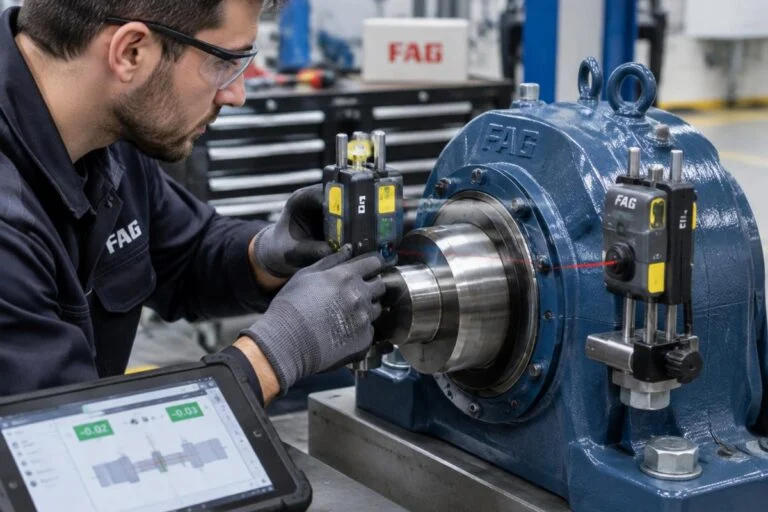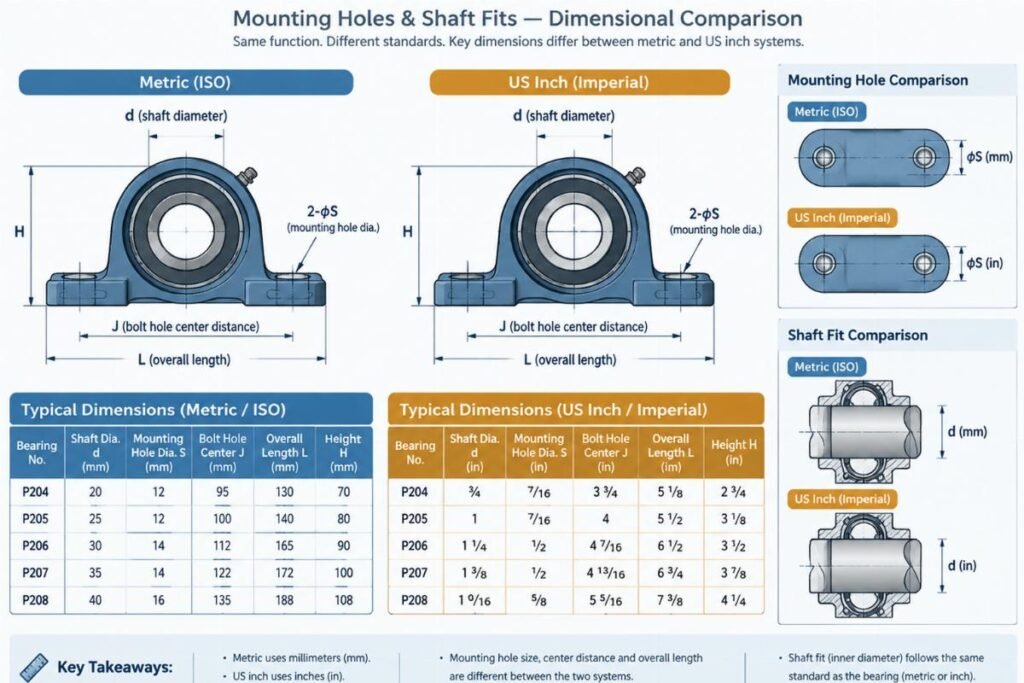
Most bearing failures stem from a simple unit mismatch, not poor manufacturing quality.
Installing FAG bearings for US inch pillow blocks requires strict adherence to imperial dimensional standards and precise torque application. The core issue is rarely the bearing itself but the forced integration of metric housings with inch-series inserts or the use of incorrect tightening protocols. To ensure reliability, operators must verify shaft diameters against ABMA inch standards, apply manufacturer-specified set screw torque to prevent inner ring distortion, and source components with full traceability to avoid counterfeit or mislabeled stock. This approach minimizes unplanned downtime in harsh industrial environments where seal integrity and fit precision are critical.
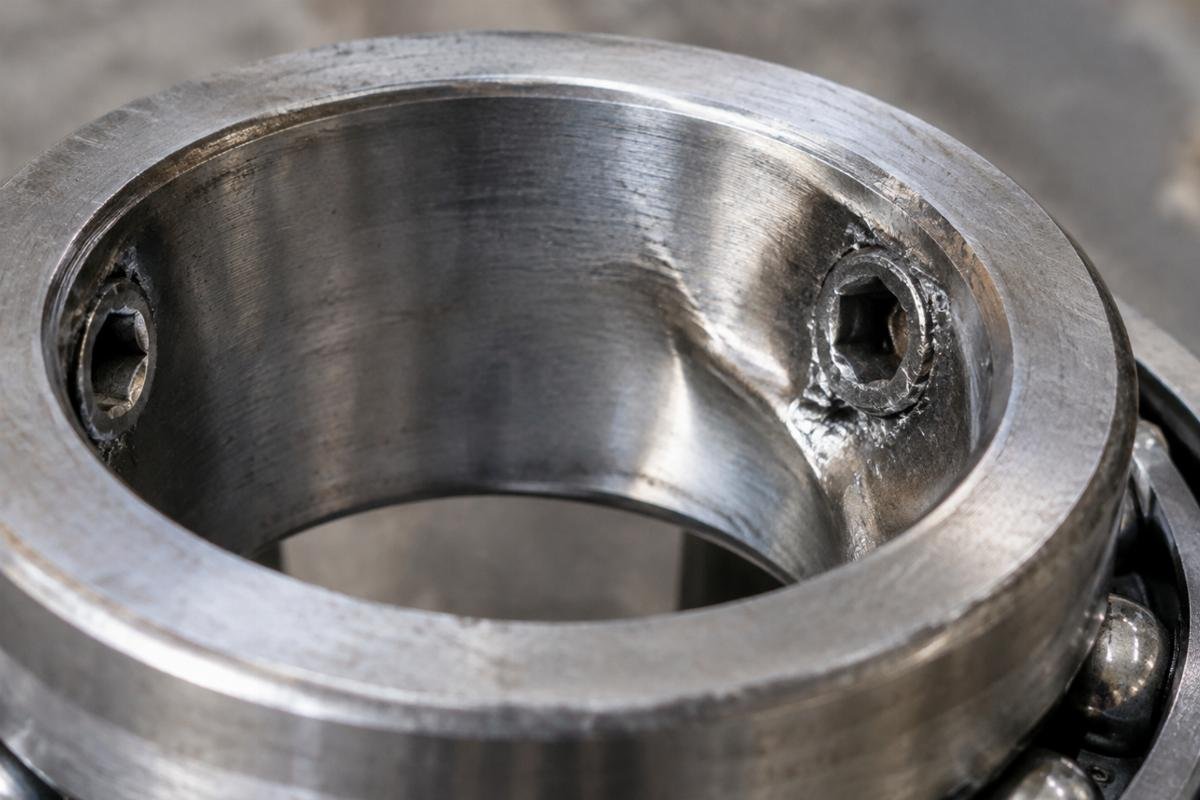
I still recall the humid air inside a desalination plant near Riyadh during a major overhaul. The maintenance team was under pressure to restart a critical pump line. They had received a shipment of what they believed were compatible replacement units. However, upon inspection, I noticed the housing bolt patterns did not align perfectly with the baseplate, and the set screws seemed unusually loose despite being tightened by hand. The team had attempted to install an inch-series insert bearing into a metric housing adapter, assuming the slight size difference could be forced out. Within months, the outer ring developed deep grooves due to rotational slip, exacerbated by high temperatures and fine sand ingress. That failure was not a defect in the steel; it was a fundamental error in understanding the incompatibility between metric and imperial systems.
Why Do US Inch Pillow Blocks Fail Prematurely?
The majority of early failures in heavy industry are misdiagnosed as material fatigue when they are actually installation errors. Two primary culprits dominate this landscape: metric-inch mismatch and improper torque application.
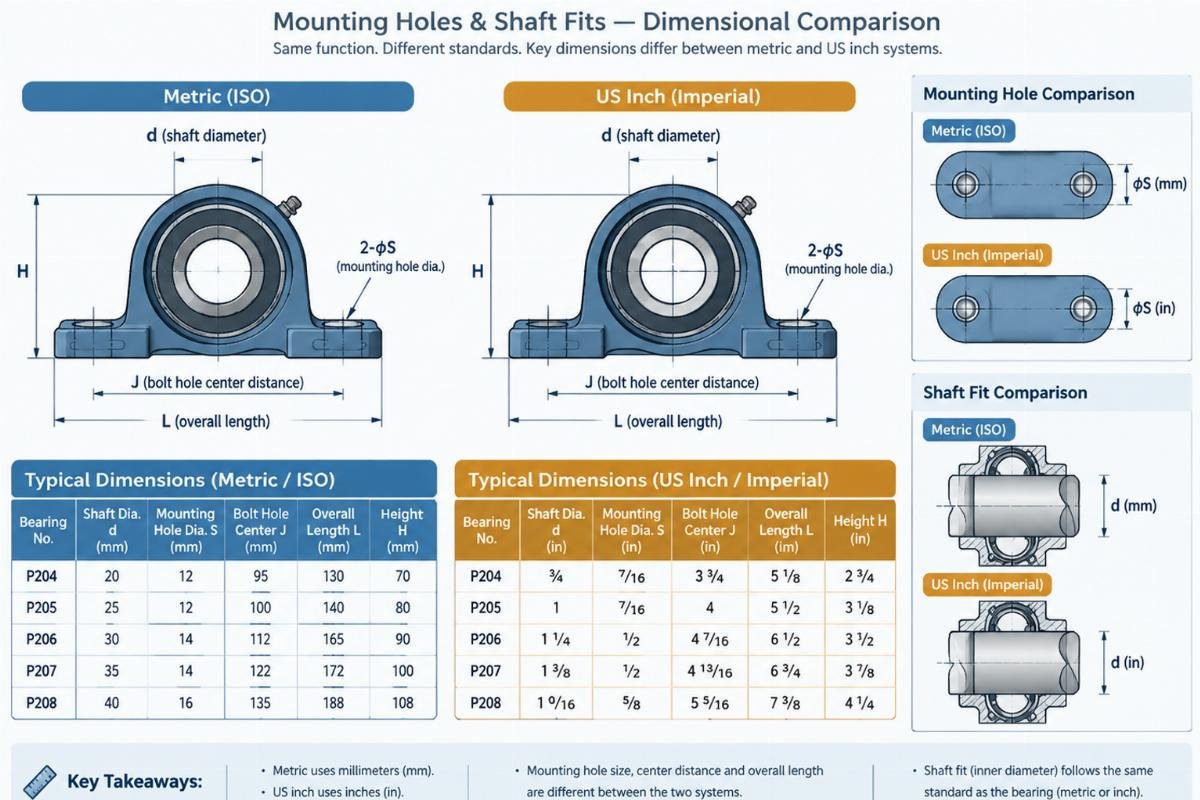
When a distributor or end-user sources FAG bearings for US inch pillow blocks, they must recognize that the inch series is not merely a metric bearing with converted labels. The bore sizes, housing dimensions, and bolt hole spacings follow specific American Bearing Manufacturers Association (ABMA) standards. Forcing a metric housing onto an inch shaft, or vice versa, creates micro-gaps that lead to fretting corrosion and eventual seizure. In high-vibration environments like mining or agriculture, these gaps amplify, causing the bearing to walk off the shaft.
Another frequent error is the belief that tighter set screws equal better grip. Over-torquing distorts the inner ring raceway, leading to premature spalling and noise. Conversely, under-torquing allows the inner ring to slip relative to the shaft, generating heat and wear debris. Both scenarios result in catastrophic failure long before the bearing reaches its calculated fatigue life.
How to Verify Inch Dimensions Before Installation?
Verification is the first line of defense against premature failure. Before any tool touches the bearing, the physical dimensions must be cross-checked against the original equipment manufacturer (OEM) specifications.
| Dimension Feature | US Inch Standard Characteristics | Metric Equivalent Risks |
|---|---|---|
| Shaft Fit | Designed for standard inch shafts (e.g., 1″, 1-3/16″) with h9/g9 tolerances. | Metric shafts (e.g., 30mm, 35mm) will not fit securely, leading to slip. |
| Housing Bolt Holes | Spacing follows imperial patterns (e.g., center-to-center distances in inches). | Metric housings may have bolt holes that do not align with inch-standard baseplates. |
| Set Screw Thread | Typically UNC or UNF threads. | Metric threads (M-series) will not engage correctly, stripping the housing or screw. |
A European wind farm operator once faced repeated gearbox bearing failures. Upon investigation, it was discovered that their procurement team had sourced “equivalent” bearings from a non-specialized supplier. The bearings were metric inserts placed in inch housings using shims to fill the gap. This workaround failed under variable load conditions, causing significant downtime. By switching to verified FAG bearings for US inch pillow blocks with proper documentation, they eliminated the fitment issues entirely.
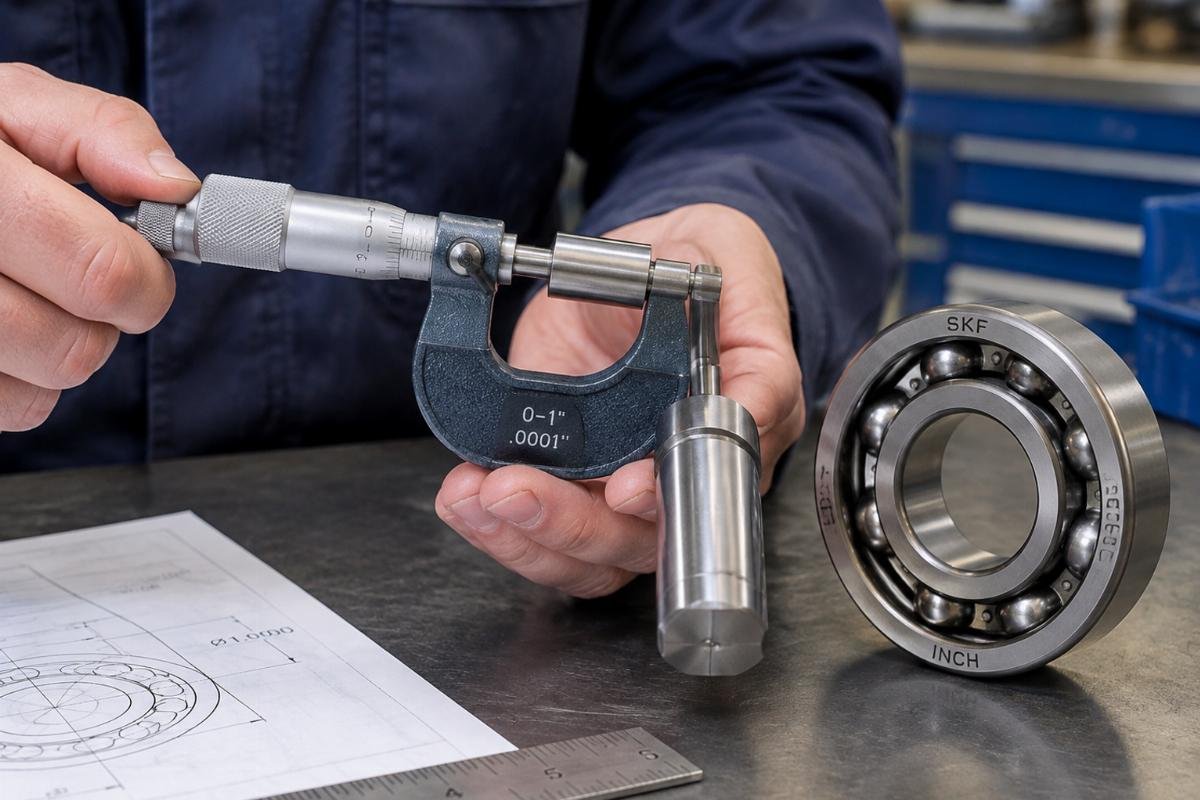
Always measure the shaft diameter with a micrometer and compare it to the bearing’s specified bore tolerance. Do not rely solely on part numbers, as cross-references can sometimes be inaccurate or refer to obsolete designs. If the shaft shows signs of wear, it should be repaired or replaced to ensure a proper fit. A loose fit cannot be corrected by tightening set screws alone.
What is the Correct Set Screw Torque for Inch Bearings?
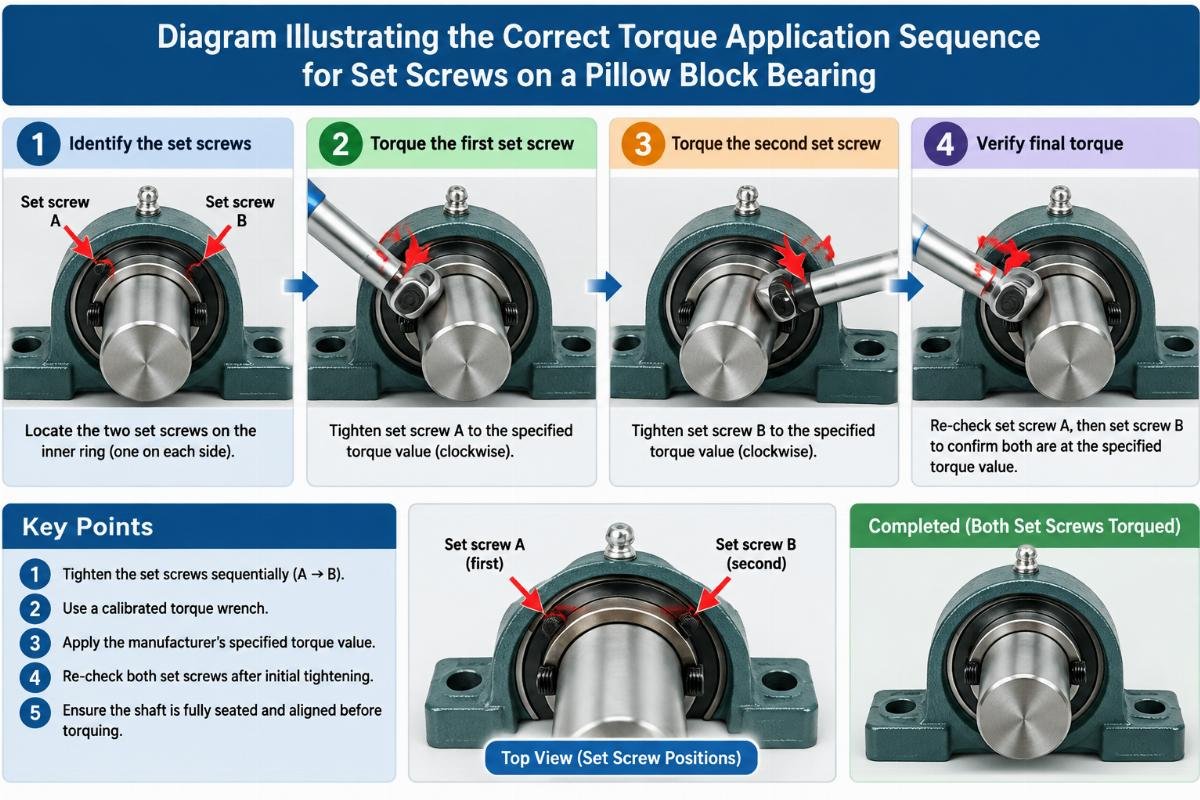
Torque specification is not a suggestion; it is a critical parameter for bearing performance. Each bearing size and series has a specific torque value recommended by the manufacturer to secure the inner ring without damaging it.
For FAG bearings for US inch pillow blocks, the torque values are determined based on the screw size, thread pitch, and material strength. Using a torque wrench is mandatory. Hand-tightening or using an impact driver without a torque setting leads to inconsistent clamping force.
- Clean the Threads: Ensure the set screw holes and threads are free of debris, rust, or old locking compound. Contaminants can affect the torque reading and holding power.
- Apply Lubricant if Specified: Some manufacturers recommend a light lubricant on the set screw threads to ensure accurate torque application. Check the technical datasheet for specific instructions.
- Tighten to Specification: Use a calibrated torque wrench to tighten the set screws to the recommended value. Tighten evenly if multiple screws are present.
- Verify Alignment: After tightening, rotate the bearing by hand to ensure it moves freely without binding. Binding indicates potential inner ring distortion.
A conveyor system in a cement plant experienced severe vibration after a routine maintenance check. The technician had used an impact gun to tighten the set screws, exceeding the recommended torque by a significant margin. This distorted the inner ring, causing the balls to run unevenly and generating excessive heat. Replacing the bearing and adhering to the correct torque specs resolved the issue.
Over-torquing is as dangerous as under-torquing. It deforms the raceway, leading to premature fatigue. Always refer to the official installation guide for the specific bearing series. If the documentation is missing, contact a qualified supplier who can provide the technical datasheets.
How to Maintain Pillow Blocks in Harsh Environments?
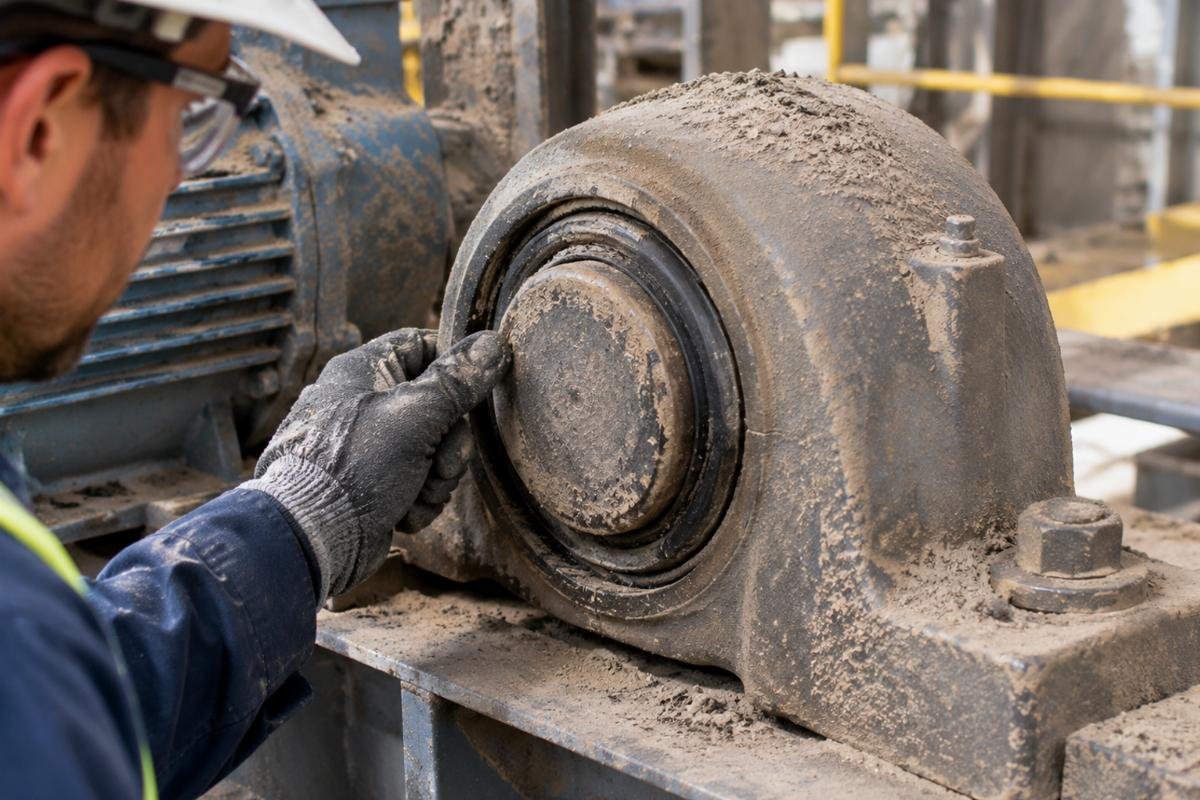
Harsh environments demand rigorous maintenance protocols. Dust, moisture, and extreme temperatures accelerate wear if seals are compromised or lubrication is neglected.
Regular re-lubrication is essential. Use the grease type specified by the manufacturer, ensuring compatibility with existing lubricants. Over-greasing can cause seal blowout, while under-greasing leads to metal-to-metal contact. Monitor the condition of the seals regularly. Replace them if they show signs of cracking, hardening, or damage.
In dusty environments like mining or agriculture, consider using bearings with enhanced sealing solutions. These seals provide better protection against particulate ingress, extending the service life of the bearing. Additionally, inspect the housing for cracks or corrosion that could compromise structural integrity.
A Middle East steel mill reduced unplanned downtime significantly by implementing a scheduled maintenance program for their FAG bearings for US inch pillow blocks. The program included regular torque checks, grease analysis, and seal inspections. This proactive approach allowed them to identify potential issues before they led to failure, saving substantial costs in emergency repairs and production losses.
Sourcing genuine parts with traceability is crucial here. Counterfeit bearings often use inferior seals and grease that degrade quickly in harsh conditions. Working with a supplier who provides full documentation ensures that the components meet the required standards for durability and performance.
Conclusion
Precision in installation and verification prevents the majority of bearing failures.
Success with FAG bearings for US inch pillow blocks relies on respecting imperial standards, applying exact torque, and maintaining rigorous inspection routines. Avoiding metric-inch mismatches and adhering to manufacturer guidelines ensures longevity and reliability in demanding industrial applications.