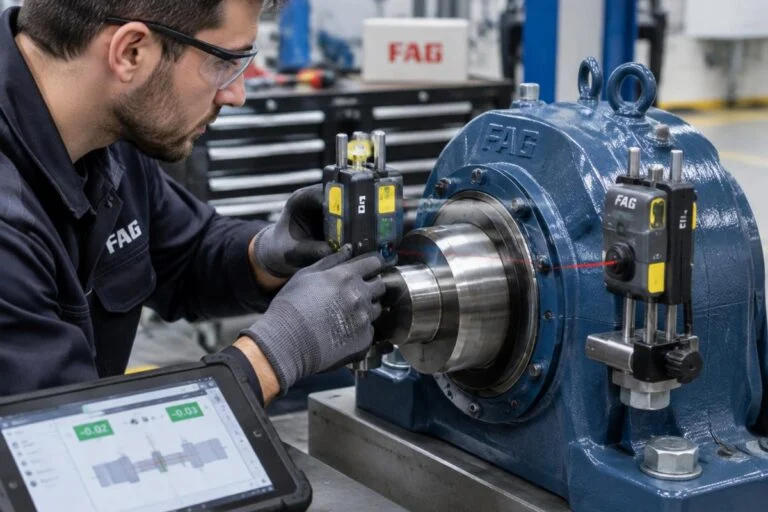
Most vibration alarms signal installation error, not bearing defect.
Effective vibration programs for FAG bearings require precise installation baselines and clearance calibration, not just sensor deployment. Without establishing a stable mechanical baseline during mounting, high-frequency data remains noise rather than diagnostic insight. The core argument is that sensors cannot compensate for improper mechanical installation; therefore, the program must start with strict adherence to FAG clearance standards before any spectrum analysis begins.
I still remember the humid air in that Midwest paper mill. The production line had stopped again. The maintenance team pointed proudly at their new monitoring dashboard, which was flashing red alerts for a critical cylindrical roller bearing. They assumed the bearing was failing prematurely. I asked to see the installation records. There were none. They had mounted the FAG unit using standard shop-floor practices, ignoring the specific internal clearance requirements for that load case. We pulled the bearing. The inner ring showed classic spalling, but the pattern suggested thermal expansion issues from day one, not material fatigue. That failure cycle lasted less than three months. It was not a product defect; it was a baseline error. This experience shapes how I view every inquiry about Vibration programs for FAG bearings today.

Why Do Standard Vibration Programs Fail on FAG Bearings?
Sensors measure movement, not intent. A vibration sensor will faithfully report the oscillation of a housing, but it cannot distinguish between a defect in the steel and a defect in the fit. Most standard programs fail because they treat the bearing as an isolated component rather than part of a mechanical system defined by tolerances.
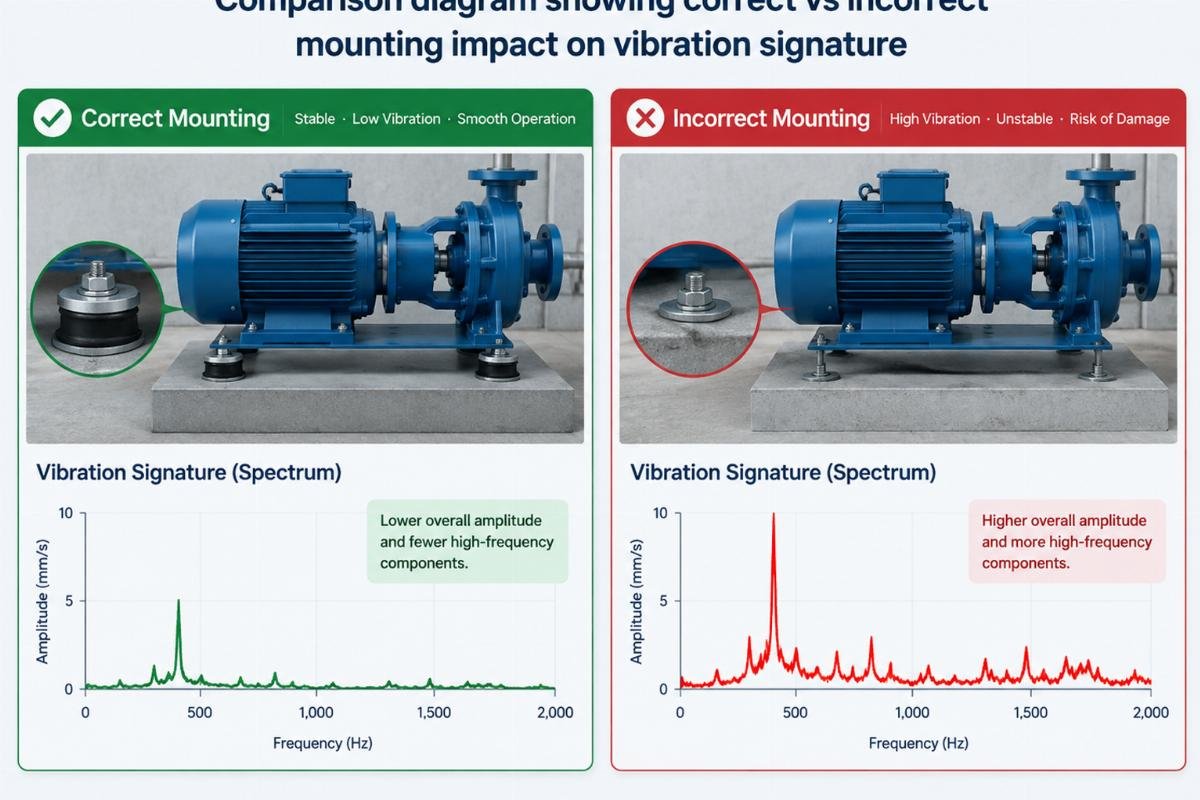
When a FAG bearing is installed with incorrect clearance, the rolling elements do not rotate freely within the designed load zone. Instead, they slide or skid, generating heat and abnormal frequencies that mimic early-stage spalling.. If the baseline is set after this improper installation, the “normal” state is already compromised. The monitoring system then flags any deviation from this flawed baseline, leading to unnecessary replacements or, worse, missed true failures because the threshold was set too high to accommodate the initial noise.
In my work with various industrial clients, I often see teams deploy advanced analytics on top of shaky mechanical foundations. They look for complex patterns in the data while ignoring the simple reality of the shaft fit. For Vibration programs for FAG bearings to work, the mechanical integrity must be verified first. This means checking the housing bore and shaft diameter against ISO tolerance classes before the bearing even leaves its packaging. Without this step, the vibration data is merely a record of installation mistakes.
How to Establish a Reliable Vibration Baseline During Installation?
A reliable baseline is not a single measurement; it is a documented process. It begins with the selection of the correct internal clearance. FAG bearings often come in C3 or C4 clearance classes for industrial applications where thermal expansion is a factor. Choosing the wrong class is a common error..
The process involves several critical steps:
- Verify Dimensions: Measure the shaft and housing to ensure they fall within the specified tolerance bands. Any deviation here changes the effective clearance of the bearing once mounted.
- Control Mounting Force: Use induction heaters or hydraulic nuts to mount the bearing. Avoid hammering, which can damage the raceways and create immediate microscopic defects that show up as high-frequency noise.
- Initial Run-in: Run the machine at low speed and monitor the vibration. Record this spectrum as the true baseline. This should happen when the bearing is healthy and properly seated.
- Document Clearance: Record the actual clearance measured during installation. This value is crucial for future failure analysis.
I recall a heavy industry scenario where we implemented this rigorous baseline protocol. During the initial startup, we noticed a slight deviation in the vibration spectrum—about ten to twenty percent above the expected noise floor. Instead of ignoring it, we stopped and checked the alignment. It turned out the motor foot was slightly uneven. Correcting this before full-load operation saved the bearing from premature wear. This highlights why Vibration programs for FAG bearings must include installation verification as a mandatory step.
What Are the Key Frequency Signatures for FAG Bearing Faults?
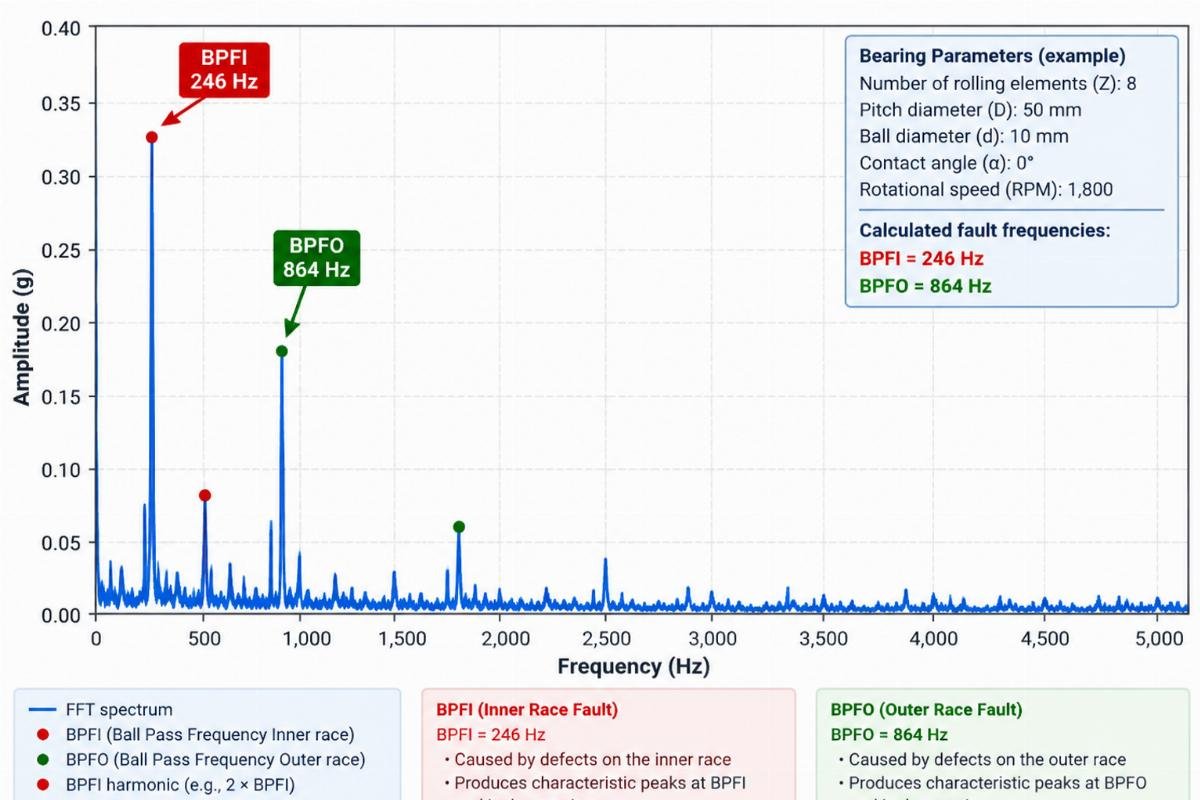
Once the baseline is set, the focus shifts to detecting deviations. Fast Fourier Transform (FFT) spectrum analysis is the primary tool for this. It breaks down the complex vibration signal into individual frequencies, allowing engineers to pinpoint the source of the problem.
Different faults generate distinct frequency signatures. Inner ring spalling typically produces peaks at the ball pass frequency of the inner ring (BPFI) and its harmonics. Outer ring defects appear at the ball pass frequency of the outer ring (BPFO).. However, these frequencies can be masked by other machinery noise if the baseline is not clean.
In the paper mill case mentioned earlier, the FFT showed high energy in the non-synchronous frequencies, which initially confused the team. But when we overlaid this with the known geometry of the cylindrical roller bearing, the pattern matched inner ring distress caused by excessive preload. This is a subtle distinction. A generic alarm might just say “high vibration,” but a detailed spectral analysis can tell you whether it is a lubrication issue, a misalignment, or a genuine raceway defect.
For MRO managers, understanding these signatures is vital. It allows for targeted interventions rather than blanket replacements. When sourcing replacements, knowing the specific fault mode helps in selecting the right upgrade. For instance, if misalignment is a recurring issue, a spherical roller bearing might be a better choice than a cylindrical one, even if the original design called for the latter. This is where technical support becomes invaluable in optimizing Vibration programs for FAG bearings.
How to Integrate Failure Analysis into Your MRO Strategy?
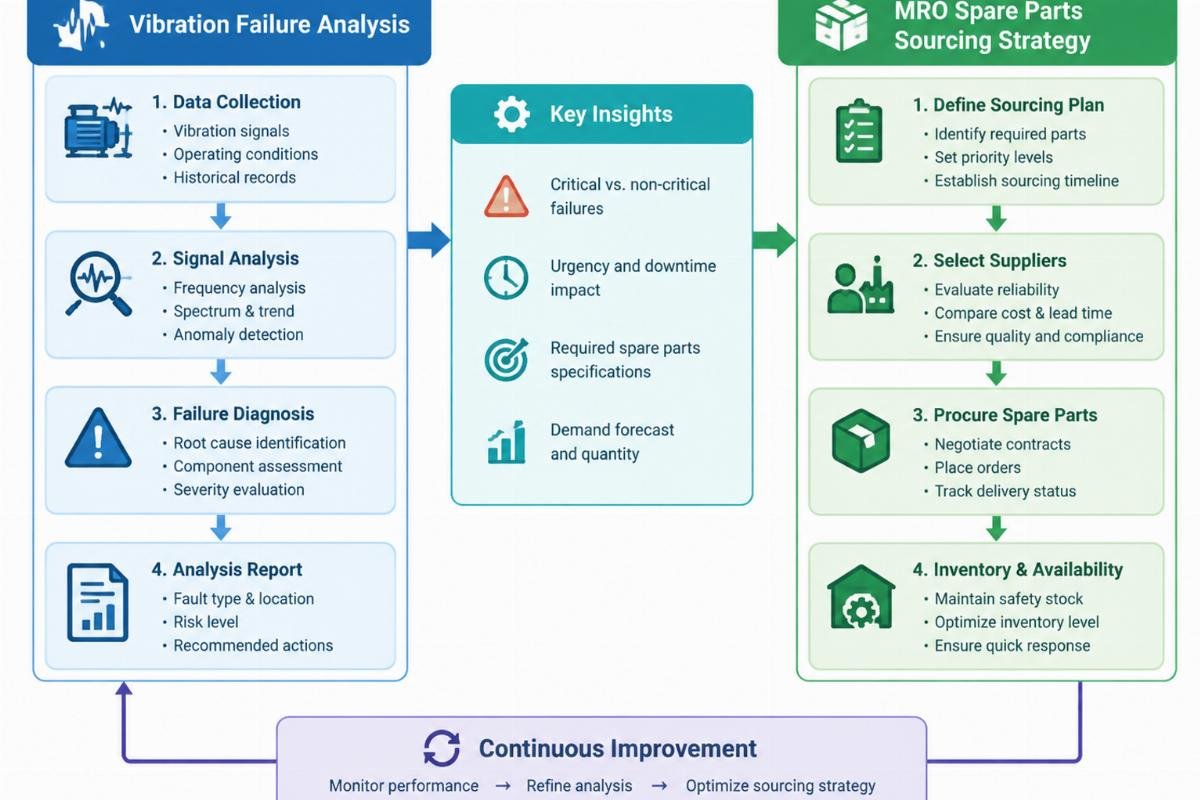
Vibration data should not sit in a silo. It must feed into the broader MRO strategy, influencing spare parts sourcing and replacement timing. When a failure occurs, the vibration logs provide a forensic trail. They tell you not just that it failed, but why it failed.
This information is critical for cross-brand equivalent selection. In mixed-batch sourcing scenarios, traceability documentation is key.. If a specific batch of bearings consistently shows early signs of distress in the vibration data, it may indicate a manufacturing variance or a mismatch with the application conditions. By analyzing this data, you can adjust your procurement criteria.
I often assist clients in reviewing their failure histories. One client in the mining sector found that their standard deep-groove ball bearings were failing due to shock loads. The vibration data showed frequent high-amplitude spikes. By switching to spherical roller bearings with higher dynamic load ratings, they extended the service life meaningfully. This decision was driven by data, not guesswork.
Moreover, having access to genuine products with complete traceability ensures that the replacement bearing matches the performance of the original. Counterfeit or substandard bearings may have different internal geometries, which alters the vibration signature and renders the baseline useless. Ensuring that your supply chain provides authentic FAG products is therefore a technical necessity, not just a commercial one. This integration of failure analysis into sourcing decisions is what makes Vibration programs for FAG bearings truly effective in reducing unplanned downtime.
Conclusion
Data without context is just noise.
Successful monitoring relies on mechanical precision first and digital analysis second. By establishing accurate baselines and interpreting spectral data correctly, plants can move from reactive repairs to predictive maintenance. This approach minimizes downtime and extends asset life, turning vibration monitoring from a cost center into a strategic advantage.