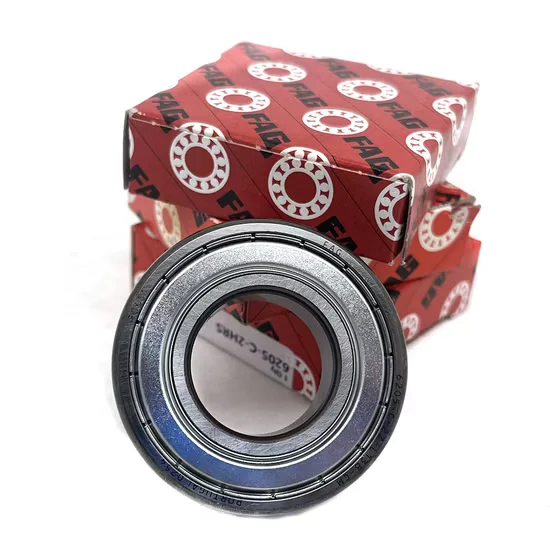
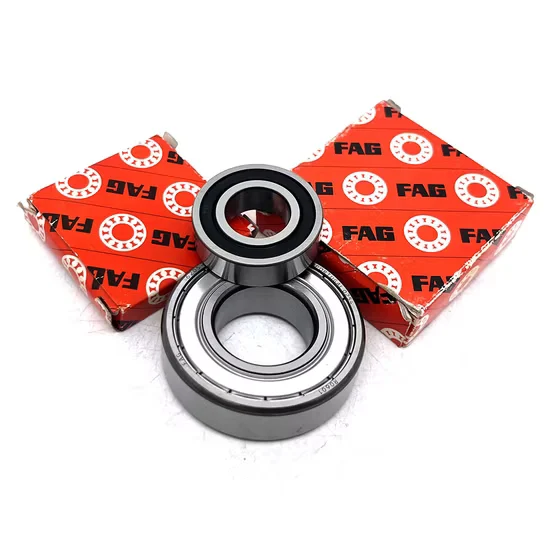
The lowest price often carries the highest risk of cleanroom contamination.
Sourcing authentic FAG bearings for US semiconductor fabs demands a rigid verification protocol where traceability documentation outweighs initial unit cost. To prevent catastrophic particle shedding and production downtime, buyers must validate batch numbers against official manufacturer records, demand full material certificates, and reject any supplier unable to provide a complete chain of custody from the factory floor to the port of entry.
I still recall the silence on the other end of the phone when a quality manager in Arizona told me their wafer handling line had stopped. The culprit was not a design flaw, but a batch of vacuum pump bearings that looked perfect to the naked eye. Under microscopic inspection in their ISO Class 1 cleanroom, the seals were shedding micro-particles at an alarming rate. The batch number on the box did not match the internal laser etching on the bearing ring. That mismatch meant the parts were likely grey market stock, stored in uncontrolled humidity before being repackaged. For a semiconductor fab, this is not just a maintenance issue; it is a yield crisis. This experience reshaped how I view procurement. It is not about moving boxes; it is about guaranteeing purity.
When you are responsible for the uptime of lithography or etching equipment, the margin for error is zero. The following guide details how to navigate the complex landscape of high-precision bearing procurement, ensuring that every component entering your facility meets the stringent requirements of modern semiconductor manufacturing.
Why Standard Bearings Fail in Semiconductor Fabs?
Standard industrial bearings are engineered for durability in harsh environments like mining or construction, where heavy loads and shock resistance are paramount. Semiconductor fabrication, however, operates in a fundamentally different paradigm. The primary enemy is not load, but contamination.
In a fab, even a single micron-sized particle can ruin a batch of wafers. Standard bearings often use lubricants and seals that are not optimized for ultra-high vacuum (UHV) or cleanroom environments. Over time, these components can outgas or shed particles, compromising the ISO class of the room. Furthermore, the precision requirements for wafer handling robots are extreme. Any slight deviation in runout or vibration can lead to misalignment during the transfer process, causing mechanical damage to the fragile silicon substrates.
| Feature | Standard Industrial Bearing | Semiconductor-Grade FAG Bearing |
|---|---|---|
| Cleanliness Level | Basic cleaning, visible grease residue | Ultra-clean, washed for low particle count |
| Lubrication | General purpose lithium-based | Specialized low-outgassing, vacuum-compatible |
| Seal Material | Standard rubber compounds | Low-particle shedding, chemically resistant elastomers |
| Traceability | Batch level often missing | Full batch-to-origin documentation required |
| Precision Class | P0 or P6 typical | P5 or higher for critical applications |
A European equipment builder once shared how they switched from standard commercial bearings to precision-grade FAG units for their loading ports. The change was not driven by a desire for longer life, but by the need to reduce vibration signatures that were interfering with sensitive metrology tools. The result was a noticeable improvement in process stability.
The key takeaway is that “good enough” for a pump in a water treatment plant is dangerously inadequate for a vacuum pump in a fab. The cost of a failed bearing is not just the replacement part; it is the lost production time and the potential scrapping of high-value wafers.
How to Verify Genuine FAG Bearings?
Counterfeit bearings are a pervasive issue in the global supply chain. In the semiconductor industry, where reliability is non-negotiable, the risk of introducing counterfeit parts is unacceptable. Visual inspection alone is insufficient. Modern counterfeits can replicate packaging and external markings with high fidelity. The true test lies in the documentation and the microscopic details of the component itself.
Verification starts with the traceability matrix. Every genuine FAG bearing comes with a unique batch number that can be traced back to the specific production line and date. This number must match across the packaging, the bearing ring, and the accompanying certificate of conformity. If a supplier cannot provide this link, the parts should be considered suspect.
I once audited a shipment destined for a US buyer where the paperwork seemed complete at first glance. However, the material certificate lacked the specific heat treatment details required for high-precision applications. Upon deeper inquiry, the supplier could not produce the original mill certs. We halted the shipment. Later analysis revealed that the steel composition did not meet the strict purity standards required for long-life performance in high-speed applications. This delay was frustrating, but it prevented a potential failure mode that would have been far more costly downstream.
Checklist for Verifying Authenticity:
- Batch Number Consistency: Ensure the number on the box matches the laser etching on the bearing.
- Material Certificates: Demand full chemical composition and heat treatment records.
- Origin Proof: Verify customs declarations and certificates of origin from the manufacturing country.
- Packaging Integrity: Check for signs of tampering or resealing. Genuine FAG packaging has specific security features.
- Supplier Authorization: Confirm the supplier’s status as an authorized distributor or their ability to source from verified channels.
Relying on price as a primary indicator is a dangerous fallacy. Genuine precision bearings involve complex manufacturing processes and rigorous quality control, which command a premium. A price that seems too good to be true usually indicates compromised quality or questionable origins.
Which FAG Series Fits Fab Equipment?
Selecting the right bearing series requires a deep understanding of the specific application within the fab. Different stages of the semiconductor manufacturing process impose distinct demands on the bearings.
Vacuum pumps are critical for creating the low-pressure environments needed for etching and deposition. These pumps operate at high speeds and require bearings that can withstand thermal stress and minimize outgassing. FAG angular contact ball bearings are often specified here due to their ability to handle combined radial and axial loads while maintaining high precision.
Wafer handling robots, on the other hand, require smooth, vibration-free motion. Any jitter can lead to positioning errors. Here, thin-section deep groove ball bearings or specialized crossed roller bearings might be used to save space while providing rigidity. The focus is on low torque variation and high rotational accuracy.
Conveyor systems within the fab move cassettes of wafers between tools. While the loads are lighter, the requirement for cleanliness remains absolute. Bearings in these applications must be sealed effectively to prevent external contaminants from entering and internal lubricants from escaping.
| Application | Typical Bearing Type | Key Requirement |
|---|---|---|
| Vacuum Pumps | Angular Contact Ball Bearings | High speed, low outgassing, thermal stability |
| Wafer Robots | Thin-Section Deep Groove / Crossed Roller | Low vibration, high positional accuracy |
| Conveyors | Sealed Deep Groove Ball Bearings | Cleanliness, low particle generation |
| Load Locks | Cylindrical Roller Bearings | High rigidity, precise alignment |
A case from a Asian fab illustrates the importance of correct selection. They experienced premature failures in their load lock mechanisms. The initial setup used standard radial bearings, which could not handle the slight misalignments caused by thermal expansion during cycling. Switching to cylindrical roller bearings with higher radial stiffness resolved the issue, extending the maintenance interval significantly.
Choosing the wrong series does not just lead to early failure; it can introduce variables that affect the entire process tool’s performance. Engineering support during the selection phase is crucial to ensure the bearing matches the operational profile.
What Procurement Documents Are Mandatory?
In the highly regulated environment of semiconductor manufacturing, paperwork is as important as the hardware. Audits are frequent, and the ability to prove the provenance of every component is mandatory. Missing documentation can lead to quality holds, delaying production and triggering expensive investigations.
The core document is the Certificate of Conformity (CoC), which states that the product meets the specified standards. However, for critical applications, this is often not enough. Buyers should request the original Material Test Report (MTR) or Mill Certificate, which provides detailed data on the steel’s chemical composition and mechanical properties.
Customs compliance is another critical area. Importing into the US requires accurate classification and valuation. Discrepancies between the commercial invoice, packing list, and bill of lading can lead to customs delays or penalties. Ensuring that the Harmonized System (HS) codes are correct and that the country of origin is clearly stated is essential for smooth clearance.
Essential Documentation Package:
- Commercial Invoice: Detailed description, quantity, unit price, and total value.
- Packing List: Itemized list of contents per package, including weights and dimensions.
- Bill of Lading/Air Waybill: Proof of shipment and title transfer.
- Certificate of Origin: Official document stating the manufacturing country.
- Material Test Reports: Detailed metallurgical data for the bearing steel.
- Certificate of Conformity: Manufacturer’s declaration of compliance with specifications.
I remember a shipment held at a US port because the certificate of origin was missing a specific stamp required by current trade regulations. The delay lasted several days, causing anxiety for the end-user who was waiting for urgent spares. Since then, I have implemented a double-check system for all export documents, ensuring that every stamp and signature is in place before the cargo leaves the warehouse. This proactive approach saves time and prevents unnecessary stress for all parties involved.
Treating documentation as an afterthought is a recipe for disruption. A robust procurement process integrates document verification into the sourcing workflow, ensuring that compliance is built in from the start.
Conclusion
Traceability is the ultimate insurance policy for semiconductor manufacturing.
Sourcing genuine FAG bearings for US semiconductor fabs is a discipline that prioritizes verification over velocity. By demanding rigorous documentation, understanding the specific technical needs of each application, and partnering with suppliers who respect the critical nature of cleanroom purity, operators can safeguard their production lines. The cost of diligence is negligible compared to the expense of contamination-induced downtime.