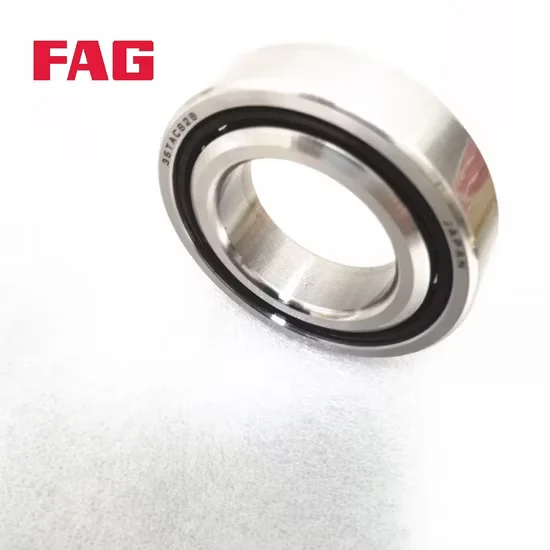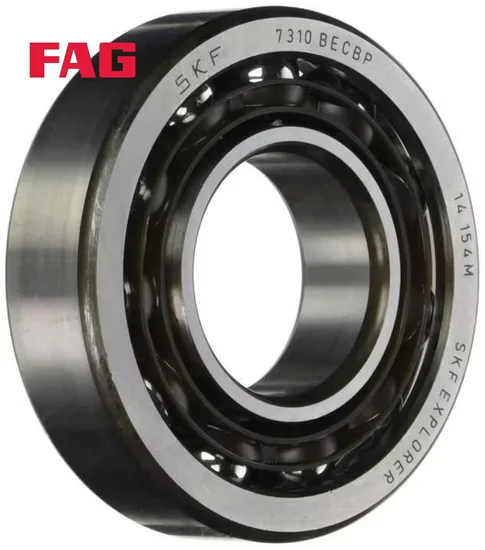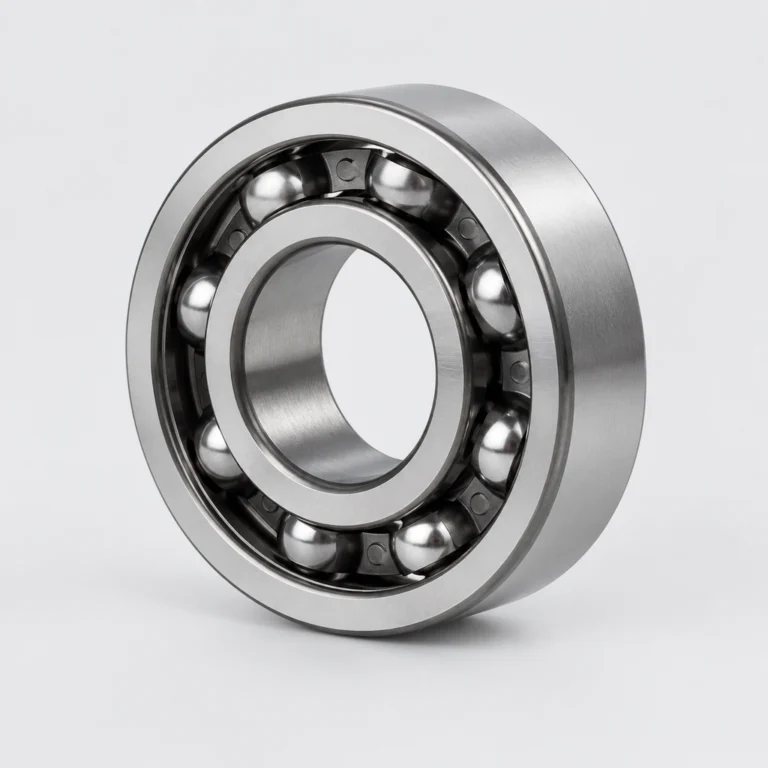

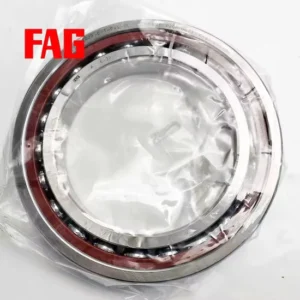
Product details
Description and application notes
Mixed-Brand Sourcing Covered — Consolidate this spindle bearing with other premium lines in a single shipment without juggling multiple vendors.
Technical Specifications
| Parameter | Value |
|---|---|
| Designation | B7209-E-T-P4s-UL FAG |
| Bearing Type | Angular Contact Ball Bearing |
| Number of Rows | Single Row |
| Series | B70, B719, B72 (Steel); Hcb70, Hcb719, Hcb72 |
| Precision Class | P4s |
| Contact Angle | 25° |
| Material | Steel |
| Certification | ISO |
Note: Suffixes B, T, and UL remain unverified and require manufacturer catalog confirmation.
Application Suitability
| Industry | Typical Applications |
|---|---|
| Machine Tool Manufacturing | High-speed CNC milling and grinding spindle assemblies |
| Industrial Pumping | High-speed centrifugal pump shaft support systems |
| Robotics & Automation | Precision joint actuators and robotic arm pivots |
| General Precision Equipment | Optical measuring instruments and coordinate measuring machines |
Why Spindle Vibration Ruins Tolerances Before the B7209-E-T-P4s-UL FAG angular contact ball bearing Even Wears Out
Micro-vibrations from improper preload matching destroy surface finishes long before the bearing reaches its fatigue limit.
Early in my procurement career, I matched a standard precision bearing where a paired ultra-precision set was required, leading to severe thermal expansion and spindle seizure during high-speed trials. When dealing with demanding machining operations, ignoring the exact preload and arrangement specifications causes catastrophic thermal runaway. Sourcing the correct configuration prevents these costly machining defects and unplanned downtime. The dynamic forces inside a CNC milling head amplify even microscopic geometric deviations, turning a minor specification oversight into a complete assembly failure that scrapes expensive workpieces and halts production lines.
Aligning Precision Classes with High-Speed Machining Demands
Selecting the right B7209-E-T-P4s-UL FAG angular contact ball bearing ensures the tight dimensional tolerances required for modern CNC spindles. Our engineering team provides cross-brand equivalent model consultation to verify that the selected precision class perfectly matches your specific spindle speed and load profile. This technical selection support guarantees optimal running accuracy for your precision equipment. When upgrading older machinery or replacing failed components, verifying the exact internal geometry and cage design prevents resonance issues that typically plague mismatched replacement parts in high-frequency milling environments.
Managing Thermal and Load Challenges in Spindle Environments
Machine tool spindles subject components to intense combined radial and axial loads while operating at extremely high rotational speeds. The resulting friction generates significant heat, which can alter internal clearances and compromise machining accuracy if the lubrication strategy is inadequate. Oil-air or oil-jet lubrication systems are typically necessary to manage these elevated temperatures and maintain the required film thickness. Furthermore, preventing coolant and metal chip contamination is critical to avoid premature raceway damage. The continuous ingress of abrasive particulates accelerates wear patterns that degrade the spindle's ability to hold tight micron-level tolerances during extended production runs.
Decoding the Engineering Behind the Designation
The P4s precision class dictates exceptionally tight tolerances for both dimensional and running accuracy, which is mandatory for minimizing spindle runout. A 25° contact angle provides an optimal balance, allowing the bearing to handle substantial axial thrust from milling operations while maintaining rigidity against radial cutting forces. The single-row angular contact design means these components must be mounted in specific paired arrangements, such as back-to-back or face-to-face, to absorb bidirectional axial loads. Understanding how the cage material and precision class interact ensures the assembly can withstand the dynamic forces of continuous high-speed milling without excessive vibration. The specific cage design also plays a pivotal role in guiding the rolling elements smoothly, reducing centrifugal forces and preventing skidding during rapid acceleration and deceleration cycles typical in modern machining centers.
The Financial Impact of Overlooking Suffix Details
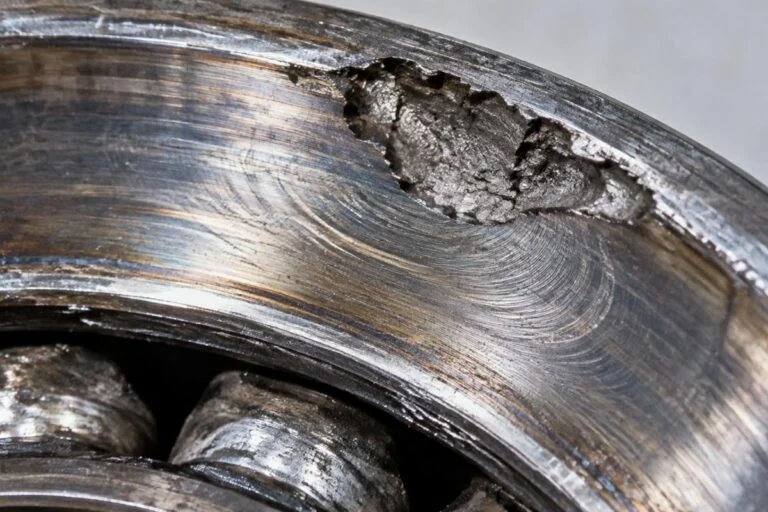
Specifying an incorrect precision grade or mismatching the preload arrangement leads to rapid thermal degradation and premature failure. According to failure mode classifications outlined in ISO 15243, inadequate lubrication or improper mounting clearance often manifests as severe smearing and raceway spalling. Such catastrophic damage not only ruins the spindle shaft but also voids equipment warranties and causes extensive unplanned downtime. Correcting these specification errors after installation is vastly more expensive than verifying the exact suffix requirements during the initial procurement phase. A single misinterpreted suffix can result in a bearing that lacks the necessary axial stiffness, leading to chatter marks on the finished parts and forcing the entire machining center offline for emergency teardowns.
Securing Authentic Spindle Components Through Verified Channels
We guarantee genuine original bearings with complete traceability documentation, ensuring every spindle bearing arrives with verifiable batch records. Our flexible MOQ accommodates everything from single-unit emergency replacements for a broken milling spindle to full container consolidation for large-scale manufacturing upgrades. We maintain massive spot inventory covering thousands of standard and special part numbers, drastically reducing the wait times typically associated with high-precision components. Furthermore, our technical team provides rigorous cross-brand equivalent model consultation to validate your selection against alternative premium lines. Finally, we offer long-term after-sales technical support for failure analysis, helping you diagnose root causes if a spindle assembly underperforms. This comprehensive approach ensures that your maintenance team receives not just a physical component, but the exact engineering validation required to keep your production lines running smoothly without unexpected interruptions.
Documentation & Authenticity
- Certificate of Conformity validating the P4s precision grade for this specific spindle bearing batch.
- Original factory batch traceability records linking the bearing to its exact production date and facility.
- Official manufacturer app QR code verification to confirm the authenticity of the high-precision component.
- Dimensional and running accuracy inspection reports confirming strict adherence to P4s tolerances before dispatch.
- Material certificates verifying the metallurgical composition of the steel rings and rolling elements.
Storage, Handling & Mounting
- Keep the P4s precision bearing in its original vacuum-sealed packaging to prevent microscopic dust contamination before mounting.
- Use clean, lint-free gloves when handling the exposed steel races to avoid moisture-induced corrosion on the precision surfaces.
- Follow the manufacturer's specified preload marks strictly when mounting paired single-row angular contact bearings to maintain alignment.
- Employ induction heating with precise temperature control for inner ring mounting to prevent thermal shock to the P4s tolerance class.
- Store the high-speed spindle components in a climate-controlled environment to prevent thermal expansion from altering the factory-set clearances.
Preparing Your Technical Data for Procurement Review
To ensure optimal performance, please share your spindle's specific radial and axial load profiles, maximum operating speeds, and expected temperature ranges. Providing the original OEM equipment model number allows our engineering team to perform accurate cross-reference verification and L10 life calculations. Supplying these operational parameters guarantees that the selected configuration perfectly aligns with your rigorous machining requirements. Detailing the specific cutting fluids used and the expected contamination levels in your shop environment also helps us recommend the most appropriate sealing solutions and lubrication intervals to maximize the service life of the assembly.
Frequently Asked Questions
Q: How can I verify the authenticity of this spindle bearing through official channels?
A: You can authenticate the component by scanning the QR code printed on the packaging using the manufacturer's official mobile application. Additionally, cross-checking the unique batch number on the bearing ring against the provided Certificate of Conformity ensures the P4s precision grade is genuine and fully traceable to the original production facility.
Q: What does the 25° contact angle mean for my machine tool spindle application?
A: A 25° contact angle provides an excellent compromise between radial load capacity and axial rigidity. This specific geometry allows the spindle to withstand significant axial thrust generated during heavy milling operations while maintaining the high radial stiffness necessary for achieving tight dimensional tolerances and superior surface finishes on the machined parts.
Q: How does P4s precision compare to standard P4 and P5 classes in ISO standards?
A: The P4s class represents an enhanced precision level that bridges the gap between standard P4 and ultra-precision P2 classes. It features tighter dimensional tolerances and significantly stricter running accuracy limits, which are absolutely critical for minimizing vibration and thermal displacement in high-speed machine tool spindles where standard P4 or P5 bearings would cause unacceptable runout.
Q: What are the critical alignment requirements when mounting these single-row angular contact bearings?
A: Single-row angular contact bearings must be mounted in matched pairs or sets to handle bidirectional axial loads and provide adequate shaft rigidity. It is crucial to strictly follow the manufacturer's alignment marks on the outer rings during installation, as incorrect orientation or improper preload application will immediately destroy the P4s running accuracy and cause rapid thermal failure.
Q: Which lubrication methods are recommended for high-speed machine tool spindles using this bearing type?
A: For high-speed spindle applications, oil-air or oil-jet lubrication systems are highly recommended over traditional grease packing. These continuous flow methods effectively dissipate the intense friction heat generated at high rotational speeds, maintain the necessary hydrodynamic film thickness, and flush away microscopic wear particles, thereby preserving the P4s precision and extending the operational lifespan.