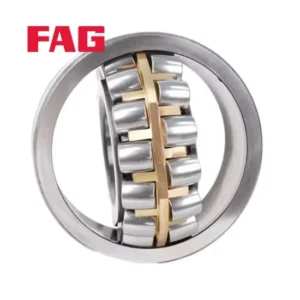
Product details
Description and application notes
Authenticity via QR scan — every FAG 22215-E1-XL-Tvpb spherical roller bearing ships with traceable batch codes verifiable through the manufacturer's official app, ensuring complete supply chain transparency for critical heavy machinery replacements.
Technical Specifications
| Parameter | Value |
|---|---|
| Designation | 22215-E1-XL-Tvpb |
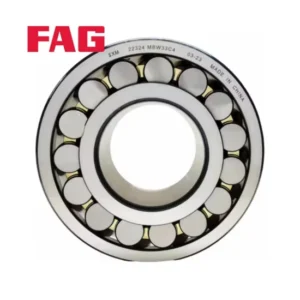
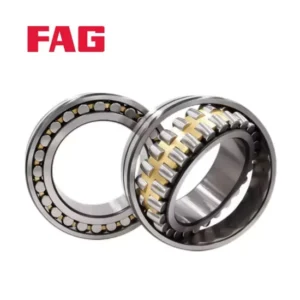
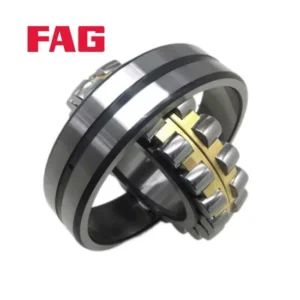
| Product Type | Spherical Roller Bearing |
| Arrangement | Double Row, Self-Aligning |
| Material | Chrome Steel Gcr15 |
| Cage Material | Steel Cage / Brass Cage / Nylon Cage |
| Bore Type | Cylindrical |
| Origin | Jiangsu China |
Note: E1, XL, and Tvpb are unverified suffixes requiring manufacturer catalog confirmation.
Application Suitability
| Industry | Typical Applications |
|---|---|
| Mining & Aggregates | Vibrating screens and crushers handling severe shock loads |
| Pulp & Paper | Paper machine dryer cylinders requiring self-alignment |
| Metallurgy | Steel mill equipment continuous casting segments |
Why Spherical Roller Bearings Fail Before the Steel Yields
Thermal expansion traps the rolling elements when internal clearance is miscalculated for the operating temperature.
During an early field assignment at a Dubai cement plant, I witnessed a catastrophic failure where standard clearance bearings were installed in a high-heat kiln application. The thermal expansion of the shaft completely eliminated the internal gap, causing the bearing to seize and the rollers to turn blue from extreme friction. This experience highlighted that premature failure in heavy equipment rarely stems from inadequate material strength, but rather from ignoring the thermodynamic boundaries of the operating environment. When sourcing a FAG 22215-E1-XL-Tvpb spherical roller bearing, understanding these thermal dynamics is crucial to preventing costly unplanned downtime.
Matching the FAG 22215-E1-XL-Tvpb Spherical Roller Bearing to Heavy Machinery
When integrating a FAG 22215-E1-XL-Tvpb spherical roller bearing into vibrating screens or crushers, the double-row self-aligning architecture effectively compensates for shaft deflection under immense radial loads. Our engineering team provides comprehensive cross-brand equivalent model consultation, ensuring that the selected configuration perfectly aligns with your specific vibration frequency and load profile. This technical validation prevents the common pitfall of installing dimensionally correct but internally mismatched components.
Navigating Thermal and Shock Load Extremes
Heavy equipment like crushers subjects rotating components to severe combined shock loads, demanding exceptional fatigue strength from the chrome steel races. More critically, elevated ambient temperatures in steel mills cause the inner ring to expand significantly, rapidly consuming standard internal clearance. If the lubrication film breaks down under these thermal extremes, metal-to-metal contact accelerates surface wear and initiates spalling. Properly matching the internal geometry to the thermal environment is the only way to maintain the hydrodynamic lubrication wedge necessary for long service life.
Decoding the Self-Aligning Architecture
The double row, self-aligning arrangement allows the inner ring and roller assembly to tilt relative to the outer ring, accommodating static misalignment originating from housing bore machining errors. Chrome steel Gcr15 material provides the necessary core hardness to resist surface fatigue under continuous heavy radial forces encountered in mining operations. Depending on the specific cage material option—whether stamped steel for standard speeds, machined brass for high vibration, or nylon for lower friction—the bearing adapts to different rotational dynamics. A cylindrical bore type ensures straightforward press-fit mounting on standard shafts without the complexity of tapered adapter sleeves, simplifying maintenance procedures in remote facilities.
The Downtime Penalty of Overlooking Clearance Classes
Selecting a standard clearance variant for a high-temperature application inevitably leads to catastrophic seizure, voiding equipment warranties and triggering extensive unplanned downtime. The resulting catastrophic damage often extends far beyond the bearing itself, scoring the main shaft and destroying adjacent sealing arrangements. According to ISO 15243 frameworks, such failures are formally classified as surface distress initiated by inadequate internal geometry for the thermal environment. Replacing the entire rotating assembly multiplies the maintenance cost and production loss far beyond the initial component price, making precise clearance selection a critical economic decision.
Securing Traceable Inventory for Critical Replacements
Sourcing genuine components requires more than just matching the basic part number; it demands rigorous verification of the exact internal geometry and cage design. We maintain massive spot inventory covering thousands of standard part numbers, ensuring urgent maintenance requirements for spherical roller bearings are met without typical multi-week lead times. Our flexible MOQ accommodates everything from single-unit emergency spare-part orders to full container consolidation shipments, optimizing your procurement logistics. Every shipment includes complete traceability documentation, protecting your operation from the severe risks associated with counterfeit or remanufactured stock. Furthermore, our technical selection support helps verify cross-reference models to prevent costly misapplications in the field.
Documentation & Authenticity
- Certificate of Conformity validating the specific production batch.
- Original manufacturer batch traceability records linking the unit to metallurgical data.
- Official app QR verification codes to instantly confirm authenticity.
- Material inspection reports confirming chrome steel chemical composition.
- Dimensional inspection reports verifying tolerance compliance before dispatch.
Storage, Handling & Mounting
- Keep the double row self-aligning bearing in original moisture-barrier packaging until installation.
- Store chrome steel components in a climate-controlled environment to prevent micro-corrosion.
- Use induction heating for the cylindrical bore inner ring to achieve interference fit.
- Apply clean lint-free gloves to prevent acidic sweat from initiating surface corrosion.
- Verify external lubrication pathways if the housing requires periodic grease replenishment.
Engineering Data Required for Technical Validation
To ensure the selected configuration perfectly matches your application, please share the specific radial and axial load profiles along with the maximum operating temperature. Providing the OEM equipment number allows our engineering team to perform a precise cross-reference check and L10 life recalculation. Detailing the installation space constraints and environmental exposure helps us recommend the optimal sealing and clearance strategy for your specific machinery.
Frequently Asked Questions
Q: What do the specific suffixes in the designation indicate?
A: The designation includes suffixes that require manufacturer catalog confirmation for exact internal design, life enhancement standards, and cage material specifics. Always verify these alphanumeric codes against the official technical documentation to ensure the bearing matches the precise dynamic and thermal requirements of your machinery.
Q: How do I cross-reference this model with other brands?
A: When cross-referencing to SKF, FAG, or NSK equivalents, you must align three critical parameters: internal clearance class, cage material, and precision tolerance. Simply matching the basic dimension series is insufficient, as variations in these internal features will drastically alter the performance under heavy shock loads or high temperatures.
Q: Which cage material is best for vibrating screens?
A: Vibrating screens generate high-frequency oscillations that demand exceptional cage durability. While standard steel cages suffice for general industrial use, machined brass cages are typically preferred for severe vibration environments due to their superior resistance to structural fatigue and their ability to maintain roller guidance under extreme dynamic stress.
Q: Why did my previous bearing seize despite correct dimensions?
A: Dimensional accuracy alone does not prevent seizure if the internal clearance is mismatched to the operating temperature. In high-heat environments, thermal expansion of the shaft reduces the internal gap, causing the rolling elements to bind. Selecting a larger clearance class compensates for this thermal growth and maintains the necessary lubrication film.