

Product details
Description and application notes
Unified Multi-Brand Sourcing — Consolidate this unit with SKF or NTN equivalents in a single shipment without juggling multiple vendor accounts.
Technical Specifications
| Parameter | Value |
|---|---|
| Designation | FAG 22220-E1-a-XL-M |
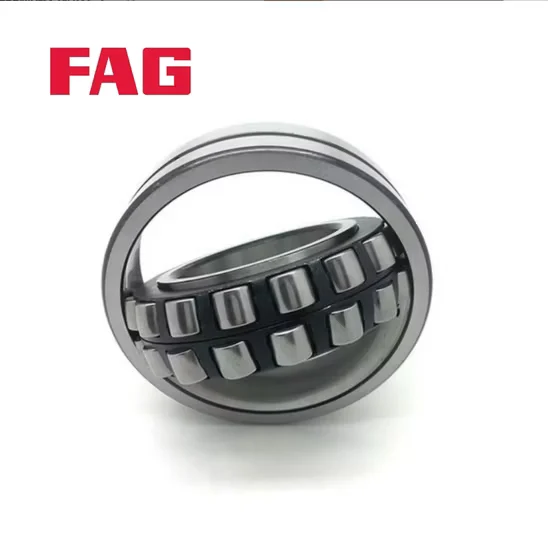
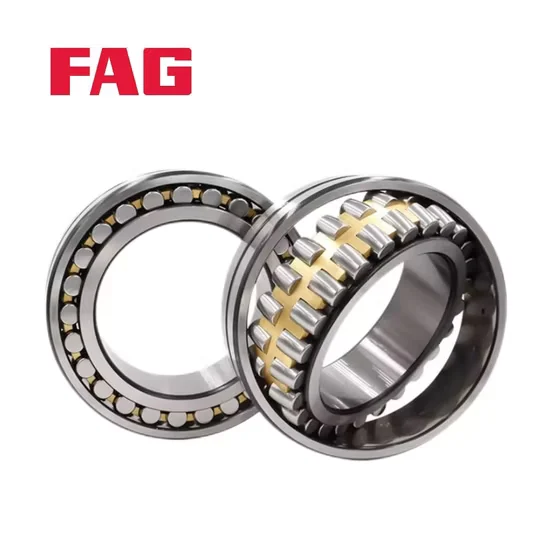
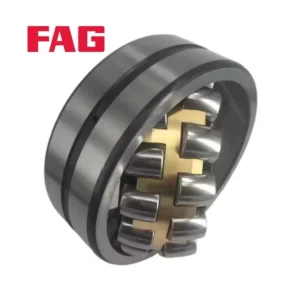
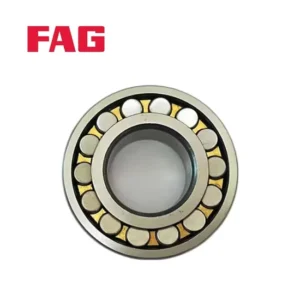
| Bearing Type | Spherical Roller Bearing |
| Bore Diameter (d) | 100 mm |
| Outside Diameter (D) | 180 mm |
| Width (B) | 46 mm |
| Dynamic Load Rating (C) | 430,000 N |
| Static Load Rating (C₀) | 475,000 N |
| Cage Material | Machined Brass (M suffix) |
| Structure | Double Row, Self-Aligning |
| Material | Chrome Steel Gcr15 |
| Clearance Class | C2 / C4 options available |
| Origin | Jiangsu China |
Note: Suffixes E1, a, XL, and 2RS are unverified against the primary manufacturer catalog and require confirmation before final ordering.
Application Suitability
| Industry | Typical Applications |
|---|---|
| Mining & Construction | Vibrating screens and jaw crushers |
| Metallurgy | Steel mill continuous casting equipment |
| Pulp & Paper | Paper machine dryer section rolls |
Why Standard Clearance Destroys the FAG 22220-E1-a-XL-M Spherical Roller Bearing
Thermal expansion under heavy loads eliminates internal clearance, causing catastrophic roller seizure.
During early failure analysis projects for European steel mills, I witnessed firsthand how ignoring clearance specifications leads to disaster. A standard clearance setup in a high-temperature, heavy-load environment expanded until the rollers bound completely against the raceway. The resulting friction generated immense heat, degrading the lubricant and causing severe smearing across the rolling elements. Switching to a C4 clearance variant stabilized the production line immediately by providing the necessary thermal expansion room. Selecting the correct internal clearance is far more critical than simply upgrading the steel grade, as misalignment between thermal growth and internal geometry guarantees premature failure.
Matching the Unit to Harsh Industrial Environments
This specific configuration excels where shaft misalignment and heavy radial loads coincide in demanding sectors. Our global sourcing network ensures that whether you need a single emergency replacement for an urgent MRO scenario or a full container consolidation for a massive plant overhaul, the exact specification arrives with complete traceability. We also provide comprehensive cross-reference consultation to match equivalent models from other premium global brands if immediate OEM stock is unavailable, ensuring your maintenance schedules remain uninterrupted regardless of supply chain fluctuations.
Handling Shock Loads and Thermal Extremes in Crushing Operations
Vibrating screens and crushers subject components to severe shock loads, continuous vibration, and abrasive particulate contamination. The double-row self-aligning structure effectively accommodates shaft deflection and housing misalignment, preventing edge loading on the rollers. Temperature fluctuations in metallurgy applications demand careful lubrication management; circulating oil systems are typically preferred over grease to dissipate heat and flush out metallic wear debris. Furthermore, the open design without integrated seals allows for customized external sealing arrangements, which is crucial when operating in environments heavily laden with silica dust or moisture.
Decoding the Suffix Configuration for Optimal Performance
Understanding the nomenclature prevents costly installation errors and ensures optimal load distribution. The 'E' suffix denotes an optimized internal design with reinforced rollers and modified raceway profiles, significantly increasing the dynamic load capacity. The 'M' suffix confirms a machined brass cage, which offers superior structural integrity and vibration damping compared to pressed steel alternatives. Furthermore, matching the clearance class to the operating temperature is vital; a C4 clearance provides the necessary thermal expansion room for hot-running crusher applications, whereas standard clearance would lead to excessive preload and accelerated surface fatigue under identical thermal conditions.
The Financial Impact of Misaligned Clearance Selection
Installing a component with incorrect internal clearance triggers a cascade of mechanical failures that extend far beyond the component itself. Excessive preload generates friction heat, rapidly degrading the lubricant film and accelerating surface fatigue mechanisms like micropitting. According to ISO 15243 frameworks, these thermal failures often manifest as severe smearing or complete roller seizure, resulting in unplanned downtime and catastrophic damage to adjacent shaft components and housings. Proper specification verification and precise clearance selection eliminate these hidden operational costs and protect the broader mechanical assembly from secondary destruction.
Securing Traceable Inventory for Critical Maintenance Windows
Sourcing genuine components requires more than just matching the alphanumeric part number on a purchase order. We rigorously verify the machined brass cage material and dimensional tolerances against original catalogs to prevent costly mismatches during installation. Our massive spot inventory covers thousands of standard and special part numbers, allowing flexible MOQ from single-unit emergency orders to bulk project shipments. Additionally, our engineering team provides long-term technical support for failure analysis, ensuring your maintenance crew understands the exact mounting practices and induction heating protocols required for large-bore units in heavy equipment. By utilizing our competitive sourcing cost compared to direct official brand channels, you secure premium quality without inflating your maintenance budget.
Documentation & Authenticity
- Certificate of Conformity confirming original manufacturer production facilities.
- Batch traceability documentation linking the specific unit to its forging and heat treatment records.
- Official app QR code verification for immediate authenticity validation upon delivery.
- Dimensional inspection reports verifying the 100 mm bore and 180 mm outside diameter tolerances.
- Material test certificates confirming the Chrome Steel Gcr15 composition and machined brass cage integrity.
Storage, Handling & Mounting
- Store the double-row unit in its original vapor-phase inhibitor packaging to prevent corrosion on the exposed Chrome Steel Gcr15 surfaces.
- Use induction heating for the 100 mm inner ring mounting, strictly controlling the temperature to preserve the machined brass cage structural integrity.
- Verify the C4 clearance with feeler gauges during installation to ensure adequate thermal expansion room for high-heat crusher applications.
- Apply clean lint-free gloves when handling the machined brass cage to prevent acidic skin oils from initiating localized corrosion.
- Align the outer ring lubrication grooves with the housing oil ports before final tightening to guarantee proper oil flow.
Preparing Your Technical Parameters for Verification
To ensure precise technical alignment, please share your specific operating parameters including radial and axial loads, operating temperatures, and rotational speeds. Providing the original equipment manufacturer drawings allows our engineering team to perform a comprehensive L10 life calculation and cross-reference verification against alternative designs. This empirical data enables us to confirm whether the current suffix configuration perfectly matches your application's thermal and mechanical demands, ultimately preventing the costly trial-and-error approach that plagues many heavy machinery maintenance programs. We stand ready to analyze your specific housing constraints and load profiles to guarantee the selected unit delivers maximum operational longevity.
Frequently Asked Questions
Q: How can we verify the authenticity and trace the original batch documentation?
A: Every unit is supplied with complete traceability documentation and a Certificate of Conformity. You can verify authenticity by scanning the official manufacturer app QR code on the packaging. We also provide dimensional and material inspection reports to confirm the exact specifications before the component leaves our facility.
Q: What are the differences between standard clearance and C2/C4 clearances for this application?
A: Standard clearance suits normal temperature and load conditions. C2 offers reduced clearance for high-precision, low-vibration setups. C4 provides increased internal clearance, which is essential for high-temperature environments like steel mills where thermal expansion would otherwise eliminate the clearance and cause roller seizure under heavy loads.
Q: How do we choose between machined brass and pressed steel cages for vibrating screens?
A: Machined brass cages, indicated by the M suffix, offer superior strength and durability under high vibration and shock loads typical in vibrating screens. Pressed steel cages are lighter and suitable for standard applications, but they may fatigue prematurely when subjected to the severe oscillations and edge stresses found in heavy mining equipment.
Q: How should we interpret complex or regional suffix codes during the replacement selection process?
A: Certain alphanumeric codes may vary across different manufacturer catalogs or regional production batches. It is crucial to cross-reference these specific designations with our engineering team to ensure the internal geometry, cage design, and tolerance classes perfectly match your existing OEM requirements before finalizing the purchase order.