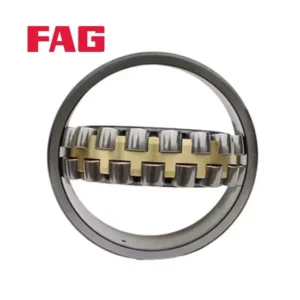


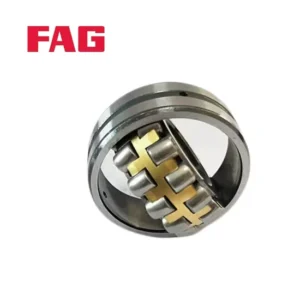
Product details
Description and application notes
Cross-Reference Alignment Verified — Every FAG 22228-E1-XL-K spherical roller bearing shipment is cross-checked against OEM equipment manuals, dimensional blueprints, and exact suffix configurations to prevent field mismatches.
Technical Specifications
| Parameter | Value |
|---|---|
| Designation | FAG 22228-E1-XL-K |
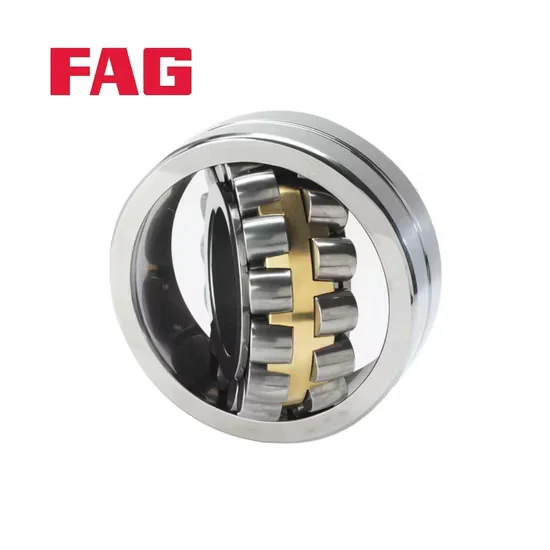
| Bearing Type | Spherical Roller Bearing |
| Bore Diameter (d) | 140 mm |
| Outside Diameter (D) | 250 mm |
| Width (B) | 68 mm |
| Bore Type | 1:12 Tapered |
| Structure | Double Row, Self-Aligning |
| Material | Chrome Steel |
Note: The "1" and "XL" suffixes denote specific manufacturer internal structural refinements and premium performance standards; verify exact catalog definitions for specialized applications.
Application Suitability
| Industry | Typical Applications |
|---|---|
| Mining | Vibrating screen exciter mechanisms |
| Construction | Crusher eccentric shaft assemblies |
| Metallurgy | Steel mill continuous casting rollers |
Why Standard Clearance Fails in Desert Mining Operations
Thermal expansion turns tight tolerances into catastrophic seizures.
When vibrating screens operate under extreme ambient heat, standard internal clearance quickly vanishes. I have seen heavy-duty mining setups in the Middle East grind to a halt because the internal gap was not specified for high-temperature thermal growth. The desert sun combined with internal friction generates immense heat, causing the shaft to expand faster than the housing. Selecting the right FAG 22228-E1-XL-K spherical roller bearing requires matching the clearance class to the actual operating temperature, not just the catalog default. Field conditions dictate the true operational limits, and relying solely on standard handbook values ignores the harsh reality of heavy-duty extraction sites. Ignoring this thermal dynamic guarantees premature failure.
Matching the Tapered Bore to Heavy-Duty Shafts
The 1:12 tapered bore design ensures a secure, interference fit on adapter sleeves, which is absolutely critical for vibrating screens experiencing severe shock loads. By sourcing the exact FAG 22228-E1-XL-K spherical roller bearing configuration, we eliminate the micro-movements that typically fret the shaft surface and cause catastrophic loosening. Our technical team verifies the sleeve dimensions and locking nut specifications to guarantee the correct drive-up distance during installation, ensuring the assembly handles continuous vibratory stress without shifting. This level of precision is non-negotiable for high-capacity processing plants.
Managing Shock Loads and Misalignment in Crushers
Crusher eccentric shafts endure massive radial forces combined with continuous shock loading and structural deflections. The self-aligning capability compensates for housing bore misalignments, preventing edge loading on the rollers that would otherwise accelerate surface fatigue. Proper lubrication routing through the outer ring grooves is essential to maintain a stable elastohydrodynamic film under these punishing conditions. Without adequate oil flow reaching the loaded zone, the metal-to-metal contact rapidly degrades the raceway, making precise specification of the lubrication features vital for long-term reliability.
Decoding the Suffix Configuration for Field Reliability
The "E" suffix indicates a reinforced internal design with larger, optimized rollers, significantly boosting the dynamic load rating for heavy machinery. The "K" suffix confirms the 1:12 tapered bore, requiring precise locking nut torque to achieve the target residual clearance. Understanding these specific suffix combinations prevents costly installation errors and ensures the component delivers its engineered performance in the field.
The Hidden Toll of Incorrect Clearance Selection
Specifying standard clearance for a high-heat vibrating screen inevitably leads to thermal seizure and unplanned downtime. According to failure analysis frameworks, a significant share of premature bearing failures stems from ignoring the thermal expansion of the shaft and housing. This oversight causes catastrophic damage to the adapter sleeve, destroys the shaft surface, and voids the equipment warranty, turning a minor specification error into a massive production loss. Replacing a seized unit in a remote quarry involves heavy rigging, extended labor hours, and significant revenue loss while the primary crusher remains offline. Proper clearance selection is not just a technical detail; it is the primary defense against systemic mechanical collapse.
Securing Traceability for Critical Mining Spares
We focus heavily on matching the exact suffix configuration, as confusing a cylindrical bore with a tapered one causes immediate installation failures on site. Every unit is sourced through authorized channels to guarantee the reinforced internal geometry is genuine and meets original equipment specifications. We provide complete batch traceability, ensuring the metallurgical properties meet the rigorous demands of continuous mining operations. Our cross-brand equivalent consultation helps when lead times for specific configurations fluctuate, ensuring your maintenance schedule never stalls due to supply chain gaps.
Documentation & Authenticity
- Original batch traceability certificates confirming the genuine reinforced internal geometry
- Dimensional inspection reports verifying the precise 1:12 tapered bore angle
- Official manufacturer QR code validation for anti-counterfeiting verification
- Material test certificates validating the high-carbon chrome steel composition
Storage, Handling & Mounting
- Store the tapered bore units in original packaging to protect the precision-machined inner ring surface from humidity
- Use induction heaters specifically calibrated for the 140mm bore to avoid localized overheating during mounting
- Measure the drive-up distance on the adapter sleeve to ensure the correct residual clearance is maintained
- Apply clean gloves when handling the exposed outer ring oil grooves to prevent particulate contamination
Preparing Your Technical Requirements for Review
To ensure the selected configuration perfectly matches your vibrating screen or crusher, please provide the operating radial and axial loads, shaft speed, and ambient temperature range. Sharing the OEM equipment serial number allows our engineering team to cross-reference the exact adapter sleeve and clearance requirements. This technical review guarantees the proposed solution aligns with your specific field conditions, preventing costly mismatches and ensuring the replacement component integrates flawlessly into your existing heavy-duty machinery setup.
Frequently Asked Questions
Q: How does the 1:12 tapered bore affect the mounting procedure?
A: The tapered bore requires an adapter sleeve and a locking nut. During installation, the drive-up distance must be carefully measured to reduce the internal clearance to the exact operational target. Over-tightening will eliminate the clearance and cause thermal seizure, while under-tightening leads to shaft fretting.
Q: What clearance class is recommended for vibrating screens in high-temperature environments?
A: For vibrating screens operating in hot climates or generating significant internal heat, a C3 or C4 clearance class is typically required. This extra internal gap compensates for the thermal expansion of the shaft and housing, preventing the rollers from binding and ensuring stable operation under extreme conditions.
Q: How can I verify the authenticity of the bearing before installation?
A: Authenticity can be verified by scanning the official manufacturer QR code on the packaging using their designated mobile application. Additionally, checking the batch traceability documentation and comparing the physical suffix markings on the outer ring against the purchase order ensures the correct genuine component was supplied.
Q: What is the difference between standard and reinforced internal designs?
A: The reinforced internal design features optimized roller profiles and increased roller dimensions, which substantially enhance the dynamic load rating. This structural improvement allows the bearing to withstand heavier radial loads and shock impacts, noticeably extending the fatigue life in demanding applications like crushers and heavy mining equipment.