
Product details
Description and application notes
Unified Multi-Brand Sourcing — consolidate your FAG 22314-E1a-K-M-C3 spherical roller bearing order with mixed-brand MRO spares under a single traceable shipment, eliminating multi-vendor coordination delays.
Technical Specifications
| Parameter | Value |
|---|---|
| Designation | FAG 22314-E1a-K-M-C3 |
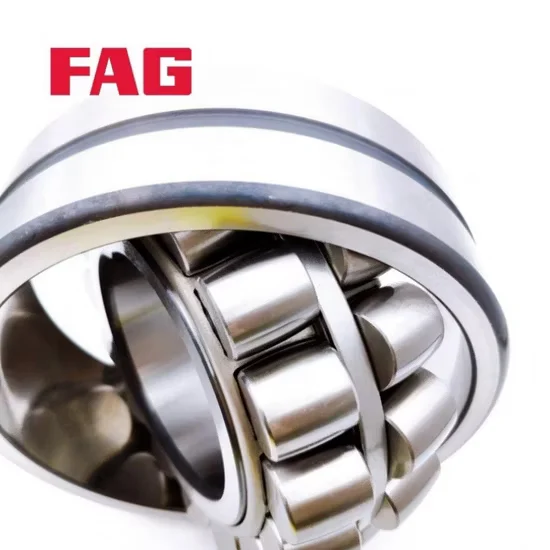
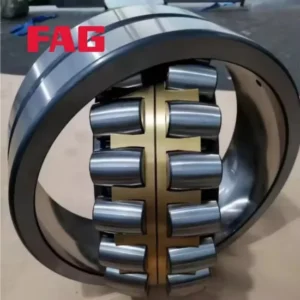
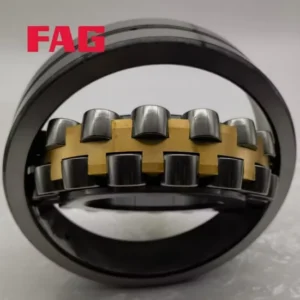
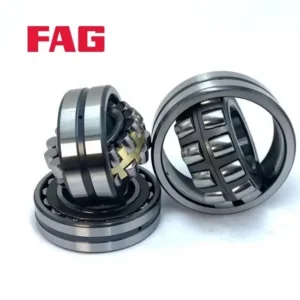
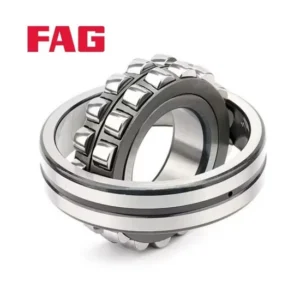
| Bearing Type | Spherical Roller Bearing |
| Bore Type | 1:12 Tapered Bore (K suffix) |
| Cage Material | Machined Brass Cage (M suffix) |
| Clearance Class | C3 Internal Clearance |
| Structure | Double Row, Self-Aligning |
| Main Material | Chrome Steel (GCr15) |
| Precision Class | Standard (P0) |
| Origin | Manufacturer's production facilities |
Application Suitability
| Industry | Typical Applications |
|---|---|
| Mining & Construction | Vibrating screen exciter mechanisms, jaw crusher eccentric shafts |
| Metallurgy | Steel mill continuous casting roller guides, rolling mill gearboxes |
| Pulp & Paper | Paper machine dryer cylinder drive sides, press section felt rolls |
Why Vibrating Screens Destroy Standard Cages Before the Raceways Fatigue
Brass cages survive the high-frequency shock loads that inevitably shatter stamped steel alternatives in heavy-duty screening environments.
When managing heavy-equipment maintenance in harsh environments like Middle Eastern cement plants or remote mining sites, replacing a failed bearing often reveals a shattered cage rather than a spalled raceway. High-vibration applications subject the rolling elements to severe acceleration forces and continuous harmonic stress. If a stamped steel cage is mistakenly installed where a machined brass cage is strictly required, the structural integrity collapses rapidly, leading to catastrophic line stoppages and massive revenue loss. Securing a genuine FAG 22314-E1a-K-M-C3 spherical roller bearing ensures the internal geometry is engineered specifically to withstand these extreme dynamic stresses without compromising the roller alignment. Maintenance teams frequently underestimate how quickly marginal cage materials degrade under constant vibratory impact.
Matching the Spherical Design to Misaligned Heavy Machinery
Heavy machinery shafts frequently deflect under massive radial loads, creating significant angular misalignment between the housing and the rotating shaft. The FAG 22314-E1a-K-M-C3 spherical roller bearing accommodates these static and dynamic alignment errors through its advanced double-row self-aligning architecture. By allowing the inner ring and roller assembly to pivot freely within the spherical outer ring raceway, edge loading on the rollers is effectively minimized. Our engineering team routinely cross-references OEM equipment manuals to verify that this self-aligning capability perfectly matches the specific deflection profiles of vibrating screens, jaw crushers, and paper machine dryer cylinders, ensuring optimal load distribution across the entire roller length.
Managing Thermal Expansion and Contamination in Harsh Sites
In crushing and screening operations, ambient dust and internal friction generate significant thermal gradients across the bearing assembly. A standard internal clearance would quickly vanish as the inner ring expands faster than the outer housing, causing the bearing to seize under extreme preload. The C3 clearance designation provides the necessary thermal expansion compensation, ensuring optimal load distribution even at elevated operating temperatures typical of metallurgy and mining sites. Furthermore, the open design without integrated seals necessitates heavy-duty external sealing solutions and strict re-lubrication schedules to prevent abrasive particulate ingress, which drastically accelerates wear. Proper grease selection and purging intervals are critical to maintaining the integrity of the machined brass cage.
Decoding the Suffix Architecture for Operational Reliability
Understanding the precise suffix string is critical for preventing catastrophic field failures and ensuring exact interchangeability. The K suffix denotes a 1:12 tapered bore, requiring precise adapter sleeve mounting to achieve the correct drive-in distance and residual internal clearance. The M suffix confirms a machined brass cage, which offers superior impact resistance and high-temperature stability compared to stamped steel or polyamide alternatives—a non-negotiable requirement for high-vibration exciters. The C3 suffix guarantees greater-than-normal radial internal clearance to accommodate thermal expansion in hot environments. Finally, the E1a suffix indicates an optimized internal design with enhanced load-carrying capacity, though specific dimensional variations under this code require manufacturer catalog confirmation to ensure exact interchangeability with older revisions.
The Hidden Financial Drain of Suffix Misinterpretation
Substituting a machined brass cage with a stamped steel variant to save on initial procurement costs inevitably triggers severe unplanned downtime. When the inadequate cage fractures under vibratory stress, the rolling elements skew and jam, often scoring the shaft and destroying the housing bore entirely. This cascading mechanical damage transforms a routine component swap into a major, multi-day mechanical rebuild. Adhering to ISO 15243 failure analysis frameworks reveals that a significant share of premature failures stems directly from incorrect cage material selection or improper clearance compensation during the installation phase. Procurement teams must prioritize exact suffix matching over superficial price comparisons to protect overall plant reliability.
Procurement Advantages for Critical MRO Spares
Sourcing the exact FAG 22314-E1a-K-M-C3 spherical roller bearing configuration eliminates the severe risk of receiving visually identical but internally mismatched substitutes. We maintain massive spot inventory covering thousands of standard and special part numbers, ensuring urgent maintenance requirements are met immediately without waiting for extended factory lead times. Our cross-brand equivalent model consultation helps verify clearance and cage suffixes when substituting models like 22314-E1a-M-C3 or evaluating alternative brands. Every shipment includes complete traceability documentation, and our technical selection support guides your maintenance crew through the precise adapter sleeve tightening procedures required for the K-tapered bore, ensuring the C3 clearance is perfectly preserved during installation.
Documentation & Authenticity
- Certificate of Conformity verifying the genuine FAG origin and manufacturing batch.
- Original batch traceability documents linking the bearing to the factory production run.
- Material inspection reports confirming GCr15 chrome steel composition and heat treatment.
- Dimensional inspection reports validating the 1:12 tapered bore geometry and C3 clearance.
- Official app QR code authentication for instant on-site counterfeit verification.
Storage, Handling & Mounting
- Keep the original packaging sealed until installation to protect the machined brass cage from corrosive humidity.
- Use induction heating for the adapter sleeve and inner ring assembly, avoiding open flames that degrade the chrome steel.
- Measure the drive-in distance precisely during mounting to maintain the specified C3 residual internal clearance.
- Apply clean lint-free gloves when handling the exposed rolling elements to prevent sweat-induced micro-corrosion.
- Store horizontally in a temperature-controlled environment to prevent static deformation of the double-row roller sets.
Engineering Review and Inquiry Preparation
To ensure the selected configuration perfectly matches your operational demands, please provide the specific radial and axial load profiles, operating speeds, and ambient temperature ranges. Sharing the OEM equipment model number allows our technical team to perform a comprehensive cross-reference check and L10 life recalculation based on your exact duty cycle. If your application involves extreme contamination or unusual thermal cycling, detailing the housing sealing arrangement helps us validate the suitability of the open bearing design and recommend optimal lubrication intervals. Providing these operational parameters ensures that the tapered bore and brass cage specifications are fully optimized for your specific heavy machinery environment.
Frequently Asked Questions
Q: What does the K suffix mean for the installation process?
A: The K suffix indicates a 1:12 tapered bore, meaning this bearing must be mounted using an adapter sleeve or a tapered shaft journal. Proper installation requires measuring the drive-in distance or the reduction in internal clearance to ensure the C3 clearance is not entirely eliminated during the tightening process, which would cause premature failure.
Q: Why is the M suffix critical for vibrating screen applications?
A: The M suffix designates a machined brass cage, providing exceptional structural integrity and impact resistance under high-frequency vibration. Unlike stamped steel cages that fatigue and fracture under continuous harmonic shock loads, the brass cage maintains roller alignment and prevents catastrophic jamming in heavy-duty screening equipment, ensuring continuous operational reliability.
Q: Can I substitute this with the 22314-E1a-M-C3 model?
A: While both share the brass cage and C3 clearance, the cross-reference model 22314-E1a-M-C3 features a standard cylindrical bore. Substituting a cylindrical bore bearing for a tapered bore design will physically prevent installation on an adapter sleeve setup, requiring a complete shaft modification and causing severe project delays.
Q: How does the C3 clearance benefit high-temperature operations?
A: The C3 designation provides greater-than-normal radial internal clearance. In applications like crushers where friction and ambient heat cause the inner ring to expand faster than the outer housing, this extra clearance compensates for thermal growth, preventing the bearing from seizing under tight preload conditions and extending the overall service life.