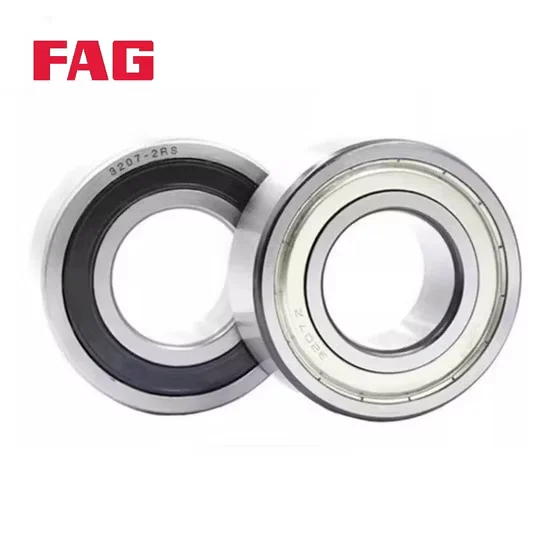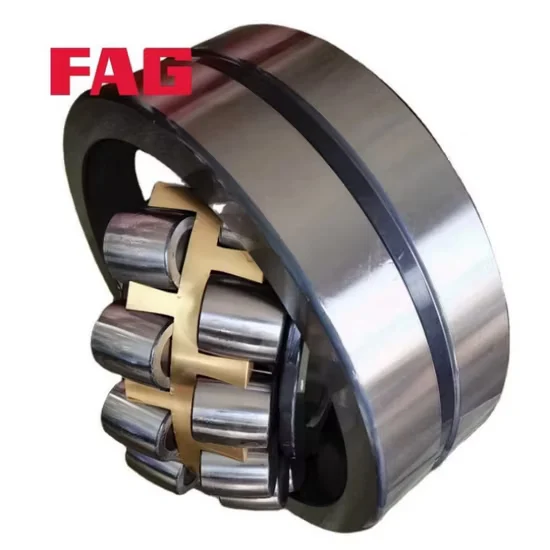

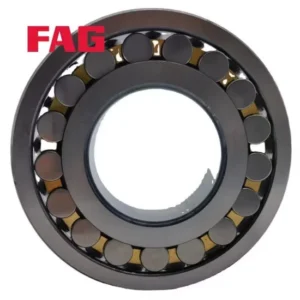


Product details
Description and application notes
Cross-reference alignment verified — Dimensional and tolerance specs cross-checked against OEM catalogs to ensure exact fitment for heavy-duty vibrating screens.
Technical Specifications
| Parameter | Value |
|---|---|
| Designation | FAG 22317-E1-K |
| Bearing Type | Spherical Roller Bearing |
| Structure | Double Row, Self-Aligning |
| Bore Type | 1:12 Tapered Bore (K suffix) |
| Material | Chrome Steel Gcr15 |
| Cage Type | Available in Steel, Brass, or Nylon |
| Clearance Class | Standard or C3 Radial Internal Clearance |
| Precision Class | P0, P2, P4, P5, P6 |
| Origin | Jiangsu China |
| Customization | Available |
Note: Suffixes E1 and T41A require manufacturer catalog confirmation for specific internal design or cage variations.
Application Suitability
| Industry | Typical Applications |
|---|---|
| Mining & Aggregates | Vibrating screen eccentric shafts, crusher main frames |
| Metallurgy | Steel mill continuous caster roll segments |
| Pulp & Paper | Paper machine dryer section felt rolls |
Why Standard Clearance Fails in Vibrating Screens with the FAG 22317-E1-K spherical roller bearing
Thermal expansion in high-frequency vibrating equipment rapidly eliminates standard internal clearance, leading to catastrophic cage deformation and unexpected line stoppages.
I recall a Chicago trade show where a client experienced repeated bearing seizures on their vibrating screens. They used standard clearance instead of C3, and the heat generated by heavy radial loads and vibration caused the inner ring to expand, locking the rolling elements. This is a common trap in heavy machinery where thermal dynamics are often underestimated. When the internal gap closes, the rolling elements skid, generating even more heat in a destructive feedback loop. Procurement engineers must prioritize thermal compensation over standard catalog defaults to avoid these costly operational disruptions.
Matching the FAG 22317-E1-K spherical roller bearing to High-Vibration Environments
Selecting the correct internal clearance and cage material is absolutely critical for vibrating screens and crushers. Our supply chain provides full traceability for these specific configurations, ensuring that the exact clearance class and cage type match the high-frequency oscillation and heavy radial loads of your equipment. We do not rely on guesswork; instead, we validate the dimensional tolerances and internal geometry against the specific demands of your aggregate processing or metallurgical plants, securing the precise component needed for continuous heavy-duty operation.
Navigating Shock Loads and Thermal Dynamics in Heavy Machinery
Vibrating screens and crushers subject bearings to severe shock loads and continuous high-frequency oscillation. These extreme conditions generate significant friction heat, which directly impacts the lubrication film thickness and internal clearance. A 1:12 tapered bore allows for precise adjustment of the radial internal clearance during mounting on adapter sleeves, compensating for the thermal expansion that occurs during continuous operation. Proper clearance adjustment prevents the rolling elements from skidding or binding under peak dynamic loads. Furthermore, the self-aligning capability mitigates the risk of edge loading when the shaft deflects under the immense weight of the vibrating screen deck.
Decoding the K Suffix and Cage Material Options
The K suffix indicates a 1:12 tapered bore, which is essential for achieving the correct interference fit and residual clearance when mounted on adapter sleeves. For the cage, brass cages are typically preferred in high-vibration applications due to their superior damping characteristics and resistance to sudden shock loads, while steel cages offer a cost-effective alternative for moderate conditions. The self-aligning double-row structure accommodates shaft deflections and misalignment, protecting the bearing from edge loading and premature fatigue. Selecting the right cage material directly influences the bearing's ability to maintain lubricant distribution across the raceways during the aggressive shaking motions inherent to screening equipment.
The Downtime Penalty of Incorrect Clearance Selection
Specifying standard clearance for a high-temperature vibrating application inevitably leads to unplanned downtime and catastrophic damage to the shaft and housing. When the internal clearance is fully consumed by thermal expansion, the bearing operates under extreme preload, causing rapid temperature spikes and cage failure. Following failure mode classifications per ISO 15243, this specific thermal seizure often results in severe smearing and adhesive wear on the raceways. The financial impact extends far beyond the replacement part cost, encompassing lost production hours, secondary equipment damage, and emergency freight expenses to restore plant operations.
Securing Authentic Configurations for Critical Equipment
Sourcing the exact C3 clearance and brass cage combination can be challenging through standard channels, but we maintain massive spot inventory covering these specific part numbers. We provide cross-brand equivalent model consultation if lead times are critical, ensuring your vibrating screens keep running. Every shipment includes complete traceability documentation, and our technical team offers post-installation failure analysis support to verify that the selected clearance and mounting procedures align with your actual operating temperatures.
Documentation & Authenticity
- Certificate of Conformity verifying the exact C3 clearance class and tapered bore dimensions.
- Original factory batch traceability linking the specific production run to quality control records.
- Official app QR code validation to confirm the authenticity of the packaging and product markings.
- Material inspection reports confirming the Chrome Steel Gcr15 chemical composition and hardness.
- Dimensional and running accuracy inspection reports validating the P-class precision tolerances before dispatch.
Storage, Handling & Mounting
- Store the tapered bore bearing in its original anti-corrosion packaging until mounting to prevent surface oxidation on the precision ground bore.
- Use induction heating for the inner ring installation, strictly controlling the temperature to avoid altering the Chrome Steel Gcr15 microstructure.
- Measure the drive-up distance and residual radial clearance during mounting on the adapter sleeve to achieve the specified C3 clearance.
- Apply clean gloves when handling the brass cage variants to prevent acidic sweat from initiating localized corrosion on the cage pockets.
- Ensure the self-aligning outer ring is free to rotate within the housing to accommodate initial shaft misalignment during startup.
Engineering Review for Optimal Bearing Selection
To ensure the selected configuration withstands your specific operating conditions, please share the radial and axial load profiles, operating speed, and ambient temperature data. Providing the OEM equipment model number allows our engineering team to perform a precise cross-reference check and verify the L10 life calculation. We will also review your mounting space and adapter sleeve specifications to confirm the correct drive-up parameters for the tapered bore.
Frequently Asked Questions
Q: How do I verify the authenticity of the FAG 22317-E1-K spherical roller bearing?
A: You can scan the QR code on the packaging using the official app to verify the origin and batch number. Additionally, we provide a Certificate of Conformity and factory traceability documents that cross-reference the serial number with production records, ensuring complete transparency for your procurement team.
Q: What is the difference between standard and C3 clearance in this spherical roller bearing?
A: Standard clearance suits normal temperatures, while C3 clearance provides extra internal space for thermal expansion. In vibrating screens where friction generates significant heat, C3 clearance prevents the bearing from seizing as the inner ring expands, maintaining optimal lubrication film thickness and preventing catastrophic cage deformation during continuous high-frequency operation.
Q: How should I select the appropriate cage material for vibrating screen applications?
A: Brass cages are generally recommended for vibrating screens due to their high strength, excellent damping properties, and ability to withstand severe shock loads. Steel cages are a viable alternative for moderate vibration. The choice depends on the specific dynamic load profile and the severity of the vibration environment.
Q: What are the correct mounting procedures for the 1:12 tapered bore?
A: Mounting a tapered bore bearing on an adapter sleeve requires measuring the drive-up distance or the reduction in radial internal clearance. It is crucial to achieve the correct interference fit without eliminating residual clearance. Using a hydraulic nut ensures precise adjustment, preventing over-tightening which could lead to premature failure.
Q: How do I interpret unverified suffixes for specific industrial applications?
A: Certain suffixes indicate specialized internal designs or cage variations requiring confirmation against the latest manufacturer catalog. When requesting a quote, our technical team will cross-reference your application requirements with official engineering documentation to ensure the exact suffix configuration matches the operational demands of your heavy machinery.