
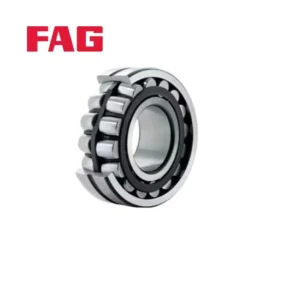

Product details
Description and application notes
Verified via QR scan — Every FAG 23144-E1-K spherical roller bearing we ship includes original packaging with scannable authentication codes for instant verification.
Technical Specifications
| Parameter | Value |
|---|---|
| Designation | FAG 23144-E1-K |
| Bearing Type | Spherical Roller Bearing |
| Arrangement | Double Row |
| Structure | Self-Aligning |
| Bore Type | 1:12 tapered bore |
| Material | Chrome Steel Gcr15 |
| Cage Material | Steel Cage / Brass Cage / Nylon Cage |
| Precision Class | P0 / P2 / P4 / P5 / P6 |
| Clearance Class | Standard (CN) |
| Origin | Jiangsu China |
Application Suitability
| Industry | Typical Applications |
|---|---|
| Mining & Aggregates | Vibrating screens / Crushers |
| Pulp & Paper | Paper machines |
| Metallurgy | Steel mill equipment |
Thermal Expansion Risks When Sourcing the FAG 23144-E1-K spherical roller bearing for Vibrating Screens
Mismatched internal clearance in heavy-duty shakers leads to rapid thermal seizure.
I recall a mining client at the Hannover Messe who replaced a C3 clearance unit with this standard clearance FAG 23144-E1-K spherical roller bearing on a high-temperature vibrating screen. Within days, thermal expansion caused the rolling elements to jam and burn out the raceway. Such catastrophic failures highlight why verifying exact suffix requirements is critical before installation. When equipment operates under intense friction and external heat, standard internal clearance simply cannot accommodate the dimensional growth of the shaft and housing. The resulting preload generates excessive heat, accelerating lubricant degradation and ultimately leading to total bearing collapse. Procurement engineers must rigorously evaluate the thermal dynamics of the application to avoid these devastating operational interruptions.
Matching Self-Aligning Geometry to Misaligned Shafts
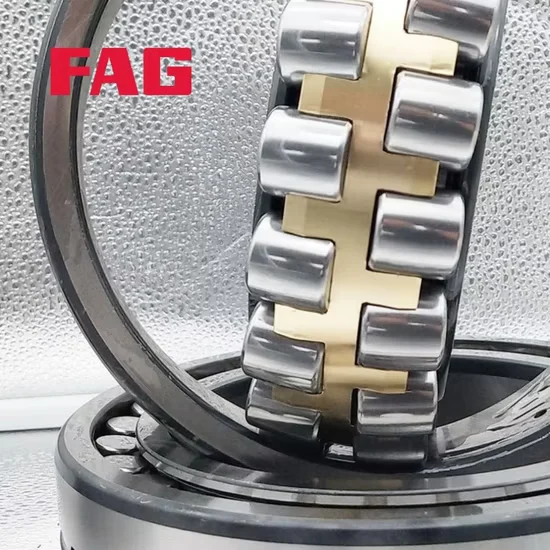
The self-aligning double-row structure of this FAG 23144-E1-K spherical roller bearing accommodates shaft deflections typical in heavy crushers and screen boxes. In mineral processing plants, heavy structural frames frequently warp under dynamic loading, introducing severe angular misalignment. The spherical outer ring raceway allows the inner ring and roller assembly to pivot freely, preventing edge loading on the rollers. Our sourcing network ensures you receive the exact cage material and precision class required to handle the severe radial loads and continuous vibrations. By neutralizing misalignment stresses, the bearing maintains uniform contact pressure across the rolling elements, significantly extending the operational lifespan of the machinery and reducing the frequency of unplanned maintenance interventions.
Navigating Shock Loads and Contaminated Environments
Vibrating screens and crushers subject bearings to immense shock loads and heavy particulate contamination. The 1:12 tapered bore allows secure mounting on adapter sleeves, maintaining tight interference fits even under severe radial impacts. When processing raw ores, abrasive dust constantly threatens to infiltrate the bearing interior, acting as a grinding paste that rapidly wears down the raceways. Adequate lubrication flow and proper sealing arrangements are essential to prevent abrasive dust from degrading the chrome steel raceways. Furthermore, the heavy-duty double-row arrangement distributes these intense shock loads across a larger contact area, ensuring the bearing can withstand the punishing mechanical forces inherent in aggregate production without suffering from premature spalling or surface fatigue.
Decoding the K Suffix and Cage Selection
The K suffix denotes a 1:12 tapered bore, which is essential for mounting on adapter sleeves to achieve precise radial internal clearance during installation. This tapered geometry provides a highly secure locking mechanism that prevents the inner ring from creeping on the shaft during heavy radial loading. Selecting the appropriate cage material—whether steel, brass, or nylon—depends on the specific vibration frequency and operating temperature of the screen deck. Brass cages typically offer superior resistance to high-frequency vibrations and provide excellent guidance for the rollers under severe oscillating conditions. Steel cages provide a balanced cost-to-performance ratio for standard heavy-duty applications, while maintaining structural integrity under high radial loads. Understanding these nuanced design choices ensures the bearing performs reliably throughout its intended service life.
The Financial Impact of Incorrect Bore and Clearance Matching
Installing a cylindrical bore bearing instead of a tapered one, or ignoring thermal expansion requirements, results in unplanned downtime and catastrophic damage to the shaft and housing. Premature failure not only voids equipment warranties but also halts entire production lines in steel mills and mining operations. When a bearing seizes due to incorrect clearance, the immense frictional heat can weld the inner ring to the shaft, requiring destructive removal methods that damage expensive machine components. Adhering to proper mounting practices and precise specification matching prevents these costly operational disruptions. The financial burden of a single unexpected breakdown often dwarfs the initial procurement cost, making rigorous technical verification an indispensable part of the purchasing process.
Securing Traceable Inventory for Critical Replacements
We maintain massive spot inventory covering thousands of standard part numbers, ensuring urgent maintenance requirements for this FAG 23144-E1-K spherical roller bearing are met without typical multi-week lead times. Our cross-brand equivalent model consultation helps verify dimensional interchangeability when OEM parts are delayed, keeping your critical machinery running. Every shipment includes complete traceability documentation, and our technical team provides failure analysis support to prevent recurring breakdowns in your vibrating screens. We understand that a missing suffix or incorrect clearance class can halt a mining operation, which is why our quality assurance protocols rigorously verify every parameter against official catalogs before dispatch. This rigorous attention to detail guarantees that the exact component you need arrives ready for immediate, trouble-free installation.
Documentation & Authenticity
- Certificate of Conformity confirming the exact FAG 23144-E1-K designation and batch origin.
- Original manufacturer batch traceability records linking the bearing to its production facility.
- Official app QR verification codes on the packaging to instantly confirm authenticity.
- Dimensional and running accuracy inspection reports verifying the selected precision class.
- Material test certificates validating the Chrome Steel Gcr15 composition and heat treatment.
Storage, Handling & Mounting
- Keep the FAG 23144-E1-K in its original moisture-barrier packaging until mounting to preserve the factory-applied rust preventive coating.
- Use induction heaters for the inner ring mounting, ensuring the temperature does not exceed the thermal limits of the selected cage material.
- Measure the drive-up distance on the 1:12 tapered bore adapter sleeve to achieve the correct residual radial internal clearance.
- Apply clean gloves when handling the exposed rolling elements to prevent acidic sweat from initiating corrosion on the chrome steel surfaces.
- Ensure the self-aligning outer ring is free to rotate within the housing during installation to avoid preloading the bearing.
Engineering Data Required for Precise Selection
To ensure this FAG 23144-E1-K spherical roller bearing meets your exact operational demands, please share your radial and axial load profiles, operating temperatures, and shaft speeds. Providing the OEM equipment number or existing bearing part number allows our engineering team to perform a thorough L10 life calculation and cross-reference verification. Specify the environmental conditions, such as dust exposure or moisture, so we can recommend the optimal sealing and cage configuration. Detailed operational data enables us to identify potential thermal or mechanical bottlenecks that might not be apparent from standard equipment manuals. By collaborating on these technical parameters, we can adapt our supply to your specific application, ensuring maximum reliability and minimizing the total cost of ownership for your heavy-duty machinery.
Frequently Asked Questions
Q: What does the K suffix indicate for this spherical roller bearing?
A: The K suffix specifies a 1:12 tapered bore, meaning the inner ring is designed to be mounted on an adapter sleeve or a tapered shaft. This configuration allows installers to precisely adjust the radial internal clearance by controlling the drive-up distance, ensuring optimal load distribution and preventing premature fatigue in heavy-duty vibrating screens.
Q: How can I verify the authenticity of the received bearings?
A: Every genuine unit we supply features original packaging with scannable QR codes compatible with the manufacturer's official verification app. You can also cross-reference the batch traceability documentation and Certificate of Conformity provided with your shipment to confirm the exact FAG 23144-E1-K designation and production origin before installation.
Q: What is the difference between the E and E1 suffix variations?
A: While the E suffix generally indicates an optimized internal design with reinforced roller sets, the E1 designation on this specific model is an unverified suffix requiring manufacturer catalog confirmation. We always recommend consulting the latest official technical documentation or our engineering team to clarify exact internal geometry variations before finalizing your procurement.
Q: How do I choose the right cage material for a vibrating screen?
A: Vibrating screens generate high-frequency oscillations that demand exceptional cage durability. Brass cages are typically preferred for their superior resistance to vibration-induced wear and high temperatures, whereas steel cages offer a reliable, cost-effective alternative for standard load conditions. Share your specific vibration amplitude and operating temperature with us to determine the optimal match.