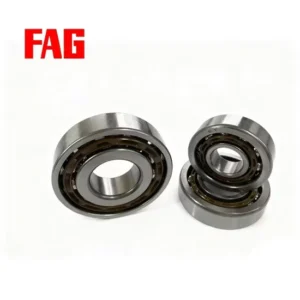
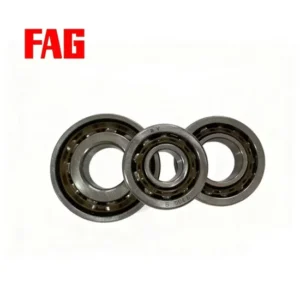
Product details
Description and application notes
Verify via official app — Every FAG B7013-C-T-P4s-Um angular contact ball bearing we supply includes a scannable QR code linking directly to the manufacturer's authentication database.
Technical Specifications
| Parameter | Value |
|---|---|
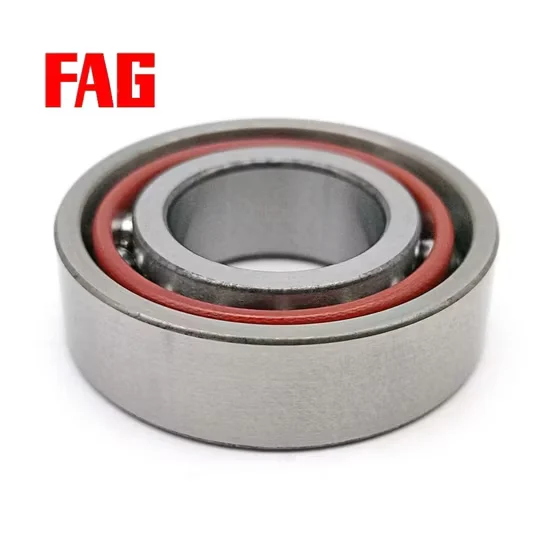
| Designation | FAG B7013-C-T-P4s-Um |
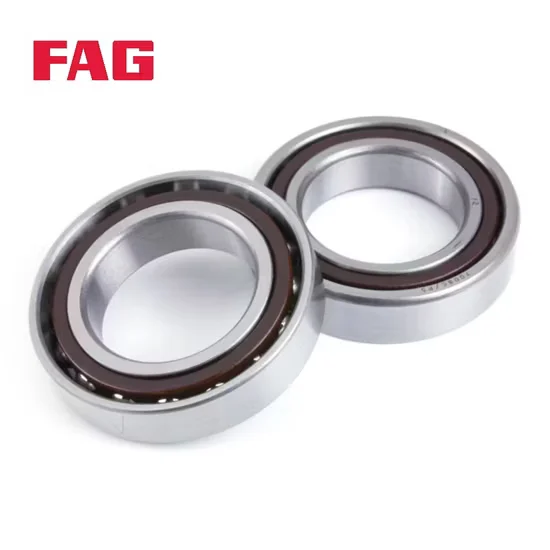
| Bearing Type | Angular Contact Ball Bearing |
| Precision Class | P4s (ISO) |
| Contact Angle | 15° (C) |
| Material | Steel |
| Origin | Jiangsu China |
| Certification | ISO compliant |
Application Suitability
| Industry | Typical Applications |
|---|---|
| Machine Tool Manufacturing | High-speed motorized spindles for CNC milling centers |
| Precision Engineering | Rotary tables and indexing heads requiring tight runout tolerances |
| Industrial Automation | High-speed robotic joint actuators and precision pump drives |
Why Standard Precision Tolerances Destroy High-Speed Spindles
When installing a FAG B7013-C-T-P4s-Um angular contact ball bearing into a motorized spindle, relying on standard P0 or P4 tolerances instead of P4s often leads to catastrophic thermal expansion.
Thermal runaway from microscopic runout errors causes premature spindle seizure.
During my years conducting failure analysis, I witnessed countless instances where clients substituted standard precision bearings into high-speed spindles to cut costs. The result was always the same: excessive vibration at operational speeds, rapid temperature spikes, and eventual spindle lock-up that destroyed the entire machining center head. The microscopic geometric deviations inherent in lower precision classes generate uneven load distribution across the rolling elements. This localized stress concentration accelerates fatigue and generates excessive friction heat, which the spindle cooling system simply cannot dissipate.
Matching Super Precision to Demanding Spindle Environments
When sourcing a FAG B7013-C-T-P4s-Um angular contact ball bearing for high-speed machining, the 15° contact angle provides the optimal balance between axial rigidity and rotational speed. Our engineering team frequently assists clients in cross-referencing this specific configuration against alternative brands to ensure identical preload and dimensional stability. Machine tool builders demand absolute consistency in spindle performance, and any deviation in internal geometry compromises the surface finish of the machined parts. By applying our comprehensive technical selection support, buyers can confidently integrate this super precision component into complex multi-axis machining centers without risking compatibility issues or unexpected performance degradation during critical production runs.
Managing Thermal and Dynamic Loads in CNC Spindles
High-speed spindles generate significant centrifugal forces and thermal gradients that directly impact internal clearance and lubrication film thickness. The 15° contact angle minimizes friction heat generation compared to steeper angles, which is critical when operating near the speed limits of grease or oil-air lubrication systems. Maintaining the correct preload under these thermal shifts prevents both skidding and excessive contact stress on the raceways. As the spindle accelerates, centrifugal forces push the rolling elements outward, altering the contact angles dynamically. If the initial preload and clearance are not meticulously matched to the anticipated thermal expansion of the rings, the bearing will either run too loose, causing destructive skidding, or too tight, leading to rapid thermal seizure.
Decoding the P4s Tolerance and Contact Angle Configuration
The P4s precision class guarantees exceptionally tight dimensional and running accuracy, which is mandatory for minimizing vibration in high-frequency spindle applications. The 'C' suffix confirms a 15° contact angle, specifically engineered to support combined loads while maximizing the limiting speed of the assembly. The bearing rings and rolling elements are available in high-purity bearing steel or specialized ceramic variants to suit specific environmental demands. Furthermore, the specific internal geometry associated with this precision class reduces friction torque, allowing the spindle to reach operational RPMs without excessive temperature rise. The raceway curvature and rolling element sphericity are controlled to sub-micron levels, ensuring that the load is distributed evenly across the entire contact ellipse. This precise geometric control is what separates a true super precision spindle bearing from a standard industrial component, directly translating to superior surface finishes and extended tool life in demanding milling operations.
The Financial Impact of Precision Mismatches
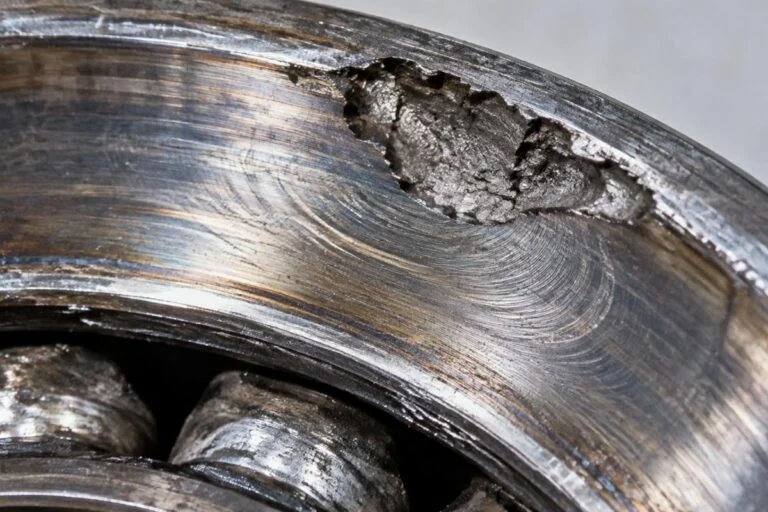
Installing a bearing with incorrect internal clearance or a mismatched precision class inevitably leads to unplanned downtime and catastrophic damage to the spindle housing. According to failure mode classifications outlined in ISO 15243, improper preload and thermal expansion are primary drivers of premature raceway spalling and cage failure. These hidden costs far exceed the initial procurement savings of substituting a lower-grade component. When a spindle seizes unexpectedly, the repair involves not just replacing the bearing, but often re-grinding the spindle shaft, replacing the housing, and recalibrating the entire machine tool. The resulting production delays and scrapped parts create a massive financial burden that completely negates any perceived upfront cost advantages of bypassing strict precision specifications.
Securing Traceable Super Precision Components
Sourcing super precision components requires strict verification, as misinterpreting complex suffix codes can result in receiving bearings with incorrect preload or cage designs. We provide complete factory batch traceability for every unit, ensuring the exact P4s tolerance and 15° contact angle match your spindle requirements. Our massive spot inventory allows for flexible order quantities, from single emergency replacements to full project consolidations. Additionally, our technical team offers cross-brand equivalent consultation to prevent production delays when specific part numbers face extended lead times. We understand that a machine tool sitting idle causes massive financial losses per hour, which is why our global shipping consolidation and rigorous pre-dispatch inspections guarantee that the exact specification arrives ready for immediate installation, eliminating the guesswork from your maintenance schedule.
Documentation & Authenticity
- Original factory batch traceability documents confirming the exact P4s precision grade.
- Running accuracy inspection reports verifying tight dimensional tolerances before dispatch.
- Scannable QR codes linking directly to the manufacturer's official authentication database.
- Material certification proving the use of high-purity bearing steel for the rings and rolling elements.
Storage, Handling & Mounting
- Keep the original vacuum packaging sealed until mounting to prevent moisture ingress affecting the P4s tolerance surfaces.
- Use clean, lint-free gloves when handling the 15° contact angle raceways to avoid corrosive sweat contamination.
- Store in a temperature-controlled environment to prevent thermal distortion of the precision steel rings or ceramic components.
- Follow the manufacturer's exact mounting sequence to preserve the factory-matched preload and internal clearance.
Preparing Your Technical Requirements for Review
To ensure accurate technical review and L10 life calculation, please share your spindle's radial and axial load profiles, maximum operating speeds, and specific temperature ranges. Providing the original OEM equipment number or existing bearing part numbers allows our engineering team to perform precise cross-reference verification. Detailing your current lubrication method and housing tolerances will help us confirm the optimal preload and clearance configuration for your application.
Frequently Asked Questions
Q: How can I verify the authenticity of this specific spindle bearing?
A: You can verify authenticity by scanning the QR code on the packaging using the manufacturer's official mobile application. This directly accesses the production database to confirm the P4s precision class and original factory batch. We also supply complete traceability documentation, ensuring every component meets strict anti-counterfeiting standards before it reaches your facility.
Q: What is the practical difference between standard P4 and P4s precision?
A: The P4s class represents a super precision standard with significantly tighter running accuracy and dimensional tolerances compared to standard P4. This enhanced precision is critical for high-speed machine tool spindles, as it minimizes microscopic runout, reduces vibration, and prevents thermal runaway during continuous high-RPM operations, ultimately extending the spindle's operational lifespan.
Q: How do I select the correct contact angle for my spindle application?
A: The 15° contact angle, indicated by the 'C' suffix, is optimized for high-speed applications where minimizing friction heat and maximizing rotational limits are the primary goals. If your spindle experiences heavier axial loads or requires higher axial rigidity at slightly lower speeds, a 25° contact angle might be more appropriate. We can analyze your specific load profiles to recommend the ideal configuration.
Q: What do the unverified 'T' and 'Um' suffixes indicate on this part number?
A: These specific suffixes require direct confirmation from the manufacturer's current technical catalog, as they may denote specialized cage materials, unique preload configurations, or specific manufacturing plant codes. We strongly recommend cross-referencing these exact suffixes with our engineering team before ordering to ensure the replacement bearing perfectly matches your spindle's original factory specifications and preload requirements.
Q: What lubrication practices are recommended for high-speed spindle bearings?
A: High-speed spindles typically require precise oil-air or oil-mist lubrication systems to manage friction heat without causing excessive churning losses. The lubrication interval and oil viscosity must be carefully matched to the 15° contact angle and P4s precision class. We advise consulting the machine tool builder's maintenance manual or requesting our technical guidance to establish the correct re-lubrication cycle for your specific operating speeds.