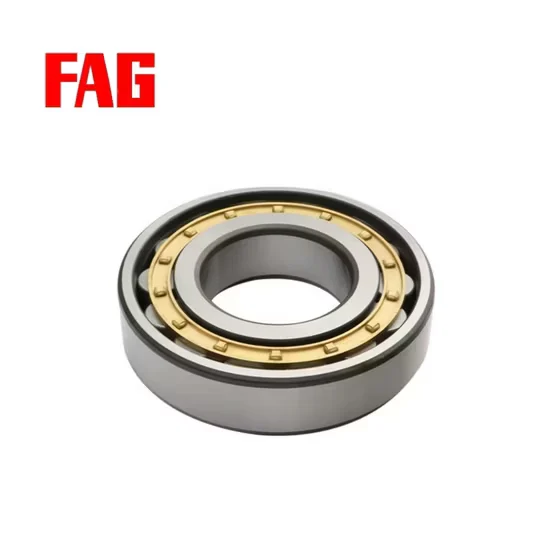
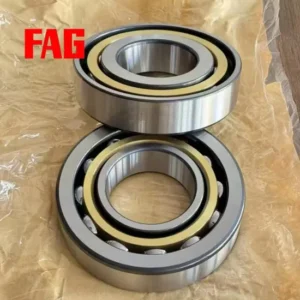
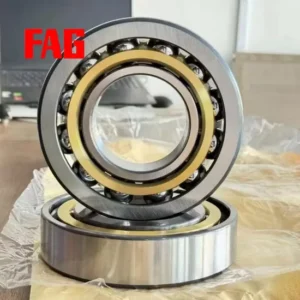
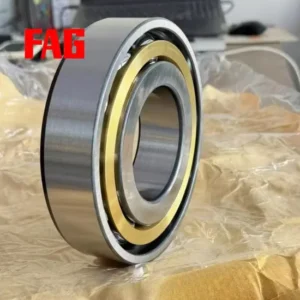
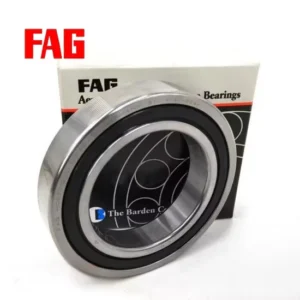
Product details
Description and application notes
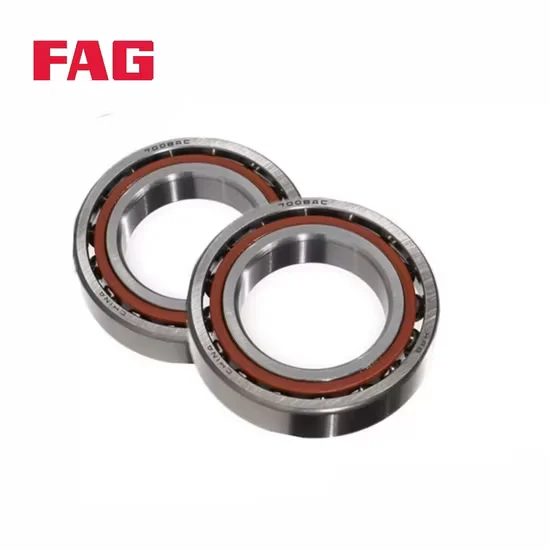
Cross-Reference Alignment — We verify dimensional, load, and speed limits against OEM equivalents before shipping this exact FAG B7017-E-T-P4s-Dul unit, ensuring perfect fitment.
Technical Specifications
| Parameter | Value |
|---|---|
| Designation | B7017-E-T-P4s-Dul |
| Bearing Type | Angular Contact Ball Bearing (Single-Row) |
| Series | B70 |
| Precision Class | P4s |
| Contact Angle | 25° |
| Material | Steel |
| Origin | Jiangsu China |
| Certification | ISO |
Suffixes T and Dul require manufacturer catalog confirmation for exact pairing and cage material details.
Application Suitability
| Industry | Typical Applications |
|---|---|
| Machine Tool Manufacturing | Grinding machine spindles, high-speed precision equipment |
| Industrial Automation | Robotics joint actuators, precision positioning stages |
| Fluid Machinery | High-speed pump shafts requiring strict runout control |
Why Spindle Vibration Ruins Surface Finish Even With a FAG B7017-E-T-P4s-Dul angular contact ball bearing
Micro-vibrations stem from mismatched preload and thermal expansion, not just the bearing itself.
Early in my career doing failure analysis in the lab, I examined a scrapped workpiece where severe grinding wheel chatter was traced directly back to a spindle bearing that lacked proper preload adjustment. When high-speed rotation generates internal heat, the inner ring expands significantly, altering the contact angle and causing catastrophic seizure if the initial setup ignores thermal dynamics. Many maintenance teams assume that simply pressing in a high-precision component solves the problem, but without calculating the thermal growth and setting the correct initial preload, the spindle will inevitably vibrate and destroy the surface finish. This realization fundamentally changed how I approach every precision transmission sale today.
Matching Super Precision to Heavy-Duty Grinding Environments
Selecting the right FAG B7017-E-T-P4s-Dul angular contact ball bearing ensures the spindle maintains strict dimensional accuracy under the heavy radial and axial grinding forces typical in modern manufacturing. Our engineering team provides comprehensive cross-brand equivalent model consultation to ensure this specific configuration perfectly matches your machine tool's original equipment manufacturer requirements. This proactive technical support prevents the common and costly pitfall of installing standard precision parts in high-speed applications where they simply cannot survive. By aligning the exact bearing specifications with your operational demands, we help you achieve consistent mirror-like finishes and extend the overall service life of the spindle assembly.
Navigating Thermal and Load Challenges in High-Speed Spindles
Grinding spindles continuously endure combined loads at extreme rotational speeds, generating significant internal heat that drastically affects lubrication viscosity and film thickness. Oil-air or oil-mist lubrication systems are typically required to manage this thermal buildup effectively without introducing excessive churning friction that would further elevate operating temperatures. Furthermore, the 25° contact angle must carefully balance axial rigidity with radial capacity, preventing destructive edge loading during heavy intermittent cuts. Contamination from aggressive coolant mist also demands careful sealing considerations to protect the highly polished raceways from abrasive wear and premature fatigue.
Decoding the P4s Precision Class and Contact Angle Geometry
The P4s precision class guarantees significantly tighter dimensional and running accuracy than standard P4 or ABEC 7 grades, which is absolutely critical for minimizing spindle runout during fine finishing operations. A 25° contact angle provides an optimal geometric balance for handling the combined radial and thrust loads typical in demanding grinding operations, ensuring stable shaft positioning. The single-row B70 series design offers higher load capacity compared to the lighter B719 series, making it exceptionally suitable for heavier, more rigid machine tool equipment. While standard bearing steel provides excellent rolling contact fatigue strength, alternative materials like ceramic rolling elements are available for specific high-speed requirements where weight reduction is prioritized. Proper interpretation of these technical suffixes ensures the bearing survives the rigorous demands of continuous precision machining without unexpected degradation.
The Financial Impact of Spindle Downtime and Premature Failure
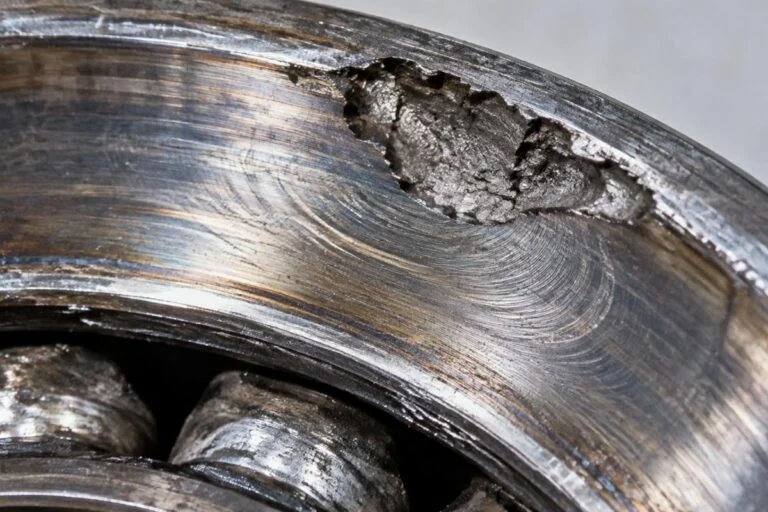
Installing an incorrectly paired or lower-precision bearing inevitably leads to premature failure, resulting in severe unplanned downtime and scrapped batches of high-value aerospace or automotive components. According to established failure mode classifications, improper mounting practices and inadequate lubrication are primary culprits that void manufacturer warranties and severely damage the adjacent spindle housing. The hidden financial cost of replacing a ruined diamond grinding wheel and re-machining rejected parts far exceeds the initial investment in a correctly specified super precision component. Ignoring these technical nuances turns a minor maintenance task into a major production bottleneck.
Securing Authentic Precision Components Through Rigorous Traceability
Sourcing genuine super precision bearings requires rigorous traceability, which we provide through complete batch documentation for every FAG B7017-E-T-P4s-Dul angular contact ball bearing we ship. We maintain a massive spot inventory of thousands of standard and special part numbers, allowing us to fulfill single-unit emergency orders for critical spindle repairs without delaying your production schedule. Our technical team carefully verifies the exact suffix combination to ensure the contact angle, precision class, and pairing match your OEM specifications, avoiding costly mismatches that lead to early failure. Additionally, we offer highly competitive sourcing costs compared to direct official channels while maintaining strict ISO-compliant quality assurance protocols. Global shipping consolidation ensures your mixed-brand bearing packages arrive safely, fully inspected, and exactly on schedule.
Documentation & Authenticity
- Certificate of Conformity verifying P4s tolerance grades for this specific spindle bearing batch.
- Original manufacturer batch inspection reports confirming 25° contact angle and dimensional accuracy.
- Official app QR code scanning support to validate the authenticity of your FAG precision components.
- Material traceability documents proving the steel quality meets strict machine tool spindle requirements.
Storage, Handling & Mounting
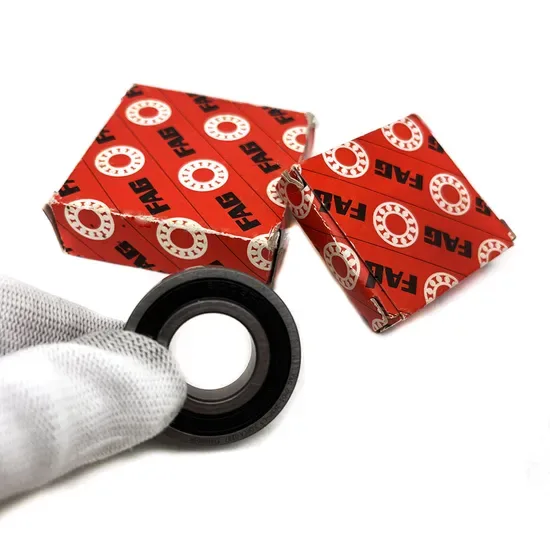
- Keep the P4s precision bearing in its original vacuum-sealed packaging to prevent microscopic dust contamination before mounting.
- Use clean, lint-free gloves when handling the 25° contact angle raceways to avoid sweat-induced corrosion.
- Verify the exact pairing marks on the outer ring before installation to maintain the factory preload arrangement.
- Apply controlled induction heating for the inner ring mounting, strictly avoiding open flames that alter the steel microstructure.
Preparing Your Technical Requirements for Spindle Integration
To ensure optimal spindle performance and longevity, please share your specific radial and axial load profiles, maximum operating speeds, and expected thermal conditions. Providing the exact OEM machine tool model number allows our dedicated engineering team to perform a precise cross-reference check against equivalents like 7017e and calculate the theoretical L10 life for your application. We will then recommend the exact lubrication strategy, mounting tolerances, and preload settings required for your specific grinding environment. This collaborative technical review guarantees that the selected bearing configuration delivers reliable, vibration-free operation under your unique manufacturing constraints.
Frequently Asked Questions
Q: How to verify the authenticity of FAG super precision spindle bearings?
A: Authenticity is confirmed by scanning the official manufacturer QR code on the packaging and cross-referencing the batch number with original inspection reports. We supply full traceability documentation, ensuring your FAG B7017-E-T-P4s-Dul angular contact ball bearing is sourced from authorized channels and meets strict P4s dimensional tolerances.
Q: What does the P4s precision class mean compared to standard P4?
A: The P4s class denotes super precision with tighter running accuracy and dimensional tolerances than standard P4 or ABEC 7 grades. This enhanced precision minimizes spindle runout and vibration, which is absolutely critical for achieving mirror-like surface finishes in high-speed grinding machine applications.
Q: Why is the 25° contact angle preferred for certain grinding spindles?
A: A 25° contact angle provides an optimal balance between axial rigidity and radial load capacity. This configuration effectively handles the combined thrust and radial forces generated during heavy grinding cuts, preventing edge loading and ensuring stable spindle rotation under demanding machining conditions.
Q: How to interpret custom or unverified pairing suffixes in spindle bearings?
A: Suffixes indicate specific internal designs, cage materials, or pairing arrangements. While standard codes like E denote a 25° contact angle, some custom suffixes require direct manufacturer catalog confirmation. We assist in decoding these identifiers to ensure the exact preload and arrangement match your OEM spindle requirements.
Q: What are the recommended lubrication practices for P4s precision bearings?
A: High-speed P4s spindle bearings typically require oil-air or oil-mist lubrication to manage thermal buildup without churning friction. It is essential to use ultra-clean, filtered oils and maintain strict contamination control, as even microscopic particles can severely compromise the running accuracy and operational lifespan of the grinding spindle.