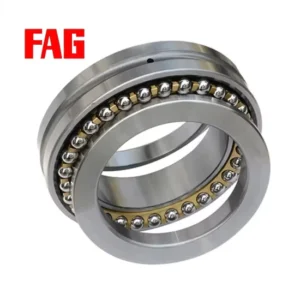
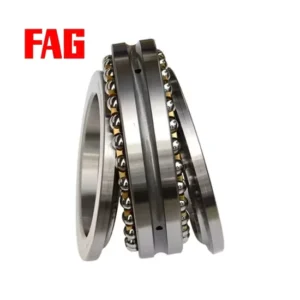
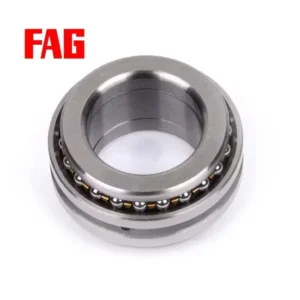
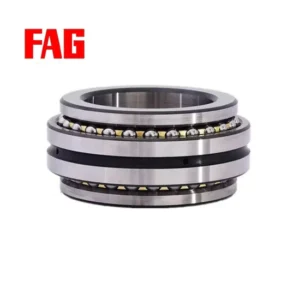
Product details
Description and application notes
Unified Procurement — Source this exact FAG spindle bearing alongside mixed-brand CNC tooling packages without coordinating multiple regional suppliers.
Technical Specifications
| Parameter | Value |
|---|---|
| Designation | FAG B7030-C-T-P4s-UL |
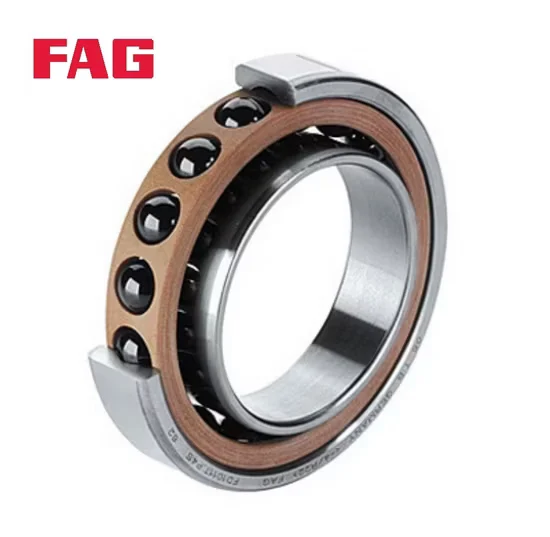
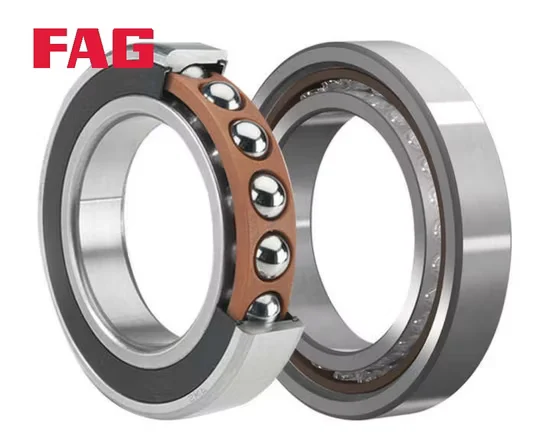
| Bearing Type | Single Row Angular Contact Ball Bearing |
| Series | B70 |
| Precision Class | P4s |
| Contact Angle | 15° |
| Material | Steel |
| Origin | Jiangsu China |
Note: Suffixes T and UL are unverified and require manufacturer catalog confirmation for exact technical definitions.
Application Suitability
| Industry | Typical Applications |
|---|---|
| Machine Tool Manufacturing | High-speed CNC milling and turning center spindles |
| Precision Engineering | Coordinate measuring machines and optical grinding equipment |
| Industrial Automation | High-precision robotic rotary joints and indexing tables |
Why Spindle Vibration Destroys CNC Accuracy Before the Tool Does
Selecting the correct FAG B7030-C-T-P4s-UL angular contact ball bearing prevents catastrophic thermal seizure in high-RPM machining centers.
Years ago in Qingdao, I supplied a woodworking machinery manufacturer with standard P0-grade angular contact bearings for their main spindles to cut costs. The resulting high-speed vibration exceeded acceptable limits, generating excessive friction heat that ultimately seized the spindle assembly. That failure completely changed my approach to CNC component sourcing. Today, I strictly specify ultra-precision classes for high-speed applications because standard tolerances simply cannot survive the thermal expansion and dynamic loads of modern machining. Installing an authentic, traceable component ensures the spindle maintains its geometric accuracy under extreme operational stress.
Matching Spindle Dynamics to Bearing Tolerances
When retrofitting or building high-speed CNC spindles, the FAG B7030-C-T-P4s-UL angular contact ball bearing provides the necessary rigidity and running accuracy. Our engineering team frequently assists clients in cross-referencing equivalent models across premium global brands, ensuring that the selected component perfectly matches the spindle housing tolerances and expected dynamic loads without requiring costly machining modifications.
Thermal Growth and Lubrication in High-RPM Environments
High-speed spindle operation generates significant internal friction heat, which directly impacts the internal clearance and lubrication film thickness. A 15° contact angle optimizes the load distribution for combined radial and axial forces while minimizing friction-induced thermal growth. Proper oil-air or grease lubrication must be carefully calibrated to prevent overheating, as inadequate lubrication at extreme speeds rapidly degrades the raceway surfaces. Furthermore, maintaining a clean environment during assembly is critical to prevent microscopic debris from compromising the precision raceways.
Decoding the B70 Series Precision Architecture
The B70 series is specifically engineered for the demanding rigidity and speed requirements of machine tool spindles. The "C" suffix designates a 15° contact angle, which strikes an ideal balance between axial load capacity and high-speed capability by reducing centrifugal forces on the rolling elements. Achieving P4s precision means the dimensional and running accuracies are tightly controlled, ensuring minimal radial runout and vibration during high-RPM operation. While standard bearing steel is common, this series is also available in ceramic hybrid variants to further reduce centrifugal forces at extreme speeds. The single-row configuration allows for flexible mounting arrangements to accommodate specific spindle preload requirements.
The Hidden Toll of Compromised Spindle Components
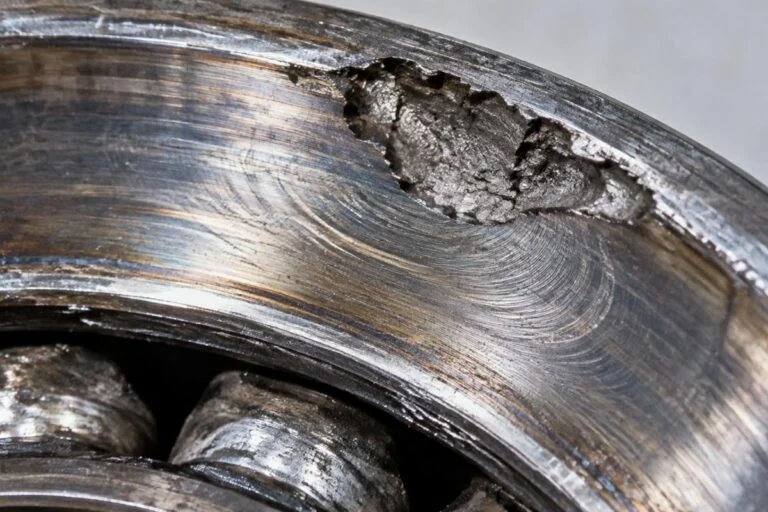
Installing unverified or incorrectly specified spindle components leads to severe operational consequences. Premature failure often manifests as unacceptable surface finish degradation, excessive acoustic noise, or complete spindle seizure during heavy cutting cycles. These issues result in unplanned downtime, scrapped high-value workpieces, and costly emergency replacement procedures. According to industry failure analysis frameworks, a significant share of premature bearing failures stems from improper selection or contaminated installation environments rather than inherent material defects.
Securing Traceable Spindle Components for Your Facility
Sourcing authentic high-precision components requires rigorous supply chain verification, especially for critical suffixes like P4s where counterfeiters often substitute lower-grade P0 or P5 stock. We provide complete original factory batch traceability for every unit shipped, eliminating the risk of installing mislabeled inventory. Our massive spot inventory covers thousands of standard and special part numbers, allowing us to fulfill urgent maintenance requirements without the typical multi-week lead times. Additionally, our technical selection support ensures that the exact precision class and contact angle align perfectly with your OEM specifications.
Documentation & Authenticity
- Original factory batch traceability documents verifying the P4s precision grade.
- Dimensional and running accuracy inspection reports confirming tight tolerances before dispatch.
- Certificate of Conformity matching the specific B70 series production batch.
- Material certification detailing the steel composition used for the rings and rolling elements.
- Official anti-counterfeiting verification guidance for authenticating the physical product markings.
Storage, Handling & Mounting
- Store the P4s precision components in their original, unopened packaging to prevent humidity-induced corrosion on the exposed steel raceways.
- Use clean, lint-free gloves during handling to avoid transferring skin acids that could compromise the high-speed raceway finish.
- Maintain strict temperature control in the storage area to prevent thermal distortion of the tightly toleranced B70 series rings.
- Follow precise induction heating protocols for the inner ring to preserve the 15° contact angle geometry during mounting.
- Keep matched sets sealed until the exact moment of installation to preserve factory-applied preload alignment marks.
Preparing Your Spindle Parameters for Technical Review
To ensure optimal performance and longevity, please provide your specific spindle operating parameters, including maximum rotational speed, expected radial and axial cutting loads, and target operating temperatures. Sharing the original OEM equipment model number allows our engineering team to perform a comprehensive cross-reference verification and L10 life calculation for the FAG B7030-C-T-P4s-UL angular contact ball bearing. This technical review guarantees that the selected configuration perfectly aligns with your machining requirements.
Frequently Asked Questions
Q: How can I verify the authenticity of this FAG spindle bearing via official channels?
A: Authenticity verification involves checking physical markings against the official database and utilizing the designated mobile app to scan the anti-counterfeiting QR code. We supply complete factory batch traceability documentation, allowing you to cross-reference the production batch directly with manufacturer records to ensure the P4s precision grade is genuine.
Q: What does the P4s precision class mean compared to standard P4 or ABEC equivalents?
A: The P4s designation indicates a specialized precision standard tailored for machine tool spindles, featuring tighter running accuracy and stricter dimensional tolerances than standard P4 or ABEC 7 equivalents. This enhanced precision minimizes radial runout and vibration at high rotational speeds, which is critical for achieving superior surface finishes in high-speed CNC milling operations.
Q: How do I select the correct contact angle and preload for my CNC spindle application?
A: Selecting the optimal configuration requires analyzing specific cutting forces and speed requirements. A 15° contact angle provides an excellent balance for high-speed operations with moderate axial loads. You must also determine required rigidity to choose the appropriate preload class, which our technical team can help calculate based on your provided load data.
Q: What are the cross-reference considerations when replacing existing spindle bearings?
A: When replacing spindle components, verify the exact precision class, contact angle, and internal clearance of the original equipment. Simply matching the dimensional envelope is insufficient, as substituting a standard precision bearing for a P4s grade causes severe vibration. Provide the OEM equipment number so we can verify exact cross-reference equivalents across premium global brands.
Q: What are the recommended mounting tools and practices for precision bearings?
A: Mounting high-precision spindle components requires specialized induction heaters with precise temperature control to expand the inner ring without altering the metallurgical structure. Always use clean, lint-free gloves and work in a controlled environment to prevent microscopic contamination. Follow specific torque specifications for the spindle locknut to achieve the exact required preload without inducing excessive friction.