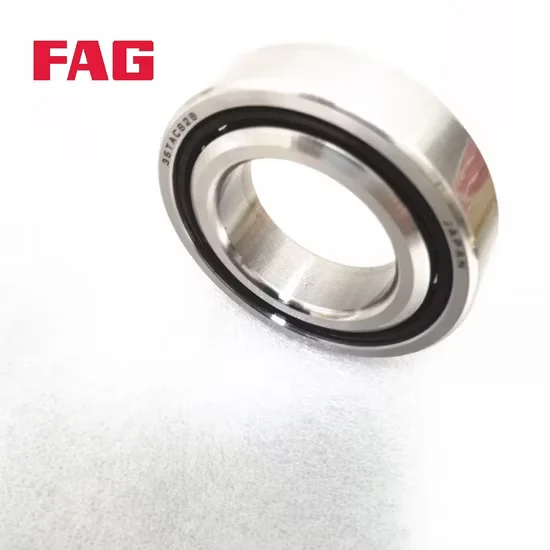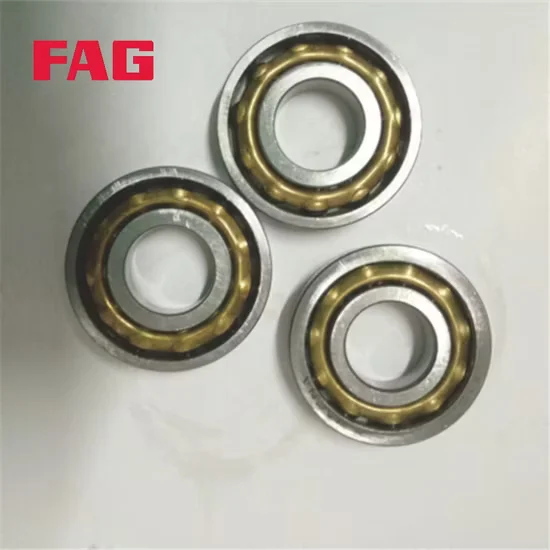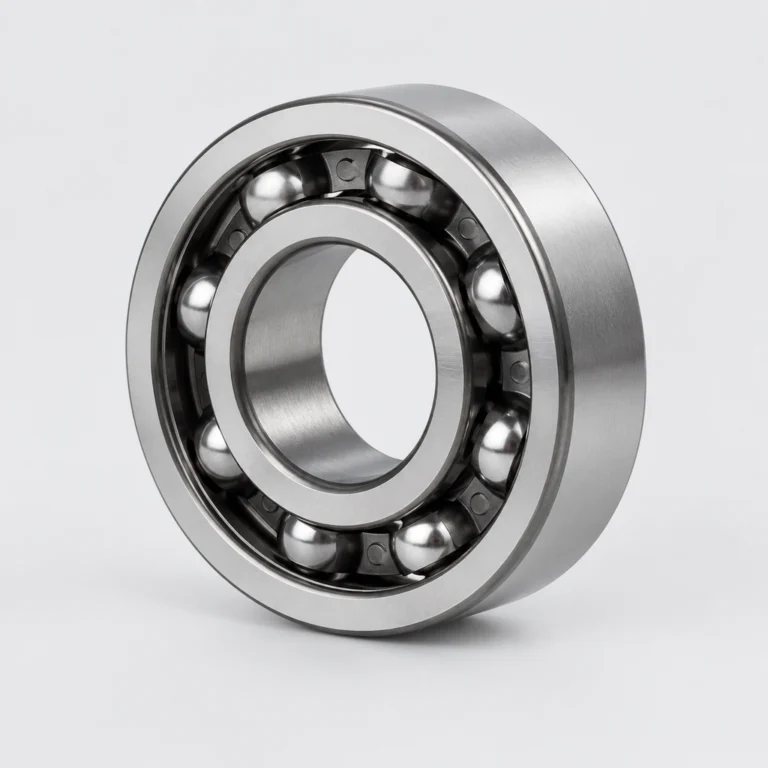



Product details
Description and application notes
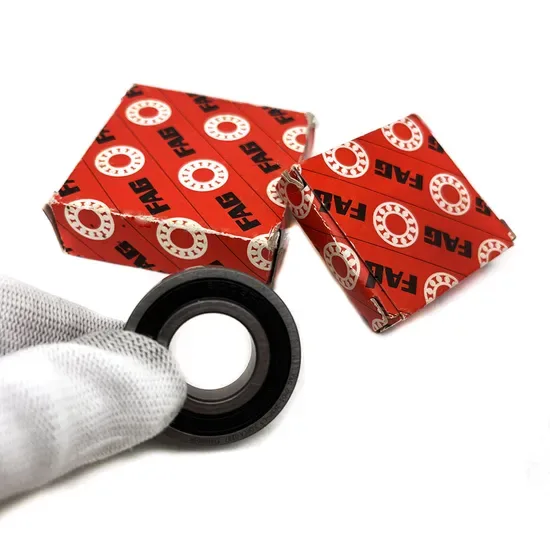
Authenticity via QR — Every FAG B71901-E-T-P4s-UL angular contact ball bearing ships with scannable factory tags for instant origin verification.
Technical Specifications
| Parameter | Value |
|---|---|
| Designation | FAG B71901-E-T-P4s-UL |
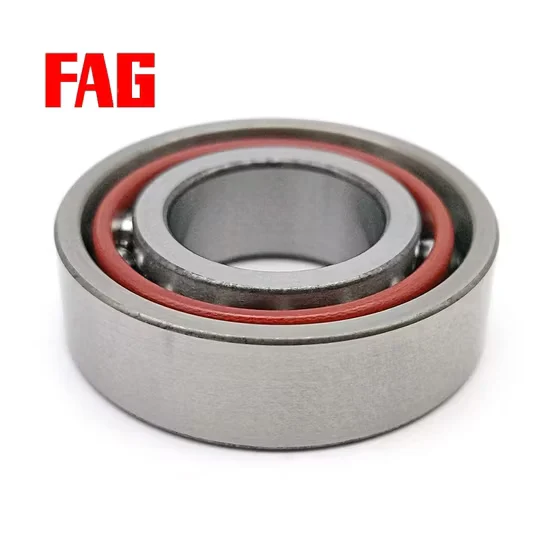
| Bearing Type | Angular Contact Ball Bearing |
| Precision Class | P4s (ISO) |
| Contact Angle | 25° (E suffix) |
| Material | Steel |
| Origin | Jiangsu China |
T and UL suffixes remain unverified and require manufacturer catalog confirmation.
Application Suitability
| Industry | Typical Applications |
|---|---|
| Machine Tool Manufacturing | CNC spindle front and rear support nodes |
| Precision Engineering | High-speed robotic joint actuators |
| Fluid Dynamics | High-speed pump shaft supports |
Spindle Vibration Traces Back to Suffix Mismatches on the FAG B71901-E-T-P4s-UL angular contact ball bearing
Ignoring pairing and preload codes destroys high-speed rotational stability.
Years ago, I sourced spindle bearings for a Dubai client but overlooked the exact suffix requirements, sending standard variants that caused severe high-speed vibration upon installation. That failure highlighted how minor catalog deviations compromise machining accuracy. Procurement teams often assume base dimensions are enough, but precision equipment demands exact suffix alignment. A mismatched internal geometry will rapidly degrade the spindle housing, turning a simple maintenance task into a catastrophic machine rebuild. Recognizing these subtle engineering distinctions separates reliable suppliers from mere catalog order-takers.
Matching Precision Codes to CNC Spindle Demands
Deploying the FAG B71901-E-T-P4s-UL angular contact ball bearing in CNC spindles requires strict adherence to the P4s tolerance class to prevent thermal drift during prolonged milling cycles. Our cross-brand equivalent model consultation ensures that if lead times fluctuate, alternative premium brands maintain the identical 25° contact angle and dimensional accuracy without altering the spindle housing fit. This technical oversight prevents the costly trial-and-error approach that often plagues emergency maintenance replacements.
Managing Thermal and Axial Loads in High-Speed Milling
CNC spindles generate immense centrifugal forces and axial thrust during heavy cutting, demanding a 25° contact angle to balance load capacity with rotational speed. As operational temperatures rise, thermal expansion alters internal clearance, making the specific precision class critical for maintaining running accuracy. Oil-air lubrication is typically mandatory here to manage friction heat without introducing the drag associated with grease packing. Furthermore, the steel construction must withstand continuous cyclic loading without experiencing micro-deformations that would ruin the surface finish. Proper thermal management ensures the spindle retains its geometric integrity throughout extended production shifts.
Decoding the P4s Tolerance and 25° Contact Geometry
The P4s precision designation indicates ultra-strict dimensional and running accuracy designed specifically for machine tool spindles, surpassing standard P4 requirements in specific axial parameters. The E suffix confirms a 25° contact angle, providing the optimal geometric compromise between radial rigidity and axial thrust handling during high-speed milling. Steel construction delivers the necessary structural durability and elastic modulus to resist deformation under continuous cutting forces. Unlike lower-precision variants, this tight tolerance class ensures minimal runout, directly translating to superior surface finish on machined parts. Selecting the correct contact angle prevents the spindle from shifting under heavy axial cutting loads, safeguarding the tool life.
The Financial Impact of Catalog Deviations
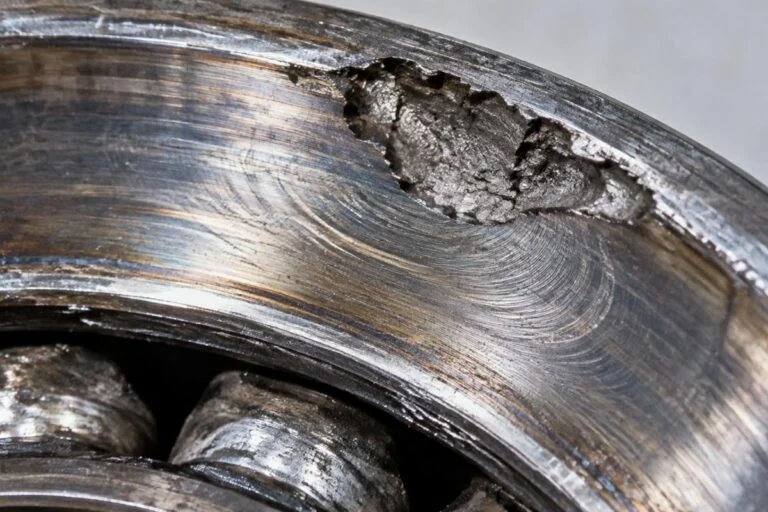
Substituting a standard precision bearing where a P4s class is specified inevitably leads to premature failure and catastrophic damage to the spindle shaft. According to failure mode classifications outlined in ISO 15243, improper internal clearance or mismatched contact angles accelerate fatigue spalling on the raceways. This unplanned downtime halts entire production lines, voiding machine warranties and eroding profit margins far beyond the initial component savings. The resulting scrap parts and emergency freight costs easily overshadow any perceived upfront procurement discounts, making strict specification adherence a financial imperative for plant managers.
Securing Traceable Spindle Components Globally
Sourcing genuine spindle bearings requires complete traceability documentation, which we provide for every shipment to guarantee authentic FAG origin. We maintain massive spot inventory covering thousands of standard and special part numbers, allowing flexible MOQs from single-unit emergency spares to full container consolidations. Our technical selection support specifically targets the high-risk suffix matching that causes spindle vibration, preventing the exact cross-reference errors I encountered early in my career. Furthermore, our global shipping consolidation ensures urgent maintenance requirements reach your facility without customs delays. This comprehensive approach eliminates the administrative burden of coordinating multiple vendors for mixed-brand machine tool rebuilds.
Documentation & Authenticity
- Certificate of Conformity verifying the P4s precision grade and original manufacturer batch.
- Running accuracy inspection reports confirming tight axial runout limits prior to dispatch.
- Scannable anti-counterfeit labels for instant digital verification of the 25° contact angle variant.
- Material certificates detailing the specific steel grade used for the inner and outer rings.
Storage, Handling & Mounting
- Store the P4s precision component in its original sealed packaging to prevent microscopic dust from scoring the raceways.
- Use induction heating for the steel inner ring, strictly monitoring temperature to preserve the factory heat treatment.
- Maintain strict climate control to protect the rust preventive coating applied to the high-precision outer ring surfaces.
- Wear lint-free gloves during handling to prevent skin oils from etching the 25° contact angle raceway geometry.
- Ensure the spindle housing is machined to the exact tight tolerance required for the P4s outer ring fit.
Engineering Data Required for Technical Validation
To validate the suitability of this specific designation, please share your spindle's radial and axial load profiles, maximum operational RPM, and target operating temperature. Providing the original OEM equipment number allows our engineering team to perform a rigorous cross-reference check, ensuring the suffix configuration perfectly matches your housing tolerances. We will also review your current lubrication setup to confirm compatibility with the open bearing design, delivering a fully vetted technical recommendation before any purchase commitment is made.
Frequently Asked Questions
Q: How does the P4s precision class differ from standard P4 under ISO standards?
A: The P4s class enforces stricter axial running accuracy and tighter dimensional tolerances specifically optimized for machine tool spindles. While standard P4 covers general high-precision needs, P4s ensures minimal axial runout during high-speed rotation, which is critical for achieving superior surface finishes in CNC milling operations.
Q: What is the impact of the 25° contact angle on CNC spindle performance?
A: A 25° contact angle provides an optimal balance between axial load capacity and high-speed rotational capability. It allows the spindle to withstand significant axial thrust generated during heavy milling cuts while maintaining the rigidity needed to prevent tool deflection and ensure precise machining tolerances.
Q: How can I verify the authenticity and traceability of these high-precision bearings?
A: We supply complete traceability documentation, including Certificates of Conformity and original manufacturer batch records. Each unit features scannable anti-counterfeit labels that allow you to instantly verify the genuine origin and confirm that the specific precision grade and contact angle match the official factory specifications.
Q: What cross-reference considerations are critical when replacing spindle bearings?
A: When replacing spindle bearings, you must match not only the base dimensions but also the exact suffix codes defining precision, contact angle, and internal clearance. Substituting a standard variant for a P4s designated unit will cause severe high-speed vibration and compromise the entire machining accuracy.