

Product details
Description and application notes
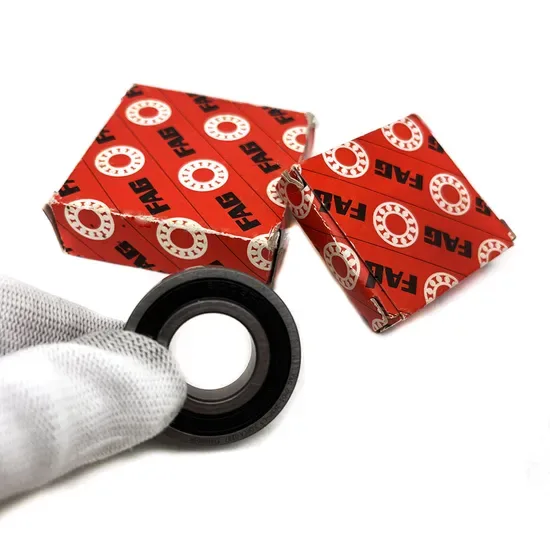
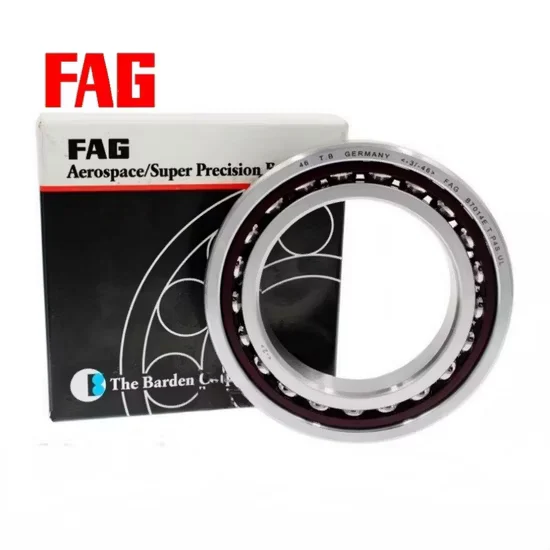
Official App Verification — Scan the QR code on the FAG B71905-E-T-P4s-Dul packaging to instantly confirm its authenticity and traceability.
Technical Specifications
| Parameter | Value |
|---|---|
| Designation | FAG B71905-E-T-P4s-Dul |
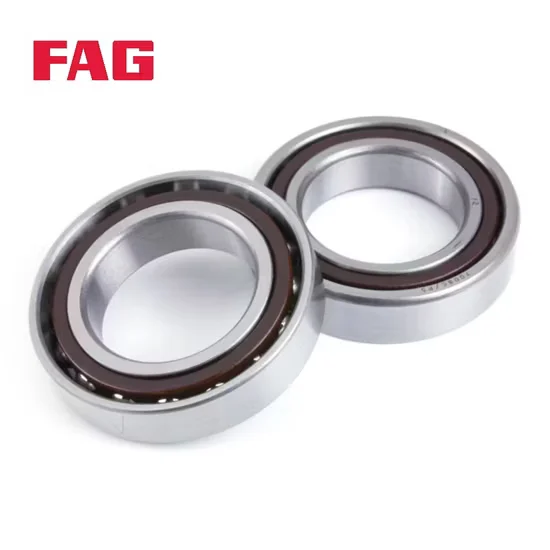
| Bearing Type | Angular Contact Ball Bearing |
| Precision Class | P4s |
| Contact Angle | 25° |
| Material | Steel |
| Origin | Jiangsu China |
Note: Suffixes 'B', 'T', and 'Dul' are unverified and require strict cross-referencing with the manufacturer's current catalog to confirm exact cage and pairing details.
Application Suitability
| Industry | Typical Applications |
|---|---|
| Machine Tool Manufacturing | High-speed spindle assemblies requiring tight radial and axial runout control |
| Precision Equipment | Rotary tables and indexing heads demanding P4s running accuracy |
| Lightweight Machinery | High-frequency robotic joints with combined load profiles |
Why Spindle Runout Ruins Machining Tolerances Before the FAG B71905-E-T-P4s-Dul angular contact ball bearing Fails
Micro-vibrations from mismatched preload destroy surface finishes long before catastrophic bearing seizure occurs.
I once shipped standard clearance bearings instead of preloaded pairs to a Riyadh machine tool plant. The spindles overheated and seized during high-speed operation, scrapping the entire assembly and ruining dozens of precision workpieces. That disaster shifted my entire focus to strict tolerance matching and preload verification. When dealing with high-accuracy components, assuming standard clearances will suffice is a critical error.. Micro-vibrations from mismatched internal geometry destroy surface finishes long before catastrophic bearing seizure occurs. Procurement teams must recognize that high-speed spindles demand exact specification adherence, making the correct precision class and preload arrangement non-negotiable for any maintenance engineer aiming to protect valuable machine assets.
Matching P4s Precision to High-Speed Spindle Demands
When sourcing a FAG B71905-E-T-P4s-Dul angular contact ball bearing for spindle applications, maintaining dimensional stability at high RPMs is critical. Our engineering team cross-checks the exact preload and tolerance stack-up to ensure the bearing matches your specific machine tool configuration. This prevents the costly trial-and-error approach that often delays urgent maintenance projects. Whether you are upgrading a legacy CNC lathe or performing routine MRO replacements on a high-frequency grinding center, securing the correct precision class ensures the spindle maintains its tight radial and axial runout control throughout its operational lifespan, ultimately safeguarding your machining tolerances and surface finish quality.
Navigating Thermal Growth and Axial Thrust in Spindles
High-speed spindles generate significant internal heat, which alters the internal clearance and contact angle under continuous operation. The 25° contact angle provides a necessary balance to handle both radial cutting forces and axial thrust loads without excessive friction. Proper oil-air or grease lubrication must be strictly maintained to prevent thermal runaway at elevated rotational speeds.. Any microscopic contamination in the spindle housing will rapidly degrade the P4s running accuracy, leading to chatter marks on the machined surfaces and accelerated raceway wear.
Decoding the Suffix Matrix for Spindle Replacement
The 'E' suffix confirms the 25° contact angle, optimizing the load distribution for combined spindle forces during heavy cutting operations. The 'P4s' precision class guarantees extremely tight dimensional and running tolerances, which is non-negotiable for high-frequency machining where micron-level deviations cause scrap. Misinterpreting specific designators can lead to incorrect preload application during mounting. Always verify the complete suffix string against the original equipment manufacturer's spindle blueprint to avoid installing a mismatched component that compromises the entire assembly. Proper alignment of these parameters ensures the bearing operates within its intended thermal and mechanical boundaries.
The Financial Impact of Preload and Tolerance Mismatches
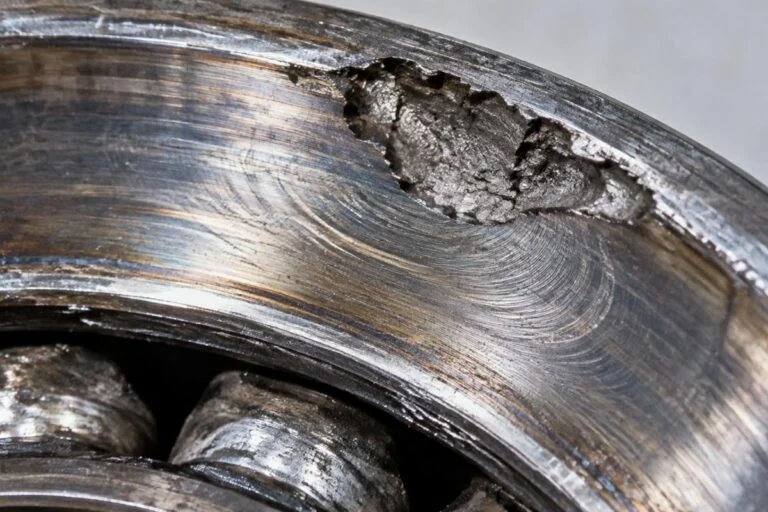
Installing a bearing with incorrect preload or mismatched precision class leads to unplanned downtime and premature failure of the entire spindle cartridge. According to failure mode classifications outlined in ISO 15243, improper internal clearance often manifests as smearing or surface fatigue on the raceways. This catastrophic damage voids equipment warranties and forces emergency replacement orders that disrupt production schedules.. The hidden costs of scrapped workpieces, lost production time, and secondary damage to the spindle housing far exceed the initial component savings.
Securing Traceable Spindle Components with Flexible Sourcing
We supply genuine FAG B71905-E-T-P4s-Dul angular contact ball bearings with complete traceability documentation, eliminating the risk of counterfeit precision parts entering your facility. Our flexible MOQ accommodates both single-unit emergency spindle repairs and full container consolidations for large manufacturing plants across different time zones. We maintain massive spot inventory covering thousands of precision part numbers to bypass typical multi-week lead times. Our technical team provides cross-brand equivalent model consultation if the original designation faces global supply shortages. Furthermore, we offer long-term after-sales support for failure analysis, helping your maintenance crew optimize future spindle rebuilds, extend overall equipment effectiveness, and prevent recurring thermal failures in high-speed machining environments.
Documentation & Authenticity
- Certificate of Conformity verifying the P4s precision class and 25° contact angle specifications.
- Original batch traceability records linking the bearing to the manufacturer's production facilities.
- Official app QR verification codes printed on the packaging for instant authenticity checks.
- Dimensional and running accuracy inspection reports confirming tight P4s tolerances before dispatch.
- Material certification confirming the high-purity steel composition used for the rings and rolling elements.
Storage, Handling & Mounting
- Keep the matched set sealed until mounting; opening early risks losing the factory preload pairing marks on this arrangement.
- Store the P4s precision bearing in a climate-controlled environment to prevent thermal distortion of the tight tolerances.
- Use clean, lint-free gloves when handling the 25° contact angle raceways to avoid corrosive sweat contamination.
- Follow the manufacturer's exact heating protocols for the steel rings to preserve the P4s dimensional stability during installation.
- Verify the specific preload arrangement indicated by the suffix string before applying the final locking nut torque.
Providing the Right Data for Technical Verification
To ensure precise selection and L10 life calculation, please share your spindle's radial and axial load profiles, maximum operating speeds, and thermal conditions. Providing the original OEM equipment number allows our engineering team to perform an accurate cross-reference verification. Supplying the exact housing dimensions and current lubrication setup helps us confirm the optimal preload and clearance configuration for your specific application, ensuring the replacement bearing integrates flawlessly into your existing machinery.
Frequently Asked Questions
Q: What does the P4s precision class mean compared to standard P4 or P5 for spindle applications?
A: P4s represents a specialized precision standard optimized for high-speed machine tool spindles, offering tighter running accuracy and dimensional tolerances than standard P4 or P5 grades. This ensures minimal runout and vibration during high-RPM machining operations, directly protecting the surface finish of your workpieces and extending the overall lifespan of the spindle cartridge.
Q: Why is matching the exact suffix combination critical when replacing this spindle bearing?
A: The suffix combination dictates the contact angle, cage design, and preload arrangement. Mismatching these parameters alters the internal load distribution, leading to excessive heat generation, premature wear, and potential spindle seizure during high-speed operation. Verifying the exact string ensures the replacement bearing perfectly mirrors the original equipment manufacturer's dynamic performance requirements.
Q: How can we verify the authenticity and traceability of the received bearings?
A: You can verify authenticity by scanning the official QR code on the packaging using the manufacturer's app. We also provide comprehensive traceability documentation, including certificates of conformity and original batch records linking the components directly to the production facilities, ensuring complete supply chain transparency for your quality assurance team.
Q: What are the recommended lubrication practices for maintaining the 25° contact angle bearing at high speeds?
A: High-speed spindles typically require precise oil-air or specialized grease lubrication to manage thermal growth. Maintaining the correct lubricant volume and interval prevents thermal runaway, ensuring the 25° contact angle continues to effectively balance radial and axial loads without excessive friction, thereby preserving the tight P4s running accuracy over time.
Q: How do you handle cross-referencing if the original spindle bearing is out of stock globally?
A: Our technical team consults cross-brand equivalent models from premium manufacturers like SKF or NSK. We analyze the exact load ratings, precision class, and dimensional envelope to propose a validated alternative that maintains the required spindle running accuracy, ensuring your production line continues operating smoothly even during global supply chain disruptions.