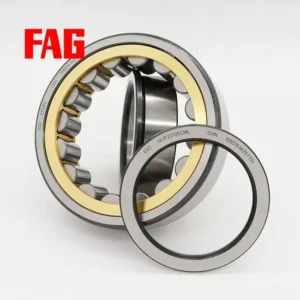
Product details
Description and application notes
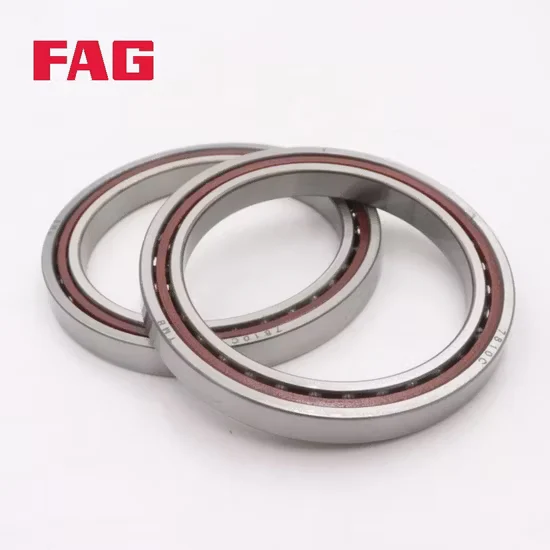
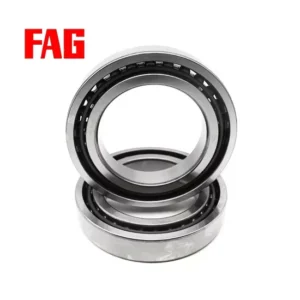
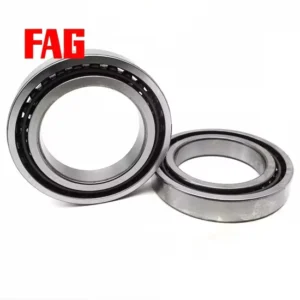
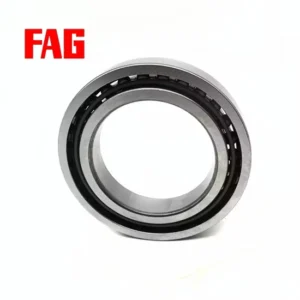
Original Batch Traceability — Every FAG B71908-C-T-P4s-UL angular contact ball bearing ships with factory batch records linking directly to the production date and inspection data.
Technical Specifications
| Parameter | Value |
|---|---|
| Designation | FAG B71908-C-T-P4s-UL |
| Bearing Type | Angular Contact Ball Bearing |
| Bore Diameter (d) | 40 mm |
| Outside Diameter (D) | 62 mm |
| Width (B) | 12 mm |
| Dynamic Load Rating (C) | 17600 N |
| Static Load Rating (C₀) | 13700 N |
| Limiting Speed (Grease) | 22000 min⁻¹ |
| Limiting Speed (Oil) | 36000 min⁻¹ |
| Seal or Shield Type | Open |
| Precision Class | P4s (ISO) |
| Contact Angle | 15° (C) |
| Material | Bearing steel |
| Certification | ISO |
Note: The "T" and "UL" suffixes are unverified and require manufacturer catalog confirmation for exact cage material and pairing preload definitions.
Application Suitability
| Industry | Typical Applications |
|---|---|
| Machine Tool Manufacturing | High-speed motorized spindles and precision grinding headstocks |
| Precision Engineering | CNC milling machine main spindles and high-frequency routing axes |
Why Spindle Vibration Ruins Surface Finish Before the FAG B71908-C-T-P4s-UL angular contact ball bearing Fails
Micro-vibrations from mismatched preload degrade machining tolerance long before physical bearing failure occurs.
When sourcing replacements for high-speed spindles, overlooking the exact preload suffix often leads to excessive heat generation during operation. I have seen entire motorized spindles seize and suffer catastrophic damage simply because the replacement bearing had a medium preload instead of the required light preload. This thermal expansion destroys the spindle housing and voids the machinery warranty. In my early years traveling to Dubai for on-site commissioning, a single mismatched angular contact bearing caused a high-speed electric spindle to overheat and lock up within hours, turning a routine maintenance task into a complete assembly rebuild. Procurement engineers must recognize that dimensional accuracy alone is insufficient if the internal contact stress profile does not match the original equipment manufacturer's thermal management design.
Matching Precision Tolerances to High-Speed Milling Demands
The FAG B71908-C-T-P4s-UL angular contact ball bearing delivers the tight dimensional accuracy required for high-frequency cutting operations. Our engineering team cross-references the exact suffix configuration to ensure the replacement matches the original equipment manufacturer's rigidity and speed requirements. This prevents the subtle runout issues that compromise surface finish on precision-machined components. By validating the internal geometry and raceway curvature, we ensure the component maintains its dynamic stiffness under heavy radial cutting forces. This level of technical scrutiny is what separates a simple parts supplier from a reliable technical partner capable of protecting your critical machinery from premature degradation.
Managing Thermal Growth and Centrifugal Forces in Spindles
At extreme rotational speeds, centrifugal forces push the rolling elements outward, altering the internal contact geometry and generating significant friction heat. If the lubrication film breaks down under these thermal loads, the resulting metal-to-metal contact accelerates wear exponentially. Proper oil-air or grease lubrication must be maintained to manage this heat, while the bearing's internal geometry must accommodate the thermal expansion of the spindle shaft. The differential expansion between the steel shaft and the housing can drastically reduce the internal clearance if the component was not specified with the correct thermal compensation in mind. Engineers must carefully evaluate the operating temperature gradient to ensure the selected precision class and internal geometry can sustain the required film thickness throughout the entire machining cycle.
Decoding the Suffix Configuration for Spindle Reliability
The "C" suffix designates a 15° contact angle, which optimizes the load distribution for high-speed radial and light axial forces typical in milling spindles. The P4s precision class ensures that the dimensional and running accuracy meets the strict ISO tolerances required to minimize vibration at high RPMs. Selecting the correct contact angle and precision grade is critical, as substituting a 25° angle or a lower precision class will fundamentally alter the spindle's dynamic stiffness and thermal behavior. Misinterpreting these designations can lead to incorrect installation orientations, causing uneven load sharing across the bearing set and drastically shortening the operational lifespan of the entire spindle assembly.
The Financial Impact of Incorrect Preload and Precision Selection
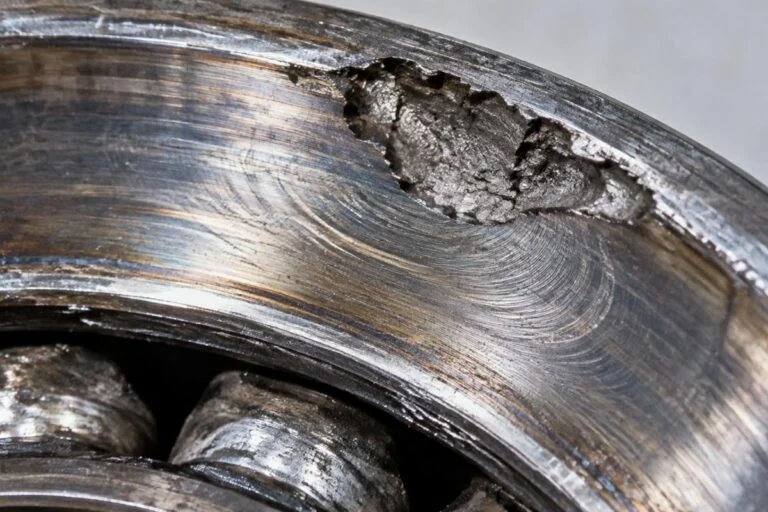
Installing a bearing with the wrong preload or precision class leads to unplanned downtime and premature failure that extends far beyond the component cost. According to failure mode classifications outlined in ISO 15243, improper internal clearance often manifests as smearing or surface distress on the raceways. This catastrophic damage frequently destroys the adjacent spindle housing and requires a complete assembly rebuild, voiding the machine tool warranty and halting production lines for extended periods. The true cost includes scrapped workpieces, missed delivery deadlines, and the labor expenses associated with tearing down a complex motorized spindle. Relying on verified technical documentation and precise cross-referencing is the only way to mitigate these hidden financial risks in high-precision manufacturing environments.
Securing Authentic Spindle Bearings with Verified Traceability
We supply genuine FAG products with complete traceability documentation, ensuring you receive authentic components rather than rebranded counterfeits. Our massive spot inventory covers thousands of standard and special part numbers, allowing us to fulfill urgent maintenance requirements without typical multi-week lead times. We provide cross-brand equivalent model consultation, helping you verify the exact preload and precision suffixes when OEM documentation is incomplete. Our flexible sourcing accommodates everything from single-unit emergency spare-part orders to full container consolidation shipments. Furthermore, our technical selection support ensures the replacement perfectly matches the original spindle design parameters. This comprehensive approach guarantees that every component we dispatch is fully validated for its intended high-speed application, protecting your equipment from the devastating consequences of substandard replacements.
Documentation & Authenticity
- Certificate of Conformity confirming the P4s precision grade and ISO compliance for this specific batch.
- Original factory batch traceability records linking the bearing to its exact production date and facility.
- Official manufacturer app QR code verification to guarantee the authenticity of the spindle component.
- Material and dimensional inspection reports validating the 15° contact angle and tight running accuracy.
- Complete origin documentation required for customs clearance and international machinery warranty compliance.
Storage, Handling & Mounting
- Keep the universal pairing marks intact and avoid dropping the bearing, as shock loads can brinell the raceways of this P4s precision component.
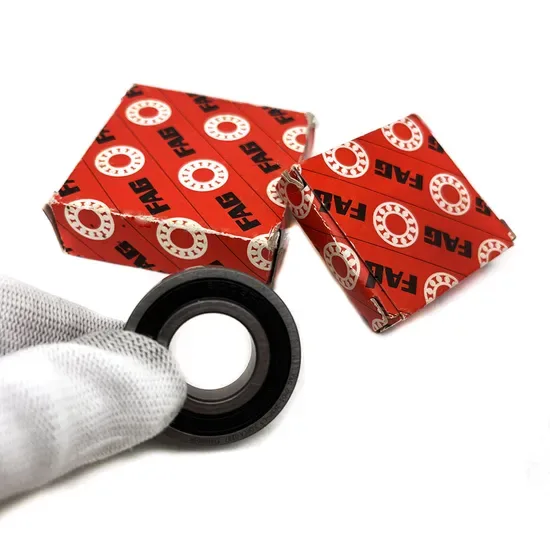
- Store in the original unopened packaging with strict humidity control to prevent microscopic corrosion on the high-precision steel surfaces.
- Use clean, lint-free gloves during handling to prevent sweat and particulate contamination from compromising the spindle's high-speed performance.
- Follow the manufacturer's induction heating guidelines strictly, ensuring the inner ring expansion does not exceed the thermal limits of the precision steel.
- Verify the shaft and housing tolerances match the P4s requirements before mounting to prevent geometric distortion of the thin-section rings.
Preparing Your Technical Data for Spindle Bearing Selection
To ensure accurate cross-referencing and L10 life calculation, please share your spindle's operational parameters, including maximum RPM, radial and axial loads, and operating temperature range. Providing the original equipment manufacturer's part number or the exact suffix configuration currently installed allows our engineering team to verify the preload and precision requirements. If you are redesigning the spindle housing, supply the exact dimensional constraints and lubrication method so we can recommend the optimal contact angle and cage configuration.
Frequently Asked Questions
Q: What does the 15° contact angle mean for my machine tool spindle?
A: The 15° contact angle, indicated by the "C" suffix, optimizes the bearing for high-speed operations with predominantly radial loads and light axial forces. This geometry minimizes friction heat generation and centrifugal ball skidding, making it the standard choice for high-frequency milling and grinding spindles where thermal stability is critical for maintaining tight machining tolerances.
Q: How can I verify the authenticity of the P4s precision grade?
A: Every genuine bearing we supply includes a Certificate of Conformity and original factory batch traceability documentation. You can also scan the official manufacturer app QR code on the packaging to verify the production details. We additionally provide dimensional and running accuracy inspection reports that confirm the component meets the strict ISO tolerances required for P4s class before it ships to your facility.
Q: Why is matching the exact preload suffix critical for spindle replacement?
A: Spindle bearings are typically installed in matched sets with specific preload configurations to achieve the required rigidity and thermal balance. Installing a replacement with a different preload alters the internal contact stresses, leading to excessive heat generation, accelerated wear, or insufficient stiffness during heavy cutting operations. We always cross-reference the exact suffix to ensure the replacement matches the original design intent.
Q: What lubrication method is recommended for high-speed angular contact bearings?
A: High-speed spindle applications typically require oil-air lubrication or precise grease packing to manage the significant friction heat generated at extreme RPMs. The chosen method must maintain a consistent lubrication film without causing excessive churning losses. We recommend consulting the machine tool builder's specifications, as the open design allows the spindle housing's integrated lubrication system to deliver the exact oil volume needed.