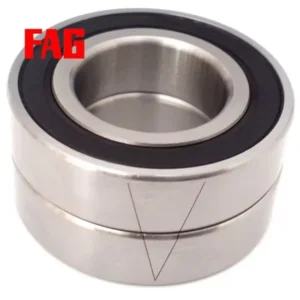
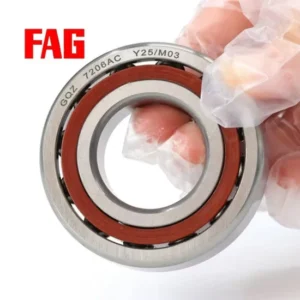
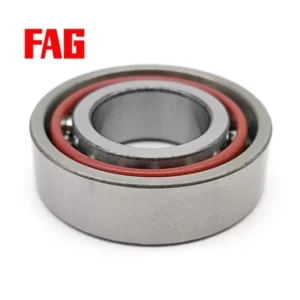
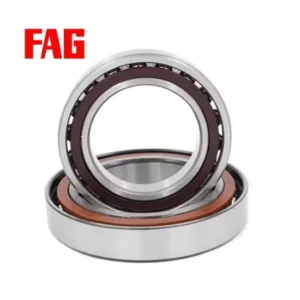
Product details
Description and application notes
Unified Multi-Brand Sourcing — Consolidate this precision spindle bearing with other premium industrial lines in a single consolidated shipment without juggling multiple vendors.
Technical Specifications
| Parameter | Value |
|---|---|
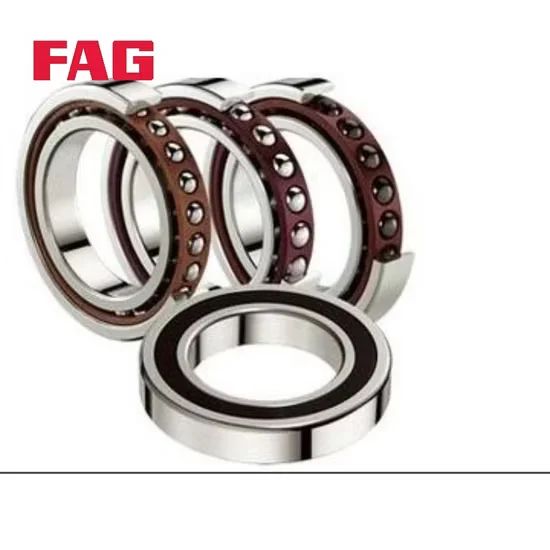
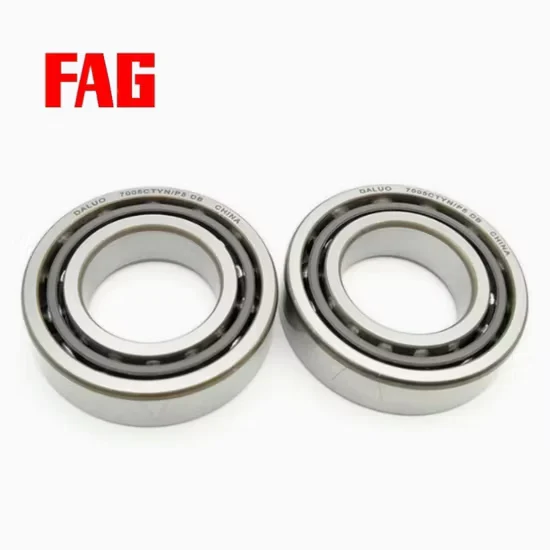
| Designation | FAG B71908-E-T-P4s-Dul |
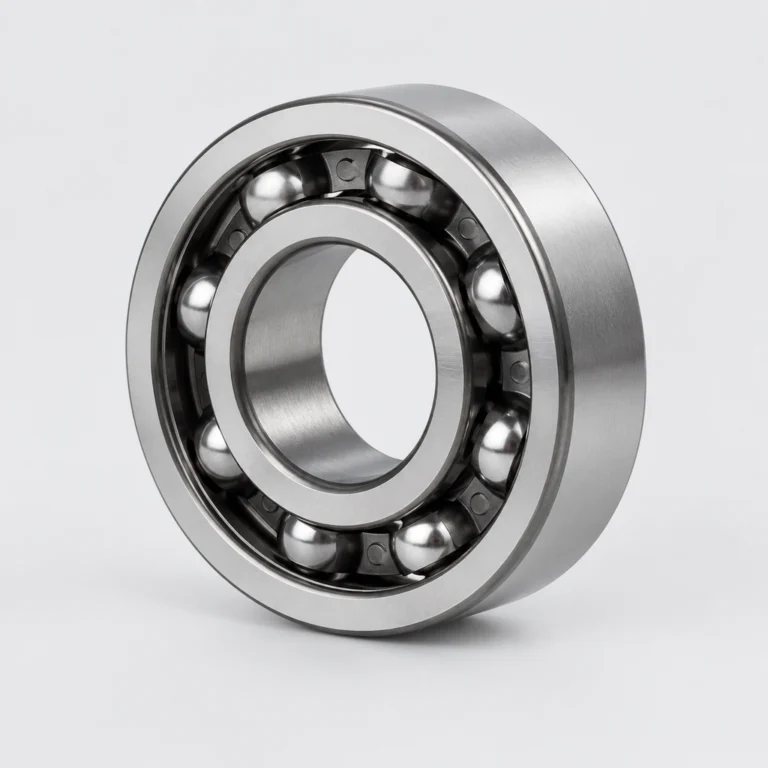
| Bearing Type | Angular Contact Ball Bearing |
| Bore Diameter (d) | 40 mm |
| Outside Diameter (D) | 62 mm |
| Width (B) | 12 mm |
| Precision Class | P4s |
| Contact Angle | 25° |
| Material | Steel |
| Certification | ISO |
Application Suitability
| Industry | Typical Applications |
|---|---|
| Textile Manufacturing | High-speed textile machinery spindles |
| Machine Tool Building | Precision grinding and milling spindles |
| General Manufacturing | High-speed pumps and precision equipment |
Why Spindle Vibration Destroys Textile Yarn Quality Before the Bearing Fails
Micro-vibrations from marginal precision directly compromise yarn uniformity long before catastrophic mechanical seizure occurs.
When sourcing critical components for high-speed textile spindles, procurement professionals often fixate on basic dimensional specifications while dangerously overlooking critical suffix variations. I learned this the hard way years ago at the Hanover industrial fair when a mismatched contact angle and incorrect precision class led to severe thermal expansion and eventual spindle lock-up on a European client's high-performance machine. Selecting the correct FAG B71908-E-T-P4s-Dul angular contact ball bearing requires meticulous attention to these exact suffix designations to prevent unplanned downtime and maintain strict yarn tolerances. Overlooking these subtle engineering details inevitably results in excessive heat generation, compromising the entire machining or spinning process and leading to massive financial losses.
Matching Precision to High-Speed Textile Demands
Textile spindles operate at extreme rotational speeds where even microscopic runout causes severe yarn defects, inconsistent tension, and frequent thread breakages during high-volume daily production runs. The P4s precision class of this FAG B71908-E-T-P4s-Dul angular contact ball bearing ensures the exceptionally tight dimensional tolerances required for such demanding, high-velocity environments. Our engineering team routinely cross-references these specific tolerance requirements against your operational parameters and existing spindle designs to guarantee optimal performance, reduced vibration, and extended longevity in continuous production cycles.
Navigating Thermal and Load Challenges in Spindle Arrays
High-speed spindle arrangements generate significant centrifugal forces and thermal gradients that directly impact internal clearance and lubrication stability over extended operational periods. The 25° contact angle is specifically engineered to handle the combined radial and axial loads typical in textile spindle configurations while maintaining structural rigidity under intense dynamic stress. Proper lubrication management and thermal dissipation are absolutely critical, as excessive heat can rapidly degrade the lubricant, alter the internal geometry, and severely compromise the operational lifespan of the precision components.
Decoding the Engineering Behind the Suffixes
The complete designation breaks down into specific functional characteristics that fundamentally dictate spindle behavior, thermal stability, and dynamic load handling capabilities. The 'E' suffix confirms the 25° contact angle, providing an optimal balance between axial rigidity and radial load capacity for high-speed applications. The 'P4s' precision class guarantees exceptionally tight dimensional and running accuracy, which is absolutely non-negotiable for minimizing vibration in precision equipment. While the 'T' and 'Dul' suffixes appear in the designation, their exact manufacturer specifications require direct catalog verification to confirm the specific cage material and the precise duplex pairing preload configuration before final installation.
The Operational Toll of Suffix Misalignment
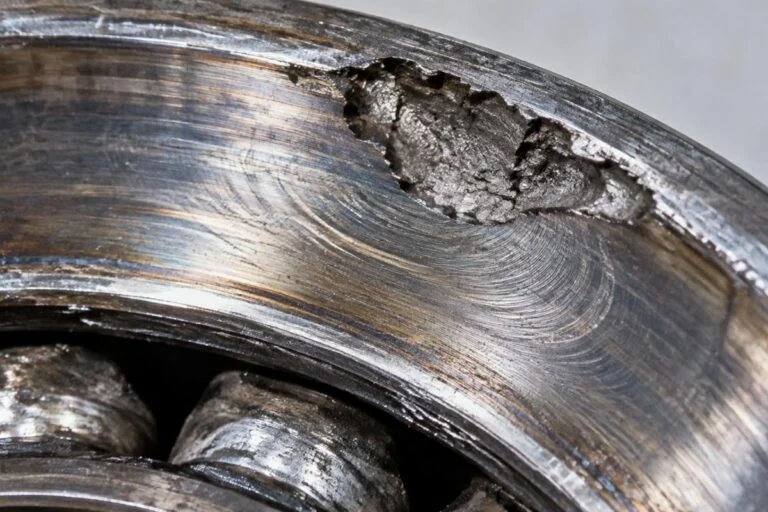
Overlooking a single suffix character when replacing critical spindle bearings frequently results in premature failure and catastrophic damage to the entire spindle assembly. A mismatched precision class or incorrect pairing arrangement disrupts the delicate load distribution, leading to accelerated wear, excessive vibration, and costly unplanned downtime on the production floor. According to established industry failure analysis frameworks, improper selection and mounting account for a significant share of early bearing failures, ultimately voiding equipment warranties and severely inflating long-term maintenance costs across the entire manufacturing facility.
Securing Authenticity in Precision Spindle Components
Sourcing genuine high-precision bearings requires much more than just matching a basic part number; it demands rigorous supply chain verification and continuous technical oversight. We specialize in cross-referencing complex suffix combinations like the P4s precision and 25° contact angle to ensure you receive the exact configuration required for your specific textile spindles. Our extensive inventory includes fully traceable components backed by original manufacturer documentation, effectively eliminating the risk of counterfeit parts that frequently plague the global MRO market. Furthermore, we provide comprehensive technical selection support to verify equivalent models, confirm preload arrangements, and optimize overall spindle performance before shipment.
Documentation & Authenticity
- Certificate of Conformity verifying the P4s precision class and original manufacturing batch.
- Official manufacturer app QR codes for immediate authenticity validation on-site.
- Dimensional and running accuracy inspection reports aligned with ISO tolerance standards.
- Material certification confirming the specific steel grade used for the rings and rolling elements.
Storage, Handling & Mounting
- Keep the duplex set sealed in its original packaging until mounting to preserve the factory-matched pairing marks.
- Use clean, lint-free gloves when handling the P4s precision components to prevent microscopic surface contamination.
- Store the bearings in a climate-controlled environment to prevent condensation from compromising the steel surfaces.
- Employ induction heating for the inner ring installation to avoid mechanical damage to the precise 40 mm bore.
- Verify the specific preload arrangement and mounting orientation before pressing the bearings into the spindle housing.
Preparing Your Technical Inquiry
To ensure accurate technical review and reliable L10 life calculation, please provide your specific radial and axial load profiles alongside operational speed and ambient temperature data. Sharing the original OEM equipment number or existing spindle assembly drawings allows our engineering team to perform a precise cross-reference and verify the required pairing arrangement. This detailed operational information enables us to confirm the optimal preload and lubrication strategy specifically tailored for your unique textile machinery application, ensuring maximum uptime and preventing costly installation errors.
Frequently Asked Questions
Q: How can I verify the authenticity of this FAG spindle bearing upon delivery?
A: You can authenticate the bearing by scanning the official manufacturer QR code located on the packaging using their dedicated mobile application. This digital verification confirms the original production batch and P4s precision class, ensuring the component meets strict traceability standards and protecting your spindle from counterfeit replacements.
Q: What does the P4s precision class signify compared to standard P4 or ABEC 7?
A: The P4s designation indicates a specialized precision standard optimized for high-speed spindle applications, often featuring tighter running accuracy and specific dimensional tolerances beyond standard P4 or ABEC 7 levels. This enhanced precision is critical for minimizing vibration and maintaining strict yarn quality in high-speed textile machinery operations.
Q: How do I select the correct contact angle for my high-speed spindle application?
A: Selecting the appropriate contact angle depends on the ratio of axial to radial loads and the required spindle rigidity. A 25° angle, as indicated by the E suffix, offers an excellent compromise for combined loads in textile spindles, whereas a 15° angle might be preferred for predominantly radial loads.
Q: What should I consider regarding pairing and preload when replacing these bearings?
A: When replacing duplex bearings, it is crucial to maintain the original factory pairing and preload configuration to ensure proper load distribution and spindle rigidity. Always verify the specific arrangement suffix and follow the manufacturer's mounting marks to avoid altering the internal clearance, which could lead to excessive heat generation.