
Product details
Description and application notes
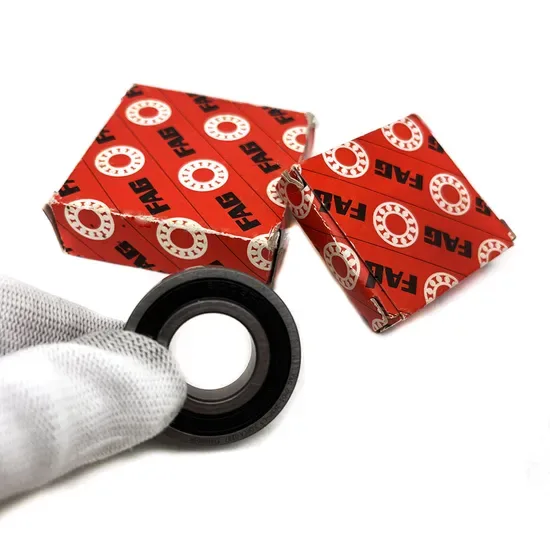
Official App Verification — Scan the QR code on the packaging to confirm the genuine origin of your FAG B71912-E-T-P4s-Dul angular contact ball bearing directly through the manufacturer's authentication tool.
Technical Specifications
| Parameter | Value |
|---|---|
| Designation | FAG B71912-E-T-P4s-Dul |
| Bearing Type | Angular Contact Ball Bearing |
| Series | B719 |
| Precision Class | P4s |
| Contact Angle | 25° |
| Material | Steel |
| Origin | Jiangsu China |
| Certification | ISO |
Application Suitability
| Industry | Typical Applications |
|---|---|
| Machine Tool Manufacturing | High-speed milling machine spindles |
| Precision Engineering | Precision equipment rotary axes |
| Metalworking | CNC machining center spindle assemblies |
Spindle Vibration Often Traces Back to the FAG B71912-E-T-P4s-Dul angular contact ball bearing Tolerances
Microscopic runout in high-speed machining rarely stems from the motor, but rather from compromised spindle bearing precision and incorrect internal geometry.
When milling operations demand tight tolerances, substituting a specified precision class with standard alternatives leads to severe thermal expansion and eventual spindle seizure. I have witnessed entire machining centers suffer catastrophic downtime because the preload pairing was ignored during maintenance, or the contact angle was mismatched to the cutting forces. Maintaining exact factory specifications prevents these costly disruptions and ensures the machine operates within its designed thermal envelope.
Aligning Spindle Demands with Bearing Capabilities
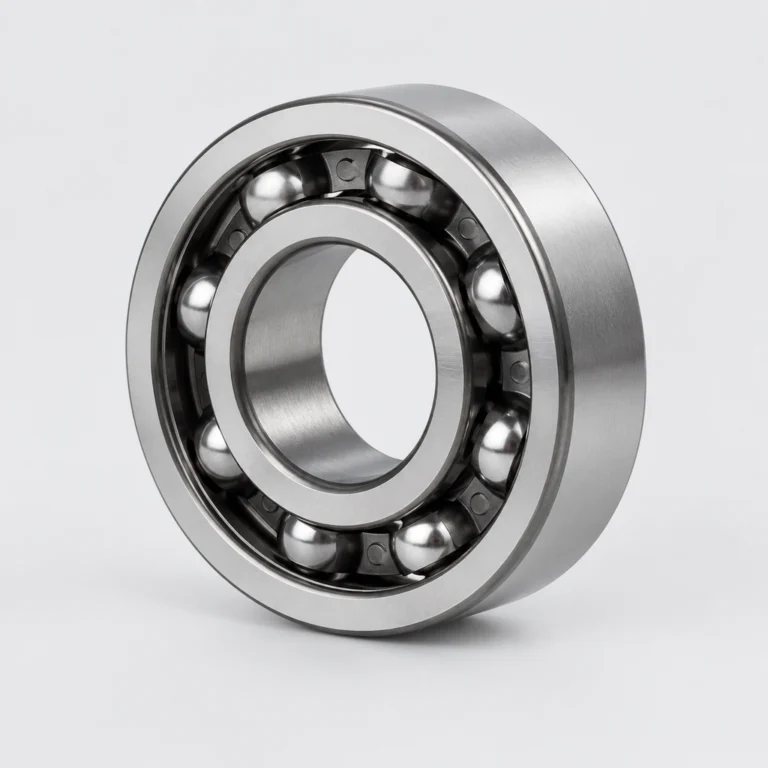
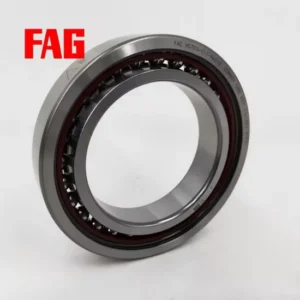
Milling spindles require rigid support to handle combined radial and axial cutting forces without deflection, especially during heavy roughing passes. The FAG B71912-E-T-P4s-Dul angular contact ball bearing delivers this rigidity through its optimized internal geometry and high-grade steel construction. Sourcing these components through verified channels ensures that the dimensional accuracy matches the strict requirements of modern machine tool assemblies. This eliminates unexpected vibration during heavy cuts and allows the spindle to maintain consistent rotational accuracy throughout prolonged machining cycles, directly impacting the surface finish of the final part.
Managing Thermal and Load Challenges in Machining
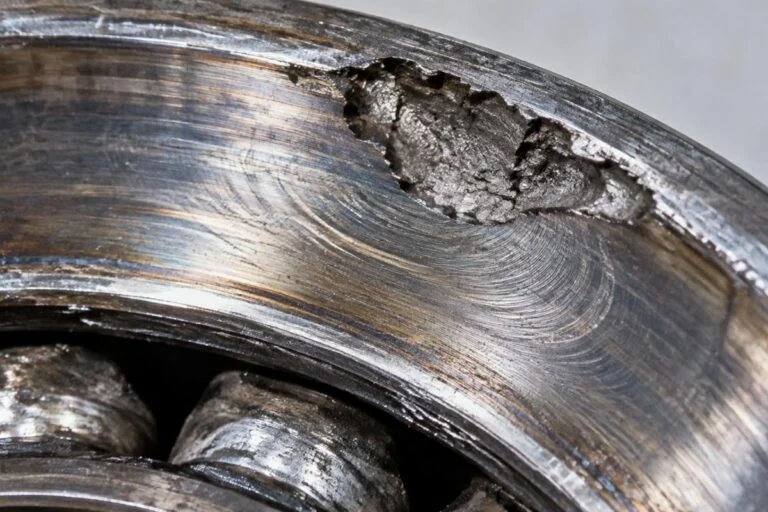
High-speed milling generates significant friction, demanding a contact angle that balances axial thrust from the tool with radial support for the shaft. The 25° contact angle effectively manages these combined loads while accommodating the thermal growth of the spindle housing. Proper lubrication intervals are critical here, as oil-air or oil-mist systems must maintain a stable film thickness to prevent skidding at elevated rotational speeds. If the lubrication fails or the viscosity drops due to excessive heat, the rolling elements will experience severe surface distress, rapidly degrading the running accuracy.
Decoding the Precision and Contact Angle Parameters
The P4s precision class guarantees exceptionally tight dimensional and running accuracy, which is mandatory for minimizing runout in high-frequency machining environments. Coupled with the 25° contact angle designated by the 'E' suffix, the internal load distribution is optimized for the predominant axial thrust encountered during milling operations. The single-row configuration allows maintenance teams to arrange the bearings in specific tandem or back-to-back setups, providing the exact stiffness required for the spindle's unique load profile. This flexibility in arrangement ensures that the spindle can withstand reversing axial loads without losing its positional accuracy.
The Financial Impact of Compromised Spindle Components
Installing a bearing that lacks the correct precision class or contact angle inevitably results in premature fatigue and excessive heat generation. According to failure analysis frameworks like ISO 15243, surface distress and smearing quickly follow when the internal clearance is mismatched to the operating temperature. This leads to unplanned downtime, scrapped workpieces, and the complete replacement of the spindle assembly, far exceeding the initial component cost. Furthermore, the secondary damage to the spindle housing and shaft journals can multiply the repair expenses, making the initial savings on a cheaper bearing completely irrelevant.
Securing Authentic Components for Critical Machinery
Sourcing genuine spindle bearings requires more than just matching the part number; it demands verification of the exact suffix configuration to ensure proper preload and pairing. We provide complete batch traceability for every FAG B71912-E-T-P4s-Dul angular contact ball bearing, ensuring the P4s precision is certified by the original manufacturer. Our technical team cross-references the specific contact angle and arrangement requirements against your machine's OEM specifications, preventing the costly mismatch of unverified variants. By securing the exact original equipment specifications, we help you avoid the hidden risks of counterfeit or downgraded components that plague the industrial supply chain.
Documentation & Authenticity
- Certificate of Conformity confirming P4s precision class for this specific batch.
- Original factory batch traceability linking the bearing to its production date.
- Dimensional and running accuracy inspection report verifying 25° contact angle geometry.
- Material certification validating the steel composition for high-speed spindle use.
Storage, Handling & Mounting
- Keep the P4s precision bearing in its original vacuum-sealed packaging to prevent microscopic dust contamination.
- Store the single-row angular contact units in a climate-controlled environment to avoid thermal distortion before mounting.
- Use clean, lint-free gloves when handling the 25° contact angle raceways to prevent moisture-induced corrosion.
- Follow the manufacturer's specified preload adjustment sequence to maintain the exact stiffness required for milling spindles.
Preparing Your Technical Requirements for Review
To ensure the selected configuration perfectly matches your milling machine, please provide the exact radial and axial cutting loads, maximum spindle speed, and operating temperature range. Sharing the OEM equipment model number allows our engineering team to perform a precise cross-reference and verify the required preload arrangement. This data enables us to calculate the expected L10 life and confirm the optimal lubrication strategy for your specific application.
Frequently Asked Questions
Q: How can I verify the authenticity of the P4s precision class before installation?
A: You can authenticate the bearing by scanning the QR code on the packaging using the manufacturer's official application. Additionally, we supply a Certificate of Conformity and a dimensional inspection report that explicitly confirms the P4s tolerance limits. This dual verification ensures the component meets the strict runout requirements for high-speed milling spindles.
Q: What is the practical difference between P4 and P4s precision for machine tools?
A: While both denote high precision, P4s typically includes stricter running accuracy and tighter dimensional tolerances specifically optimized for machine tool spindles. This enhanced precision minimizes vibration and thermal displacement during high-speed milling. Selecting the correct class ensures the spindle maintains tight machining tolerances and extends the overall service life of the assembly.
Q: How does the 25° contact angle affect milling spindle performance?
A: A 25° contact angle provides an optimal balance between radial rigidity and axial load capacity, which is essential for handling the thrust forces generated during milling. This geometry prevents excessive deflection under heavy cuts while maintaining high rotational speeds. It ensures the cutting tool remains stable, resulting in superior surface finishes on the machined parts.
Q: Why are the 'T' and 'Dul' suffixes marked as unverified in some catalogs?
A: These specific suffixes require direct confirmation from the manufacturer's latest technical catalog to determine their exact meaning regarding cage material or pairing arrangement. Relying on assumed definitions can lead to incorrect preload settings during installation. We always cross-check these designations with the factory to ensure the supplied configuration matches your spindle's precise engineering requirements.