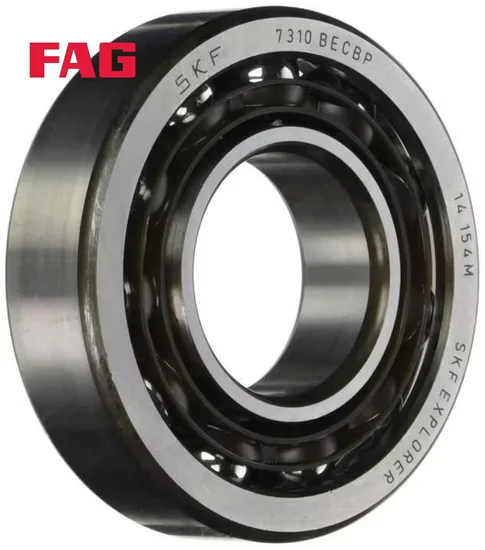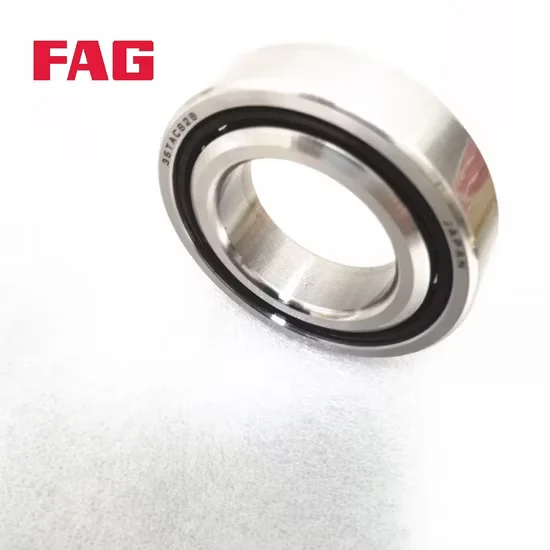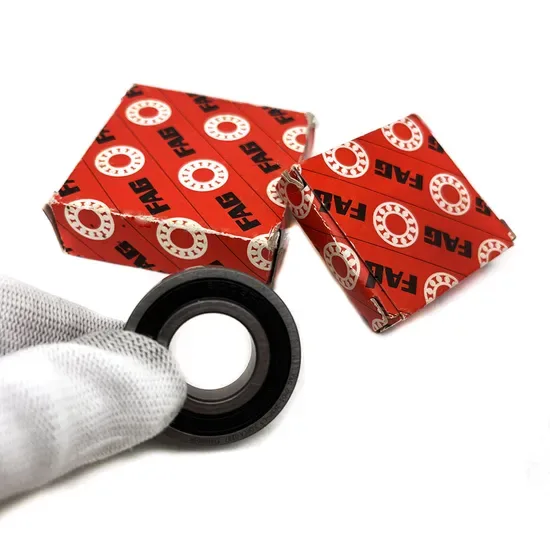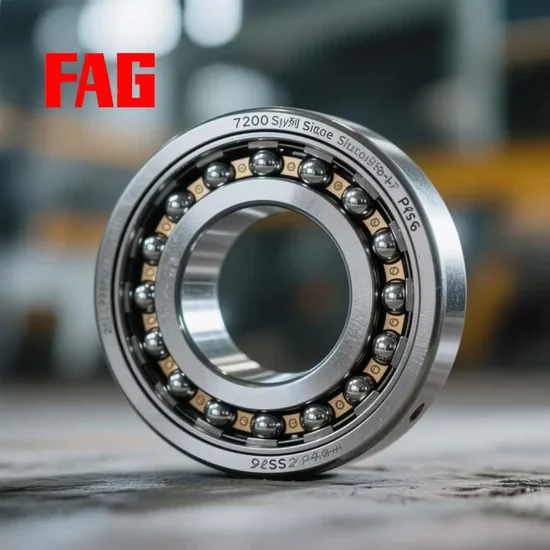
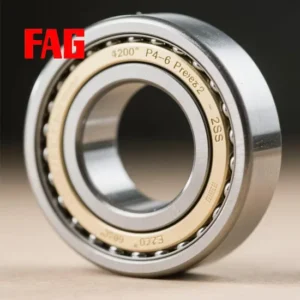

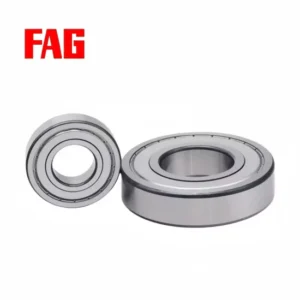
Product details
Description and application notes
Original Batch Traceability — Every FAG B71914-E-T-P4s-UL angular contact ball bearing ships with verifiable factory lot documentation to ensure spindle integrity.
Technical Specifications
| Parameter | Value |
|---|---|
| Designation | FAG B71914-E-T-P4s-UL |
| Bearing Type | Angular Contact Ball Bearing |
| Series | B719 |
| Precision Class | P4s |
| Contact Angle | 25° |
| Material | Steel |
| Arrangement | Single-Row Bearing |
Note: Suffixes T and UL require manufacturer catalog confirmation for exact technical definitions.
Application Suitability
| Industry | Typical Applications |
|---|---|
| Machine Tool Manufacturing | High-speed milling and grinding spindle assemblies |
| Precision Engineering | Coordinate measuring machine rotary axes |
| Industrial Pumping | High-speed centrifugal pump shaft support |
| Robotics | Precision joint articulation mechanisms |
Why Spindle Vibration Often Traces Back to a Single Suffix on the FAG B71914-E-T-P4s-UL angular contact ball bearing
Mismatched contact angles and preload classes silently destroy spindle assemblies long before the bearing itself fails.
Early in my procurement career, I specified a basic B71914 model for a European client's machine tool, completely overlooking the critical suffix details for contact angle and preload. The result was catastrophic: excessive vibration, thermal seizure, and a scrapped spindle. That failure taught me that precision components demand obsessive suffix verification. When sourcing a FAG B71914-E-T-P4s-UL angular contact ball bearing, assuming standard specifications will inevitably lead to unplanned downtime.
Matching Precision Tolerances to High-Speed Cutting Dynamics
Deploying the FAG B71914-E-T-P4s-UL angular contact ball bearing in machine tool spindles requires aligning its P4s precision class with the rigorous dimensional demands of high-speed milling. Our engineering team cross-checks these tight tolerances against your specific spindle housing dimensions to prevent micro-misalignments. This rigorous matching process ensures the bearing handles combined radial and axial loads without compromising surface finish quality.
Navigating Thermal Expansion and Lubrication Starvation
High-speed spindles generate intense frictional heat, which directly impacts internal clearance and lubricant viscosity. A 25° contact angle effectively manages the axial thrust generated during heavy cutting operations, but thermal growth can still alter the preload distribution. Proper oil-air or grease lubrication intervals are critical to prevent cage wear and raceway scoring. Furthermore, sealing arrangements must balance contamination exclusion with minimal friction to avoid exacerbating the thermal load.
Decoding the Engineering Behind the Suffixes
The 'E' suffix designates a 25° contact angle, providing an optimal balance for the combined loads typical in machining centers. The P4s precision class guarantees exceptionally tight dimensional and running accuracy, which is non-negotiable for minimizing spindle runout at high RPMs. Single-row configurations like this require precise paired mounting to manage bidirectional axial forces. Understanding these specific design traits ensures the bearing integrates flawlessly into complex spindle cartridges.
The Financial Drain of Unplanned Spindle Downtime
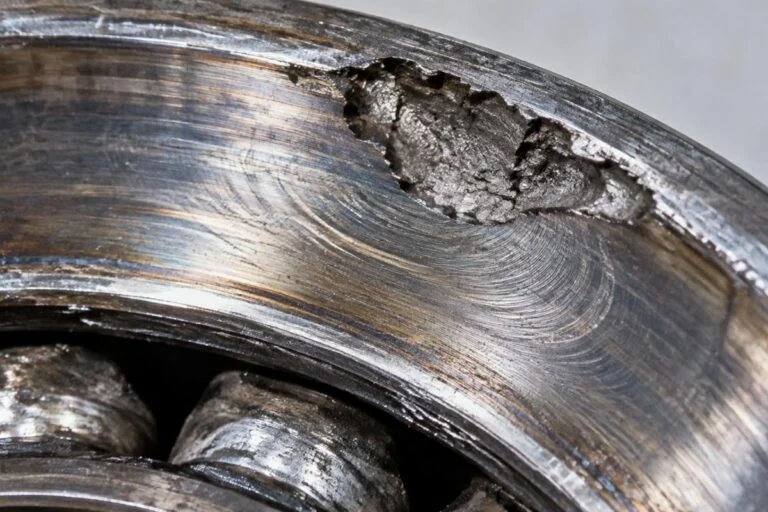
Selecting an incorrect precision class or misinterpreting preload specifications leads to premature failure and catastrophic damage to the spindle housing. According to ISO 15243 frameworks, improper mounting and incorrect internal clearance are primary drivers of early bearing fatigue. The resulting scrap costs and production halts far exceed the initial savings of sourcing unverified components.
Securing Authentic Precision Through Rigorous Verification
We eliminate the risk of counterfeit precision parts by providing complete factory batch traceability for every FAG B71914-E-T-P4s-UL angular contact ball bearing. Our technical team actively verifies the exact suffix combinations against official manufacturer catalogs to prevent the exact mismatch errors I encountered early in my career. We maintain massive spot inventory to support urgent maintenance requirements, ensuring your spindle rebuilds are never delayed by typical multi-week lead times. Additionally, our cross-brand equivalent consultation helps you find reliable alternatives if specific OEM parts face allocation constraints.
Documentation & Authenticity
- Certificate of Conformity verifying the P4s precision grade and material origin.
- Original factory batch traceability linking the bearing to its specific production run.
- Dimensional and running accuracy inspection reports confirming tight spindle tolerances.
- Official brand verification QR codes to instantly authenticate the component.
Storage, Handling & Mounting
- Store the single-row bearing in its original, unopened packaging to protect the P4s precision raceways from ambient humidity.
- Use clean, lint-free gloves during handling to prevent microscopic debris from compromising the 25° contact angle surfaces.
- Apply induction heating strictly controlled below thermal limits when mounting the steel inner ring onto the spindle shaft.
- Maintain matched set pairing marks and follow the exact factory sequence during installation to preserve the intended preload.
Technical Review and Selection Guidance
To ensure optimal spindle performance, please share your specific radial and axial load profiles, operational speeds, and thermal conditions. Providing the original OEM equipment number allows our engineering team to perform a comprehensive cross-reference check and L10 life calculation. This technical validation guarantees the selected configuration perfectly matches your machining environment.
Frequently Asked Questions
Q: How do the specific suffixes impact the performance of this spindle bearing?
A: The 'E' suffix indicates a 25° contact angle, crucial for managing axial thrust in milling operations, while P4s ensures the tight running accuracy required for high-speed spindles. These specific design traits guarantee optimal load distribution and minimal runout during heavy cutting.
Q: How can we verify the authenticity and traceability of these precision bearings?
A: We provide comprehensive original factory batch traceability and official brand verification tools with every shipment. This ensures the P4s precision class is genuine, protecting your spindle from the catastrophic failures associated with counterfeit or mislabeled components.
Q: What is the correct approach to lubricating high-speed machine tool spindles?
A: High-speed spindles typically require precise oil-air or specialized grease lubrication to manage frictional heat. We provide application guidance on relubrication intervals and fluid selection to maintain the 25° contact angle integrity and prevent thermal seizure.
Q: How do we cross-reference precision classes for machine tool applications?
A: Our technical team maps ISO P4s tolerances to equivalent ABEC or other brand standards, ensuring dimensional interchangeability. We verify housing fits and preload requirements to guarantee the replacement bearing maintains the original spindle's dynamic rigidity.