Product details
Description and application notes
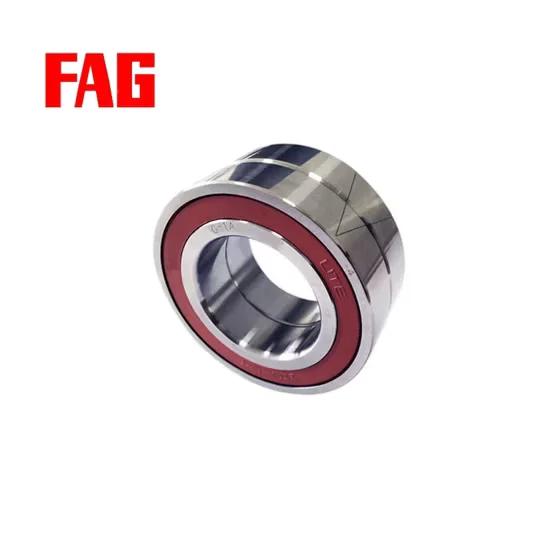
Verified FAG Spindle Inventory — Authenticate each FAG B71918-C-T-P4s-UL angular contact ball bearing directly through the official manufacturer QR scanning application.
Technical Specifications
| Parameter | Value |
|---|---|
| Designation | FAG B71918-C-T-P4s-UL |
| Bearing Type | Single-Row Angular Contact Ball Bearing |
| Series | B719 |
| Precision Class | P4s (ISO) |
| Contact Angle | 15° (C suffix) |
| Material | Available in standard bearing steel or hybrid ceramic variants |
| Origin | Jiangsu, China |
| Certification | ISO compliant |
Note: The 'T' and 'UL' suffixes remain unverified and require manufacturer catalog confirmation for specific cage and preload definitions.
Application Suitability
| Industry | Typical Applications |
|---|---|
| Machine Tool Manufacturing | High-speed milling and grinding spindle assemblies |
| Precision Engineering | Robotics joint actuators and high-speed pump drives |
Precision Loss in High-Speed Spindles Starts with Suffix Misinterpretation
Ignoring the exact suffix combination on a FAG B71918-C-T-P4s-UL angular contact ball bearing often leads to severe spindle vibration and premature wear.
Matching the exact contact angle and precision class to the spindle housing is the only way to maintain rotational accuracy.
Years ago at the Hannover Messe, I observed a high-end machining center fail its final acceptance test simply because the replacement bearings lacked the correct preload pairing. The vibration levels exceeded acceptable limits, causing massive rework delays and frustrating the end user. When sourcing precision components, overlooking the specific suffix string transforms a high-accuracy assembly into a costly liability. Procurement teams must verify every character to ensure the internal geometry aligns with the machine's dynamic requirements. A single misinterpreted letter can completely alter the axial stiffness, leading to chatter marks on the machined surface and forcing an entire teardown of the spindle cartridge.
Aligning P4s Tolerances with Spindle Dynamics
The FAG B71918-C-T-P4s-UL angular contact ball bearing delivers the tight dimensional tolerances required for demanding machining operations. Our engineering team provides cross-brand equivalent model consultation to verify that this specific P4s precision class matches your original equipment manufacturer specifications. We ensure the selected component integrates perfectly into your existing spindle cartridge without requiring invasive housing modifications. By analyzing your specific cutting forces and thermal profiles, we can confirm whether this exact configuration will maintain its geometric stability throughout prolonged milling cycles, preventing unexpected deflection during heavy roughing operations.
Thermal Expansion and Lubrication in Milling Operations
High-speed milling generates significant friction heat, which directly impacts the internal clearance of single-row spindle bearings. A 15° contact angle optimizes the load distribution for high rotational speeds while minimizing thermal buildup. Proper oil-air or grease lubrication must be maintained to prevent cage wear and raceway scoring under continuous axial thrust. Contamination from coolant mist also necessitates careful seal selection to protect the precision ground raceways. As temperatures rise within the spindle housing, the differential expansion between the shaft and the outer ring can eliminate the necessary operating clearance, making the initial precision grade and contact angle selection absolutely critical for long-term reliability.
Decoding the B719 Series Contact Angle and Precision
The 'C' suffix explicitly designates a 15° contact angle, which is the industry standard for high-speed spindle applications where radial loads and axial thrust must be balanced. This specific geometry reduces friction heat compared to larger contact angles, allowing the spindle to reach higher RPM limits without thermal seizure. The P4s precision class guarantees exceptionally tight running accuracy and dimensional tolerances, which are critical for minimizing runout in fine finishing operations. Standard bearing steel provides the necessary core hardness, while hybrid ceramic variants are available for applications demanding higher stiffness and reduced centrifugal forces. Understanding these core specifications ensures the bearing survives the rigorous demands of continuous metal cutting, while the single-row design allows for flexible tandem or back-to-back arrangements depending on the required axial rigidity.
The Financial Impact of Unplanned Spindle Downtime
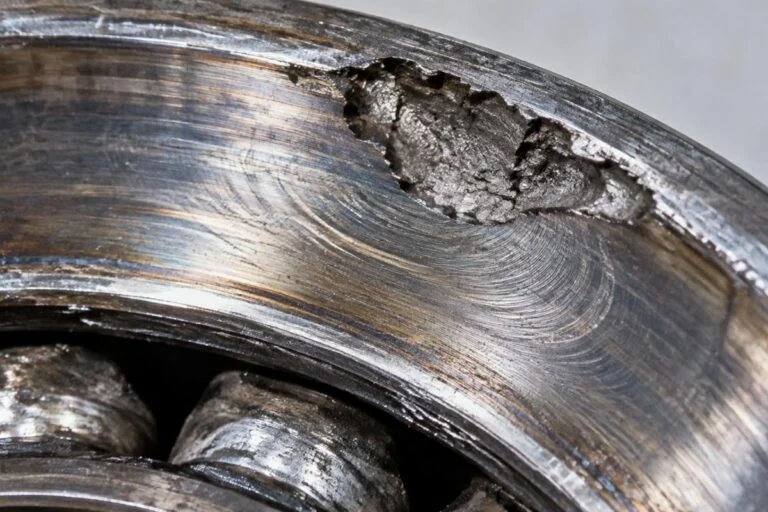
Installing a misgraded precision bearing inevitably results in catastrophic damage to the spindle shaft and adjacent seals. Such unplanned downtime halts the entire production line, leading to severe financial penalties and missed delivery deadlines. According to established failure analysis frameworks, improper preload or clearance selection is a primary driver of early fatigue spalling. Warranty voidance is also a common consequence when non-compliant components are introduced into certified machine tool assemblies. The secondary damage to the spindle housing often requires complete replacement rather than a simple bearing swap, multiplying the initial cost of the incorrect component by a significant margin and disrupting weeks of scheduled production.
Securing Traceable Precision Components for Your Facility
We maintain massive spot inventory covering thousands of standard and special part numbers, ensuring rapid dispatch for urgent spindle rebuilds. Our flexible MOQ allows you to order a single emergency replacement or a full container consolidation for major maintenance overhauls. Every FAG B71918-C-T-P4s-UL angular contact ball bearing ships with complete traceability documentation to prevent counterfeit integration. We provide dedicated technical selection support to verify suffix compatibility, preventing the exact pairing errors that cause excessive vibration. Furthermore, our competitive sourcing cost offers a highly efficient alternative to direct official brand channels without compromising authenticity, backed by long-term after-sales technical support for failure analysis and application guidance across global shipping networks.
Documentation & Authenticity
- Certificate of Conformity verifying the P4s precision class for this specific batch.
- Original manufacturer batch traceability codes linked to the production facility.
- Official app QR authentication for every single spindle bearing unit.
- Dimensional and running accuracy inspection reports confirming ISO P4s tolerances.
Storage, Handling & Mounting
- Store the P4s precision bearings in climate-controlled environments to prevent thermal distortion before mounting.
- Use clean, lint-free gloves when handling the 15° contact angle raceways to avoid corrosion from skin moisture.
- Keep the single-row units in their original vapor-corrosion inhibitor packaging until the exact moment of installation.
- Apply induction heating strictly within specified limits to preserve the P4s dimensional tolerances during shaft fitting.
Engineering Data Required for Spindle Integration
Please provide the exact radial and axial load profiles, maximum operating RPM, and spindle housing dimensions for our technical review. Sharing the original equipment manufacturer part number allows us to perform a precise cross-reference verification. This data ensures the selected bearing configuration perfectly matches your specific machining dynamics and thermal expansion characteristics.
Frequently Asked Questions
Q: How can I verify the authenticity of this spindle bearing upon delivery?
A: You can authenticate the bearing by scanning the QR code printed on the packaging using the manufacturer's official mobile application. Additionally, we provide a Certificate of Conformity and original batch traceability documentation that links the component directly to the production facility, ensuring complete supply chain transparency and protecting your equipment from counterfeit risks.
Q: What does the P4s precision class mean for my machine tool spindle?
A: The P4s classification indicates ultra-high precision with exceptionally tight tolerances for both dimensional accuracy and running precision. This level of exactness is critical for high-speed spindles to minimize radial runout and axial displacement during heavy cutting operations, ultimately ensuring superior surface finish quality and extending the operational lifespan of the entire machining center.
Q: How should I interpret the unverified T and UL suffixes in the designation?
A: These specific suffixes require direct confirmation from the manufacturer's current technical catalog to determine the exact cage material and preload configuration. We strongly recommend consulting our engineering team to cross-check these designators against your spindle's original blueprint, ensuring the internal geometry and preload forces perfectly match your machine's dynamic requirements before installation.
Q: What precautions are necessary when cross-referencing this bearing with other brands?
A: When cross-referencing, you must verify that the alternative brand matches not only the basic dimensions but also the exact 15° contact angle and P4s precision class. Minor deviations in internal geometry or preload settings between different manufacturers can lead to severe vibration issues, so always request detailed technical drawings to confirm absolute compatibility.
Q: What is the recommended lubrication strategy for high-speed spindle applications?
A: High-speed spindles typically require precise oil-air or high-speed grease lubrication to manage friction heat effectively. The lubrication interval and volume must be calculated based on the spindle's maximum RPM and the specific 15° contact angle geometry, ensuring adequate film thickness without causing excessive churning losses that could degrade the P4s running accuracy.