


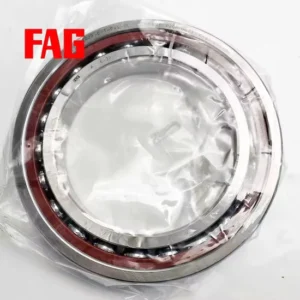
Product details
Description and application notes
Complete Sourcing Coverage — Procure this spindle bearing alongside mixed-brand MRO packages without coordinating multiple suppliers.
Technical Specifications
| Parameter | Value |
|---|---|
| Designation | FAG B7201-C-T-P4s-UL |
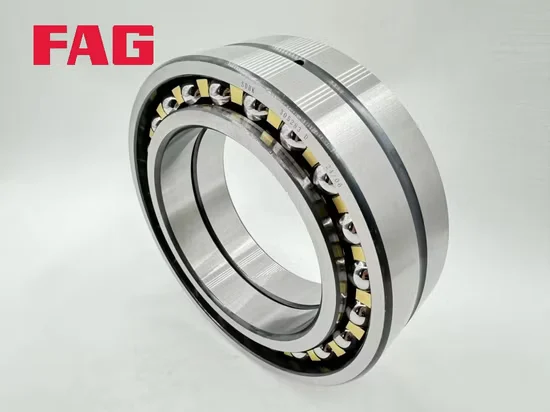
| Bearing Type | Angular Contact Ball Bearing |
| Precision Class | P4s |
| Contact Angle | 15° |
| Arrangement | Single-Row Bearing |
| Material | High-carbon chrome bearing steel (ceramic rolling element options available) |
Note: Suffixes B72, 01, T, and UL require manufacturer catalog confirmation for specific cage material and preload details.
Application Suitability
| Industry | Typical Applications |
|---|---|
| Machine Tool Manufacturing | High-speed motorized spindles and precision grinding heads |
| Precision Engineering | High-accuracy rotary tables and indexing fixtures |
| Industrial Automation | High-speed pump shafts and robotic joint actuators |
Why Spindle Vibration Traces Back to the FAG B7201-C-T-P4s-UL angular contact ball bearing Preload
Mismatched preload suffixes silently destroy spindle running accuracy long before the first metal-to-metal contact occurs.
I learned this the hard way at a Hanover trade show when a misread universal preload suffix caused severe thermal expansion in a European client's machining center. A significant share of premature spindle failures stems from ignoring these microscopic clearance variations during assembly. Selecting the exact configuration prevents catastrophic vibration, protects your machining tolerances, and ensures the spindle reaches its designed operational lifespan without unexpected degradation.
Matching Spindle Dynamics with Precision Components
When retrofitting high-speed machining centers, the FAG B7201-C-T-P4s-UL angular contact ball bearing provides the exact dimensional stability required for continuous micro-milling operations. Our engineering team cross-references your existing housing tolerances to ensure this single-row arrangement integrates flawlessly into the spindle cartridge. We consolidate these high-precision units with your broader maintenance inventory, eliminating the friction of dealing with fragmented vendors and ensuring your facility remains operational without prolonged procurement delays.
Managing Thermal and Centrifugal Spindle Stresses
High-speed spindles generate intense centrifugal forces that push rolling elements outward, demanding a contact angle that perfectly balances axial rigidity with radial support. As rotational speeds climb, internal friction heat alters the internal clearance, making the initial preload selection absolutely critical for long-term survival. Inadequate lubrication in these tight envelopes quickly degrades the raceway surface and compromises the structural integrity of the rolling elements. Proper sealing and precise grease fill volumes are mandatory to prevent contamination without introducing excessive churning resistance that limits maximum RPM.
Analyzing the Core Specification Details
The 15° contact angle optimizes the load distribution for high-speed rotary applications, minimizing friction heat while maintaining sufficient axial stiffness for heavy cutting loads. The P4s precision class guarantees exceptionally tight dimensional and running accuracy, which is non-negotiable for eliminating chatter marks on finished aerospace or automotive workpieces. Furthermore, the single-row arrangement allows maintenance technicians to configure matched pairs or triplets on-site based on the specific rigidity requirements of the spindle cartridge. The specialized cage design ensures low friction and stable rolling element guidance at extreme rotational velocities, preventing skidding during rapid acceleration and deceleration cycles.
The Cascading Financial Impact of Specification Errors
Installing a bearing with an incorrect internal clearance or mismatched precision grade leads to unplanned downtime that ripples through the entire production schedule and delays critical shipments. Premature failure in a high-precision spindle often causes catastrophic damage to the adjacent labyrinth seals, drive motors, and expensive tooling interfaces. According to industry frameworks, misalignment and incorrect mounting practices void warranty claims and exponentially increase replacement costs across the entire machine tool asset. These hidden expenses always outweigh the initial savings of bypassing technical verification and authorized sourcing channels.
Securing Authentic Spindle Components Through Verified Channels
Sourcing genuine high-precision components requires more than just matching the part number on a purchase order and hoping for the best. We verify the exact preload and precision suffixes against the manufacturer's production records to prevent the costly mismatches I witnessed early in my career on the exhibition floor. Our supply chain provides complete batch traceability for every FAG B7201-C-T-P4s-UL angular contact ball bearing shipped to your facility. We also offer flexible consolidation, allowing you to mix single-unit emergency spares with full container loads. Our technical team provides cross-brand equivalent consultation if lead times require immediate alternative solutions to keep your spindles running.
Documentation & Authenticity
- Certificate of Conformity verifying the P4s tolerance class before dispatch
- Original factory batch traceability linking the physical unit to production records
- Official manufacturer app QR validation for instant authenticity confirmation
- Material inspection reports confirming high-carbon chrome steel metallurgical standards
- Dimensional and running accuracy inspection reports matching ISO specifications
Storage, Handling & Mounting
- Keep the single-row bearing in its original vapor-phase inhibitor packaging until the exact moment of mounting
- Store the P4s precision components in a climate-controlled environment to prevent microscopic raceway corrosion
- Use clean, lint-free gloves when handling the 15° contact angle raceways to avoid skin acid etching
- Apply induction heating strictly within the specified thermal limits to preserve the original dimensional stability
- Verify the universal preload marks to ensure correct orientation when assembling matched spindle sets
Preparing Your Technical Parameters for Review
To ensure optimal spindle performance and avoid costly installation errors, please share your specific radial and axial load profiles alongside the maximum operating speeds. Providing the exact OEM equipment model number allows our engineers to perform a comprehensive cross-reference and L10 life calculation adapted to your duty cycle. Detail the operating environment, including ambient temperature fluctuations and coolant exposure, so we can validate the sealing and lubrication requirements before finalizing the shipment configuration.
Frequently Asked Questions
Q: What does the P4s precision class indicate for machine tool applications?
A: The P4s designation represents a specialized high-precision standard that exceeds conventional P4 tolerances, specifically engineered for machine tool spindles. It guarantees exceptionally tight dimensional and running accuracy, which minimizes vibration and ensures superior surface finish quality during high-speed milling and grinding operations.
Q: How should I verify the authenticity of this specific spindle bearing?
A: You can authenticate the component by scanning the QR code on the packaging using the manufacturer's official mobile application. Additionally, we provide complete factory batch traceability documentation and a Certificate of Conformity that explicitly confirms the P4s precision grade and original production origin.
Q: What is the significance of the 15° contact angle in this configuration?
A: A 15° contact angle provides an optimal balance between high-speed capability and axial rigidity. It reduces internal friction and heat generation during rapid spindle rotation, making it the preferred geometry for high-frequency machining centers where thermal expansion must be strictly controlled to maintain tight tolerances.
Q: How do I determine the correct preload arrangement for my spindle?
A: Selecting the correct preload requires analyzing your spindle's specific axial stiffness requirements and operating speed range. Share your detailed machining parameters and housing dimensions with our engineering team, and we will calculate the optimal matched pair configuration to prevent excessive thermal growth or chatter marks.