Product details
Description and application notes
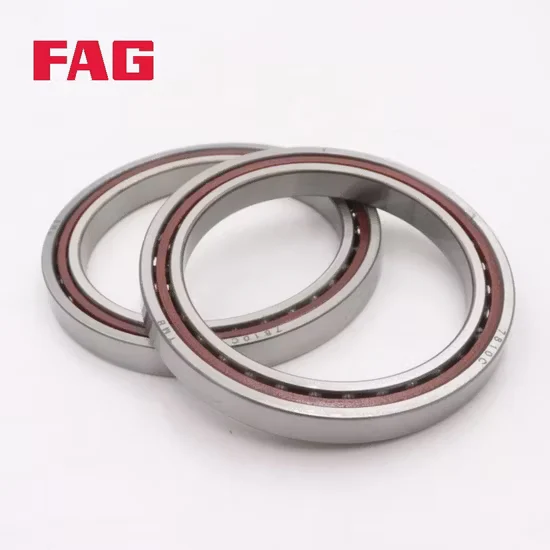
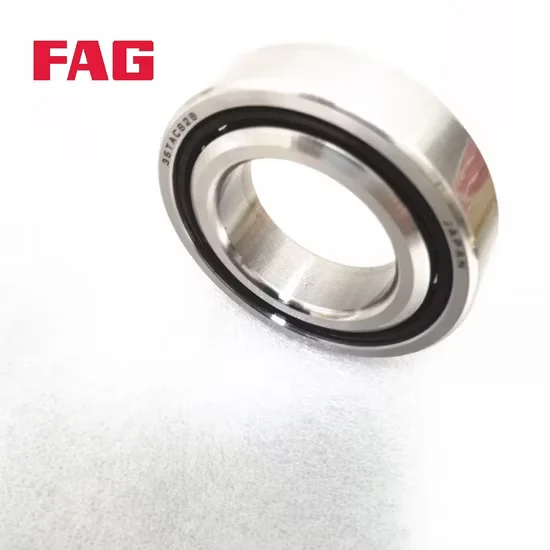
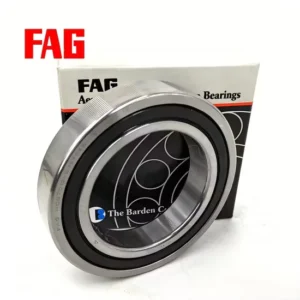
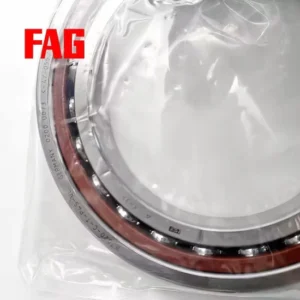
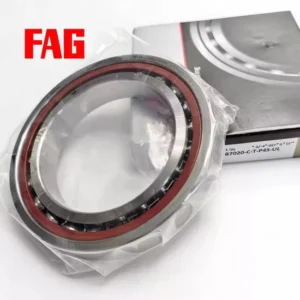
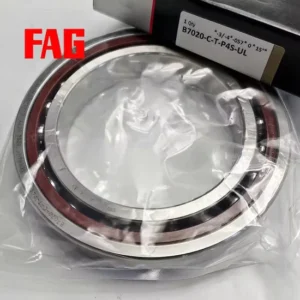
Full Batch Traceability — Every FAG B7208-C-T-P4s-UL angular contact ball bearing we dispatch ships with verifiable manufacturer lot codes linking directly to the original production run.
Technical Specifications
| Parameter | Value |
|---|---|
| Designation | FAG B7208-C-T-P4s-UL |
| Bearing Type | Angular Contact Ball Bearing |
| Bore Diameter (d) | 40 mm |
| Outside Diameter (D) | 80 mm |
| Width (B) | 18 mm |
| Precision Class | P4s |
| Contact Angle | 15° |
| Material | Steel |
Note: Suffixes T and UL require manufacturer catalog confirmation for exact cage material and preload specifications.
Application Suitability
| Industry | Typical Applications |
|---|---|
| Machine Tool Manufacturing | High-speed milling spindle front and rear support nodes |
| Precision Engineering | CNC grinding wheel headstock rotational assemblies |
| Industrial Robotics | High-accuracy rotary joint actuators and positioning arms |
| Fluid Machinery | High-speed centrifugal pump shaft support stages |
Why Spindle Vibration Spikes Ruin Machining Tolerances
Mismatched preload and precision classes silently destroy surface finish quality long before catastrophic bearing seizure occurs.
Early in my failure analysis career, I documented numerous cases where standard tolerance bearings were forced into high-speed spindles, resulting in vibration spikes and scrapped batches within months. Sourcing a verified FAG B7208-C-T-P4s-UL angular contact ball bearing prevents these compounding errors, yet many procurement channels lack the technical depth to validate the exact suffix string.
Aligning Precision Components with High-Speed Spindle Demands
Modern CNC spindles demand exceptional rotational accuracy and minimal friction heat generation during continuous operation. The FAG B7208-C-T-P4s-UL angular contact ball bearing delivers the tight dimensional tolerances required for these demanding environments. Our engineering team routinely cross-references spindle housing drawings to ensure this specific configuration matches the original equipment manufacturer's rigidity and speed requirements.
Managing Thermal Growth and Lubrication Starvation
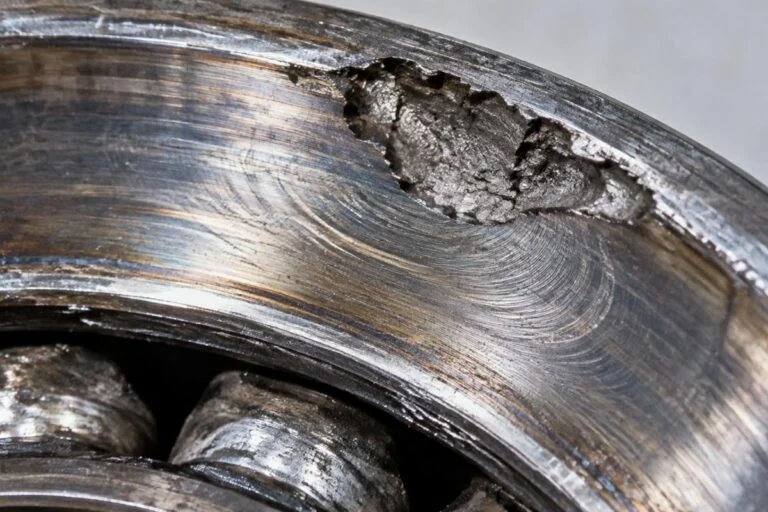
High-speed spindle operation generates significant friction heat, which directly impacts internal clearance and lubricant film thickness. A 15° contact angle optimizes the balance between radial load capacity and axial rigidity while minimizing friction torque. Inadequate oil-air lubrication or improper grease fill volumes rapidly degrade the raceway surfaces. Furthermore, microscopic contamination from machining coolants can penetrate inadequate sealing arrangements, accelerating surface fatigue.
Decoding the Engineering Behind the Suffix String
The P4s precision class guarantees exceptionally tight dimensional and running accuracy, which is mandatory for preventing chatter marks on machined surfaces. The 15° contact angle, designated by the 'C' suffix, provides the optimal geometry for high-speed rotation where centrifugal forces on the rolling elements are substantial. Single-row steel construction ensures maximum structural rigidity when mounted in paired or multiplex arrangements within the spindle cartridge. This specific configuration relies on precise preload matching to maintain stiffness under varying cutting forces.
The Financial Drain of Incorrect Spindle Configurations
Installing an incorrectly specified bearing into a precision spindle inevitably leads to premature failure and catastrophic damage to the shaft and housing. The resulting unplanned downtime halts production lines, while the cost of replacing the entire spindle cartridge far exceeds the initial component savings. According to ISO 15243 frameworks, improper preload and precision mismatches are primary drivers of early-life fatigue and smearing on raceways.
Securing Authentic Spindle Components Through Technical Sourcing
We maintain massive spot inventory covering thousands of standard and special part numbers, ensuring urgent spindle rebuilds are not delayed by typical multi-week lead times. Our cross-brand equivalent model consultation helps verify if alternative configurations can safely substitute when specific suffix variations face allocation constraints. Every FAG B7208-C-T-P4s-UL angular contact ball bearing we supply includes complete traceability documentation to guarantee authenticity. We provide flexible MOQ ranging from single-unit emergency spare-part orders to full container consolidation shipments for large-scale maintenance overhauls. Our technical selection support ensures the exact contact angle and precision class align with your spindle's operational parameters.
Documentation & Authenticity
- Certificate of Conformity verifying the P4s precision class and material grade for this specific batch.
- Original manufacturer lot code traceability linking the bearing to its exact production facility and date.
- Dimensional and running accuracy inspection reports confirming tight tolerances before dispatch.
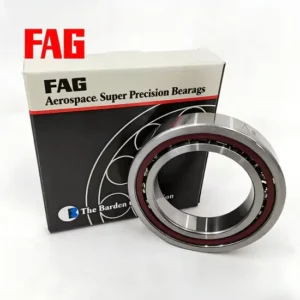
- Official packaging verification utilizing QR codes to validate the supply chain origin.
Storage, Handling & Mounting
- Store the P4s precision components in their original, unopened packaging to prevent microscopic dust contamination.
- Maintain strict humidity control in the storage area to prevent corrosion on the exposed steel raceways.
- Use clean, lint-free gloves when handling the bearing to avoid transferring skin acids to the precision-ground surfaces.
- Follow the manufacturer's specified induction heating parameters for the inner ring to avoid altering the metallurgical structure.
- Verify the matching marks and preload sequence before mounting multiplex arrangements to maintain the factory-set axial stiffness.
Engineering Review and Selection Support
To ensure the selected configuration perfectly matches your spindle requirements, please provide detailed operational parameters including radial and axial loads, maximum rotational speed, and operating temperature ranges. Sharing the original equipment manufacturer's part number or spindle housing drawings allows our engineering team to perform a comprehensive cross-reference and L10 life calculation. This technical review guarantees the contact angle and precision class align with your specific machining tolerances.
Frequently Asked Questions
Q: How does the P4s precision class differ from standard P4 for spindle applications?
A: The P4s class imposes stricter tolerances on running accuracy and dimensional variations compared to standard P4. This enhanced precision is critical for high-speed machine tool spindles to minimize vibration, prevent chatter marks on workpieces, and ensure consistent surface finish quality during continuous heavy-duty machining operations.
Q: Why is verifying the exact suffix string critical when replacing spindle bearings?
A: The suffix string dictates the contact angle, cage material, precision class, and preload configuration. Substituting a bearing with a different preload or contact angle alters the spindle's axial stiffness and thermal growth characteristics, leading to premature failure, excessive vibration, and degraded machining accuracy.
Q: What lubrication procedures are recommended for high-speed angular contact configurations?
A: High-speed spindles typically require precise oil-air lubrication or carefully measured grease fills. The lubricant must be compatible with the cage material and applied in exact volumes to prevent churning losses and excessive heat generation, which can degrade the lubricant and cause premature raceway fatigue.
Q: How can we verify the authenticity of the supplied spindle bearings?
A: We provide comprehensive traceability documentation, including the manufacturer's lot code and Certificate of Conformity. Buyers can also inspect the original packaging and utilize official verification tools to scan QR codes, ensuring the components originate directly from authorized production channels.