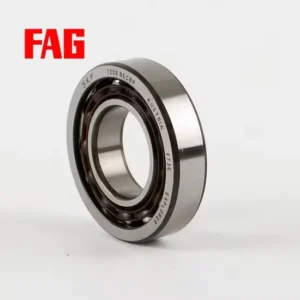
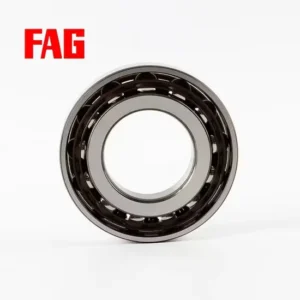
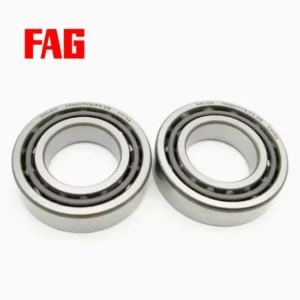
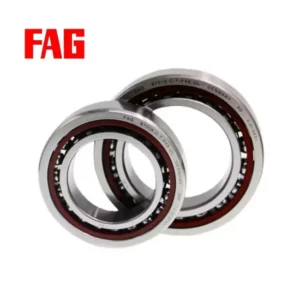
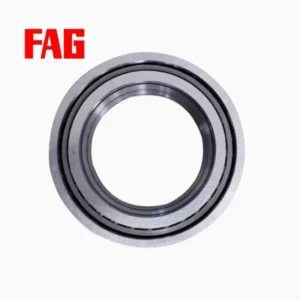
Product details
Description and application notes
Authenticity via QR scan — Every FAG B7208-E-T-P4s-Um angular contact ball bearing shipped includes an official app scannable code to verify factory origin.
Technical Specifications
| Parameter | Value |
|---|---|
| Designation | FAG B7208-E-T-P4s-Um |
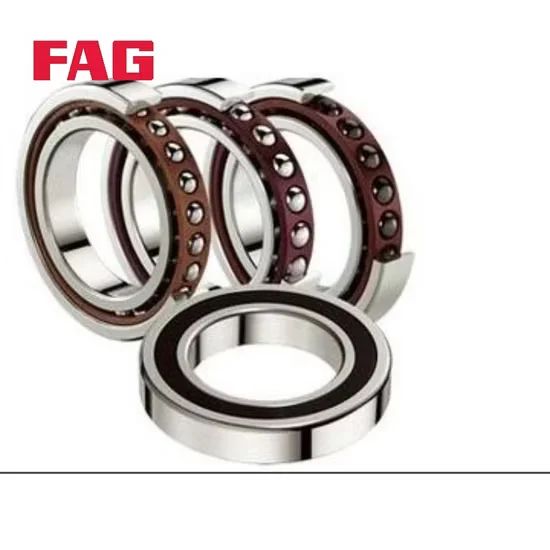
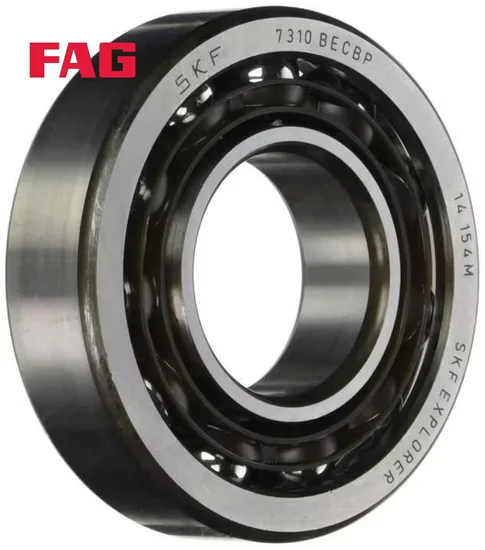
| Bearing Type | Angular Contact Ball Bearing |
| Precision Class | P4s (ISO) |
| Contact Angle | 25° |
| Material | Steel |
| Arrangement | Single-Row |
| Origin | Jiangsu China |
Note: The 'T' and 'Um' suffixes are unverified in standard public catalogs and require direct manufacturer confirmation.
Application Suitability
| Industry | Typical Applications |
|---|---|
| Machine Tool Manufacturing | CNC milling machine main spindles |
| Precision Engineering | High-speed robotic joint actuators |
| Fluid Power | High-speed pump drive shafts |
Why Spindle Bearings Fail Before the Steel Yields
When sourcing a FAG B7208-E-T-P4s-Um angular contact ball bearing, buyers often focus on basic load ratings while ignoring suffix-driven thermal limits and precision grades. Suffix mismatches cause thermal runaway long before dynamic load capacity is reached. I once analyzed a European CNC milling spindle that seized catastrophically during a production run. The maintenance team replaced the original unit with a standard P5 grade and steel cage variant, completely missing the specific P4s tolerance and specialized cage requirements. Within hours of high-speed operation, friction heat expanded the internal components, locking the shaft solid and destroying the spindle housing. This disaster highlights why precision spindle bearings demand rigorous suffix verification rather than simple part number matching.
Matching Ultra-Precision Tolerances to Milling Dynamics
Modern CNC spindles demand extreme rotational accuracy to maintain tight surface finishes on machined aerospace and automotive parts. The FAG B7208-E-T-P4s-Um angular contact ball bearing delivers the necessary P4s dimensional stability under continuous radial and axial cutting forces encountered during heavy milling. Our global sourcing network ensures these specific high-precision variants are consolidated with your broader MRO requirements, eliminating multi-vendor coordination headaches. By securing the exact factory-specified configuration, we help your maintenance team avoid the costly trial-and-error process of fitting incorrect replacements that compromise machining accuracy.
Thermal Management and Lubrication in High-Speed Spindles
Spindle environments generate intense localized heat, making the 25° contact angle crucial for balancing radial support and axial thrust from cutting tools. Proper lubrication selection is equally critical; oil-air systems are typically preferred over grease to manage thermal dissipation at elevated rotational speeds and prevent churning losses. Any contamination in the lubricant film directly compromises the running accuracy and accelerates raceway wear. Furthermore, thermal expansion of the shaft and housing must be accommodated by the specific internal clearance design to prevent preload loss or excessive friction during continuous operation. Ignoring these thermal dynamics inevitably leads to premature spindle degradation.
Decoding the Suffix Matrix for Spindle Reliability
The designation breakdown reveals critical engineering choices that dictate spindle performance. The 'E' suffix confirms the 25° contact angle, optimizing the load distribution for combined milling forces and ensuring axial rigidity. The 'P4s' precision class guarantees stringent dimensional and running accuracy, far exceeding standard P5 tolerances required for vibration-sensitive high-speed spindles. Selecting the correct cage material—often phenolic or specialized polymer for high-speed spindles—is non-negotiable to avoid the catastrophic thermal seizures I witnessed in the field. Misinterpreting these suffixes is the most common root cause of spindle failure.
The Cascading Impact of Precision Downgrades
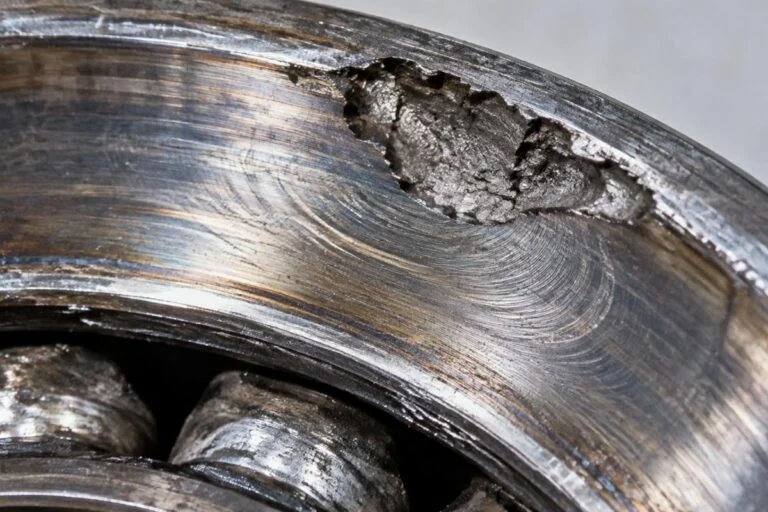
Substituting a lower precision grade or incorrect cage type to save on initial procurement costs triggers severe downstream penalties across the entire machining cell. The resulting vibration accelerates cutting tool wear, degrading the surface finish of machined components and significantly increasing scrap rates. Unplanned downtime for emergency spindle teardowns and subsequent recalibration completely eclipses any upfront savings achieved by buying inferior replacements. According to established failure analysis frameworks, such misapplications lead to premature fatigue, raceway smearing, and catastrophic seizure. Protecting your spindle integrity requires treating precision specifications as absolute mandates.
Securing Exact Suffix Matches Through Technical Vetting
Sourcing the exact FAG B7208-E-T-P4s-Um angular contact ball bearing requires more than just matching the base part number in a database. We strictly verify the P4s tolerance and specific cage suffixes to prevent the disastrous mismatches that cause thermal lockups in CNC equipment. Our extensive spot inventory covers specialized part numbers, allowing us to fulfill both individual unit emergency replacements and bulk project consolidation shipments efficiently. We provide complete cross-brand equivalent model consultation if lead times fluctuate, ensuring your production line never stops. Every shipment includes full traceability documentation, guaranteeing your maintenance team receives the exact factory-specified component with verified origin.
Documentation & Authenticity
- Certificate of Conformity confirming P4s ISO precision class for this specific batch.
- Original factory batch traceability linking the bearing to its production date and facility.
- Official app QR verification code affixed to the packaging for immediate authenticity checks.
- Dimensional and running accuracy inspection reports validating the 25° contact angle tolerances.
Storage, Handling & Mounting
- Keep the P4s precision bearing in its original vacuum-sealed packaging until mounting to prevent microscopic dust contamination.
- Use lint-free clean gloves when handling the exposed steel races to avoid corrosive sweat transfer.
- Verify the spindle housing bore dimensions match the P4s outer ring tolerances before pressing.
- Follow the manufacturer's specific oil-air lubrication flushing protocol prior to high-speed run-in.
Engineering Data Required for Technical Validation
To ensure this spindle bearing perfectly matches your application, please share your specific radial and axial cutting loads, maximum operating RPM, and spindle housing dimensions. Providing the original OEM equipment model number allows our engineering team to perform a precise cross-reference verification and confirm the exact suffix configuration. This technical review guarantees the selected precision class and internal clearance align with your thermal expansion parameters. We also evaluate your lubrication setup to confirm compatibility with the bearing's high-speed thermal limits, ensuring long-term reliability in your specific machining environment.
Frequently Asked Questions
Q: What does the P4s precision class mean for this spindle bearing?
A: The P4s designation indicates an ultra-precision grade under ISO standards, offering tighter dimensional and running accuracy than standard P5 or P4 classes. This stringent tolerance is essential for CNC milling spindles to minimize vibration, maintain tight machining tolerances, and prevent premature fatigue at high rotational speeds.
Q: How can I verify the authenticity of the bearing before installation?
A: Every unit ships with an official QR code that can be scanned using the manufacturer's official mobile app. This digital verification confirms the factory origin, production batch, and exact suffix configuration. We also provide physical batch traceability documents to ensure complete supply chain transparency for your quality audits.
Q: Why is the 25° contact angle critical for milling applications?
A: The 25° contact angle, denoted by the E suffix, provides an optimal balance between radial load capacity and axial thrust resistance. During milling operations, the cutting tool generates significant axial forces; this specific angle ensures the bearing maintains rigidity and rotational accuracy without excessive internal stress or heat generation.
Q: What information should I provide to cross-reference this exact model?
A: Please provide the original OEM equipment model, the exact spindle shaft and housing dimensions, and your maximum operating RPM. Sharing the complete original designation, including all suffixes, allows our technical team to verify compatibility and suggest exact equivalents if the specific variant requires extended procurement lead times.