
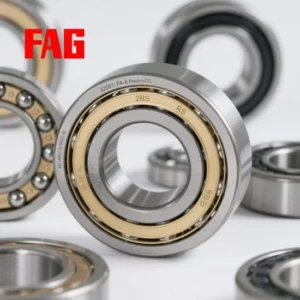
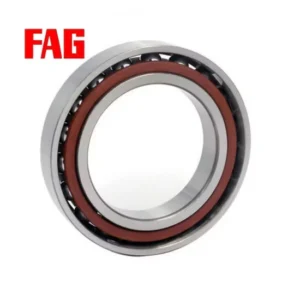
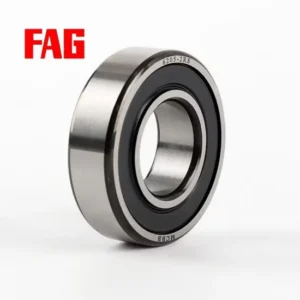
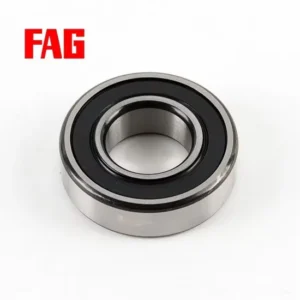
Product details
Description and application notes
Cross-Reference Alignment — Verifying dimensional, precision, and preload equivalence prevents catastrophic spindle vibration during retrofitting.
Technical Specifications
| Parameter | Value |
|---|---|
| Designation | FAG B7212-C-T-P4s-Dul |
| Bearing Type | Angular Contact Ball Bearing |
| Precision Class | P4s |
| Contact Angle | 15° (C) |
| Material | Steel |
| Origin | Jiangsu China |
| Customization | Available |
Note: The 'T' and 'Dul' suffixes require manufacturer catalog confirmation as they remain unverified in standard public documentation.
Application Suitability
| Industry | Typical Applications |
|---|---|
| Machine Tool Manufacturing | High-speed milling and grinding spindles |
| Precision Engineering | Coordinate measuring machine rotary axes |
| Industrial Automation | High-speed robotic joint actuators |
Spindle Vibration Often Traces Back to Misinterpreted Suffix Codes on the FAG B7212-C-T-P4s-Dul angular contact ball bearing
Matching the exact preload and precision class is non-negotiable for high-speed rotary accuracy.
Procurement engineers frequently focus solely on the base bore and outer diameter, overlooking critical pairing arrangements. I learned this the hard way years ago at a Hannover trade show when sourcing parts for a machining center. I only checked the basic B7212 designation and completely missed verifying the specific preload configuration. After installation, the spindle vibration exceeded acceptable limits, leading to immediate scrap and massive financial losses. Such oversight leads to severe runout issues, accelerated tool wear, and unplanned downtime that disrupts entire production schedules.
Aligning P4s Tolerances with High-Speed Machining Demands
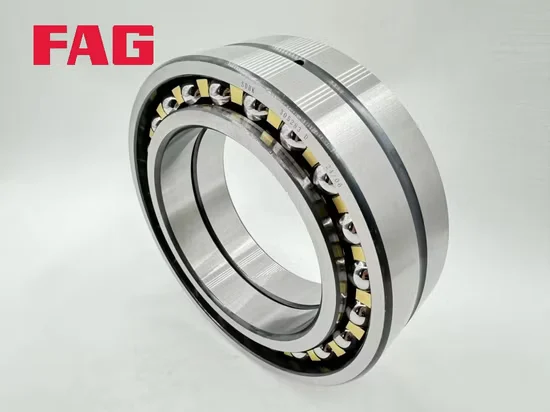
The FAG B7212-C-T-P4s-Dul angular contact ball bearing delivers the tight dimensional control necessary for precision grinding and milling operations. Its 15° contact angle minimizes friction heat generation, allowing the spindle to maintain thermal stability during prolonged high-RPM cycles. Our engineering team cross-checks these specific tolerance bands against your OEM blueprints to ensure precise integration. Whether you need a single-unit emergency spare part or a full container consolidation shipment for a major factory overhaul, we structure our mixed-brand packages to keep your maintenance schedules on track.
Managing Thermal Expansion and Lubrication Starvation in Spindles
High-speed spindles generate significant internal heat, which directly impacts internal clearance and lubricant film thickness. If the grease degrades or the oil-air mixture fails to reach the raceway, the rolling elements experience localized stress and premature wear. Furthermore, external contaminants from the machining environment can infiltrate the housing, making proper sealing and regular maintenance intervals critical to sustaining rotational accuracy over the long term.
Decoding the Contact Angle and Precision Class
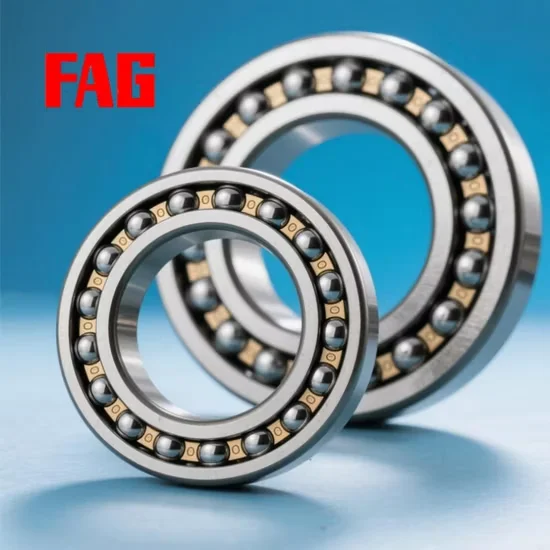
When specifying a FAG B7212-C-T-P4s-Dul angular contact ball bearing, the 'C' suffix designates a 15° contact angle, which is optimal for high-speed applications where axial loads are moderate and radial rigidity is paramount. Achieving P4s precision ensures that the inner and outer ring tolerances, along with running accuracy, meet stringent ISO standards for machine tool spindles. This specific precision class restricts dimensional deviations, ensuring the bearing operates quietly without inducing harmonic vibrations into the workpiece surface finish. Furthermore, the internal clearance and cage design are engineered to withstand the centrifugal forces generated at extreme rotational speeds, preventing cage pocket wear and maintaining consistent lubricant distribution across the raceway.
The Cascading Financial Impact of Incorrect Preload Selection
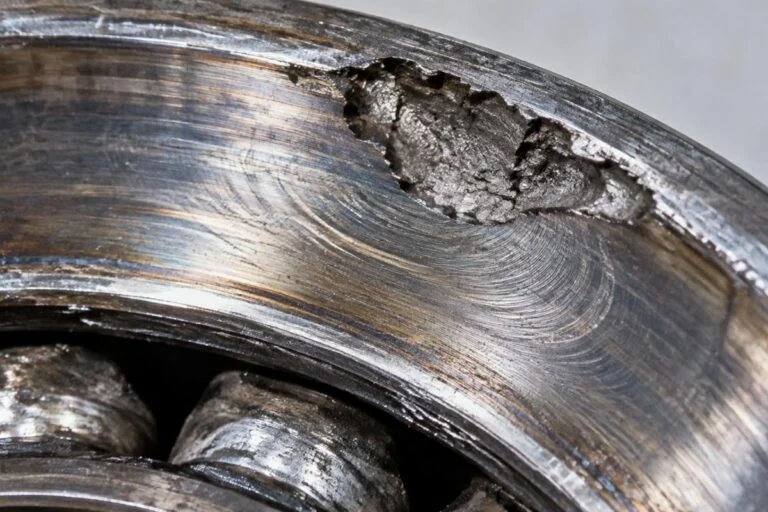
Selecting an inappropriate preload or ignoring the exact pairing configuration results in accelerated raceway fatigue and catastrophic spindle seizure. According to ISO 15243 frameworks, improper internal clearance distribution is a primary driver of surface distress and smearing on the rolling contact paths. When the L10 life calculation is compromised by wrong selection, it ultimately voids equipment warranties and forces expensive replacements. Relying on ISO 281 standards for dynamic load rating adjustments highlights how sensitive these precision components are to incorrect mounting forces and thermal gradients.
Securing Traceability and Exact Suffix Verification
We prioritize exact suffix matching because a single character deviation in the preload code can ruin a precision spindle assembly. Our supply chain provides complete batch traceability documentation for every FAG B7212-C-T-P4s-Dul angular contact ball bearing shipped. We maintain massive spot inventory covering thousands of standard and special part numbers to fulfill urgent maintenance requirements without compromising on authentic origin verification. Additionally, our technical team offers cross-brand equivalent model consultation if legacy spindles require immediate retrofitting solutions, ensuring you receive reliable technical selection support and long-term after-sales failure analysis guidance.
Documentation & Authenticity
- Certificate of Conformity validating the P4s precision grade for this specific production batch.
- Original factory batch traceability records linking the bearing to its exact manufacturing date.
- Dimensional and running accuracy inspection reports confirming strict ISO compliance before dispatch.
- Official brand QR code authentication verifying the genuine origin of the steel components.
Storage, Handling & Mounting
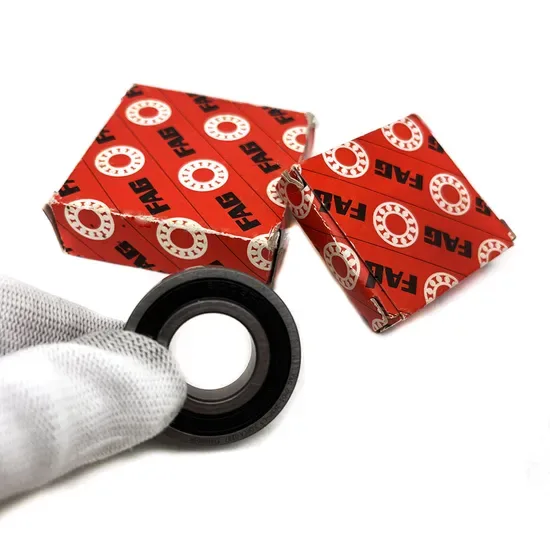
- Store the matched set in its original anti-corrosion packaging until spindle assembly to preserve factory preload.
- Use lint-free gloves when handling the P4s precision raceways to prevent microscopic surface contamination.
- Maintain strict temperature control in the storage area to prevent thermal distortion of the high-precision steel rings.
- Follow specified induction heating protocols for the inner ring to preserve the 15° contact angle geometry.
Preparing Your Technical Parameters for Accurate Quotation
To ensure precise selection and accurate L10 life calculation, please share your spindle's radial and axial load profiles alongside maximum operating speeds. Providing the original OEM equipment serial number allows our engineers to perform a thorough cross-reference check. Detailing the operating temperature range and lubrication method helps us verify if this specific configuration meets your rigorous machining demands, ensuring we provide the exact technical selection support required for your project.
Frequently Asked Questions
Q: How can I verify the authenticity of this spindle bearing through official channels?
A: You can authenticate the bearing by scanning the official brand QR code on the packaging using the manufacturer's dedicated mobile application. We also provide original factory batch traceability documentation and a Certificate of Conformity, ensuring the P4s precision grade is fully verifiable before installation.
Q: What do the unverified suffixes in the designation mean and how should I confirm them?
A: Certain specialized suffixes may not appear in standard public catalogs and require direct verification against the manufacturer's technical documentation. We recommend sharing your exact OEM spindle blueprint with our engineering team, allowing us to cross-reference the specific preload and cage design requirements directly with the factory.
Q: Why is matching the exact precision class and contact angle critical for spindle replacement?
A: The P4s precision class guarantees tight dimensional tolerances necessary for minimizing runout in high-speed machining. A 15° contact angle optimizes load distribution for high-RPM operations. Mismatching these parameters alters internal stress distribution, leading to excessive heat generation, severe vibration, and premature spindle failure during continuous operation.
Q: What are the cross-reference precautions regarding clearance and cage material for angular contact bearings?
A: When cross-referencing to alternative brands, verify that the internal clearance, cage material, and preload configuration exactly match the original specification. Even if basic dimensions align, differences in cage design or preload can drastically alter thermal behavior and limiting speed, potentially compromising the surface finish of your machined parts.
Q: What are the recommended lubrication practices for high-speed industrial spindles using this bearing?
A: High-speed spindles typically require precise oil-air lubrication systems to manage friction heat without causing churning losses. It is essential to use the exact oil viscosity recommended by the machine tool builder, as excessive lubrication causes rapid temperature spikes, while insufficient lubrication leads to raceway smearing and catastrophic seizure.