
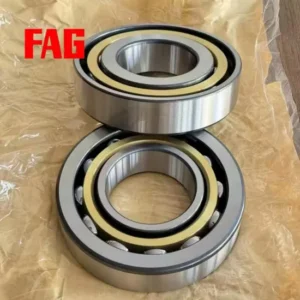
Product details
Description and application notes
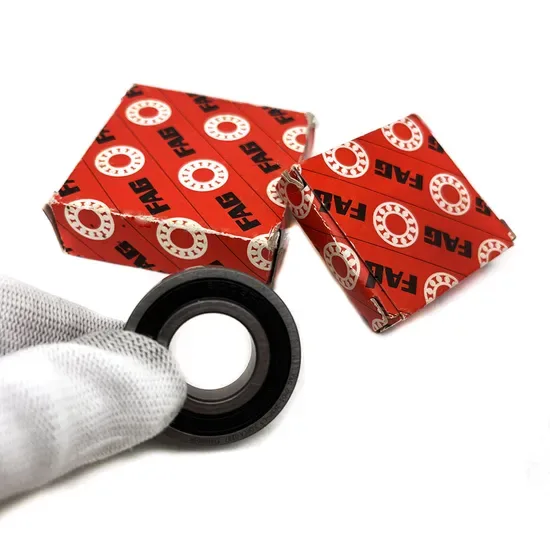
Original Factory Batch Traceability — Every unit ships with verifiable laser-etched outer ring codes linking directly to the manufacturer's production facilities and initial inspection records.
Technical Specifications
| Parameter | Value |
|---|---|
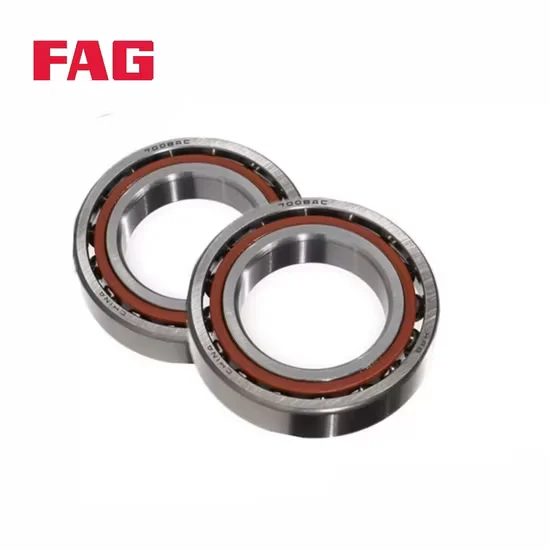
| Designation | FAG B7218-E-T-P4s-Dul |
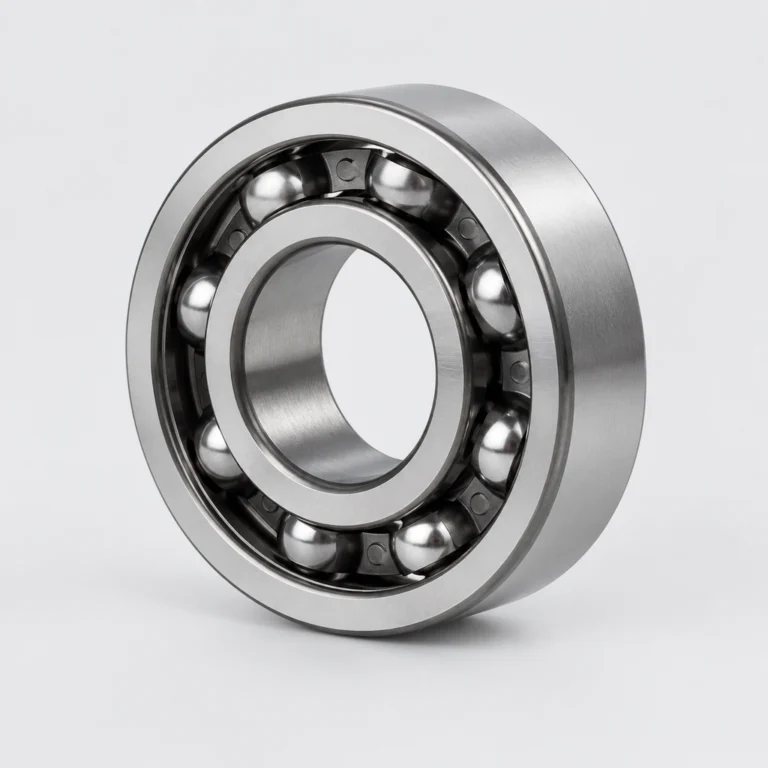
| Bearing Type | Angular Contact Ball Bearing |
| Bore Diameter (d) | 90 mm |
| Outside Diameter (D) | 160 mm |
| Width (B) | 30 mm |
| Precision Class | P4s |
| Contact Angle | 25° |
| Material | Steel |
| Certification | ISO |
The T and Dul suffixes remain unverified in public catalogs and require manufacturer confirmation.
Application Suitability
| Industry | Typical Applications |
|---|---|
| Aerospace | High-speed turbine spindles, gyroscopic test rigs |
| Precision Machining | CNC milling machine tool spindles, high-frequency grinding heads |
| Robotics | Articulated joint actuators requiring minimal runout |
Why Ignoring Suffix Variations Destroys Aerospace Spindles Using the FAG B7218-E-T-P4s-Dul angular contact ball bearing
A single overlooked pairing code turns a precision asset into a catastrophic heat generator.
When matching replacements for aerospace test rigs, engineers often fixate on the base bore and outer diameter while treating suffix strings as mere administrative text. I learned this the hard way in Dubai when a misread pairing designation on a similar high-speed unit caused severe vibration and eventual spindle seizure during commissioning. Such oversights bypass the engineered preload, forcing the rolling elements to skid rather than roll under axial thrust. The resulting frictional heat rapidly degrades the lubricant film, leading to microscopic welding on the raceways. In precision environments, assuming that any similarly sized component will suffice ignores the highly specific internal geometry required to sustain continuous high-frequency rotation without thermal runaway.
Aligning Ultra-Precision Tolerances with High-Frequency Machining Demands
The FAG B7218-E-T-P4s-Dul angular contact ball bearing delivers the strict dimensional control required for aerospace spindles where micron-level runout dictates surface finish quality. By utilizing our cross-brand equivalent consultation, maintenance teams can smoothly integrate this specific configuration into existing housings without modifying adjacent components. Our technical selection support ensures the chosen precision class aligns perfectly with the operational speed envelope of your grinding or milling equipment. When upgrading older machinery, verifying the exact housing tolerances against the P4s outer ring dimensions prevents excessive clamping forces that could distort the raceway geometry and negate the benefits of the ultra-precision manufacturing process.
Managing Thermal Expansion and Axial Thrust in Continuous Operations
High-speed spindles generate immense frictional heat, demanding a contact angle that optimally balances radial support with axial rigidity. The 25° contact angle effectively manages combined loads while minimizing internal stress during rapid acceleration phases. Proper lubrication routing is critical here; oil-air systems must be calibrated to prevent churning losses that degrade the grease or oil film. Furthermore, maintaining the correct mounting preload prevents the inner ring from creeping on the shaft journal under heavy cutting forces. If the thermal expansion of the shaft exceeds the designed clearance limits during prolonged operation, the internal preload spikes dramatically, accelerating fatigue and compromising the overall dimensional stability of the machined parts.
Decoding the Engineering Behind P4s Tolerances and Contact Geometry
The P4s precision class imposes significantly tighter restrictions on dimensional and running accuracy compared to standard P4 grades, ensuring minimal vibration at extreme rotational velocities. The 25° contact angle, denoted by the E suffix, provides an optimal load distribution profile for applications experiencing predominant axial thrust alongside radial cutting forces. Single-row angular contact designs inherently require paired mounting to accommodate bidirectional axial loads, making the correct interpretation of trailing designations absolutely vital for assembly. The core geometry guarantees exceptional rigidity for demanding manufacturing environments. Selecting the appropriate cage material and understanding the specific window design further reduces centrifugal forces acting on the rolling elements, allowing the spindle to reach its maximum rated RPM safely.
The Financial Toll of Compromised Spindle Integrity
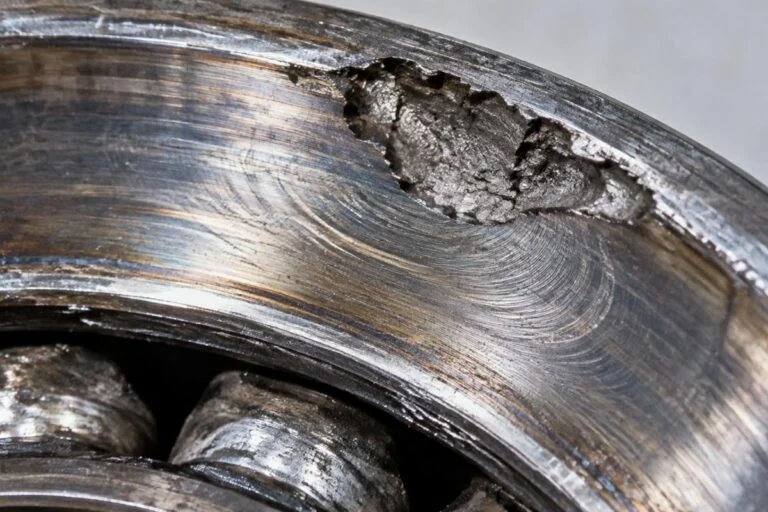
Substituting a standard precision bearing where a P4s grade is specified inevitably leads to premature fatigue and unplanned downtime. According to ISO 15243 frameworks, improper preload or mismatched contact angles accelerate subsurface initiated spalling, ultimately destroying the spindle housing. The resulting catastrophic damage extends far beyond the component itself, necessitating complete assembly teardowns, voiding equipment warranties, and causing severe production delays in high-value aerospace manufacturing cells. The financial impact multiplies when scrapped workpieces and missed delivery deadlines are factored into the equation, proving that compromising on initial procurement specifications is a fundamentally flawed strategy for critical machining operations.
Securing Traceability and Technical Accuracy for Critical Assets
Sourcing ultra-precision components requires more than just finding a matching part number on a screen. We provide complete traceability documentation for every FAG B7218-E-T-P4s-Dul angular contact ball bearing, ensuring you receive genuine factory-sealed units rather than repackaged stock. Our massive spot inventory allows us to fulfill single-unit emergency spare-part orders just as efficiently as full container consolidations. When dealing with complex suffix strings, our technical team cross-references internal databases to verify pairing and preload specifications before dispatch. This rigorous validation process, combined with competitive sourcing costs compared to direct official channels, protects your machinery from the devastating consequences of counterfeit or mislabeled precision parts. Our failure analysis background means we actively flag potential mounting discrepancies before the shipment leaves our facility.
Documentation & Authenticity
- Certificate of Conformity verifying P4s tolerance grades for this specific aerospace spindle application.
- Original factory batch traceability linking the outer ring laser marking to the production date.
- Official app QR authentication confirming the genuine origin of the high-precision packaging.
- Material inspection reports validating the bearing steel composition for high-speed thermal stability.
- Running accuracy inspection reports confirming strict dimensional limits prior to international shipment.
Storage, Handling & Mounting
- Keep the matched set sealed in its original anti-corrosion packaging until the exact moment of mounting to preserve the factory-applied rust preventative.
- Utilize clean, lint-free gloves when handling the P4s precision rings to prevent acidic skin oils from etching the ultra-fine grinding surfaces.
- Verify the specific pairing marks and preload arrangements dictated by the trailing suffixes before pressing the rings into the spindle housing.
- Employ induction heating strictly controlled below the thermal limit of standard bearing steel when fitting the inner ring to the shaft journal.
- Store the single-row units horizontally in a climate-controlled environment to prevent gravitational deformation of the precise raceway geometry.
Engineering Review for Spindle Integration
To ensure flawless integration into your aerospace or precision machining equipment, please share your operational parameters including radial and axial loads, maximum RPM, and operating temperatures. Providing the original OEM equipment number allows our engineering team to perform a thorough cross-reference check and validate the exact suffix requirements. This technical review guarantees the selected configuration meets your specific L10 life expectations and spatial constraints. Additionally, detailing your current lubrication method and filtration setup helps us confirm whether the open or sealed variant is more appropriate for your specific contamination exposure levels, ensuring long-term reliability in demanding production environments.
Frequently Asked Questions
Q: How does the P4s precision class differ from standard P4 for this angular contact ball bearing?
A: The P4s designation enforces strictly tighter limits on both dimensional and running accuracy compared to standard P4. This ultra-precision grade minimizes high-speed vibration and ensures exceptional rotational stiffness, which is absolutely critical for aerospace spindles and high-frequency grinding heads where micron-level deviations compromise surface finishes.
Q: What do the T and Dul suffixes indicate in this specific configuration?
A: While the E and P4s suffixes confirm the 25° contact angle and precision class, the T and Dul designations require direct manufacturer catalog confirmation. They typically denote specific cage materials, window designs, or universal flush grinding for duplex pairing arrangements, which must be verified to ensure correct preload during assembly.
Q: Why is a 25° contact angle preferred for high-speed machine tool spindles?
A: A 25° contact angle provides an optimal balance between radial load capacity and axial rigidity. In high-speed machining, cutting forces generate significant axial thrust; this geometry ensures the rolling elements maintain proper contact with the raceways, preventing skidding and minimizing frictional heat generation during aggressive material removal.
Q: How can we verify the authenticity of the received spindle bearings?
A: Every genuine unit features laser-etched traceability codes on the outer ring that must perfectly match the factory packaging labels. Additionally, you can utilize the manufacturer's official mobile application to scan the QR codes on the box, instantly confirming the product's origin and protecting your equipment from counterfeit risks.