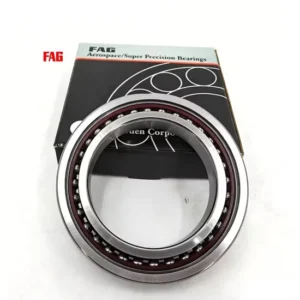

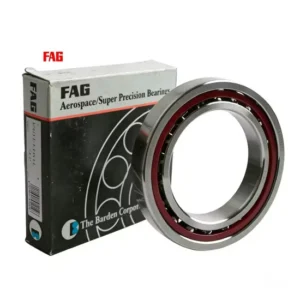

Product details
Description and application notes
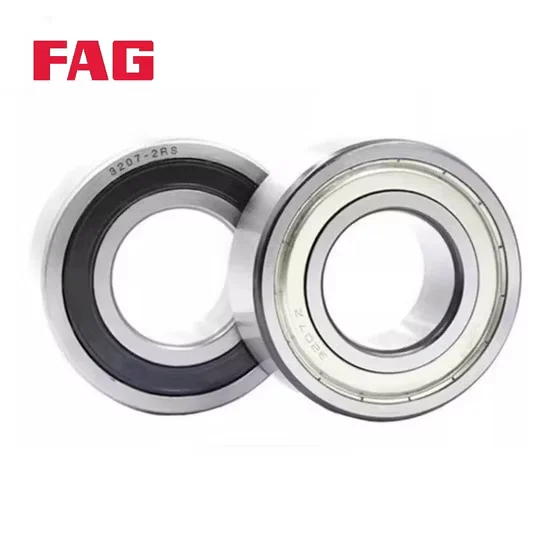
Cross-reference alignment verified — We validate precision class, contact angle, and dimensional tolerances against OEM specs before dispatching this spindle bearing.
Technical Specifications
| Parameter | Value |
|---|---|
| Designation | B7226-E-T-P4s-UL |
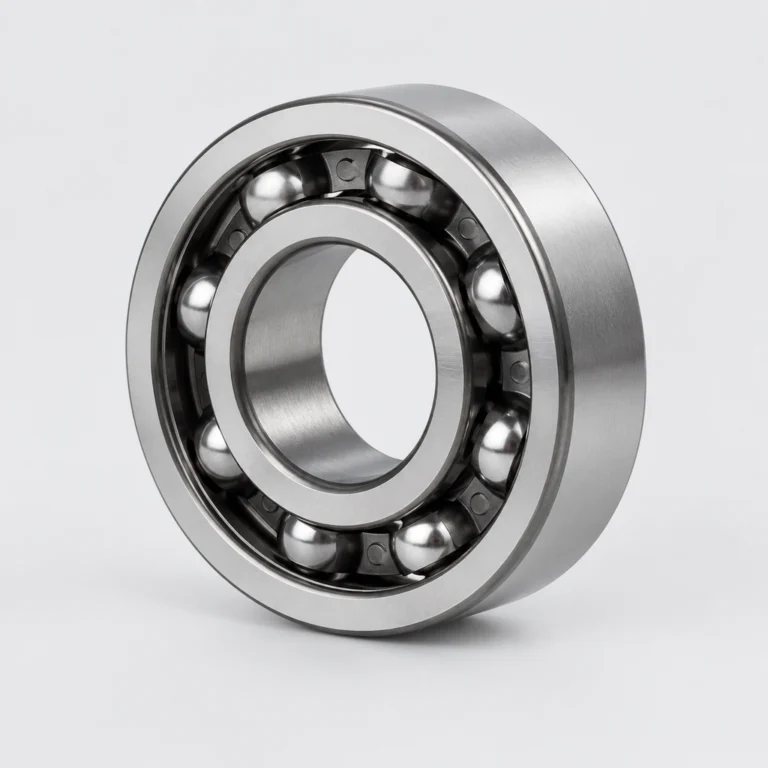
| Bearing Type | Angular Contact Ball Bearing |
| Bore Diameter (d) | 130 mm |
| Outside Diameter (D) | 230 mm |
| Width (B) | 40 mm |
| Precision Class | P4s |
| Contact Angle | 25° |
| Material | Steel |
| Certification | ISO |
| Origin | Jiangsu China |
Application Suitability
| Industry | Typical Applications |
|---|---|
| Machine Tool Manufacturing | High-speed milling and grinding spindle motors |
| Industrial Pumping Systems | High-speed centrifugal pump shaft supports |
| Robotics & Automation | Precision rotary joints and actuator drives |
Why Spindle Motors Fail When the FAG B7226-E-T-P4s-UL angular contact ball bearing Preload is Mismatched
Thermal expansion from incorrect preload destroys the cage before the steel ever fatigues.
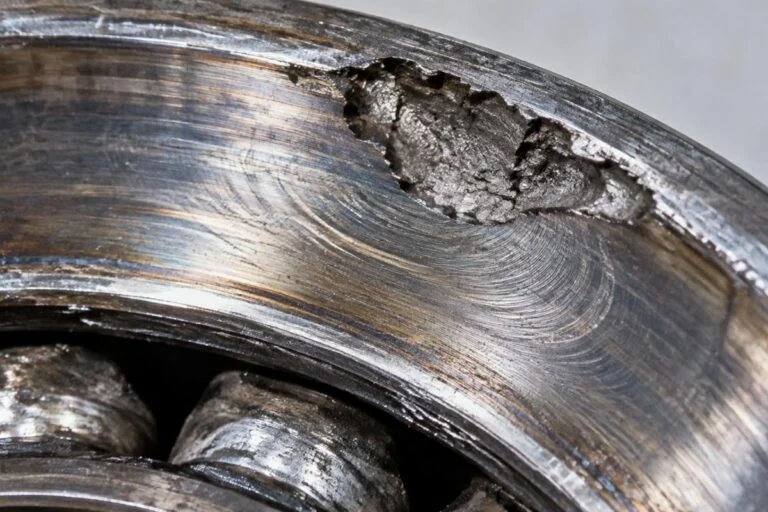
I once investigated a seized spindle in a Riyadh workshop where a standard angular contact bearing was substituted without adjusting the preload. The excessive friction generated immense heat, turning the cage completely discolored and welding the rolling elements to the raceway. When sourcing a FAG B7226-E-T-P4s-UL angular contact ball bearing, ignoring the exact pairing and precision class guarantees catastrophic thermal runaway under continuous high-speed operation. Maintenance teams often overlook how minor deviations in internal clearance translate into massive thermal expansion, ultimately destroying the spindle housing and requiring weeks of lead time for replacement parts.
Matching the 25° Contact Angle to Spindle Load Profiles
The 25° contact angle in this configuration optimally balances the radial cutting forces and axial thrust loads typical in high-speed milling operations. By supplying the genuine FAG B7226-E-T-P4s-UL angular contact ball bearing, we ensure the internal geometry perfectly aligns with the spindle manufacturer's original load calculations, preventing premature raceway spalling under combined loading conditions. Furthermore, the precise alignment of the contact angle ensures that the lubricant film remains stable across the entire raceway, preventing localized stress concentrations that could otherwise initiate micro-pitting and accelerate surface degradation during heavy cutting cycles.
Managing Thermal Growth and Lubrication Starvation at High RPMs
Spindle motors generate significant internal heat, which directly impacts internal clearance and lubricant film thickness. If the lubrication interval is miscalculated or the wrong grease viscosity is applied, the rolling elements will skid rather than roll, accelerating surface wear. Maintaining the P4s precision class requires strict contamination control, as even microscopic particles can disrupt the elastohydrodynamic lubrication film and initiate surface fatigue. Engineers must also account for the differential thermal expansion between the steel shaft and the housing, ensuring that the initial preload does not become dangerously excessive as the operating temperature rises during continuous machining shifts.
Decoding the P4s Precision and 25° Contact Angle Specifications
The P4s precision class dictates extremely tight dimensional and running accuracy tolerances, which are mandatory for minimizing vibration and maintaining surface finish quality in precision machining. The E suffix confirms the 25° contact angle, providing higher axial rigidity compared to a 15° variant, making it ideal for heavy-duty cutting applications where axial deflection must be minimized. Steel construction offers the necessary structural integrity for continuous industrial operation, while the exact cage design ensures stable rolling element guidance at elevated rotational speeds. This precise cage geometry prevents rolling element clustering and ensures uniform load distribution, which is absolutely critical for maintaining the stringent running accuracy required by modern CNC equipment.
The Cascading Financial Impact of Precision Downgrades
Substituting a lower precision grade or an incorrect contact angle might seem like a minor procurement saving, but it inevitably leads to unplanned downtime and scrapped workpieces. A mismatched bearing compromises the entire spindle assembly, causing chatter marks on machined parts and eventually leading to catastrophic spindle seizure. According to industry failure analysis frameworks, the cost of replacing a destroyed spindle shaft and housing vastly exceeds the initial investment in correctly specified precision components. Furthermore, the secondary damage caused by a disintegrating bearing can contaminate the entire lubrication system, forcing maintenance teams to flush lines and replace adjacent seals, compounding the overall financial loss.
Securing Authentic Spindle Components Through Rigorous Verification
We specialize in sourcing genuine precision bearings, ensuring that every FAG B7226-E-T-P4s-UL angular contact ball bearing arrives with complete factory traceability. Our technical team cross-references the exact suffix combinations to prevent the dangerous mismatch of preload classes that often plagues emergency replacements. We provide comprehensive dimensional inspection reports and original batch documentation, giving maintenance engineers absolute confidence that the installed component meets the stringent requirements of high-speed spindle applications. This rigorous verification process eliminates the guesswork from procurement, ensuring that the replacement bearing perfectly mirrors the dynamic characteristics of the original factory-installed unit, thereby preserving the spindle's designed operational lifespan.
Documentation & Authenticity
- Certificate of Conformity confirming the P4s tolerance grade for this specific production batch.
- Original factory batch traceability linking the bearing serial number to the manufacturer's production facilities.
- Dimensional and running accuracy inspection report verifying the 25° contact angle and P4s precision.
- Material certification validating the high-purity steel composition used for the inner and outer rings.
Storage, Handling & Mounting
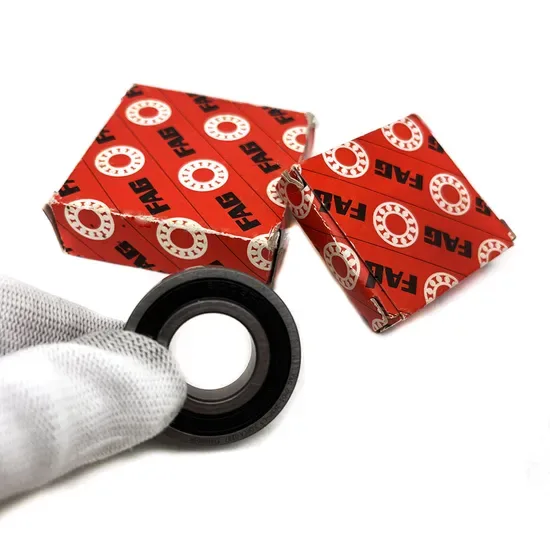
- Keep the original packaging sealed until installation to protect the P4s precision raceways from ambient moisture and dust.
- Use clean, lint-free gloves when handling the bearing to prevent corrosive sweat from degrading the high-purity steel surfaces.
- Strictly follow the manufacturer's specified heating methods for the inner ring to avoid altering the P4s dimensional tolerances.
- Verify the pairing marks and preload orientation before mounting to ensure the 25° contact angle aligns correctly with the spindle thrust direction.
Initiating the Technical Review Process
To ensure optimal spindle performance, please share your specific radial and axial load profiles, operating speeds, and target operating temperatures. Providing the original equipment manufacturer's part number allows our engineering team to perform a comprehensive cross-reference check and confirm the exact preload arrangement required for your application.
Frequently Asked Questions
Q: What does the P4s precision class mean for spindle motor applications?
A: The P4s class indicates extremely tight dimensional and running accuracy tolerances, specifically designed for high-speed spindle motors. This precision minimizes vibration and thermal generation, ensuring superior surface finish on machined parts and extending the operational lifespan of the entire spindle assembly under continuous heavy cutting loads.
Q: How does the 25° contact angle affect load capacity?
A: A 25° contact angle provides an optimal balance between radial and axial load capacities. It offers higher axial rigidity compared to a 15° angle, making it highly suitable for spindle applications that experience significant axial thrust during heavy milling or drilling operations, effectively minimizing axial deflection.
Q: What documentation is provided to verify the bearing's authenticity?
A: We supply a comprehensive documentation package including a Certificate of Conformity, original factory batch traceability records, and detailed dimensional inspection reports. These documents verify the P4s precision class, material composition, and exact manufacturing origin, ensuring complete transparency and protecting your equipment from the risks of counterfeit components.
Q: How should unverified suffixes like T and UL be interpreted for this model?
A: Suffixes such as T and UL in this designation require direct confirmation from the manufacturer's current catalog, as they typically denote specific cage materials, pairing arrangements, or preload classes. We strongly recommend consulting our technical team to verify these exact parameters against your spindle's original engineering specifications before installation.