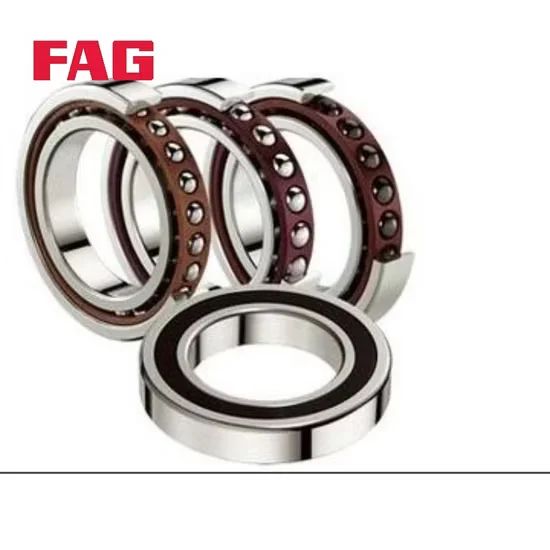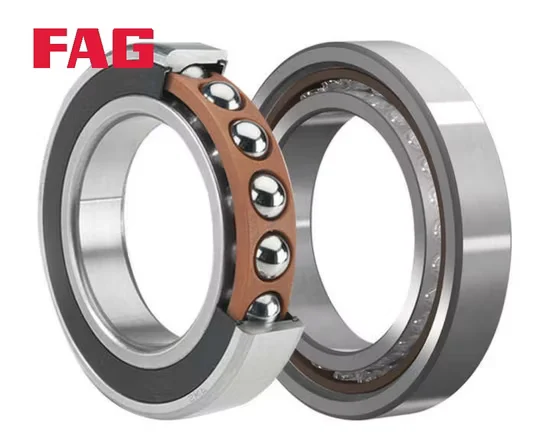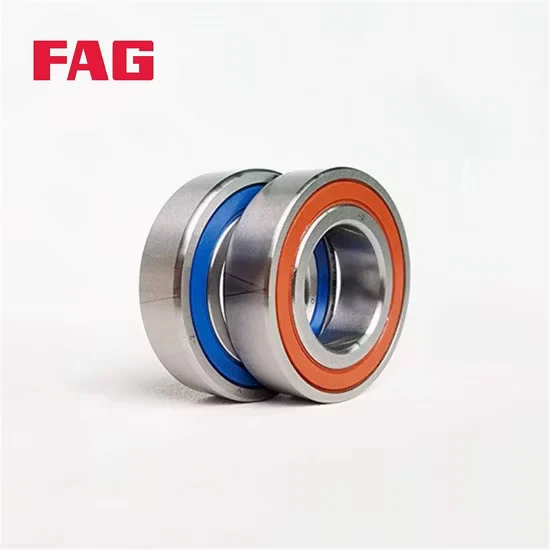
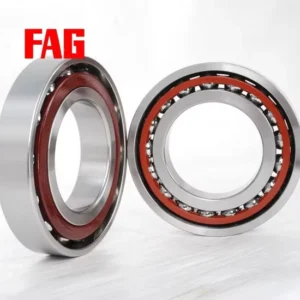

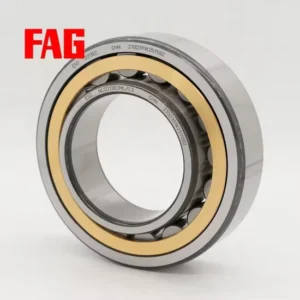


Product details
Description and application notes
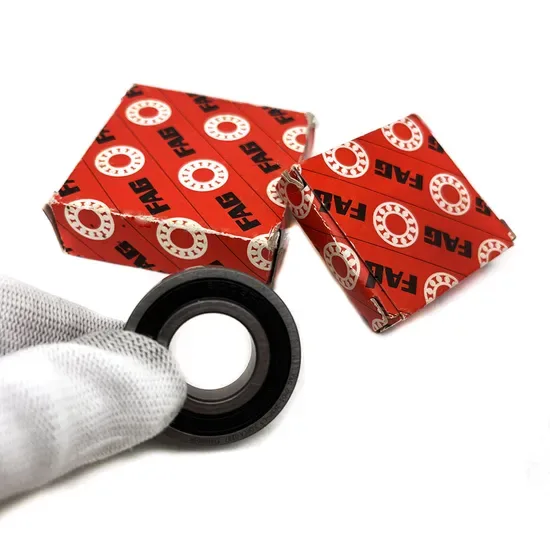
Authenticity via QR scanning — Every FAG HS7007-E-T-P4s-UL angular contact ball bearing ships with original packaging QR codes for instant verification through the manufacturer's official app.
Technical Specifications
| Parameter | Value |
|---|---|
| Designation | FAG HS7007-E-T-P4s-UL |
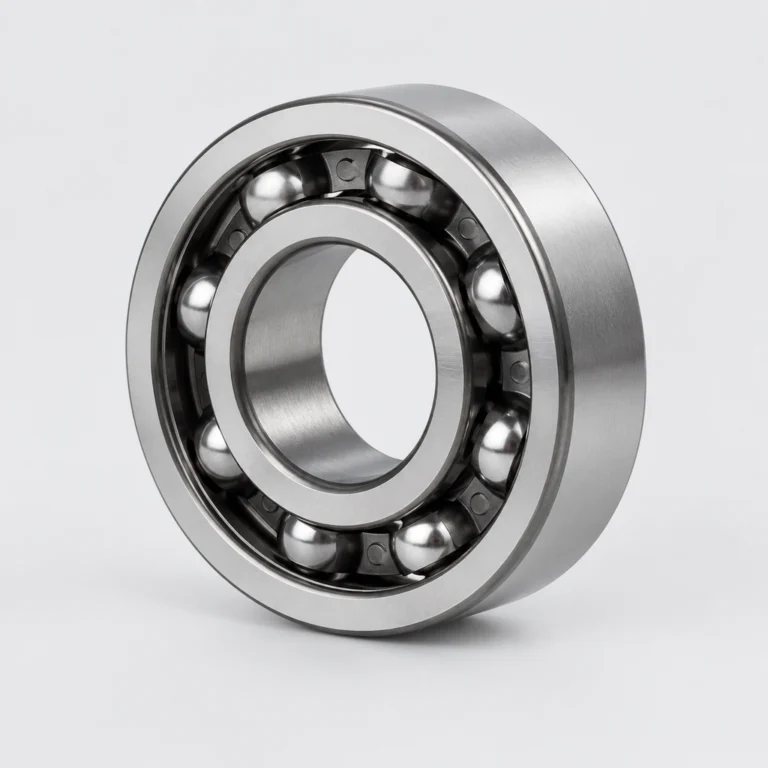
| Bearing Type | Angular Contact Ball Bearing |
| Precision Class | P4s |
| Contact Angle | 25° |
| Material | Steel |
| Number of Rows | Single-Row |
| Series Standard | B70 / HCB70 design principles |
| Certification | ISO compliant |
Note: Suffixes HS, T, and UL remain unverified in standard public catalogs and require manufacturer confirmation for specific internal design variations.
Application Suitability
| Industry | Typical Applications |
|---|---|
| Machine Tool Manufacturing | CNC machining center main spindles and high-speed milling heads |
| Precision Engineering | High-speed pump shafts and robotic joint actuators |
| Industrial Automation | Precision grinding equipment and optical measuring instruments |
Why Spindle Vibration Often Traces Back to Thermal Mounting Abuse
Heat induction is mandatory, not optional, for precision spindle assemblies.
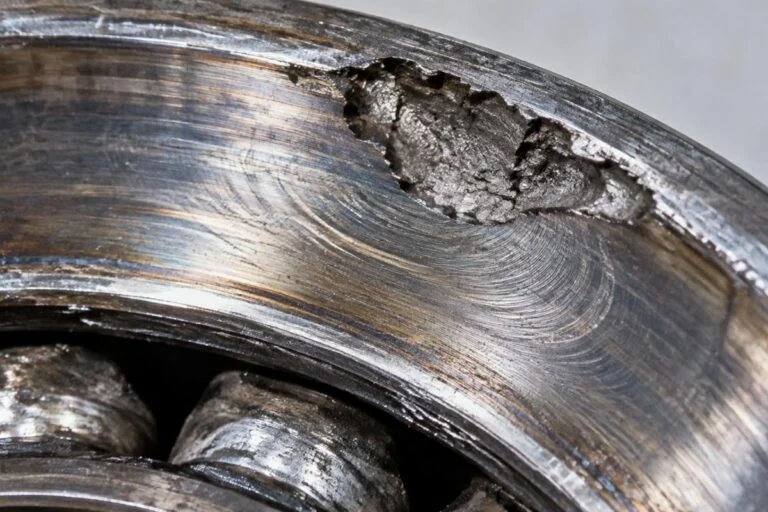
During early failure analysis investigations, I examined a machining center suffering from severe spindle vibration and poor surface finishes. Teardown revealed the internal clearance of the precision bearing was completely destroyed because the maintenance crew used an open flame torch for heating during assembly, irreversibly altering the metallurgical structure and softening the raceways. Installing a FAG HS7007-E-T-P4s-UL angular contact ball bearing demands strict adherence to professional induction heating protocols to preserve the delicate raceway geometry. Ignoring these thermal limits guarantees premature failure, regardless of the initial component quality.
Matching High-Speed Spindle Dynamics with Exact Tolerance Grades
CNC spindles operate at extreme rotational speeds where microscopic deviations cause severe chatter marks on machined surfaces and accelerate tool wear. The P4s precision class ensures the running accuracy remains strictly controlled under dynamic loads, preventing the harmonic vibrations that ruin tight-tolerance parts. By supplying this exact configuration, our engineering team ensures mixed-brand project orders maintain consistent dimensional tolerances across the entire spindle bearing set. This precise alignment is crucial when replacing multiple bearings in a single spindle cartridge to maintain uniform load distribution.
Navigating Thermal Expansion and Lubrication Starvation in Milling Heads
High-speed milling generates substantial friction heat, causing the inner ring to expand faster than the outer ring and progressively reducing internal clearance. A 25° contact angle optimally balances the axial thrust from cutting forces with the radial loads from belt drives, preventing the rolling elements from skidding under light radial loads. Proper oil-air lubrication is critical here; grease lubrication often fails to dissipate heat at these rotational velocities, leading to cage failure and lubricant starvation. Monitoring the lubrication interval ensures the bearing operates within its thermal boundaries during continuous heavy-duty machining cycles.
Decoding the Precision and Contact Angle Parameters
The P4s designation indicates a tolerance grade that exceeds standard P4 requirements, specifically tightening the dimensional and running accuracy limits required for ultra-precision spindles. The E suffix confirms the 25° contact angle, which provides higher axial rigidity compared to a 15° C-type design, making it ideal for heavy axial cutting operations like deep hole drilling. Single-row steel construction follows the reliable B70 series design philosophy, ensuring high structural stiffness while maintaining the lightweight characteristics needed for rapid acceleration and deceleration of the spindle shaft. This specific geometry allows the bearing to sustain high thrust loads without compromising the rotational speed limits essential for modern CNC machining centers.
The Cascading Financial Impact of Compromised Spindle Bearings
Selecting an incorrect precision grade or ignoring preload specifications inevitably leads to unplanned downtime and catastrophic damage to the spindle housing. When internal clearance collapses due to thermal mismatch or incorrect mounting, the resulting friction can weld the rolling elements to the raceway. Such premature failures not only void equipment warranties but also scrap expensive aerospace workpieces and require complete spindle rebuilds, far exceeding the initial component savings. Relying on unverified suppliers often results in receiving reboxed or counterfeit parts that lack the necessary metallurgical integrity for high-speed operations.
Securing Traceable Spindle Components Through Global Sourcing Networks
Sourcing genuine precision bearings often involves managing complex distribution channels where counterfeit parts easily infiltrate the supply chain. We maintain massive spot inventory covering thousands of standard and special part numbers, allowing us to fulfill urgent maintenance requirements without typical multi-week lead times. Our cross-brand equivalent model consultation ensures that if a specific OEM part is discontinued, we identify the exact dimensional and precision match. Furthermore, flexible MOQ policies mean you can order a single emergency replacement or a full container consolidation for a production line overhaul, all backed by complete traceability documentation. This comprehensive sourcing capability eliminates the need to coordinate with multiple vendors for mixed-brand MRO packages.
Documentation & Authenticity
- Certificate of Conformity matching the specific batch number of the P4s precision set.
- Original manufacturer QR codes for instant digital authenticity verification.
- Dimensional and running accuracy inspection reports confirming P4s tolerances.
- Material traceability certificates verifying the steel composition for high-speed durability.
- Factory batch tracking documents linking the bearing to its original production run.
Storage, Handling & Mounting
- Store the single-row bearing in its original unopened packaging to prevent humidity ingress before spindle assembly.
- Use professional induction heaters with strict temperature limits to avoid altering the metallurgical structure during mounting.
- Wear lint-free cleanroom gloves when handling the P4s precision raceways to prevent microscopic corrosion from skin acids.
- Keep matched pairs sealed until the exact moment of installation to preserve factory preload alignment marks.
- Apply designated spindle oil immediately after mounting to prevent dry-start damage during initial run-in.
Technical Data Required for Spindle Bearing Verification
To ensure the selected FAG HS7007-E-T-P4s-UL angular contact ball bearing perfectly matches your CNC spindle requirements, please provide the exact radial and axial cutting loads alongside the maximum operating RPM. Sharing the OEM equipment model number allows our technical team to perform a precise cross-reference check and verify the preload specifications. Detailed environmental data, such as coolant exposure and ambient temperature fluctuations, will help us confirm the suitability of the sealing and lubrication strategy.
Frequently Asked Questions
Q: How does the P4s precision class differ from standard P4 in spindle applications?
A: The P4s grade imposes significantly tighter limits on running accuracy and dimensional tolerances compared to standard P4. This strict control minimizes spindle runout at extreme RPMs, ensuring superior surface finish on machined parts and preventing the vibration harmonics that typically degrade tool life in high-speed CNC milling operations.
Q: What is the boundary between choosing a 25° (E) versus a 15° (C) contact angle?
A: A 25° contact angle provides substantially higher axial rigidity, making it the preferred choice for spindles subjected to heavy axial thrust during drilling or heavy milling. Conversely, a 15° angle offers higher radial stiffness and allows for slightly higher limiting speeds, suiting high-speed routing or light-duty precision grinding applications where axial loads are minimal.
Q: How do we verify the authenticity of the received precision bearings?
A: Every genuine unit features specific QR codes printed on the original packaging. By scanning these codes using the manufacturer's official mobile application, procurement engineers can instantly verify the production batch, confirm the exact specifications, and ensure the component has not been diverted through unauthorized gray market channels.
Q: Why is induction heating strictly required for mounting these spindle bearings?
A: Open flame or uncontrolled hot plate heating causes uneven thermal expansion and permanently alters the steel's metallurgical structure, destroying the precise internal clearance. Professional induction heaters provide uniform, strictly monitored heating, ensuring the inner ring expands evenly without compromising the P4s precision tolerances or the raceway hardness.