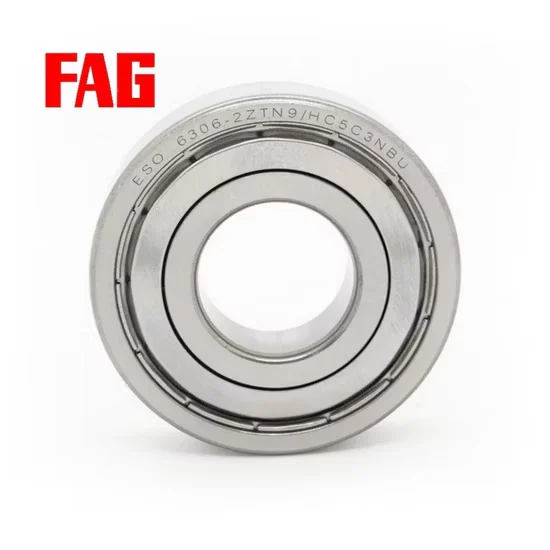


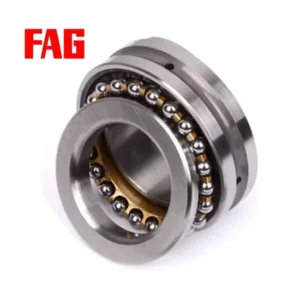
Product details
Description and application notes
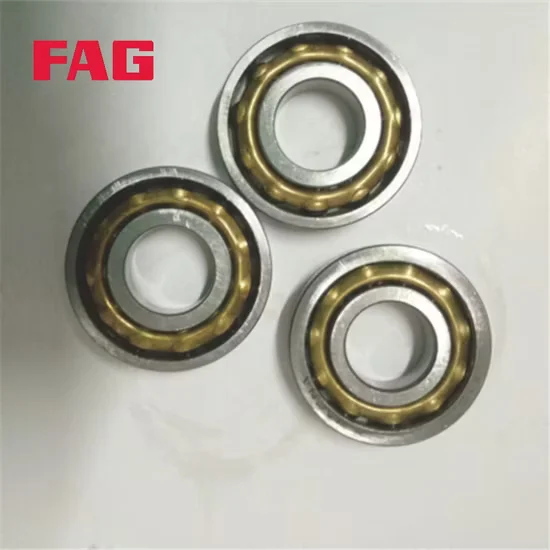
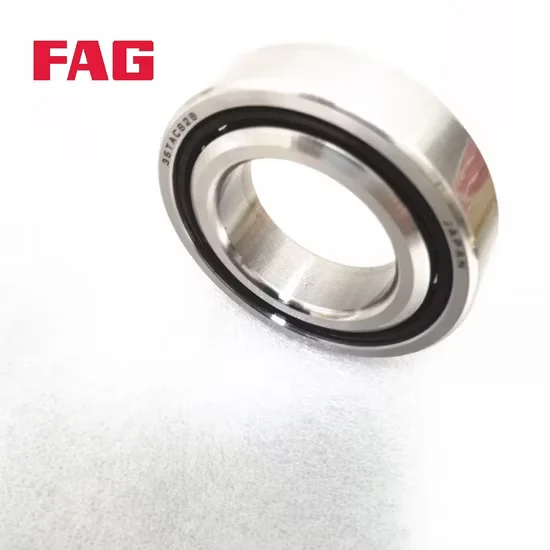
Original Batch Traceability — Every FAG HS7017-C-T-P4s-UL angular contact ball bearing ships with verifiable factory lot documentation to guarantee absolute authenticity and material provenance.
Technical Specifications
| Parameter | Value |
|---|---|
| Designation | FAG HS7017-C-T-P4s-UL |
| Bearing Type | Angular Contact Ball Bearing |
| Number of Rows | Single-Row |
| Precision Class | P4s |
| Contact Angle | 15° |
| Material | Steel |
| Origin | Jiangsu China |
| Certification | ISO |
Note: Suffixes T and UL require manufacturer catalog confirmation for exact technical definitions.
Application Suitability
| Industry | Typical Applications |
|---|---|
| Machine Tool Manufacturing | High-speed spindle assemblies |
| Precision Engineering | Robotics joint actuators |
| Industrial Pumps | High-speed fluid transfer pumps |
Why Spindle Downtime Often Traces Back to Unverified Bearing Suffixes
Mismatched preload or cage suffixes silently destroy spindle accuracy long before physical failure occurs.
I once dismantled a high-speed spindle where mixed preload configurations caused thermal seizure in under two hours. When sourcing a FAG HS7017-C-T-P4s-UL angular contact ball bearing, overlooking specific suffix combinations leads to catastrophic thermal expansion. Procurement teams often focus solely on the base dimension, ignoring that precision spindle setups demand exact factory-matched pairs to maintain dimensional stability under extreme rotational speeds. A slight deviation in internal clearance or cage design alters the frictional heat generation, rapidly degrading the lubricant film and causing metal-to-metal contact.
Aligning P4s Precision with High-Speed Machining Demands
Achieving tight tolerances in continuous milling operations requires components that resist structural deflection under dynamic loads. The FAG HS7017-C-T-P4s-UL angular contact ball bearing delivers the necessary P4s precision class to maintain strict dimensional accuracy during high-RPM cycles. Our engineering team provides cross-brand equivalent model consultation to ensure this specific configuration integrates flawlessly into your existing spindle architecture, preventing costly retrofitting or housing modifications.
Navigating Thermal and Centrifugal Loads in Spindle Assemblies
High-speed spindle environments generate immense centrifugal forces and frictional heat, directly impacting internal clearance and lubricant film thickness. A 15° contact angle optimizes the load distribution for these extreme rotational velocities, minimizing rolling friction while supporting combined radial and axial forces. Proper lubrication selection becomes critical, as standard greases may degrade rapidly under these conditions. This necessitates specialized high-speed oil-air lubrication systems to prevent raceway scoring and ensure the bearing operates within its thermal limits throughout the machining cycle.
Decoding the Engineering Behind the 15° Contact Angle and P4s Tolerance
The single-row steel construction provides the structural rigidity required for demanding machine tool setups. A 15° contact angle, designated by the C suffix, specifically targets high-speed applications by reducing rolling friction and centrifugal ball loads compared to steeper angles. Reaching P4s precision ensures exceptionally tight dimensional and running accuracy, which is non-negotiable for minimizing vibration in precision grinding spindles. While the base material is standard bearing steel, the exact cage design and preload characteristics dictated by the remaining suffixes govern the ultimate speed limit and stiffness of the assembly. Understanding these interactions is vital for predicting the bearing's behavior under varying cutting forces and thermal gradients.
The Cascading Financial Impact of Incorrect Spindle Bearing Selection
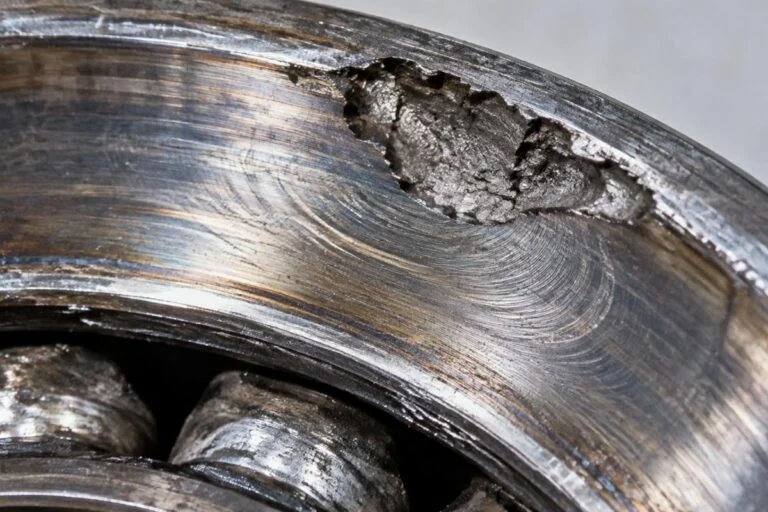
Installing an improperly specified bearing into a precision spindle rarely results in immediate, obvious failure. Instead, it causes subtle vibration and thermal drift that ruins batch tolerances, leading to massive scrap rates and unplanned downtime. According to failure mode classifications outlined in ISO 15243, premature wear in these scenarios often stems from inadequate internal clearance management rather than material fatigue. Ultimately, replacing a seized spindle shaft, ruined tooling, and lost production time costs exponentially more than verifying the correct bearing configuration and preload alignment upfront.
Securing Authentic Spindle Components Through Rigorous Verification
Sourcing a genuine FAG HS7017-C-T-P4s-UL angular contact ball bearing requires more than just finding a matching part number in a catalog. We supply original FAG products with complete traceability documentation, ensuring the exact P4s tolerance and 15° contact angle you specified. Our massive spot inventory covers thousands of special part numbers, allowing us to fulfill urgent maintenance requirements without the typical multi-week lead times. Furthermore, our technical selection support helps verify complex suffix alignments, preventing the costly mistake of mixing unmatched preload configurations in high-speed setups. We also offer global shipping consolidation and thorough inspection services to streamline your mixed-brand project orders.
Documentation & Authenticity
- Certificate of Conformity validating the P4s precision class for this specific angular contact configuration.
- Original factory batch tracing linking the bearing to its exact production run and material heat.
- Official QR code verification enabling immediate authenticity checks for the FAG spindle component.
- Dimensional and running accuracy inspection reports confirming strict P4s tolerances before dispatch.
Storage, Handling & Mounting
- Keep the P4s precision bearing in its original vacuum packaging to prevent microscopic dust contamination on the raceways.
- Use clean, lint-free gloves when handling the 15° contact angle bearing to avoid corrosive skin oils on the steel surfaces.
- Employ induction heating with strict temperature control for the inner ring to preserve the tight P4s dimensional tolerances.
- Verify the exact preload suffix alignment before mounting to prevent catastrophic thermal seizure in the high-speed spindle.
Preparing Your Technical Parameters for Accurate Spindle Sourcing
To ensure precise technical review and L10 life calculations, please share your spindle's operational parameters, including radial and axial loads, maximum RPM, and operating temperatures. Providing the original OEM equipment model number allows our engineering team to perform a thorough cross-reference alignment. This operational data guarantees the selected configuration perfectly matches your specific high-speed machining requirements and prevents premature failure due to undocumented load spikes.
Frequently Asked Questions
Q: How do the unverified suffixes T and UL affect the bearing's performance?
A: These suffixes typically dictate specific cage materials, contact angle variations, or preload arrangements critical for high-speed spindles. We recommend consulting the manufacturer's catalog or our technical team to decode these exact designations, ensuring the bearing matches your spindle's required stiffness and thermal characteristics.
Q: What is the difference between P4s and standard P4 precision classes?
A: P4s represents a specialized precision grade optimized specifically for high-speed machine tool spindles, offering tighter running accuracy and stricter dimensional tolerances than standard P4. This enhanced precision minimizes vibration and thermal generation during extreme RPM operations, directly improving surface finish quality and tool life.
Q: Can this 15° contact angle bearing be used in heavy-duty milling applications?
A: A 15° contact angle excels in high-speed, light-to-medium load scenarios by minimizing friction and centrifugal forces. For heavy-duty milling with massive axial cutting forces, a steeper contact angle or a different bearing arrangement is generally required to prevent raceway separation and premature failure.
Q: How should we handle lubrication for this high-speed spindle bearing?
A: High-speed angular contact bearings typically require specialized oil-air or oil-mist lubrication systems rather than standard grease packing. Proper lubricant selection and precise delivery intervals are essential to manage frictional heat and maintain the protective oil film across the 15° contact angle raceways during continuous operation.