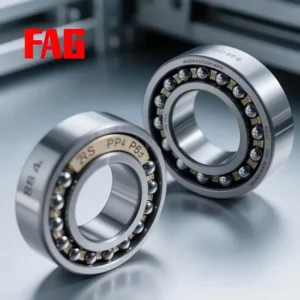


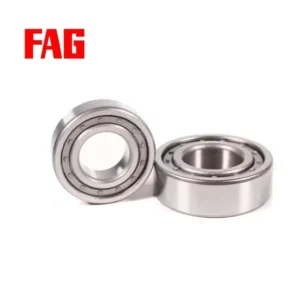
Product details
Description and application notes
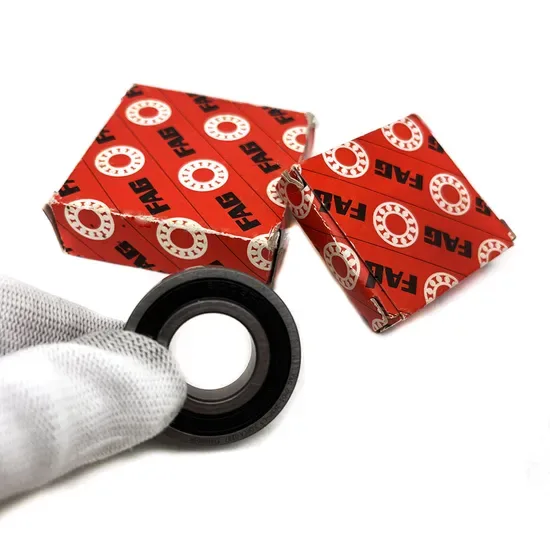
Official App Verification — Scan the QR code on the FAG HS71917-E-T-P4s-UL packaging using the manufacturer's official app to instantly confirm authenticity and batch traceability.
Technical Specifications
| Parameter | Value |
|---|---|
| Designation | FAG HS71917-E-T-P4s-UL |
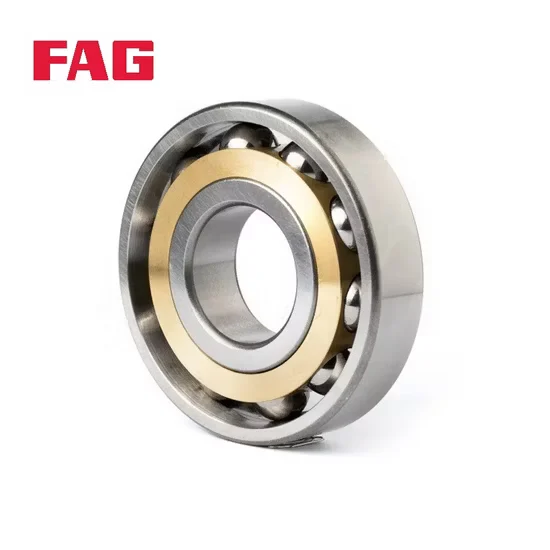
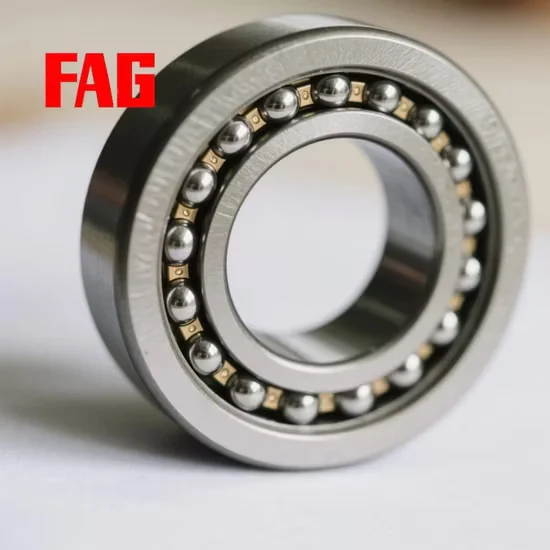
| Bearing Type | Angular Contact Ball Bearing |
| Precision Class | P4s |
| Contact Angle | 25° |
| Material | Steel |
| Origin | Jiangsu China |
| Certification | ISO compliant |
Application Suitability
| Industry | Typical Applications |
|---|---|
| Machine Tool Manufacturing | High-speed machining center spindles |
| Precision Engineering | Precision grinding equipment rotary axes |
| Fluid Machinery | High-speed pump drive shafts |
Preventing Spindle Seizure: Why the FAG HS71917-E-T-P4s-UL angular contact ball bearing Outperforms Standard Tolerances
Tighter dimensional tolerances prevent the microscopic vibration that generates catastrophic friction heat at high RPMs.
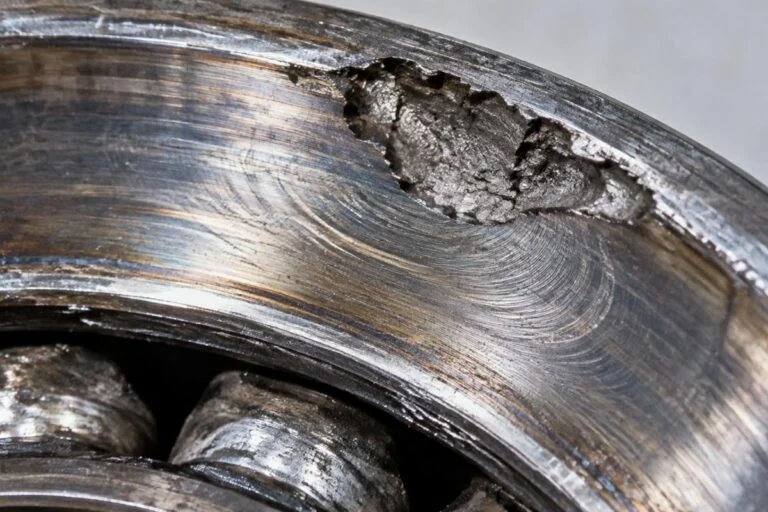
I once analyzed a high-speed machining center spindle that seized after barely a few months of operation. The teardown revealed severely burned raceways caused by using standard precision bearings instead of specialized spindle grades. When rotational speeds escalate, even minor dimensional deviations amplify into destructive vibration, rapidly degrading the lubricant film. Upgrading to specialized precision classes mitigates this thermal runaway and preserves the geometric integrity of the cutting tool. Furthermore, maintaining strict dimensional control ensures that the spindle can consistently achieve the tight tolerances required for modern aerospace and medical device manufacturing, where surface finish anomalies are completely unacceptable.
Matching Spindle Dynamics with Precision Engineering
When configuring a high-speed machining center, the FAG HS71917-E-T-P4s-UL angular contact ball bearing provides the exact running accuracy required to maintain tight tolerances during heavy cutting operations. Our engineering team frequently assists clients in replacing degraded spindle bearings, ensuring the replacement matches the original equipment manufacturer's strict geometric requirements. This exact alignment prevents chatter marks on the finished workpiece and significantly extends the interval between mandatory spindle rebuilds, ultimately securing the dimensional integrity of complex aerospace and automotive components. By prioritizing exact dimensional matching, manufacturers can avoid the subtle tool deflection that often ruins expensive raw materials during the final finishing passes.
Managing Thermal Expansion and Lubrication Starvation
High-speed spindles generate intense localized heat, which directly impacts internal clearance and lubricant viscosity during continuous machining cycles. If the bearing cannot accommodate thermal expansion, the rolling elements experience excessive preload, leading to rapid cage wear and eventual seizure. Adequate oil-air or oil-jet lubrication is absolutely critical to dissipate this heat while maintaining a protective hydrodynamic film between the balls and raceways. Furthermore, preventing coolant and metallic swarf from infiltrating the bearing cavity requires careful sealing strategies at the spindle housing level to avoid abrasive contamination. Implementing these protective measures ensures the lubricant remains clean and effective throughout the entire operational lifespan of the spindle assembly.
Decoding the Contact Angle and Precision Class
The 25° contact angle, denoted by the 'E' suffix, strikes an optimal balance between axial rigidity and radial load capacity, which is essential for spindles subjected to multidirectional cutting forces. The P4s precision class guarantees exceptionally tight dimensional and running accuracy, minimizing the runout that causes surface finish defects on precision parts. While standard P4 bearings might suffice for general industrial gearboxes, the stringent requirements of high-speed machining demand the refined tolerances of the P4s designation to effectively suppress high-frequency vibration and maintain consistent tool tip positioning. This precise control over internal geometry allows the spindle to operate smoothly even when subjected to the interrupted cuts typical of complex milling operations.
The Compounding Financial Impact of Premature Spindle Failure
Selecting an inadequate precision class or mismatching the contact angle often results in catastrophic damage to the spindle housing and shaft journals. Beyond the immediate cost of the replacement bearing, unplanned downtime halts the entire production line, leading to missed delivery deadlines and severe contractual penalties. According to industry failure analysis frameworks, improper selection is a primary driver of premature fatigue and smearing, ultimately voiding the machine tool warranty and necessitating a complete, highly expensive spindle overhaul rather than a simple component swap. The cascading financial consequences of a single incorrect specification highlight why rigorous technical validation is an indispensable step in the procurement process.
Securing Authentic Spindle Components Through Verified Channels
Procuring genuine spindle bearings requires dealing with a market saturated with counterfeit and relabeled products that compromise machining accuracy. We supply the FAG HS71917-E-T-P4s-UL angular contact ball bearing with complete batch traceability, ensuring the metallurgical integrity perfectly matches the manufacturer's original specifications. Our technical team cross-references the exact suffix combinations, preventing the common mistake of substituting universal pairing bearings with mismatched preload sets. Additionally, we consolidate mixed-brand orders, allowing you to source both the primary spindle bearings and auxiliary pump bearings in a single, fully documented shipment. This comprehensive approach eliminates the administrative burden of managing multiple vendors while guaranteeing that every component meets the required engineering standards.
Documentation & Authenticity
- Original manufacturer batch traceability documents linking the specific P4s precision grade to the production facility.
- Official app QR code verification confirming the authenticity of the FAG HS71917-E-T-P4s-UL angular contact ball bearing packaging.
- Dimensional and running accuracy inspection reports validating the strict P4s tolerance limits before dispatch.
- Certificate of Conformity detailing the exact 25° contact angle and material specifications.
Storage, Handling & Mounting
- Store the P4s precision bearings in their original, unopened packaging to prevent microscopic dust contamination from degrading the raceway finish.
- Maintain a stable, climate-controlled environment to avoid thermal shock that could subtly alter the tight dimensional tolerances before mounting.
- Use lint-free cleanroom gloves when handling the exposed steel surfaces to prevent corrosive salts from skin contact.
- Follow the manufacturer's strict mounting sequence for the universal pairing arrangement to preserve the factory-calibrated preload.
Preparing Your Technical Requirements for Spindle Integration
To ensure optimal performance, please provide the specific radial and axial cutting loads, maximum operating RPM, and the exact spindle housing dimensions. Sharing the original equipment manufacturer's part number allows our engineering team to verify the cross-reference and confirm the correct preload class. Detailing the lubrication method and operating temperature range enables us to validate the suitability of the selected configuration for your specific machining environment.
Frequently Asked Questions
Q: How does P4s precision compare to standard P4 in high-speed spindle applications?
A: The P4s class offers significantly tighter running accuracy and dimensional tolerances than standard P4. This refined precision minimizes high-frequency vibration and heat generation at elevated RPMs, which is critical for maintaining surface finish quality in machining centers and preventing premature raceway fatigue.
Q: What does the 25° contact angle mean for my spindle's load capacity?
A: A 25° contact angle provides an excellent balance between axial rigidity and radial load support. This configuration is ideal for high-speed spindles that experience significant axial thrust during drilling or milling operations while still requiring strong radial stability to resist cutting forces.
Q: How can I verify the authenticity of the received spindle bearings?
A: You can authenticate the bearings by scanning the QR code on the packaging using the manufacturer's official mobile application. Additionally, we provide original batch traceability documentation and dimensional inspection reports that confirm the specific P4s precision grade and material origin.
Q: What are the specific meanings of the unverified suffixes in the designation?
A: Certain suffixes in the FAG HS71917-E-T-P4s-UL angular contact ball bearing designation, such as T and UL, may denote specific cage materials, preload classes, or universal pairing configurations. We recommend consulting the official manufacturer catalog or our technical team to confirm the exact operational parameters these suffixes represent for your application.