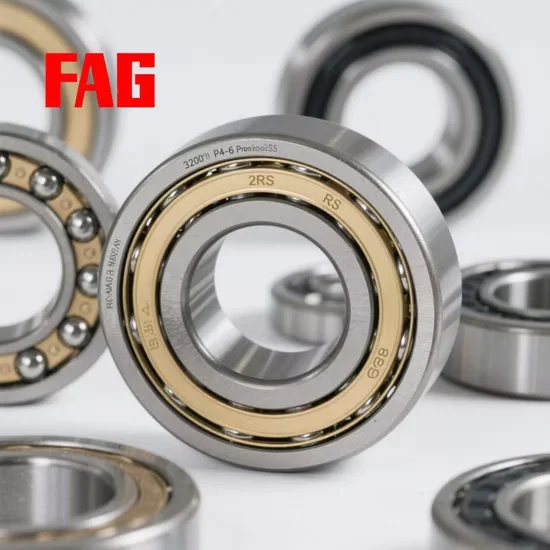


Product details
Description and application notes
Full-Brand Sourcing — Consolidate your spindle and engine bearing orders into a single shipment without juggling multiple vendor contracts, ensuring every precision component arrives with unified documentation and synchronized logistics.
Technical Specifications
| Parameter | Value |
|---|---|
| Designation | HS71920-E-T-P4s-UL FAG |
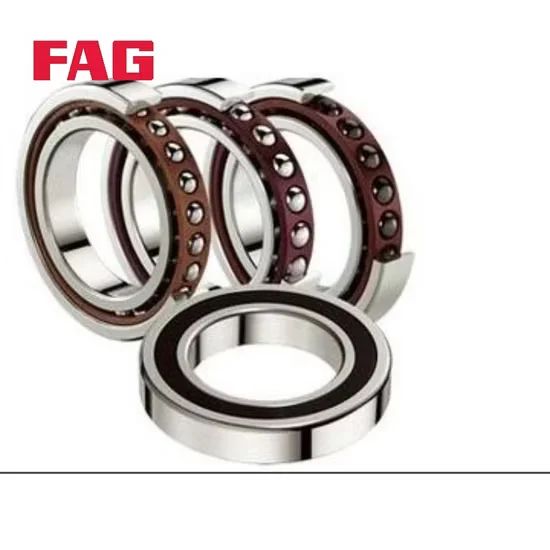
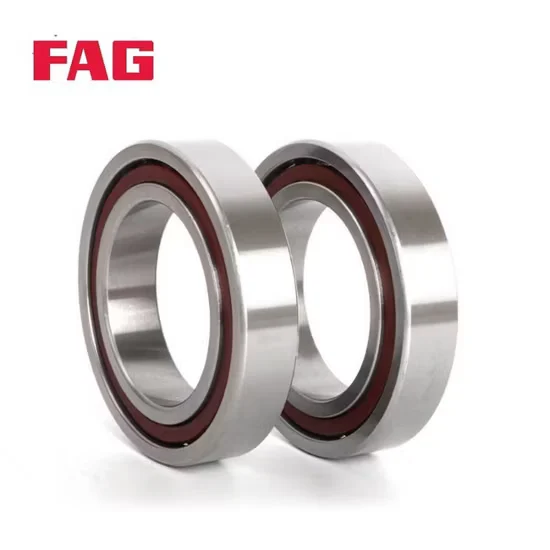
| Bearing Type | Angular Contact Ball Bearing |
| Precision Class | P4s |
| Contact Angle | 25° |
| Material | Steel |
| Origin | Jiangsu China |
| Certification | ISO |
Suffixes HS, T, and UL remain unverified in standard public catalogs and require direct manufacturer confirmation for exact preload and cage specifics.
Application Suitability
| Industry | Typical Applications |
|---|---|
| Machine Tool Manufacturing | High-speed spindle assemblies and precision rotary tables |
| Industrial Power Generation | Main rod spindle supports in heavy-duty industrial engines |
| Fluid Dynamics | High-speed pump shafts requiring tight axial displacement control |
| Automated Systems | Joint actuators and rotary axes in precision robotics |
Why Standard Tolerances Destroy Spindles Before the FAG HS71920-E-T-P4s-UL angular contact ball bearing Reaches Operating Temperature
Micro-vibrations from P0-class clearances generate fatal heat accumulation long before structural fatigue occurs.
I have seen this exact scenario unfold on machine shop floors in Riyadh. A maintenance crew once forced a standard P0 bearing into a precision spindle, and within thirty minutes, the vibration spiked and the shaft seized completely due to thermal expansion. Upgrading to a precision-ground alternative prevents this thermal runaway, aligning with. The internal geometry must perfectly match the housing tolerances to avoid localized stress concentrations that rapidly degrade the lubricant film and destroy the raceway surface.
Matching Precision Geometry to Engine and Spindle Demands
When specifying a FAG HS71920-E-T-P4s-UL angular contact ball bearing for industrial engine main rods, the 25° contact angle provides the exact balance needed to handle combined radial and axial thrust. Our engineering team routinely cross-references these load vectors against OEM blueprints to ensure the selected precision class prevents micro-slip under continuous rotational stress. By analyzing the specific harmonic frequencies of your spindle, we can confirm whether this exact geometry will dampen vibrations effectively or if a steeper contact angle is required to manage the axial displacement generated during heavy cutting operations.
Managing Thermal Expansion and Lubrication Breakdown
High-speed spindles generate intense localized heat, which alters internal clearance and accelerates lubricant degradation. If the initial preload is too heavy, the rolling elements skid; if too light, the shaft deflects under cutting forces. Managing this thermal gradient requires strict adherence to, ensuring the grease film remains intact without churning into a solid mass. Furthermore, the sealing arrangement must be carefully evaluated to prevent coolant ingress while minimizing the frictional heat generated by the seal lips themselves during continuous high-RPM operation. Contamination from microscopic metal shavings can also act as an abrasive, accelerating wear and fundamentally altering the intended contact mechanics.
Decoding the P4s Tolerance and 25° Contact Geometry
The P4s precision class dictates exceptionally tight dimensional and running accuracy, which is non-negotiable for minimizing runout in high-RPM applications. Meanwhile, the 25° contact angle (denoted by the E suffix) optimizes the load distribution path, allowing the steel races to absorb significant axial thrust without edge-stressing the rolling elements. This specific geometry ensures the bearing maintains its kinematic stability even when subjected to the erratic load reversals typical in industrial engine environments. The high-quality steel construction provides the necessary core toughness to withstand shock loads, while the precise raceway grinding ensures a smooth elastohydrodynamic lubrication film forms instantly upon startup.
The Cascading Financial Impact of Incorrect Preload Selection
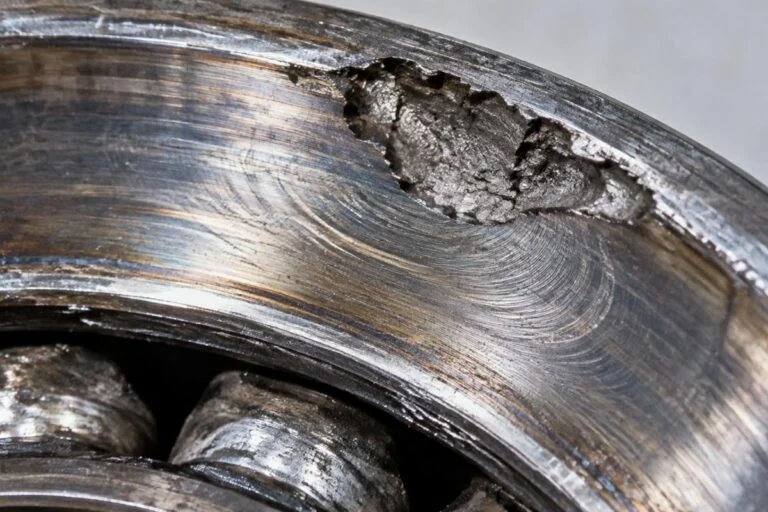
Installing a bearing with mismatched internal clearance leads to premature spalling and catastrophic spindle damage. This unplanned downtime halts the entire production line, voiding equipment warranties and triggering massive replacement costs. According to, these secondary losses often dwarf the initial component price, making exact specification matching a critical financial safeguard. Beyond the immediate repair costs, the resulting scrap parts and delayed shipments severely damage your operational reputation, proving that rigorous technical verification during the procurement phase is the most effective cost-control strategy available. A single misaligned component can trigger a cascading failure that destroys the entire motor assembly.
Securing Traceable Precision Components for Critical Machinery
Sourcing high-precision spindle components requires more than just finding a part number; it demands absolute material certainty. We provide complete batch traceability for every FAG HS71920-E-T-P4s-UL angular contact ball bearing, ensuring the steel metallurgy matches the original factory specs. Our flexible consolidation allows you to mix this precision unit with heavy-duty spherical rollers in a single container, optimizing your freight costs. Furthermore, our technical team verifies the exact contact angle and tolerance class before dispatch to prevent costly field mismatches, utilizing our extensive cross-reference database to ensure direct integration into your existing maintenance inventory without compromising the stringent quality requirements of your machining center.
Documentation & Authenticity
- Certificate of Conformity verifying the P4s precision class and ISO compliance.
- Original factory batch traceability linking the steel heat number to the specific bearing.
- Dimensional and running accuracy inspection reports confirming tight P4s tolerances.
- Material test certificates validating the chemical composition of the bearing steel.
Storage, Handling & Mounting
- Keep the P4s precision bearing in its original vacuum-sealed packaging until the exact moment of installation to prevent microscopic dust contamination.
- Store the steel components in a climate-controlled environment to prevent condensation from compromising the factory-applied rust preventive coating.
- Use clean, lint-free thermal gloves when handling the 25° contact angle races to avoid acidic skin oils etching the precision-ground surfaces.
- Apply controlled induction heating for the inner ring mounting, strictly monitoring the temperature to preserve the P4s dimensional stability.
Engineering Review and Selection Guidance
To ensure optimal spindle performance, please share your specific radial and axial load profiles, operating RPM, and thermal environment. Providing the original OEM equipment serial number allows our technical team to perform a precise cross-reference check and verify the required preload configuration for your specific application. Additionally, detailing your current lubrication protocol ensures the HS71920-E-T-P4s-UL FAG operates within its designed thermal limits and enables us to recommend the exact mounting procedures necessary to maximize operational lifespan.
Frequently Asked Questions
Q: How should we cross-reference this precision bearing with alternative manufacturer part numbers?
A: When evaluating equivalents, you must strictly align the 25° contact angle, the P4s precision class, and the exact dimensional boundaries. Simply matching the bore and outside diameter is insufficient for spindle applications. Our engineering team utilizes comprehensive cross-reference databases to verify that the alternative bearing's internal geometry and preload characteristics perfectly mirror the original specifications to prevent operational instability.
Q: How does the P4s precision class differ from standard P4 or P5 grades?
A: The P4s class represents a specialized high-precision tier that enforces stricter running accuracy and tighter dimensional tolerances than standard P4 or P5 grades. This enhanced precision minimizes axial runout and vibration, which is absolutely critical for maintaining surface finish quality in high-speed machine tool spindles and industrial engine main rod applications.
Q: Can this 25° contact angle bearing be mounted in a back-to-back or face-to-face arrangement?
A: Yes, angular contact bearings with a 25° contact angle are frequently mounted in duplex pairs to handle bidirectional axial loads and increase system rigidity. However, the specific arrangement depends on the spindle's load direction and thermal expansion characteristics. Our engineering team can calculate the optimal pairing configuration based on your exact machine geometry and operating speeds.
Q: What verification steps should we take upon receiving the precision bearing?
A: Upon delivery, immediately cross-reference the physical laser markings on the bearing rings with the provided Certificate of Conformity. Inspect the packaging for any signs of tampering and verify the anti-corrosion coating is intact. For critical spindle applications, we recommend conducting a baseline vibration test during the initial run-in phase to confirm the P4s running accuracy meets your machine's strict thresholds.