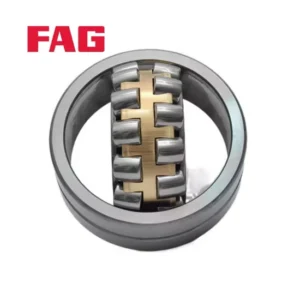


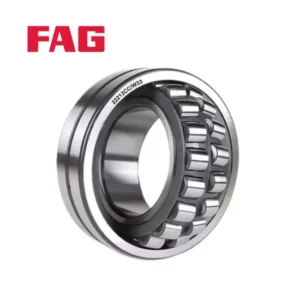
Product details
Description and application notes
Cross-Reference Alignment Verified — matching OEM part numbers across three major catalogs ensures exact fitment for heavy-duty crushers.
Technical Specifications
| Parameter | Value |
|---|---|
| Designation | FAG 22218-E1-XL-C3 |
| Bearing Type | Spherical Roller Bearing |
| Bore Diameter (d) | 90 mm |
| Outside Diameter (D) | 160 mm |
| Width (B) | 40 mm |
| Dynamic Load Rating (C) | 345,000 N |
| Static Load Rating (C₀) | 375,000 N |
| Limiting Speed | 5,200 rpm |
| Reference Speed | 3,500 rpm |
| Clearance Class | C3 |
| Bore Type | Cylindrical |
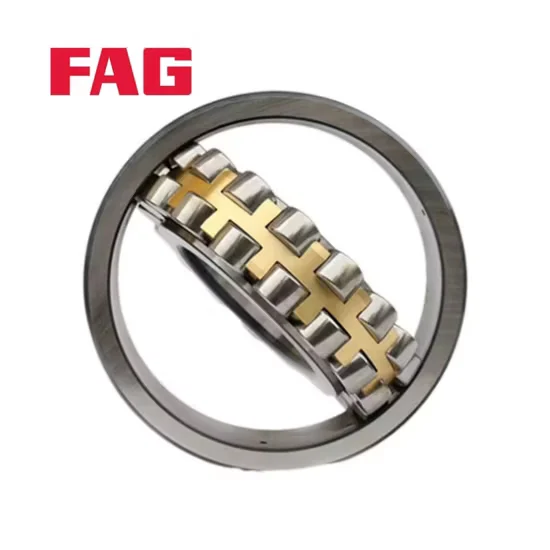
| Arrangement | Double Row, Self-Aligning |
| Material | Chrome Steel Gcr15 |
| Cage Material | Steel, Brass, or Nylon options |
| Origin | Jiangsu, China |
Note: Suffixes E1 and XL require manufacturer catalog confirmation for specific internal design variations.
Application Suitability
| Industry | Typical Applications |
|---|---|
| Mining & Quarrying | Jaw crusher eccentric shafts, vibrating screen drive mechanisms |
| Metallurgy & Steel Mills | Continuous caster roll segments, rolling mill guide rollers |
| Pulp & Paper | Paper machine dryer cylinder bearings, press roll supports |
Why Thermal Expansion Destroys Spherical Roller Bearings in Crushing Circuits
Clearance selection dictates survival when ambient and frictional heat collide.
During a recent mining project, I witnessed a catastrophic failure on a primary jaw crusher. The maintenance team installed a standard clearance bearing instead of a C3 variant, ignoring the intense heat generated by continuous rock fracturing. The thermal expansion eliminated internal clearance, leading to premature seizure and unplanned downtime. As the shaft heats up, it expands radially, shrinking the internal play. If the initial clearance is not sufficient to absorb this growth, the rollers are forced into a tight bind against the raceways. This skidding action generates even more heat, creating a destructive feedback loop that* the cage. Specifying the correct FAG 22218-E1-XL-C3 spherical roller bearing prevents this exact failure mode by accommodating shaft expansion under extreme thermal loads, ensuring the rolling elements maintain a protective hydrodynamic oil film.
Matching Internal Geometry to Heavy Shock Loads
The double-row self-aligning structure inherently compensates for shaft deflection and housing misalignment, which are unavoidable in vibrating screens and rock breakers. When sourcing a FAG 22218-E1-XL-C3 spherical roller bearing for these environments, the optimized roller profile distributes shock loads evenly across the raceway. Heavy impact forces from breaking large boulders travel directly through the shaft into the bearing housing. A rigid, non-aligning bearing would concentrate these shock loads on a small section of the rollers, leading to rapid surface spalling and fatigue. Our engineering team cross-references your specific equipment OEM requirements to ensure the internal geometry perfectly matches the radial and axial forces present in your crushing circuit, maximizing the operational lifespan of the machinery.
Navigating Contamination and Temperature Extremes
Mining and steel mill environments introduce severe particulate contamination alongside massive temperature fluctuations. In these conditions, lubrication integrity becomes the primary defense against abrasive wear. While the open design allows for flexible relubrication intervals using high-viscosity greases, the C3 internal clearance is non-negotiable for high-temperature zones to prevent thermal binding. Fine rock dust and metallic debris easily penetrate inadequate housing seals, mixing with the grease to form a grinding paste that accelerates raceway wear. Proper sealing arrangements in the housing must complement the bearing to keep contaminants out of the rolling elements. Furthermore, the relubrication strategy must be carefully calibrated; purging old, contaminated grease requires sufficient internal volume and appropriate pressure to avoid blowing out the housing seals while ensuring fresh lubricant reaches the critical contact zones.
Decoding the Clearance and Structural Enhancements
The C3 clearance class provides greater internal radial play than standard CN, which is essential when the inner ring expands due to frictional heat or tight interference fits on the shaft. Without this extra clearance, the rolling elements would skid rather than roll, generating excessive heat and rapid cage wear. The chrome steel Gcr15 material offers the necessary core toughness and surface hardness to withstand the punishing impact loads typical in mineral processing. Furthermore, the availability of steel, brass, or nylon cage options allows maintenance engineers to select the optimal retainer based on the specific vibration frequency and lubrication method of the machinery. Brass retainers, for instance, provide superior resistance to the high-frequency vibrations found in screening equipment, preventing the cage from fracturing under cyclic stress. Understanding these nuances ensures the component is fundamentally engineered for your specific mechanical stresses.
The Financial Impact of Ignoring Suffix Specifications
Substituting a standard clearance bearing for a C3 variant in high-heat applications inevitably leads to catastrophic damage. The resulting seizure not only destroys the bearing itself but often scores the shaft and damages the housing bore, escalating a simple component replacement into a major mechanical overhaul. Such premature failures void equipment warranties and trigger massive revenue losses due to halted production lines. When a critical crusher goes down unexpectedly, the cost of the replacement component is negligible compared to the hourly loss of plant output and the emergency labor required for extraction. Adhering strictly to the designated clearance and structural suffixes is the only way to mitigate these hidden operational costs and maintain a predictable maintenance schedule.
Securing Traceability in a Market Flooded with Counterfeits
Sourcing genuine heavy-duty components requires more than just matching a part number on a screen. We provide complete traceability documentation for every FAG 22218-E1-XL-C3 spherical roller bearing, ensuring the metallurgical properties meet the original manufacturer's strict standards. Our flexible consolidation shipping allows you to mix this specific crusher bearing with other MRO spares in a single container, optimizing your freight costs and simplifying customs clearance. Additionally, our technical team verifies the exact suffix requirements against your operating parameters, eliminating the risk of receiving a visually identical but functionally inadequate standard-clearance replacement. The market is saturated with repackaged or substandard bearings that fail prematurely under heavy loads. By enforcing strict supply chain controls and demanding verifiable origin documentation, we protect your operations from the devastating consequences of counterfeit parts entering your critical machinery.
Verification and Quality Assurance Records
- Certificate of Conformity linking the specific batch number to the original manufacturing facility.
- Official app QR code verification to confirm the authentic origin of the FAG packaging and labels.
- Material inspection reports validating the Gcr15 chrome steel composition and heat treatment hardness.
- Dimensional and running accuracy inspection reports confirming the C3 clearance tolerances before dispatch.
- Origin documentation detailing the Jiangsu production location for customs and compliance requirements.
Preservation and Installation Protocols
- Store the double-row spherical roller bearing in its original moisture-barrier packaging until installation to prevent raceway corrosion.
- Use induction heating for the inner ring mounting, strictly monitoring temperature to preserve the C3 clearance and chrome steel metallurgy.
- Maintain a clean environment and wear lint-free gloves during handling to prevent abrasive dust from embedding into the roller surfaces.
- Verify shaft and housing tolerances prior to pressing, ensuring the interference fit does not inadvertently reduce the critical C3 internal radial play.
- Align the outer ring properly within the spherical housing seat to activate the self-aligning capability and prevent edge loading.
Engineering Data Required for Final Validation
To guarantee the selected bearing perfectly suits your machinery, please provide the detailed operating parameters. Sharing the exact radial and axial loads, operational speeds, and ambient temperature ranges allows our team to perform a comprehensive L10 life calculation. Additionally, supplying the OEM equipment model number enables us to cross-reference the housing dimensions and confirm the optimal cage material and clearance class for your specific application. Many maintenance manuals list generic part numbers that may not account for recent operational upgrades or changes in production throughput. By analyzing your real-world duty cycle, we can recommend precise adjustments to the lubrication interval or sealing configuration, ensuring the bearing delivers maximum reliability in your unique processing environment.
Frequently Asked Questions
Q: How does the C3 clearance prevent thermal seizure in crushers?
A: The C3 designation indicates a radial internal clearance larger than the standard CN class. In high-temperature environments like rock crushers, frictional heat causes the inner ring to expand more than the outer ring. This extra clearance compensates for that thermal expansion, preventing the rolling elements from binding against the raceways and avoiding catastrophic seizure during continuous heavy-duty operation.
Q: What is the best way to verify the authenticity of this specific bearing?
A: Authenticity is confirmed by scanning the QR code on the packaging using the manufacturer's official mobile application. Additionally, we provide a Certificate of Conformity and original batch traceability documents. These records allow you to cross-reference the production batch with the factory's quality control database, ensuring the component is a genuine product and not a counterfeit replica.
Q: Why is the self-aligning feature critical for vibrating screen applications?
A: Vibrating screens experience constant shaft deflection and structural flexing due to intense oscillating forces. The spherical outer ring raceway allows the inner ring and roller assembly to pivot slightly, automatically compensating for these misalignments. This prevents destructive edge loading on the rollers, significantly extending the service life of the bearing under severe dynamic conditions.
Q: How do I determine the correct cage material for my equipment?
A: The choice between steel, brass, or nylon cages depends on your specific operating conditions. Brass cages are typically preferred for high-vibration and high-shock environments due to their superior durability and resistance to cage fatigue. Steel cages offer a cost-effective solution for standard heavy loads, while nylon cages are suitable for applications requiring lower friction, provided temperature limits are respected.
Q: Can this bearing accommodate combined radial and axial loads?
A: Yes, the double-row spherical roller design is engineered to handle heavy radial loads alongside significant axial forces acting in either direction. The angled contact between the rollers and the spherical raceway allows the bearing to manage combined loading effectively, making it highly suitable for inclined conveyor pulleys and crusher eccentric shafts where multi-directional forces are constantly present.