Product details
Description and application notes
Official App QR Verification — Every FAG 23252-B-MB spherical roller bearing we dispatch includes a scannable traceability code linked to the manufacturer's authentication database.
Technical Specifications
| Parameter | Value |
|---|---|
| Designation | FAG 23252-B-MB |
| Product Type | Spherical Roller Bearing |
| Arrangement | Double Row, Self-Aligning |
| Cage Material | Brass Cage (MB suffix) |
| Material | Chrome Steel Gcr15 |
| Precision Class | P0 P2 P4 P5 P6 (Options) |
| Origin | Jiangsu China |
Note: The 'B' suffix remains unverified and requires manufacturer catalog confirmation for exact internal design specifics.
Application Suitability
| Industry | Typical Applications |
|---|---|
| Mining & Aggregates | Vibrating screens and heavy-duty crushers |
| Metallurgy | Steel mill continuous casting and rolling equipment |
| Pulp & Paper | Paper machine dryer section rolls |
Why Thermal Expansion Destroys Spherical Roller Bearings in Steel Mills
Clearance selection dictates survival when ambient heat meets operational friction.
During my early failure analysis days in Riyadh, I watched a continuous casting machine seize completely because a 232-series bearing was installed with standard clearance instead of C3. The thermal expansion from the steel mill environment left zero internal room for the rollers, causing catastrophic binding. When sourcing a FAG 23252-B-MB spherical roller bearing for similar high-heat metallurgy applications, ignoring the clearance-to-temperature ratio guarantees premature downtime. The inner ring expands faster than the housing, rapidly consuming the internal radial clearance and forcing the rolling elements to slide rather than roll. This sliding friction generates immense localized heat, breaking down the lubricant film and leading to severe raceway smearing.
Matching the MB Brass Cage to Heavy Shock Loads
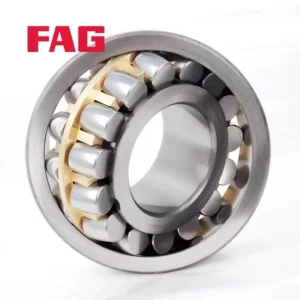
Vibrating screens and crushers subject equipment to intense, unpredictable shock loads that easily fracture standard stamped steel cages. The machined brass cage guided on the inner ring provides the necessary structural rigidity to keep rollers aligned under these extreme radial forces. Procuring a genuine FAG 23252-B-MB spherical roller bearing ensures you receive this exact heavy-duty cage configuration, supported by our cross-brand equivalent model consultation if lead times require alternative sourcing. The solid brass construction also resists the chemical degradation often caused by aggressive lubricants used in mining environments, ensuring the cage maintains its precise geometrical tolerances throughout its operational lifespan.
Managing Temperature Spikes and Contaminant Ingress
Heavy industrial environments introduce a dual threat of extreme heat and abrasive particulate matter. Elevated temperatures thin out standard lubricants, while metallic dust from crushing operations infiltrates the raceway, accelerating wear. Proper selection demands evaluating whether the application requires external lubrication grooves or if the operating speed permits sealed variants to block contaminants. Furthermore, the thermal gradient between the inner and outer rings must be calculated to prevent the clearance from closing up during peak operational heat. In paper machine dryer sections, for instance, steam exposure combined with high rotational speeds requires a delicate balance between adequate sealing and minimizing friction-induced heat generation.
Decoding the Internal Geometry and Cage Guidance
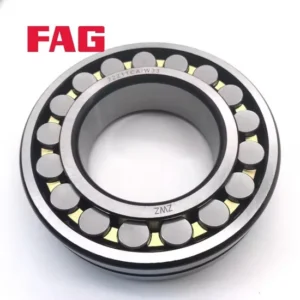
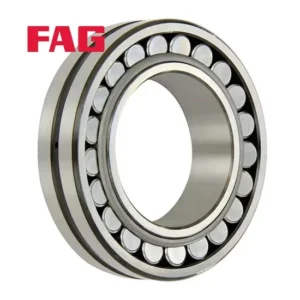
The MB suffix explicitly designates a solid brass cage guided on the inner ring, a configuration chosen for its superior damping characteristics and resistance to cage fracture under high vibration. Unlike polymer alternatives that degrade at elevated temperatures, brass maintains its structural integrity and allows for higher operating speeds under heavy radial loads. The double-row, self-aligning arrangement compensates for shaft deflections and housing misalignments, which are inevitable in heavy machinery foundations subjected to dynamic loading. Selecting the correct precision class from the available P0 to P6 options ensures the running accuracy matches the specific rotational demands of the equipment without over-specifying costs. Additionally, the Chrome Steel Gcr15 material provides the high fatigue strength necessary to withstand the repeated stress cycles inherent in continuous industrial operations.
The Financial Impact of Misaligned Clearances and Cage Materials
Specifying a standard clearance for a high-temperature application inevitably leads to internal preload, generating excessive friction heat that destroys the raceway. Similarly, substituting a brass cage with a pressed steel variant in a high-vibration crusher invites cage fatigue and subsequent roller skewing. These misconfigurations result in unplanned downtime, secondary damage to adjacent shafts and housings, and complete warranty voidance. Adhering to ISO 281 life calculation frameworks prevents these costly oversights by accurately modeling the specific load and temperature conditions. When the internal geometry is compromised by incorrect clearance selection, the resulting metal-to-metal contact rapidly initiates surface fatigue, turning a minor maintenance oversight into a catastrophic equipment failure.
Securing Authentic Heavy-Duty Bearings with Full Traceability
Counterfeit bearings often fail first in the cage material, using inferior alloys that crack under the shock loads typical of vibrating screens. We guarantee the authenticity of every FAG 23252-B-MB spherical roller bearing through complete batch traceability documentation and manufacturer certificates. Our massive spot inventory covers thousands of standard part numbers, allowing us to fulfill urgent maintenance requirements without the typical multi-week lead times. Furthermore, our technical selection support helps buyers verify that the suffix codes exactly match their equipment's replacement requirements, preventing the costly installation of incorrect clearance classes. By consolidating mixed-brand and mixed-size orders, we also simplify the procurement process for large-scale plant overhauls, ensuring every component arrives verified and ready for immediate installation.
Documentation & Authenticity
- Original manufacturer batch traceability codes linking directly to the production facility records.
- Material inspection reports confirming the specific brass alloy composition for the inner-ring guided cage.
- Dimensional and running accuracy inspection reports verifying the selected precision class before dispatch.
- Certificate of Conformity validating the genuine origin of the Chrome Steel Gcr15 components.
Storage, Handling & Mounting
- Store the double-row self-aligning units in their original moisture-barrier packaging to prevent corrosion on the Chrome Steel Gcr15 raceways.
- Use induction heating for mounting the inner ring, ensuring the temperature does not exceed the thermal limit of the brass cage material.
- Keep the bearing sealed until the exact moment of installation to prevent abrasive crusher dust from entering the roller pathways.
- Verify the shaft and housing tolerances carefully, as the self-aligning capability cannot compensate for extreme dimensional deviations in heavy mill equipment.
Engineering Data Required for Technical Verification
To ensure the selected configuration matches your operational reality, please provide the specific radial and axial loads, operating speeds, and ambient temperature ranges. Sharing the original equipment manufacturer part numbers allows our engineering team to perform a precise cross-reference check and validate the clearance class. This technical review guarantees the proposed solution aligns perfectly with your maintenance intervals and load requirements.
Frequently Asked Questions
Q: How do I interpret the MB suffix for proper cage selection in vibrating equipment?
A: The MB suffix indicates a machined brass cage guided on the inner ring. This specific design is critical for vibrating screens and crushers because brass offers superior strength and damping compared to stamped steel or polyamide cages, preventing cage fracture under intense shock loads and high-frequency vibrations.
Q: What cross-reference considerations apply when replacing this specific brass cage design?
A: When replacing an inner-ring guided brass cage bearing, you must ensure the substitute features an identical cage guidance system and material. Substituting it with an outer-ring guided or steel cage variant alters the load distribution and vibration resistance, potentially leading to premature failure in heavy-duty applications like steel mill equipment.
Q: How should I choose the correct clearance class for high-temperature steel mill applications?
A: For high-heat environments like continuous casting machines, you must select an expanded clearance class such as C3 or C4 to accommodate thermal expansion. Installing a standard clearance bearing in these conditions causes the internal gap to close, resulting in excessive friction, heat generation, and eventual seizure of the rolling elements.
Q: How can I verify the authenticity of the bearing using official traceability tools?
A: Authentic units feature specific batch codes and scannable QR labels that link directly to the manufacturer's database. By scanning these codes using the official brand application, you can confirm the production date, facility origin, and original specifications, ensuring the component is not a counterfeit or refurbished part.