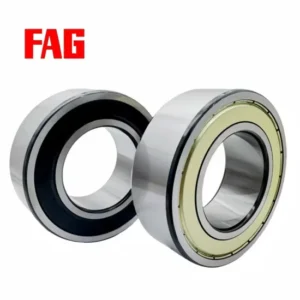
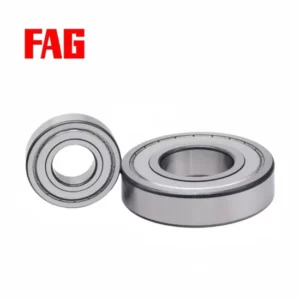
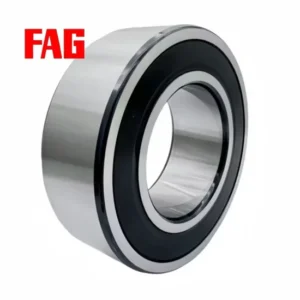
Product details
Description and application notes
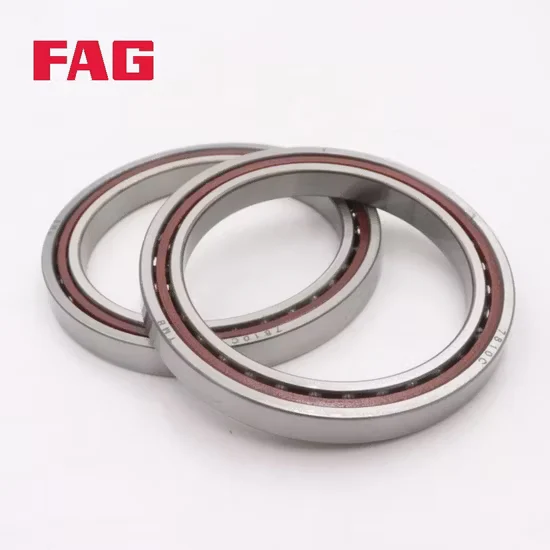
Official App QR Verification — Every HS71920-C-T-P4s-UL FAG angular contact ball bearing ships with a scannable factory QR code linked directly to the manufacturer's authentication database.
Technical Specifications
| Parameter | Value |
|---|---|
| Designation | HS71920-C-T-P4s-UL FAG |
| Bearing Type | Angular Contact Ball Bearing |
| Bore Diameter (d) | 100 mm |
| Outside Diameter (D) | 140 mm |
| Width (B) | 20 mm |
| Precision Class | P4s |
| Contact Angle | 15° |
| Arrangement | Single-Row |
| Material | Steel |
Note: Suffixes HS, T, and UL remain unverified against the current official catalog and require direct manufacturer confirmation.
Application Suitability
| Industry | Typical Applications |
|---|---|
| Machine Tool Manufacturing | High-speed milling spindle assemblies |
| Heavy Machinery | Precision rotary tables for boring mills |
| Industrial Automation | High-accuracy robotic arm joints |
Why Spindle Bearings Fail When Heat Expands the Steel
Thermal growth destroys preload balance long before the steel fatigues.
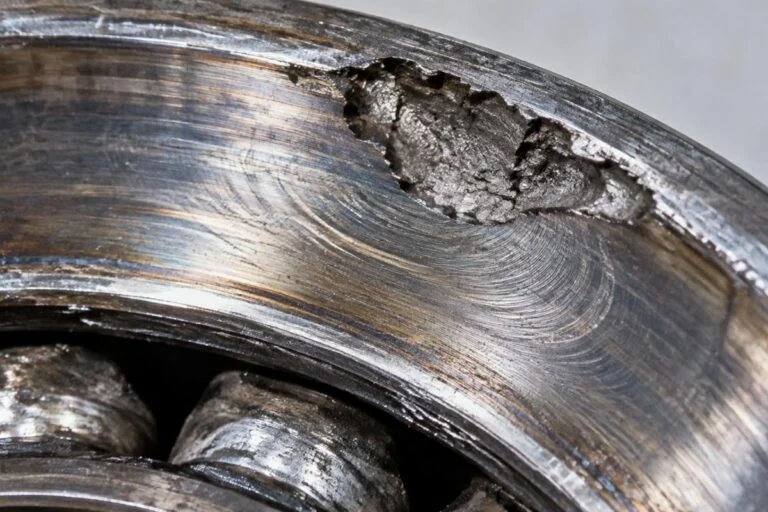
When installing a precision component like the HS71920-C-T-P4s-UL FAG angular contact ball bearing into heavy machinery spindles, engineers often overlook how operational heat alters internal clearance. I once analyzed a catastrophic spindle seizure in Dubai where the exact mismatch between thermal expansion and initial preload turned a high-speed rotor into a fused block of metal. Ignoring the thermodynamic realities of precision assemblies leads to unplanned downtime and severe equipment damage.
Matching Precision Tolerances to Heavy-Duty Spindle Loads
Heavy machinery spindles demand exceptional rotational accuracy under combined radial and axial loads. The HS71920-C-T-P4s-UL FAG angular contact ball bearing delivers the necessary P4s precision class to maintain tight dimensional tolerances during continuous operation. Our engineering team cross-references these specific tolerance requirements against your machine's operational profile to ensure the selected component handles the exact load spectrum without compromising surface finish quality.
Managing Thermal and Lubrication Challenges at High RPMs
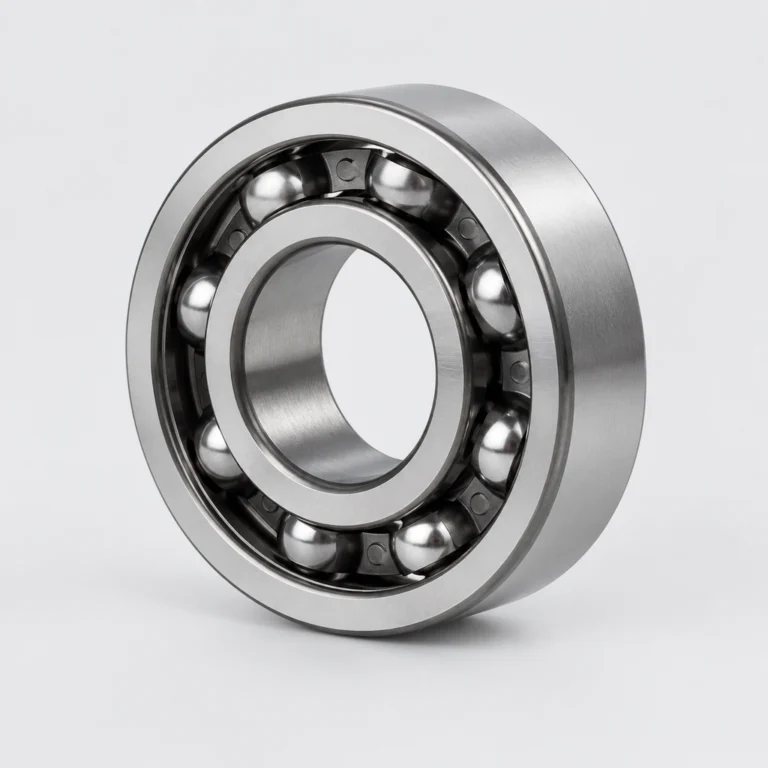
At elevated rotational speeds, friction heat rapidly degrades standard lubricants and alters the internal geometry of the bearing. A 15° contact angle optimizes the balance between axial rigidity and radial support, yet it requires strict attention to lubrication intervals to prevent thermal runaway. If the operating environment introduces coolant mist or metal particulates, the absence of integrated seals means external sealing solutions must be flawlessly designed to prevent contamination ingress.
Decoding the Engineering Behind P4s Precision and 15° Contact Angles
The P4s precision class dictates exceptionally tight tolerances for both dimensional accuracy and running precision, which is mandatory for preventing vibration in high-speed spindles. A 15° contact angle, indicated by the C suffix, provides an optimal load distribution that favors high-speed capability while maintaining sufficient axial stiffness. Single-row steel construction ensures structural integrity, though the specific cage design and preload arrangements must be verified against the machine builder's original specifications to avoid resonance issues during heavy cutting operations.
The Financial Impact of Overlooking Preload and Clearance
Selecting an incorrect preload class or ignoring thermal expansion coefficients results in premature failure that extends far beyond the cost of a replacement part. When a spindle seizes due to improper internal clearance, the resulting catastrophic damage often destroys* weeks of unplanned downtime. Adhering to failure analysis frameworks helps procurement teams recognize that cutting corners on precision specifications inevitably triggers massive secondary repair costs.
Securing Traceable Precision Components for Critical Machinery
Sourcing genuine spindle components requires more than just finding a matching part number; it demands rigorous verification of the manufacturing origin and material certifications. We supply the HS71920-C-T-P4s-UL FAG angular contact ball bearing with complete batch traceability, ensuring the P4s precision class is backed by original factory inspection data. Our technical team actively prevents the common pitfall of mismatching preload suffixes by validating your specific spindle arrangement before shipment, backed by flexible order quantities that accommodate both urgent maintenance and scheduled overhauls.
Documentation & Authenticity
- Original factory batch traceability documents linking the P4s precision grade to specific production runs.
- Scannable QR codes for immediate verification of the bearing's authenticity via the manufacturer's official application.
- Dimensional and running accuracy inspection reports confirming strict adherence to P4s tolerance bands.
- Material certification detailing the metallurgical composition of the steel rings and rolling elements.
Storage, Handling & Mounting
- Store the single-row bearing in its original unopened packaging to prevent humidity from compromising the steel surfaces before installation.
- Use clean, lint-free gloves when handling the P4s precision components to avoid transferring corrosive sweat to the raceways.
- Maintain strict temperature control in the storage area to prevent thermal shock from altering the precise internal clearances.
- Employ induction heating for the inner ring mounting, ensuring the temperature never exceeds the thermal limit of standard bearing steel.
Preparing Your Technical Data for Accurate Selection
To ensure this precision component perfectly matches your heavy machinery spindle, please provide the exact radial and axial load profiles alongside your maximum operational RPM. Sharing the original equipment manufacturer's part number allows our engineers to perform a thorough cross-reference check, verifying that the internal clearance and contact angle align with your specific thermal and mechanical requirements.
Frequently Asked Questions
Q: How can we verify the authenticity of this specific spindle bearing?
A: Every unit ships with a unique factory QR code that links directly to the manufacturer's official authentication database. Scanning this code confirms the original production batch, validating the P4s precision class and ensuring the component is a genuine product rather than a refurbished or counterfeit alternative.
Q: What do the specific suffixes in the designation mean for our application?
A: The C suffix confirms a 15° contact angle, optimizing the balance between axial rigidity and high-speed radial support. Since exact cage and preload configurations dictate spindle performance, we strongly recommend providing your operational parameters so our engineering team can verify the complete arrangement against the manufacturer's latest technical documentation.
Q: How does P4s precision compare to standard tolerance classes?
A: The P4s precision class offers significantly tighter dimensional and running accuracy compared to standard P5 or P0 grades. This extreme precision is mandatory for high-speed machine tool spindles, as it minimizes vibration, reduces heat generation, and ensures the superior surface finish required in heavy-duty milling and boring operations.
Q: Which lubrication strategy is recommended for this 15° contact angle bearing?
A: An open bearing with a 15° contact angle relies entirely on the machine builder's external lubrication system, typically requiring high-speed spindle oil or specialized grease. The exact lubrication interval and viscosity must be calculated based on your specific RPM and thermal load to prevent friction-induced preload loss.