
Product details
Description and application notes
Consolidated Multi-Brand Sourcing — Procure this exact FAG designation alongside other OEM equivalents in a single mixed-brand shipment without juggling multiple vendors.
Technical Specifications
| Parameter | Value |
|---|---|
| Designation | 21313-E1-K-Tvpb-C3 |
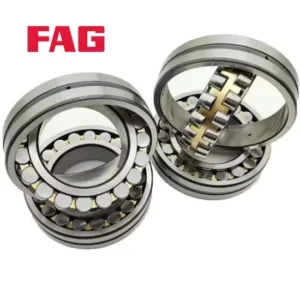
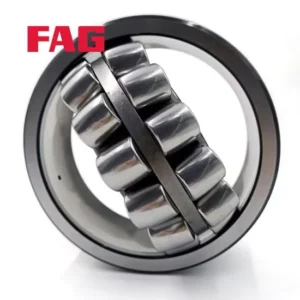
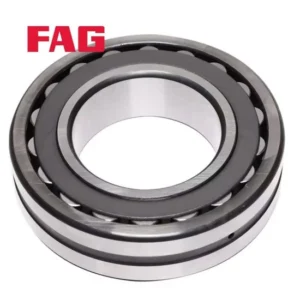
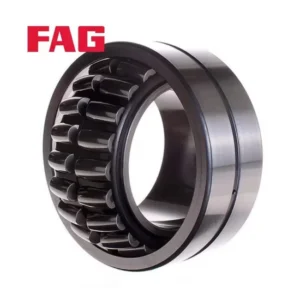
| Bearing Type | Spherical Roller Bearing |
| Bore Type | 1:12 Tapered Bore (K suffix) |
| Number of Rows | Double Row |
| Arrangement | Self-Aligning |
| Clearance Class | C3 Radial Internal Clearance |
| Material | Chrome Steel Gcr15 |
| Cage Material Options | Steel / Brass / Nylon |
| Precision Class Options | P0 / P6 / P5 / P4 / P2 |
| Origin | Jiangsu, China |
Application Suitability
| Industry | Typical Applications |
|---|---|
| Mining & Aggregates | Vibrating screen exciter mechanisms / Crusher main shafts |
| Pulp & Paper | Paper machine dryer section felt rolls |
| Metallurgy | Steel mill continuous casting equipment |
Why Downgrading Cage Materials Destroys Vibrating Screen Uptime
Matching the cage design to the vibration profile prevents catastrophic structural fatigue in heavy-duty exciter mechanisms.
I spent years doing failure analysis on mining sites in Riyadh, and I have seen what happens when procurement ignores suffix details. Replacing a machined brass cage with a pressed steel alternative in high-vibration environments leads to early cage fracture. The resulting unplanned downtime costs far more than the initial savings on the FAG 21313-E1-K-Tvpb-C3 spherical roller bearing. Heavy equipment like jaw crushers subject the rolling elements to intense shock loads that standard cages cannot withstand. When the cage fails, the rolling elements skew, causing immediate seizure and severe collateral damage to the shaft. Procurement teams often overlook the fact that the internal architecture dictates the actual survival rate in harsh conditions.
Aligning Internal Geometry with Heavy-Duty Shock Loads
The double-row self-aligning architecture of the FAG 21313-E1-K-Tvpb-C3 spherical roller bearing accommodates shaft deflections common in crusher operations. By utilizing a 1:12 tapered bore, this component secures firmly onto adapter sleeves, preventing inner ring creep under severe radial shock loads. Our engineering team verifies these geometric traits against your specific equipment parameters to ensure optimal load distribution. In heavy machinery, minor shaft misalignments are inevitable due to structural flexing under peak loads. The self-aligning capability ensures that the load remains evenly distributed across both rows of rollers, preventing edge loading and localized stress concentrations that would otherwise accelerate surface fatigue.
Navigating Thermal Expansion and Contamination in Harsh Environments
Heavy machinery operating in dusty quarries or hot steel mills faces extreme thermal gradients and abrasive particle ingress. A C3 radial internal clearance is essential here, providing the necessary internal play to compensate for thermal expansion without inducing excessive preload. Furthermore, proper lubrication intervals and effective sealing arrangements are critical to flush out contaminants. Selecting the appropriate clearance and sealing configuration directly dictates the operational lifespan. When the inner ring reaches a higher operating temperature than the outer ring, the radial clearance naturally decreases. If a standard clearance bearing were used, the thermal expansion would eliminate the internal play entirely, leading to destructive preload and rapid thermal runaway. The C3 designation specifically mitigates this risk.
Decoding the Suffix Architecture for Reliable Performance
The K suffix indicates a 1:12 tapered bore, which is mandatory for secure mounting on adapter sleeves in vibrating equipment. The C3 designation specifies a radial internal clearance greater than normal, specifically engineered to absorb thermal expansion in high-temperature mill environments. While the E1 and Tvpb suffixes denote specific internal design and cage material variations, these require manufacturer catalog confirmation to verify exact metallurgical and structural traits. Understanding these suffix combinations prevents the fatal mistake of installing a standard clearance or incorrect cage type in a high-vibration application. The internal design modifications indicated by unverified suffixes often involve optimized roller profiles that enhance load-carrying capacity and reduce friction. Ignoring these subtle engineering details results in premature failure.
The Financial Impact of Overlooking Suffix Details
Specifying a standard clearance instead of C3 in a high-heat environment causes internal preload, leading to rapid thermal runaway and catastrophic seizure. Similarly, substituting a high-strength brass cage with a pressed steel variant under heavy vibration accelerates fatigue cracking. These mismatches result in premature failure, voided warranties, and severe collateral damage to adjacent shaft components. Aligning every suffix with the actual operating conditions is non-negotiable for asset protection. The hidden costs of an incorrect selection extend far beyond the price of the replacement component itself. You must factor in the labor costs for emergency teardowns, the lost production revenue during the downtime, and the potential expense of replacing damaged shafts and housings.
Securing Traceability and Technical Accuracy for Critical Spares
We source genuine components with complete batch traceability, ensuring the exact cage material and clearance class match your OEM requirements. Our cross-reference consultation prevents the costly error of accepting an incompatible substitute when the exact FAG designation is unavailable. We maintain massive spot inventory, allowing us to fulfill both single-unit emergency orders and full-container project shipments without delay. Furthermore, our technical team provides post-installation failure analysis support if operating conditions shift unexpectedly. Every shipment includes comprehensive documentation to verify authenticity before the equipment is even powered on. When dealing with critical spares for continuous process industries, our stringent verification protocols guarantee that the component possesses the exact metallurgical integrity specified by the manufacturer.
Documentation & Authenticity
- Original factory batch traceability linking the specific FAG 21313-E1-K-Tvpb-C3 spherical roller bearing to its production run.
- Official manufacturer app QR code verification confirming genuine origin and preventing counterfeit installation.
- Material and dimensional inspection reports validating the C3 clearance and tapered bore tolerances before dispatch.
- Certificate of Conformity detailing the exact cage material and precision class for your maintenance records.
Storage, Handling & Mounting
- Keep the original packaging sealed until mounting to protect the tapered bore and C3 clearance surfaces from humidity and corrosion.
- Use induction heating for the inner ring mounting, strictly monitoring temperature to preserve the Chrome Steel Gcr15 metallurgical hardness.
- Verify the adapter sleeve locknut torque to achieve the correct drive-up distance and residual internal clearance for this 1:12 tapered bore design.
- Apply clean gloves when handling the exposed rolling elements to prevent acidic sweat from initiating micro-pitting on the raceways.
Engineering Review for Optimal Selection
To ensure precise technical alignment, please share your radial and axial load profiles, operating speeds, and ambient temperature ranges. Providing the OEM equipment model number allows our team to perform a thorough cross-reference check and verify the L10 life calculation. This data enables us to confirm whether the C3 clearance and specific cage configuration perfectly match your site conditions. We also evaluate the mounting procedures used by your maintenance crew to ensure the tapered bore and adapter sleeve combination is being utilized correctly. By analyzing these operational variables, we can recommend targeted adjustments to your lubrication strategy, ultimately maximizing the service interval and protecting your capital equipment investment.
Frequently Asked Questions
Q: How can I verify the authenticity of the FAG 21313-E1-K-Tvpb-C3 spherical roller bearing upon delivery?
A: You can scan the QR code on the packaging using the official manufacturer application to confirm the product's genuine origin. Additionally, we provide original factory batch traceability documents and a Certificate of Conformity. These records allow you to cross-check the specific production batch, ensuring the component matches the exact cage material and clearance specifications required for your heavy-duty equipment.
Q: What does the K suffix mean for mounting this spherical roller bearing?
A: The K suffix designates a 1:12 tapered bore, meaning the inner ring diameter increases slightly along its width. This specific geometry requires mounting on a matching adapter sleeve or tapered shaft journal. Proper installation involves calculating the exact drive-up distance to reduce the internal C3 clearance to the optimal operational value, preventing inner ring creep under severe vibrating screen shock loads.
Q: Why is cross-referencing cage materials critical when replacing this designation?
A: Substituting a machined brass cage with a pressed steel alternative in high-vibration environments often leads to early structural fatigue and cage fracture. When evaluating cross-references, it is vital to align not just the basic dimensions, but also the internal clearance, precision class, and exact cage type. Our engineering team verifies these suffix details against your application to prevent catastrophic unplanned downtime.
Q: How do I determine the correct relubrication intervals for this application?
A: Relubrication frequency depends heavily on the operating temperature, rotational speed, and contamination level in your specific crusher or paper machine environment. While the C3 clearance accommodates thermal expansion, inadequate lubrication will still cause excessive friction and wear. We recommend sharing your exact site conditions with our technical support team so we can calculate the appropriate replenishment volume and interval for your maintenance schedule.